Skin Guide · Indian Skin · 2026

Blemishes on Face: What They Are, Why They Form & How to Treat Them

Dark spots left from a pimple after a family wedding? Or stubborn brown patches across your cheeks after a summer trip? On Indian skin, blemishes rarely just disappear — our melanin-rich cells love to leave dark marks that hang around for months. Here is what dermatologist Dr. Lipy Mehta sees in clinic every week, and what actually fades them.

Get Your Free Skin Analysis → 3-minute AI photo check · 100% confidential
What you will find in this guide
  • ✓ 5 common types of blemishes seen on Indian skin
  • ✓ The real biological reasons marks linger after breakouts
  • ✓ Top ingredients: niacinamide, succinic acid, azelaic acid & arbutin
  • ✓ Unbiased analysis of popular blemish removal creams & serums
  • ✓ A realistic morning and night routine that fits daily life
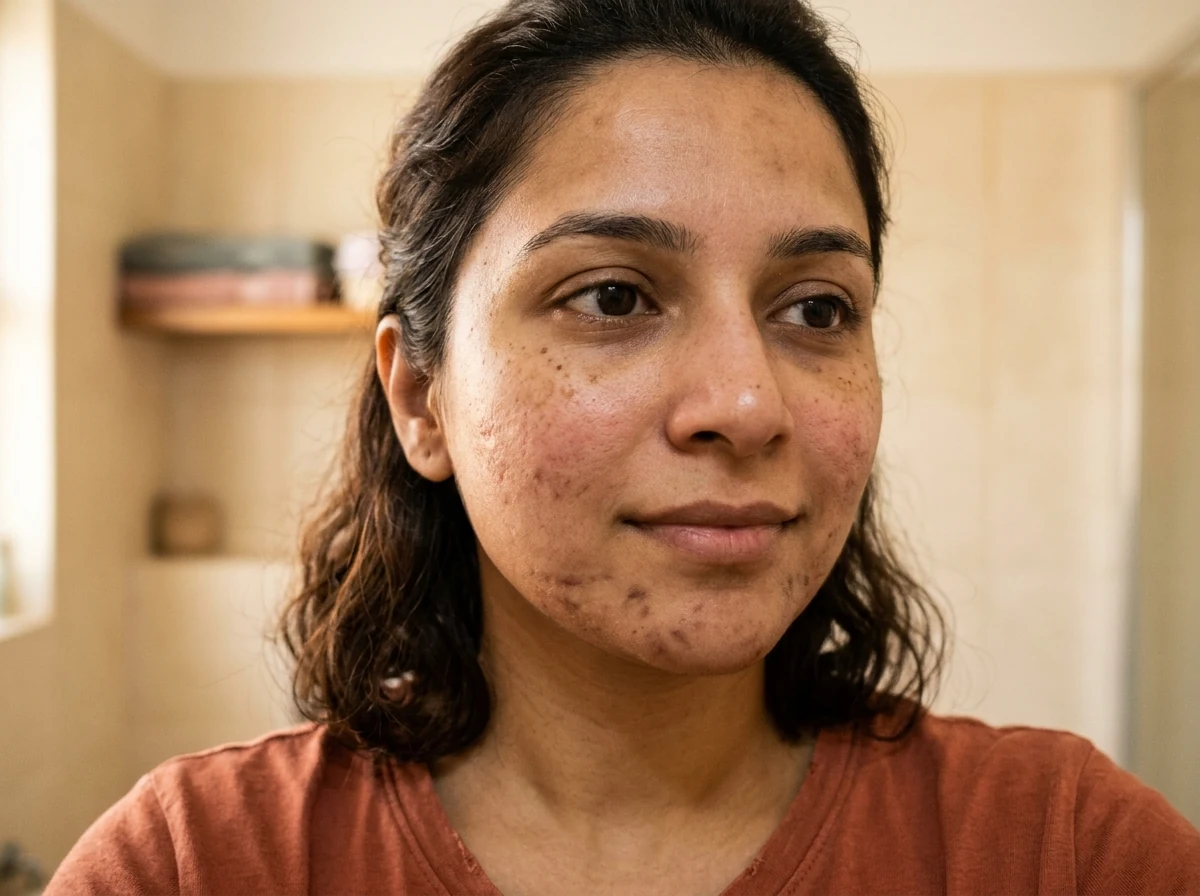
Indian woman with visible dark spots and post-acne marks on face — a common blemish concern in Indian skin
50,000+ Indians search blemish remedies monthly
6–8 Wks Average timeline to notice real fading

What Are Blemishes on Face? The 5 Types Common in India

A blemish is simply everyday shorthand for anything unusual on your face — a sudden red bump before an interview, a cluster of blackheads on your nose, or that stubborn dark circle left behind three weeks after a pimple finally popped. Not every blemish needs the same fix.

For South Asian skin, the most common blemish is the flat brown or grey mark that lingers after a pimple disappears. In clinical dermatology, this is called post-inflammatory hyperpigmentation (PIH). Because our skin produces more melanin, any minor irritation triggers cells to leave pigment behind.

🟤
Type 1 · Post-Acne Marks
Dark Marks (PIH)
Flat brown or dark spots that remain after a pimple heals. The skin over-produces melanin during recovery, leaving a flat spot that takes 6 to 12 weeks to fade.
Extremely Common in India
🟫
Type 2 · Hormonal Patches
Melasma
Wider, symmetrical patches of brown or grey pigmentation across the cheeks, bridge of nose, and forehead. Driven by sun exposure and hormonal shifts like PCOS or pregnancy.
Needs Dermatologist Care
⚫
Type 3 · Clogged Pores
Blackheads & Whiteheads
Non-inflamed comedones formed when sebum and dead cells plug hair follicles. Blackheads turn dark when exposed to air; whiteheads stay sealed under the skin.
Very Common
🔴
Type 4 · Inflamed Bumps
Papules & Pustules
Tender red bumps (papules) or bumps with visible white pus centers (pustules). Squeezing these causes deep tissue irritation and almost guarantees a stubborn dark spot.
High Risk for Marks
〰️
Type 5 · Texture Changes
Pitted Acne Scars
Permanent indentations (ice-pick, boxcar, or rolling scars) or raised tissue marks caused by loss of collagen after severe cystic acne. Serums cannot fill these in.
Requires Clinical Procedures
6–8 Wks Average timeline for fresh superficial marks to lighten with targeted actives
3–6 Mo Timeline for deeper, older pigment deposits without in-clinic assistance
SPF 50 Daily morning sunscreen is required to prevent UV rays from darkening marks
Dermatologist Clarification

Many people mistake dark spots for scars. A flat dark spot is simply pigment sitting in the epidermis or upper dermis — it can fade completely. A true scar involves structural changes to the skin tissue that you can feel with your fingertip.

Why Does Indian Skin Develop So Many Blemishes?

If you have lived through a humid August in Mumbai or Kolkata, you know how sweat and excess sebum turn your T-zone into an oil slick by midday. In dry Delhi winters, sudden barrier cracking triggers irritation. Here is why Indian skin gets hit from multiple angles at once:

🧬
Active Melanin Response in South Asian Skin
Our skin contains melanocytes that respond strongly to any trauma. Whether it is an acne breakout, insect bite, or accidental scratch, the healing process prompts pigment cells to produce excess melanin right at the injury site.
☀️
High Year-Round Ultraviolet (UV) Radiation
Sunlight triggers melanogenesis. When you step outdoors — or even sit by an open window — without sun protection, UV rays re-activate pigment production inside fresh marks, making them noticeably darker within days.
⚖️
Hormonal Swings and Polycystic Ovarian Syndrome (PCOS)
Elevated androgens stimulate the sebaceous glands to produce thicker, stickier oil. This triggers recurring cycles of cystic acne along the jawline and chin, producing fresh dark marks every month.
🏙️
Urban Particulate Pollution and High Humidity
Fine dust (PM 2.5) binds with facial sebum and sweat, clogging pores and generating oxidative stress that worsens surface inflammation and weakens the natural barrier.
🍚
Dietary Spikes in Blood Sugar and Insulin
Refined carbohydrates and sugary snacks cause rapid surges in insulin and insulin-like growth factor (IGF-1), which prompts oil glands to work in overdrive and inflames acne lesions.
🫳
Picking, Scratching, or Squeezing Pimples
Popping a pimple pushes bacteria deeper into the pore, ruptures delicate capillaries, and increases melanin deposition by up to three times compared to letting the spot heal naturally.
Home Remedy Danger

Avoid applying raw lemon juice, garlic paste, or household baking soda to blemishes. These home hacks disrupt skin pH, strip away moisture, and cause severe irritant contact dermatitis that leaves behind dark patches far worse than the original pimple.

The Best Ingredients for Blemish Skin & Dark Marks

Rather than buying random products based on social media trends, look for active ingredients with proven clinical backing for reducing inflammation and regulating melanin synthesis.

Niacinamide (2% to 5%) Top Recommendation

Blocks the transfer of pigment packets (melanosomes) from melanocytes into surrounding skin cells. Also soothes redness and regulates surface oiliness without causing peeling.

Ideal for: Daily maintenance, fresh pink or brown marks, oily complexion

Alpha Arbutin (1% to 2%) Strong Support

A safe derivative that inhibits tyrosinase, the main enzyme responsible for melanin production. It lightens dark marks gradually without the safety concerns associated with hydroquinone.

Ideal for: Stubborn dark brown marks, sun spots, persistent PIH

Azelaic Acid (10% to 15%) Multi-Targeting

Acts on two fronts simultaneously: it suppresses acne bacteria to prevent fresh breakouts and selectively inhibits abnormal pigment-producing cells to clear leftover marks.

Ideal for: Concurrent breakouts and marks, rosacea, sensitive skin

Succinic Acid (2%) Emerging Active

A gentle antimicrobial and anti-inflammatory agent that calms inflamed pimples without drying out surrounding tissue. Ideal for tender bumps before they leave marks.

Ideal for: Spot application on active red bumps, sensitive skin

Salicylic Acid (1% to 2%) Pore Cleanser

An oil-soluble beta hydroxy acid (BHA) that penetrates inside oily pores to loosen sebum, dead cells, and debris, preventing future blemishes from developing.

Ideal for: Blackheads, whiteheads, enlarged pores, oily T-zone

Vitamin C (3-O-Ethyl Ascorbic Acid) Morning Brightener

Neutralizes free radicals from pollution and UV light, promotes collagen renewal, and enhances the photoprotective capability of your daytime sunscreen.

Ideal for: Overall radiance, dull skin, fresh superficial spots

Adapalene (0.1% Gel) Cellular Renewal

A third-generation topical retinoid that normalizes the turnover of skin cells, stops microcomedones from forming, and speeds up the shedding of pigmented surface cells.

Ideal for: Comedonal acne, long-term texture smoothing, adult acne

Tranexamic Acid (3% to 5%) Pigment Inhibitor

Slows the chemical messaging between keratinocytes and melanocytes triggered by sun exposure. Frequently recommended alongside azelaic acid for melasma.

Ideal for: Hormonal melasma patches, stubborn post-inflammatory marks

Golden Rule for Actives

More is not better. Introducing three new strong serums simultaneously almost always compromises your skin barrier, causing more breakouts and deeper pigmentation. Pick one primary active for 4 weeks before making changes.

Succinic Acid Blemish Treatment: Is It Worth the Hype?

Searches for succinic acid blemish treatments spiked by over 900% in India lately, mostly driven by viral pharmacy videos. Think of succinic acid as the calm older cousin to benzoyl peroxide. While benzoyl peroxide attacks bacteria like a sledgehammer — often leaving dry, peeling patches behind — succinic acid works quietly without wrecking your moisture barrier.

Ingredient Breakdown

What Does Succinic Acid Actually Do?

Succinic acid is a naturally occurring dicarboxylic acid found in amber and sugarcane, produced commercially through clean bio-fermentation. It provides gentle antibacterial defense without aggressive peeling.

🎯
Inhibits Breakout Bacteria: Acts on Cutibacterium acnes membranes to reduce bacterial counts without developing antibiotic resistance.
💧
Protects Barrier Hydration: Unlike benzoyl peroxide or high-strength salicylic acid, succinic acid does not cause redness, flaking, or that uncomfortably tight feeling.
⚡
Rapidly Reduces Swelling: Dabbed directly on a tender red bump, it helps flatten the inflammation within 24 to 48 hours.
⚠️
Important Limitation: Succinic acid is not an exfoliating acid — it will not dissolve blackheads or fade dark brown spots from months ago.

When to Choose Succinic Acid

✅
You Have Sensitive Skin That Reacts to Benzoyl Peroxide
If standard acne spot gels leave your skin peeled, red, or itching, succinic acid offers a soothing, barrier-safe alternative.
✅
You Need to Calm a Painful Pimple Before an Event
Apply a small dab 2 to 3 times a day on the raised bump to decrease swelling without making the area flake under makeup or sunscreen.
❌
Your Main Goal Is Fading Dark Marks
Succinic acid has minimal impact on melanin synthesis. For fading dark patches, choose azelaic acid, alpha arbutin, or niacinamide instead.

Blemish Removal Creams: Realistic Expectations & Product Analysis

Almost everyone in India who has browsed Nykaa or Amazon has seen the Mamaearth Bye Bye Blemishes bottle. Advertised heavily across social media, it promises clear, spot-free skin. But how does it hold up when a dermatologist inspects the bottle? Let us break down the ingredients honestly.

Mamaearth Bye Bye Blemishes Face Serum & Cream
★★★☆☆ 3.2 / 5 — Mild Everyday Brightener

Detailed Look at Mamaearth Bye Bye Blemishes

Key Actives: Alpha Arbutin, Glycolic Acid, Lactic Acid, Mulberry Extract, Vitamin C

✓ Advantages
  • ✅ Uses alpha arbutin, a recognized tyrosinase inhibitor that supports mark lightening.
  • ✅ Mild blend of AHAs (glycolic and lactic acid) gently loosens dull surface cells.
  • ✅ Lightweight fluid texture that absorbs quickly without feeling greasy in humid weather.
  • ✅ Readily accessible at retail outlets across India at an affordable price point (~₹449).
✗ Considerations & Drawbacks
  • ⚠️ Active ingredient percentages are modest — progress requires at least 8 to 10 weeks of daily application.
  • ⚠️ Contains fragrance, which can occasionally irritate sensitive or reactive skin types.
  • ⚠️ Will not repair deep dermal melasma, post-inflammatory erythema, or structural scars.
  • ⚠️ AHAs raise sun sensitivity — skipping sunscreen will cause marks to become darker.
Clinical Perspective

Mamaearth Bye Bye Blemishes can be a practical introductory product for someone with minor, fresh surface spots who wants a gentle formula. However, if your dark marks are deep or chronic, a fragrance-free formula with verified percentages (such as 2% Alpha Arbutin or 10% Azelaic Acid) paired with strict daily sun protection will deliver clearer, more dependable outcomes.

A Dependable Morning & Night Routine for Blemish-Prone Skin

A successful skincare routine does not need eight complicated steps. Consistency with a few gentle, targeted formulas produces far better results than constantly switching products.

☀️ Morning Routine (Protection & Brightening)

1
Gentle Low-Foaming Cleanser
Wash with lukewarm water and a mild face wash. Avoid harsh scrubbing beads that micro-tear skin and provoke melanocyte activity.
2
Antioxidant Support (Niacinamide or Vitamin C)
Apply 3 to 4 drops of a 5% niacinamide or vitamin C serum to damp skin. This shields cells from environmental pollution and stops pigment transfer.
3
Lightweight Gel Moisturizer
A light, non-comedogenic gel-cream with hyaluronic acid or glycerin hydrates the skin barrier so treatment actives work smoothly.
4
Broad-Spectrum Sunscreen (SPF 50, PA++++)
The most crucial step in any blemish routine. Apply two finger-lengths across your face and neck. Without daily sun defense, marks simply will not fade.
Tip: Look for matte or gel sunscreens suited to Indian humidity

🌙 Evening Routine (Repair & Treatment)

1
Gentle Cleanse (Double Cleanse if Wearing Sunscreen)
Use micellar water or a gentle cleansing oil to lift away sunscreen, grime, and city pollution, followed by your everyday cleanser.
2
Targeted Active (Azelaic Acid or Alpha Arbutin)
Smooth a pea-sized amount of azelaic acid (10%) or alpha arbutin (2%) over areas prone to marks. This inhibits excess pigment formation overnight.
3
Spot Treatment on Raised Bumps (If Needed)
Dab a tiny drop of succinic acid gel or benzoyl peroxide on any active pimples. Keep the product confined to the bump itself.
4
Barrier-Supporting Night Cream
Seal in your actives with a soothing moisturizer containing ceramides or cica (centella asiatica) to support the skin repair process.
EXPERT VIDEO GUIDE

Dermatologist Guide: Fading Dark Spots and Facial Blemishes

Watch board-certified dermatologists explain how hyperpigmentation develops, how to layer brightening actives, and how to avoid everyday mistakes.

Which Blemish Care Plan Fits Your Skin?

Select the option that best reflects what you see on your skin today for immediate, practical suggestions.

🟤
Flat Dark or Brown Spots
Breakouts have healed, but flat brown spots remain across the cheeks or chin without any raised texture.
🟫
Patchy Brown Discoloration
Broader, symmetrical patches on both cheeks, forehead, or above the lip that darken when exposed to sun.
🔴
Active Red Pimples & Pores
Tender red bumps, whiteheads, or blackheads currently active and flaring up on the face.
〰️
Indented Pits or Scars
Physical texture changes, small hollow pits, or rolling unevenness left behind by past breakouts.
Recommended Action Plan →

Frequently Asked Questions on Facial Blemishes

A blemish is an everyday word for any noticeable spot, mark, or discoloration on your skin. This includes red pimples, dark spots left behind after acne, blackheads, whiteheads, or patches of pigmentation like melasma. In Indian skin, flat dark marks from old pimples are by far the most frequent complaint.
Indian skin naturally produces higher amounts of melanin. Whenever there is local inflammation from a breakout or a picked pimple, pigment cells react by depositing excess color in the healing area. Dermatologists refer to this as post-inflammatory hyperpigmentation (PIH). Strong year-round sunlight makes these spots darker and slow to fade.
Succinic acid is a gentle compound derived from amber or natural fermentation. It curbs acne-causing bacteria and calms swelling on tender red pimples without drying out the skin surface. While excellent as a mild spot treatment for active bumps, it does not dissolve blackheads or lighten older dark spots.
Over-the-counter blemish removal creams and serums with ingredients like alpha arbutin, niacinamide, and azelaic acid gradually lighten surface spots over 6 to 12 weeks. However, deeper marks or melasma usually need medical-grade prescriptions or in-clinic treatments like chemical peels.
The Mamaearth Bye Bye Blemishes formulation includes beneficial ingredients like alpha arbutin, glycolic acid, and mulberry extract that help smooth surface texture and fade fresh spots. But results demand regular use over 8 weeks alongside daily sunscreen. It will not clear deep hormonal melasma or pitted acne scars.
The fastest approach combines calming the active pimple early to avoid deep marks, applying a proven pigment-fading active like azelaic acid or niacinamide, and wearing broad-spectrum SPF 50 sunscreen every morning without fail. Sun protection stops UV rays from darkening healing skin.
Consult a doctor if your dark marks remain unchanged after 3 months of consistent care, if you have ongoing painful cysts along the jawline, if pigmentation appears in broad symmetrical patches (melasma), or if you notice true skin indentations and scars.