
Why Chin Breakouts Are Different From Forehead Acne
Your chin behaves differently from the rest of your face. Explore the four distinct biological and habit-based mechanisms driving lower-face congestion.
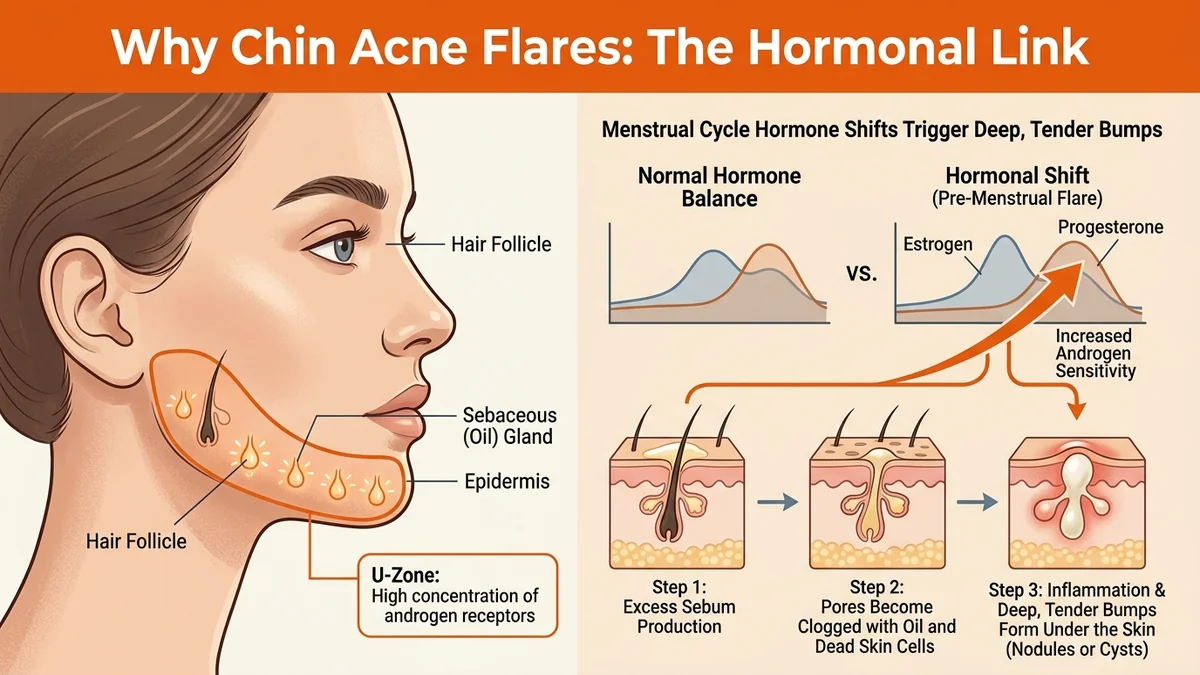
The Hormone Antenna Effect
The oil glands on your chin and jawline have an unusually high density of androgen receptors. Even small natural hormonal fluctuations before your menstrual period prompt these glands to produce thick, sticky sebum that creates blind, tender bumps under the skin.
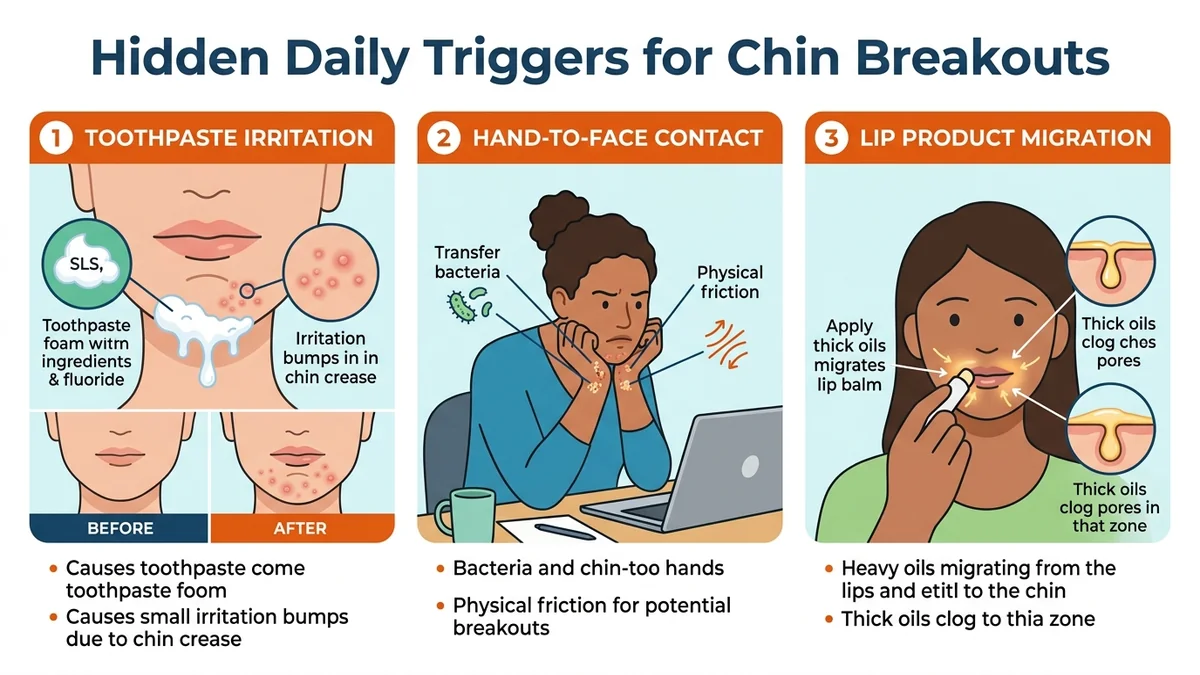
Toothpaste Foam & Habit Friction
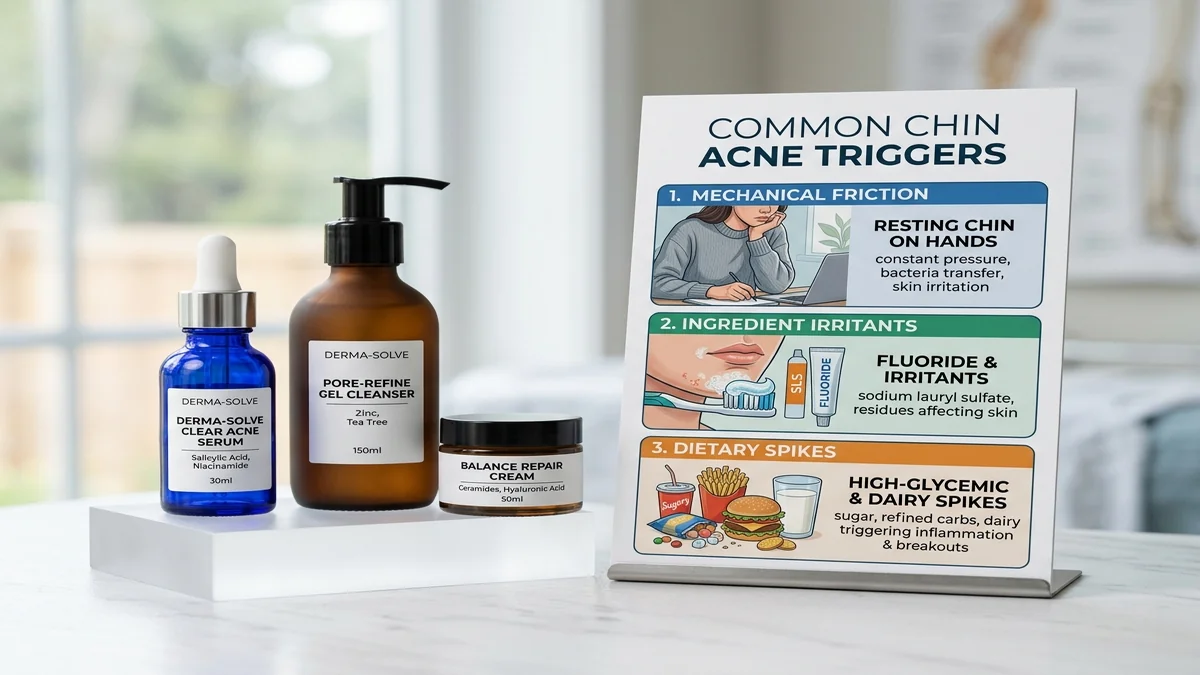
Sodium Lauryl Sulfate (SLS) and strong mint oils in foaming toothpaste frequently drip into the chin crease during brushing, irritating the barrier. Meanwhile, resting your chin on your hands during work or study transfers bacteria and applies continuous friction.
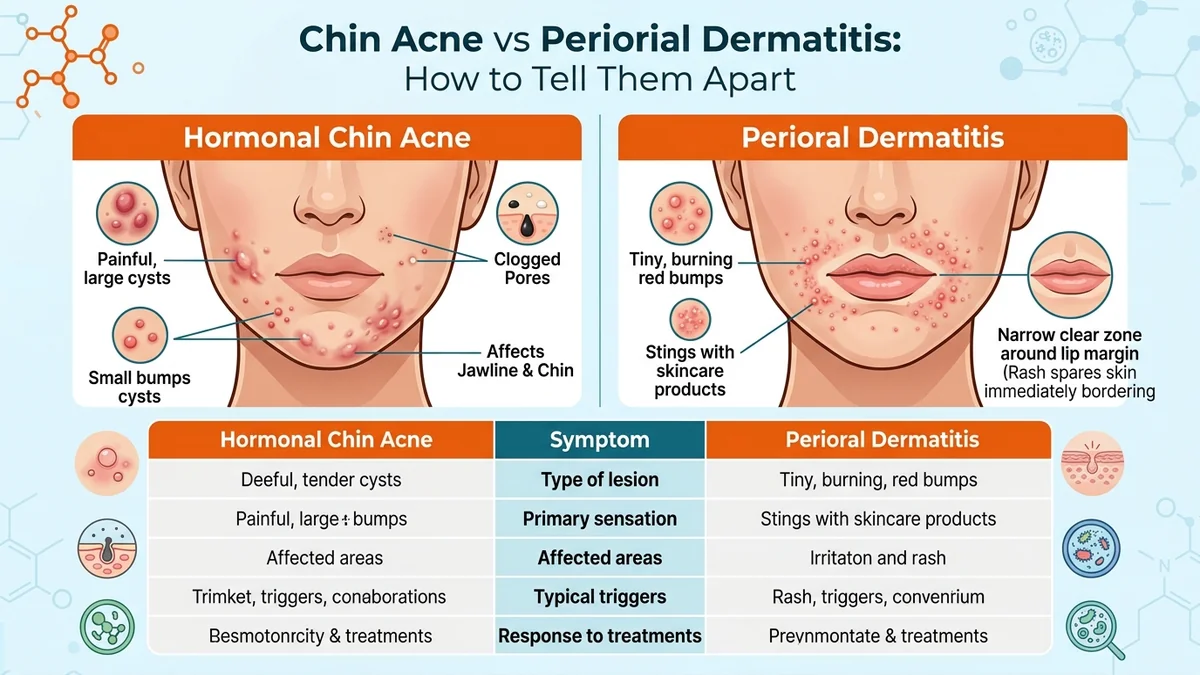
Chin Acne vs. Perioral Dermatitis
Not all chin bumps are acne. Perioral dermatitis looks like clusters of tiny, burning red bumps around the mouth that sting when applying skincare products, characteristically sparing a narrow ring around the lip margin. Standard acne acids worsen this condition.
Proven Skincare Actives That Work
Because chin skin has a thinner barrier than the forehead, heavy physical scrubs cause severe micro-tears. Dermatologists recommend combining gentle pore-clearing salicylic acid or benzoyl peroxide with skin-calming azelaic acid to prevent dark marks.
How Dermatologists Treat Chin & Hormonal Acne
Watch board-certified dermatologist Dr. Noopur Jain explain why painful hormonal pimples concentrate along the chin and jawline and how to calm them.
Mapping Your Lower Face Breakout Zones
Different zones on your lower face reflect distinct triggers. Use this clinical cheat sheet to identify where your bumps originate:
| Breakout Location | Common Underlying Triggers | Recommended Topicals | Habit Fix to Make Today |
|---|---|---|---|
| Upper Chin / Crease Under lower lip | Toothpaste foam residues (SLS, fluorides), heavy lip balm oils, saliva pooling during sleep. | Salicylic Acid 2% or mild cleanser | Always wash your face after brushing teeth. Wipe lip corners gently before bed. |
| Central & Lower Chin Mental prominence | Luteal phase hormone spikes, leaning chin on hands during desk work or video calls. | Benzoyl Peroxide 2.5% & Adapalene 0.1% | Keep hands off your face during work. Clean your smartphone screen daily with alcohol wipes. |
| Mandibular Jawline Edges along jaw | Systemic androgen sensitivity, helmet straps, tight face masks, dairy-heavy tea or sweets. | Azelaic Acid 15% & gentle wash | Wash helmet chin straps weekly. Audit daily dairy consumption if breakouts persist. |
| Corners of the Mouth Perioral area | Perioral dermatitis, over-exfoliation from strong acids, topical steroid cream rebound. | Gentle Ceramide Gel (Zero harsh acids) | Stop all active acids immediately. Switch to an SLS-free, fluoride-safe oral hygiene paste. |
Interactive Chin Routine Builder
Select your breakout type and skin sensitivity to receive a customized morning and evening routine:
Evening Routine: Cleanse gently. Apply a pea-sized amount of Adapalene 0.1% across the chin area on alternate nights. Follow with an oil-free ceramide fluid to buffer against dryness.
3 Common Chin Acne Mistakes That Leave Dark Marks
Treating lower-face bumps aggressively often backfires on melanin-rich Indian skin types. Watch out for these three frequent missteps:
Squeezing Deep Blind Cysts
Hormonal chin bumps sit deep in the dermis without a surface pore opening. Squeezing ruptures the delicate follicle walls internally, creating severe inflammation and long-lasting dark hyperpigmentation.
Washing Face Before Brushing
If you cleanse your face first and brush teeth afterwards, foamy residue containing SLS and fluoride drips right onto freshly cleaned chin skin, dissolving barrier lipids and causing stubborn crease pimples.
Applying Heavy Cold Creams
Using rich, occlusive moisturizers or coconut oil on the lower face traps sebum inside androgen-stimulated pores. Opt for lightweight gel-creams formulated with glycerin, hyaluronic acid, or squalane.
Medically Reviewed by Dr. Lipy Mehta
Consultant Dermatologist & Aesthetic Physician • MBBS, MD Dermatology.
"Chin breakouts are among the most frustrating complaints we see in clinical practice because they are heavily influenced by internal hormones and daily micro-friction. The key to long-term clearance is pairing gentle topical barrier care with consistent habit adjustments, rather than aggressively burning the skin with harsh scrubs."
Frequently Asked Questions About Chin Acne
Clear, practical answers to help you understand stubborn chin bumps and choose the right daily care.