
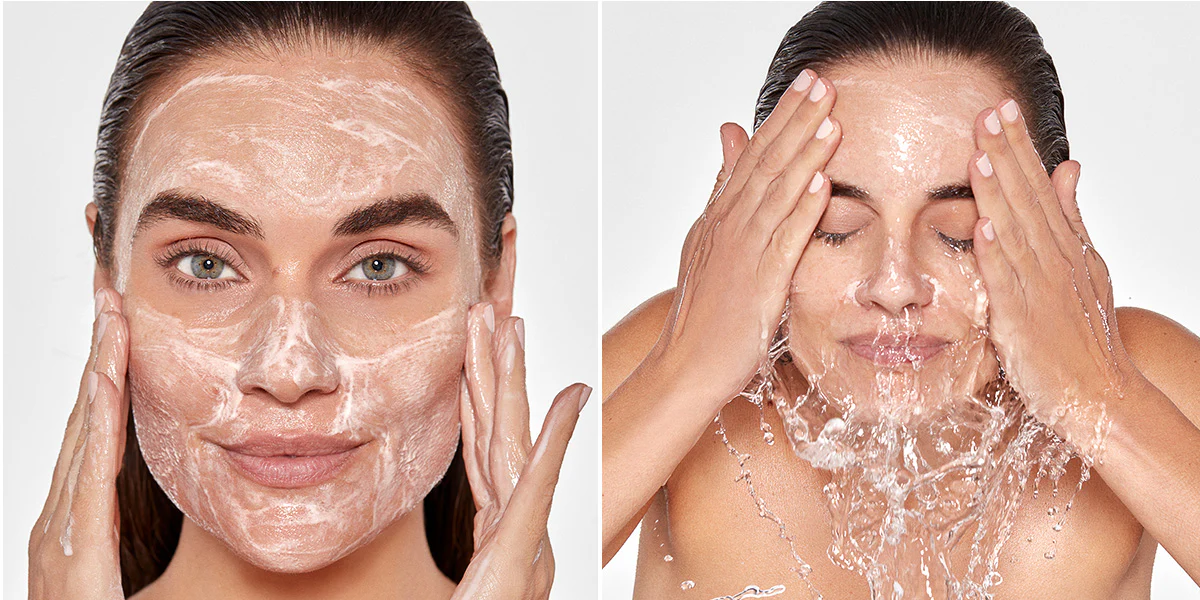
1. Do You Actually Need Double Cleansing? Who Should Skip It
Double cleansing is a method designed to dissolve oil-soluble impurities like sebum, water-resistant sunscreen, and makeup (first cleanse) before washing away water-soluble residues like sweat and dust (second cleanse). While highly popular, it is not a biological necessity for everyone.
Signs your first cleanser is not rinsing clean:
- You notice a white, waxy film left on your skin after washing.
- Wiping your face with a toner pad after cleansing reveals yellow-brown sunscreen or makeup residue.
- You experience persistent, non-inflammatory tiny forehead bumps (closed comedones) that do not resolve with standard washes.
When not to double cleanse (Who should skip it):
- Barrier Damage: If your skin currently experiences active burning, stinging, scaling, or flaking, skip double cleansing. Multiple washing steps will escalate irritation.
- Minimal Sunscreen Days: If you only wore a light, water-soluble chemical sunscreen indoors, a single water-based cleanser is sufficient.
- Dry or Rosacea-Prone Skin: These skin types are highly prone to trans-epidermal water loss (TEWL); double washing can strip away essential intercellular lipids.
2. The Indian Sunscreen, Sweat, & Pollution Challenge
The Indian climate features hot, humid summers and monsoons that force cosmetic formulators to create heavy-duty, water-resistant products. This presents unique skin challenges:
- Silicone-Heavy Gel Sunscreens: Popular matte sunscreens in India use silicones (like dimethicone or cyclopentasiloxane) to provide sweat resistance. These form a hydrophobic film that resists standard water-based gel cleansers.
- Sweat and Sebum Mix: In extreme humidity (e.g. Mumbai, Chennai, Kolkata), sebum output increases. When mixed with atmospheric particulate pollution and sunscreen film, it forms a sticky, pore-clogging paste.
- Hard Water Aggravation: Many Indian high-rise apartments utilize hard ground water containing high levels of calcium and magnesium. Hard water minerals react with soap surfactants, leaving a hard-to-rinse residue on the skin that increases tightness and barrier friction.
- Over-Washing Risk: In an effort to feel clean, many wash their faces 3-4 times a day during summer. This strip-and-compensate cycle makes oily skin produce even more sebum.
3. Step-by-Step Method & Timing: How to Cleanse Safely
To avoid stripping your skin barrier, your double cleansing process must be precise, particularly during the emulsification step.
Double Cleansing Routine for Indian Summer Nights:
Always perform your double cleanse during your evening (PM) routine. Never double cleanse in the morning, as it will strip away overnight lipid repair. Morning skin only requires a single gentle wash or a simple water rinse.
4. Micellar vs. Cleansing Oil vs. Balm Decision Table
Use the matrix below to match your first-cleanse agent to your skin profile and makeup/sunscreen usage:
| First Cleanse Agent | Best For | Acne Safety | Pros & Cons |
|---|---|---|---|
| Micellar Water | Sensitive skin, light sunscreens, daily indoor use | 🟢 High (Water-based surfactants, leaves no residue) | Easy to use, non-greasy; requires cotton pad friction which can irritate active red pustules. |
| Cleansing Oil | Water-resistant physical sunscreens, heavy sebum plugs | 🟡 Moderate (Must be emulsified completely) | Dissolves sebum efficiently; can trigger breakouts if mineral or essential oils are left behind. |
| Cleansing Balm | Heavy long-wear makeup, dry winter skin | 🔴 Low (Avoid if prone to closed comedones) | Highly travel-friendly; contains solid waxes (like polyethylene) that can clog acne-prone pores. |
Decision Rules (Safe-Active Matcher):
- "If you wear only indoor, water-soluble sunscreen → single cleanse with a gentle wash is enough."
- "If you wear heavy silicone, water-resistant SPF → use micellar water or lightweight emulsifying oil first."
- "If you get tiny forehead bumps → avoid waxy cleansing balms entirely."
- "If you use prescription acne medications → pair your first cleanse with a non-active, soap-free second cleanser."
- "If your skin feels tight or dry → reduce your second cleanser strength or frequency."
5. Acne Medication Compatibility
If you are using active dermatologist-prescribed acne treatments, your cleansing steps must adapt to prevent severe skin peeling:
| Active Medication | Double Cleanse Compatibility | Dermatological Recommendation |
|---|---|---|
| Adapalene / Tretinoin | ⚠️ Cautious (Limit to makeup/heavy SPF days) | Use a gentle, fragrance-free micellar water followed by a soap-free, non-active second cleanser (e.g. Cetaphil). Avoid salicylic acid washes. |
| Benzoyl Peroxide (BPO) | ⚠️ Cautious (Risk of dryness) | Do not use an active BPO second wash immediately after oil cleansing. Keep the second wash mild to prevent red, dry patches. |
| Salicylic Acid (BHA) | 🟢 Safe (For oily skin types) | Excellent combination. An oil first cleanse melts sebum plugs, enabling the Salicylic Acid wash to penetrate pores deeper. |
| Oral Isotretinoin | 🚫 Strictly Avoid | Oral isotretinoin severely reduces sebum production. Skin barrier is dry; double cleansing will trigger severe flaking and burning. Use a single hydrating cream cleanser. |
Best second cleanser types when using active treatments:
- If using retinoids (Adapalene/Tretinoin): Pair with a soap-free, pH-balanced cream or gel wash (e.g. Episoft OC Cleansing Gel) to prevent over-stripping.
- If dealing with severe active acne: Avoid foaming washes containing high levels of sodium lauryl sulfate (SLS), which strip the skin barrier.
6. Product Selection & Checklist for Indian Skin
Ingredients acne-prone skin should be cautious with:
When selecting cleansing oils or balms, scan the ingredient label for these highly comedogenic oil bases and waxy binders:
- Isopropyl Myristate / Isopropyl Palmitate: Highly comedogenic esters that trigger rapid pore blockages.
- Ethylhexyl Palmitate: A common synthetic ester in cleansing balms that can block oily skin pores.
- Coconut Oil / Cocos Nucifera Oil: A heavy, comedogenic oil that should not be used on acne-prone skin.
- Synthetic Waxes (Polyethylene): Used as solidifying agents in cleansing balms; can leave a waxy film if not thoroughly rinsed.
Budget Indian-Market Pharmacy & Skincare Options:
You do not need luxury imports. These stable, dermatologist-trusted Indian market options are effective:
- First Cleanse (Micellar Water): Garnier Micellar Water Pink (fragrance-free, budget-friendly), Bioderma Sensibio H2O (dermatology gold standard for sensitive skin).
- First Cleanse (Lightweight Oil/Balm): Plum Chamomile Cleansing Balm (emulsifies cleanly), Conscious Chemist Lipid Wash.
- Second Cleanse (Gentle Gel/Foam): Cetaphil Oily Skin Cleanser, Sebamed Clear Face Foam, Episoft OC Cleansing Gel (ideal for retinoid users).
7. Troubleshooting: Breakouts, Tightness, & Closed Comedones
What to do if oil cleansing breaks you out:
If you experience tiny bumps or whiteheads within a week of starting oil cleansing, follow these diagnostic steps:
- Check the ingredient list to ensure it is free from ethylhexyl palmitate, coconut oil, and fragrance.
- Ensure you are massaging the oil for no longer than 60 seconds (extended massage pushes oil back into pores).
- Increase your emulsification time to 15-20 seconds before rinsing.
- If breakouts persist, swap your cleansing oil for a fragrance-free micellar water. Micellar waters do not leave oil films behind.
Tightness and Hard Water Interactions:
If your skin feels dry, tight, or "squeaky clean" after double washing, your barrier is being stripped. Reduce your second cleanser concentration or switch to a non-foaming hydrating face wash. In hard water areas, use a final rinse of filtered or drinking water to prevent mineral buildup on your skin.
8. 7-Day Starter Routine for Indian Summer Nights
If you are new to double cleansing, follow this conservative 7-day schedule to monitor skin tolerance:
- Day 1 & Day 2 (Introduction): Use Micellar Water (first cleanse) followed by a gentle gel cleanser. Perform only on PM.
- Day 3 (Barrier Check): Monitor for any redness, flaking, or tightness. If skin feels dry, pause double cleansing and perform a single cleanse only.
- Day 4 & Day 5 (Exfoliation integration): If your skin is oily and tolerating the wash, use a Salicylic Acid second wash in the PM after your first cleanse.
- Day 6 & Day 7 (Maintenance): Continue double cleansing only on days you wear sweat-resistant sunscreen or spend time outdoors in heavy traffic. Keep indoor days to a single gentle wash.
9. Frequently Asked Questions
Yes, but only if you wear heavy, water-resistant sunscreen, makeup, or are exposed to high outdoor pollution. If you stay indoors or have dry, peeling skin from acne medications like tretinoin or benzoyl peroxide, daily double cleansing can over-strip your barrier.
Yes, micellar water is often safer for oily, highly acne-prone skin because it contains water-soluble surfactants that leave zero oily residue, reducing the risk of closed comedones compared to heavy cleansing oils.
Yes. If your cleansing oil or balm contains highly comedogenic base ingredients (like ethylhexyl palmitate or coconut oil) or if you fail to emulsify and wash it off completely with a second cleanser, it will trap sebum and cause closed comedones.
No. Your skin does not accumulate heavy environmental pollutants or waterproof sunscreens while you sleep. A single gentle cleanser or a simple water rinse in the morning is sufficient to preserve your skin's natural moisture barrier.
You only need it if the sunscreen is highly water-resistant, silicone-based, or physical (containing zinc oxide/titanium dioxide). Lightweight chemical sunscreens designed for daily indoor use can be effectively removed with a single high-quality gel cleanser.
Use a water-based gel or foaming cleanser. If you have active breakouts and oily skin, a second cleanser containing 1-2% Salicylic Acid is ideal. If your skin is sensitive or on acne medication, use a soap-free, non-active hydrating wash.
It can be risky. Many cleansing balms contain waxy solidifying agents and synthetic esters (like ethylhexyl palmitate) that can leave a stubborn film on oily skin. If you have active acne or closed comedones, micellar water is a safer choice.
Limit your first cleanse massage to 45-60 seconds. Massaging the oil for too long can push dissolved sunscreen, grime, and makeup back into your pores, triggering irritation and breakouts.
Track Your Skin Progress with AI
Not sure whether your double cleansing is leaving residue, or if you're over-stripping your barrier?
Use the MyMirror AI scan to track redness, active breakouts, oiliness-looking shine, and texture changes over 2 weeks after changing your cleansing routine.
Start Your Free AI Skin Scan NowReferences & Peer-Reviewed Sources
- Zaenglein AL, Pathy AL, Schlosser BJ, et al. Guidelines of care for the management of acne vulgaris. Journal of the American Academy of Dermatology. 2016;74(5):945-973.
- Indian Association of Dermatologists, Venereologists and Leprologists (IADVL) Task Force Guidelines on Cleansing and Skincare in Fitzpatrick Skin Types III-VI (2022).
- Draelos ZD. The science behind skincare: Cleansers. Journal of Cosmetic Dermatology. 2018;17(2):101-107.