
Dark Spots vs. True Acne Scars: Knowing the Difference
Almost everyone uses the word "scar" to describe any mark left behind after body acne heals. But in clinical dermatology, dark marks and true acne scars are two completely different skin issues requiring totally different treatments.
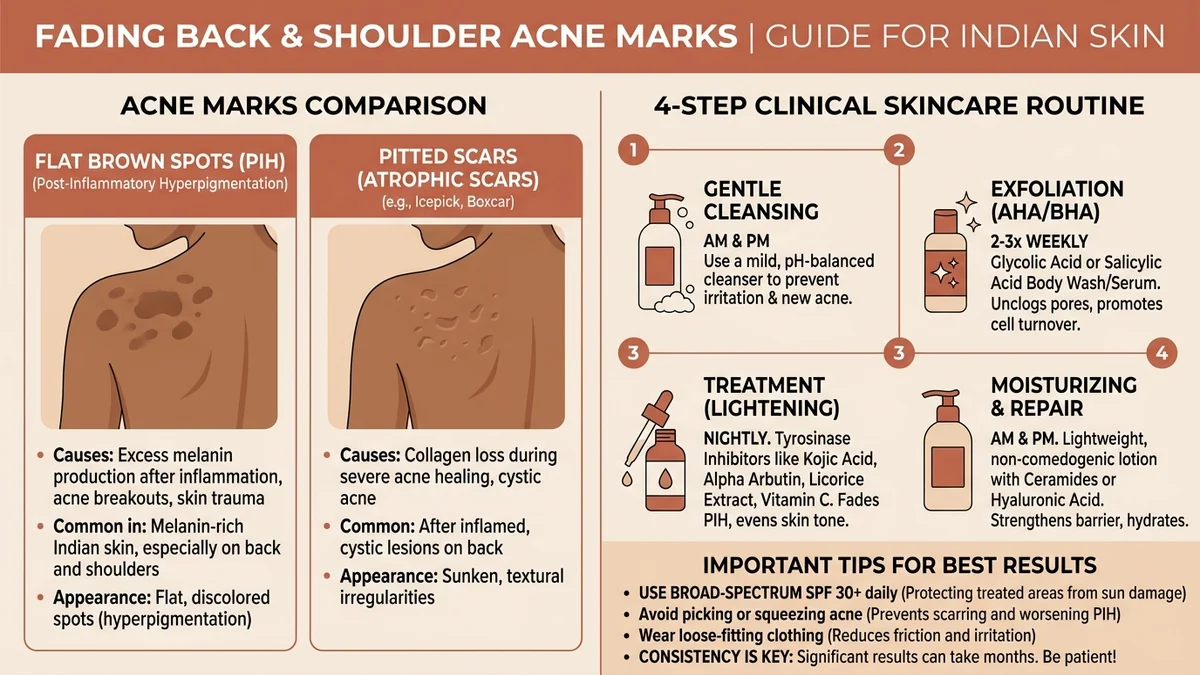
Flat Brown Marks (PIH)
What you feel: Completely smooth. When you run your hand across your back, you feel zero texture difference—only normal, flat skin.
What it is: Post-inflammatory hyperpigmentation. When a pimple gets inflamed, your pigment cells produce extra melanin as a defense mechanism. This pigment gets trapped in the upper skin layers.
Will it fade? Yes, 100%. With consistent topical exfoliants and pigment inhibitors, flat brown spots fade completely back to your natural skin tone.
True Acne Scars (Textural)
What you feel: Sunken pits, ice-pick indentations, rolling dips, or hard raised bumps that you can clearly feel with your fingertips.
What it is: Structural damage to the dermis. Severe inflamed cysts destroy collagen as they heal, leaving a hollow indentation, or produce excess chaotic collagen (keloids).
Will creams fix it? No. No body lotion or serum can regrow lost collagen to fill a pit. True scars require in-clinic dermatologist procedures like fractional lasers, subcision, or microneedling.
Why Do Back Marks Take 3x Longer to Fade Than Face Marks?
If you have ever had a pimple mark on your cheek, you probably noticed it fading noticeably within 3 to 4 weeks. But when you get a dark spot on your back or shoulders, it seems to sit there for months without budging. There are three anatomical reasons why back skin heals at a much slower pace:
Thicker Stratum Corneum (Skin Barrier)
The outer protective layer of skin on your back is two to three times thicker than facial skin (often 40 to 50 micrometers thick compared to 15 to 20 micrometers on the face). That means there are many more layers of dead, pigmented skin cells that must be shed before fresh, clear skin reaches the surface.
Slower Cell Turnover Rate (45–60 Days)
Your face has a fast metabolic turnover cycle, shedding and replacing its epidermis every 28 days. Skin on your upper back and shoulders renews itself at a much slower rate—taking 45 to 60 days per cycle. To see significant pigment clearance, your skin needs to go through at least two to three full turnover cycles.
Higher Melanin Activity in Indian Skin
South Asian skin tones naturally feature larger, more active pigment-producing units (melanosomes). Any inflammatory trigger—such as an active acne cyst, sweating under gym clothes, or picking at a scab—causes these units to deposit dense melanin caps that cling stubbornly to the surrounding cells.
The Loofah Mistake: Why Scrubbing Makes Dark Spots Worse
The most common instinct when someone sees dark spots on their back is to buy a stiff plastic loofah, a long-handled wooden body brush, or a gritty walnut scrub and scrub their back vigorously in the shower every morning.
Dermatologists across India warn that harsh mechanical scrubbing does not remove dark spots—it creates new ones. Chronic physical friction against melanin-rich skin triggers a condition called friction melanosis. When you rub hard with a rough sponge or loofah, you create microscopic tears in the skin barrier. Your skin interprets this as injury and responds by producing even more dark melanin, driving the pigment deeper into the lower dermis.
To make matters worse, damp plastic loofahs hanging in warm Indian bathrooms quickly collect bacteria and mold. Scrubbing with an old loofah spreads acne-causing bacteria across your shoulders, sparking fresh breakouts that leave behind fresh dark spots in an endless loop.
| Approach | What It Actually Does | Impact on Dark Spots | Verdict |
|---|---|---|---|
| Plastic Loofah or Bath Brush | Creates friction tears and micro-injuries on the skin | Triggers friction melanosis; makes dark spots darker | Stop Immediately |
| Abrasive Walnut or Apricot Scrubs | Scratches skin with jagged physical particles | Inflames active acne papules and ruptures pores | Avoid Entirely |
| Gentle Hands + Soft Cotton Cloth | Gently cleanses surface sweat without mechanical drag | Allows the skin barrier to calm down and heal | Doctor Recommended |
| Chemical Exfoliation (Glycolic Acid) | Dissolves the microscopic glue binding dead pigmented cells | Accelerates cell turnover and fades dark marks evenly | Gold Standard |
The 4-Step Clinical Fading Routine for Indian Skin
To clear back pigmentation safely, you need a two-pronged strategy: accelerate the shedding of old, pigmented dead skin cells on the surface, while stopping pigment cells underneath from making fresh melanin. Follow this evidence-based 4-step routine:

Step 1: Daily Gentle Cleansing (In the Shower)
Wash your back with a gentle, fragrance-free, pH-balanced foaming body wash. Use your bare hands to apply the lather over your shoulders and spine. If you still have active red pimples alongside dark marks, use a 1% to 2% salicylic acid body wash or a 2.5% benzoyl peroxide wash (such as Perobar) two to three times a week. Let the lather sit on your skin for 60 seconds before rinsing completely.
Step 2: Post-Shower Chemical Exfoliation (2–3 Evenings Weekly)
On dry skin at night, apply an alpha hydroxy acid (AHA) treatment. Glycolic acid is the gold standard because its small molecular size allows it to penetrate through thick back skin, gently ungluing dead cells and speeding up cell renewal.
Indian Pharmacy & OTC Options: Minimalist 8% Glycolic Acid Body Exfoliator or Glyco-6 / Glyco-12 Cream (applied in a thin layer across marked areas). Start two nights a week and gradually build up tolerance.
Step 3: Targeted Spot Brightening (Nightly)
To stop melanocytes from producing fresh brown pigment, apply a targeted tyrosinase inhibitor cream directly to stubborn dark marks.
Doctor-Recommended Actives: Look for creams containing Kojic Acid (2%), Azelaic Acid (10–15%), Alpha Arbutin, or Niacinamide (5%) (e.g., Kozimax Cream or Biluma Cream). These calm overactive pigment cells without bleaching or damaging healthy surrounding skin.
Step 4: Barrier Hydration & Sun Protection
Active exfoliating acids can dry out your skin barrier if you do not moisturize. Follow your treatments with a lightweight, non-comedogenic body lotion containing ceramides, hyaluronic acid, or colloidal oat. When wearing sleeveless tops or spending time outdoors, apply a broad-spectrum water-resistant sunscreen (SPF 30+) across your shoulders—UV rays trigger pigment cells to redarken spots instantly.
Dermatologist Video Guide: Back Acne & Dark Mark Prevention
In this video, consultant dermatologist Dr. Aanchal Panth MD explains why back breakouts develop, how to clear them with effective pharmacy washes, and the daily shower and gym mistakes that make marks worse:
Key Video Takeaways from Dr. Aanchal Panth
- The 60-Second Lather Rule: Medicated body washes (salicylic acid or benzoyl peroxide) must sit on your skin for at least 1 to 2 minutes so active ingredients penetrate pores before being rinsed away.
- Shower Sequence Matters: Rinse your hair shampoo and conditioner completely first, clip your hair up, and wash your back LAST to ensure no pore-clogging silicone residue lingers on your shoulders.
- Post-Workout Hygiene: Never sit in sweaty gym clothes or tight polyester fabrics after exercising. Wash your body within 15 minutes of working out.
Everyday Habits for Indian Weather: Clothes, Sweat & Sun
Managing body breakouts and dark spots in India requires adapting to high humidity, intense UV sunlight, and sweaty commutes. Here are four daily habits that make a dramatic difference:
The Cotton T-Shirt UV Myth
Many people believe a standard cotton t-shirt blocks all sunlight. In reality, a thin white summer cotton shirt provides an Ultraviolet Protection Factor (UPF) of only 5 to 7. Substantial UV-A radiation passes right through the weave, stimulating pigment cells across your shoulders.
What to do: If you are commuting or spending hours outdoors in direct sunlight, wear darker, denser weaves or apply sunscreen to your shoulders beneath thin shirts.
Heavy Backpack Friction
Carrying a heavy laptop bag or backpack during your daily commute creates constant pressure, heat, and friction against your upper spine and shoulder blades (acne mechanica). This friction drives melanin deeper into your skin and causes recurring dark clusters.
What to do: Loosen tight backpack straps, hold your bag on your lap during transit, and wear a breathable cotton layer against your skin.
Hair Conditioner Dripping on Back
Deep-conditioning hair masks, rich oils, and heavy silicone conditioners frequently wash down your back in the shower. These lipid-rich formulas coat your pores with a film that traps sweat and acne bacteria, sparking fresh bumps that turn into new dark marks.
What to do: Tilt your head forward or flip your hair over when rinsing conditioner, or wash your body as the very last step of your shower routine.
Synthetic Gym Clothes & Sweating
Tight polyester and spandex gym gear trap sweat and heat against your skin, encouraging bacterial and fungal proliferation across your chest and back. Letting dried sweat sit on your skin for hours guarantees fresh breakouts.
What to do: Change out of gym wear immediately after finishing your workout. If you cannot shower right away, wipe your back with a salicylic acid wipe or clean towel.
Frequently Asked Questions
Clear, direct answers to common questions about back acne dark spots, healing times, and body routines: