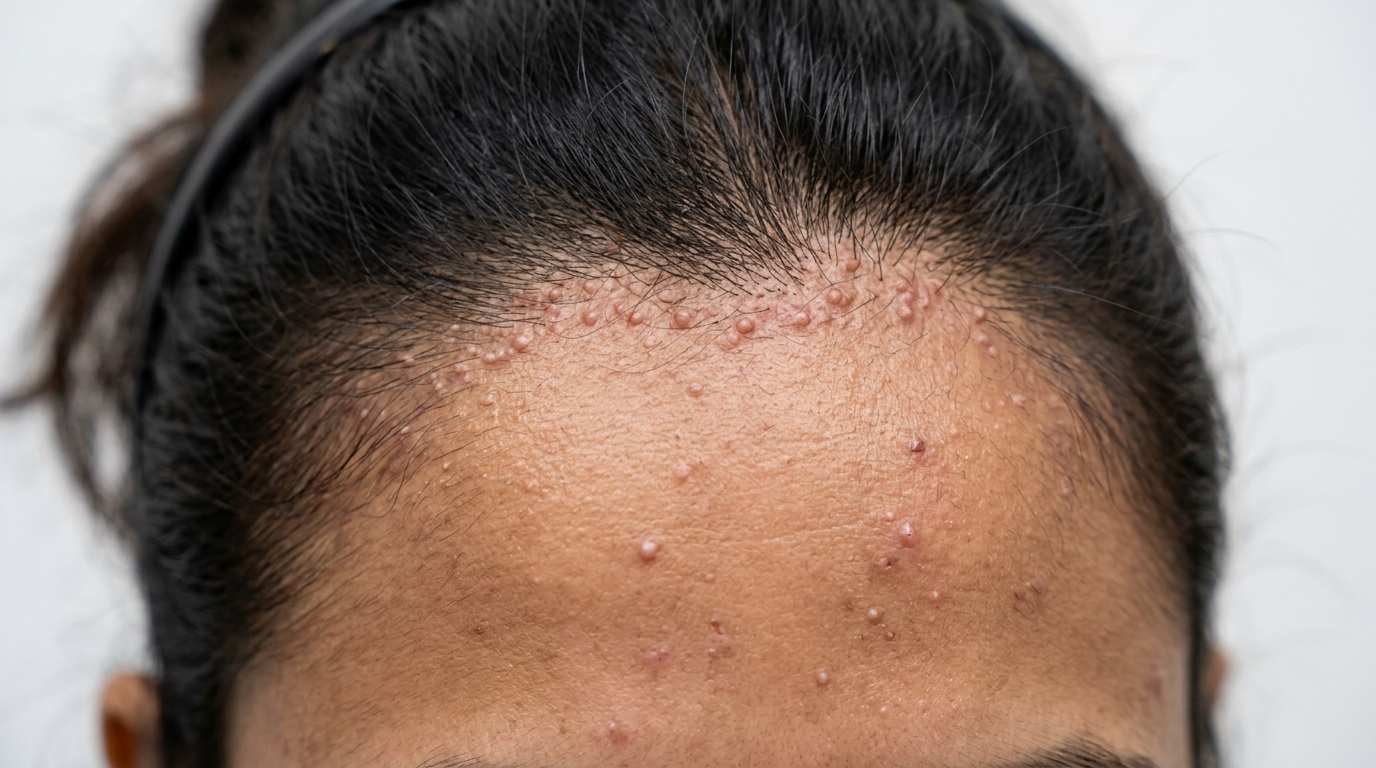
Head-to-Head Diagnostic Comparison Matrix
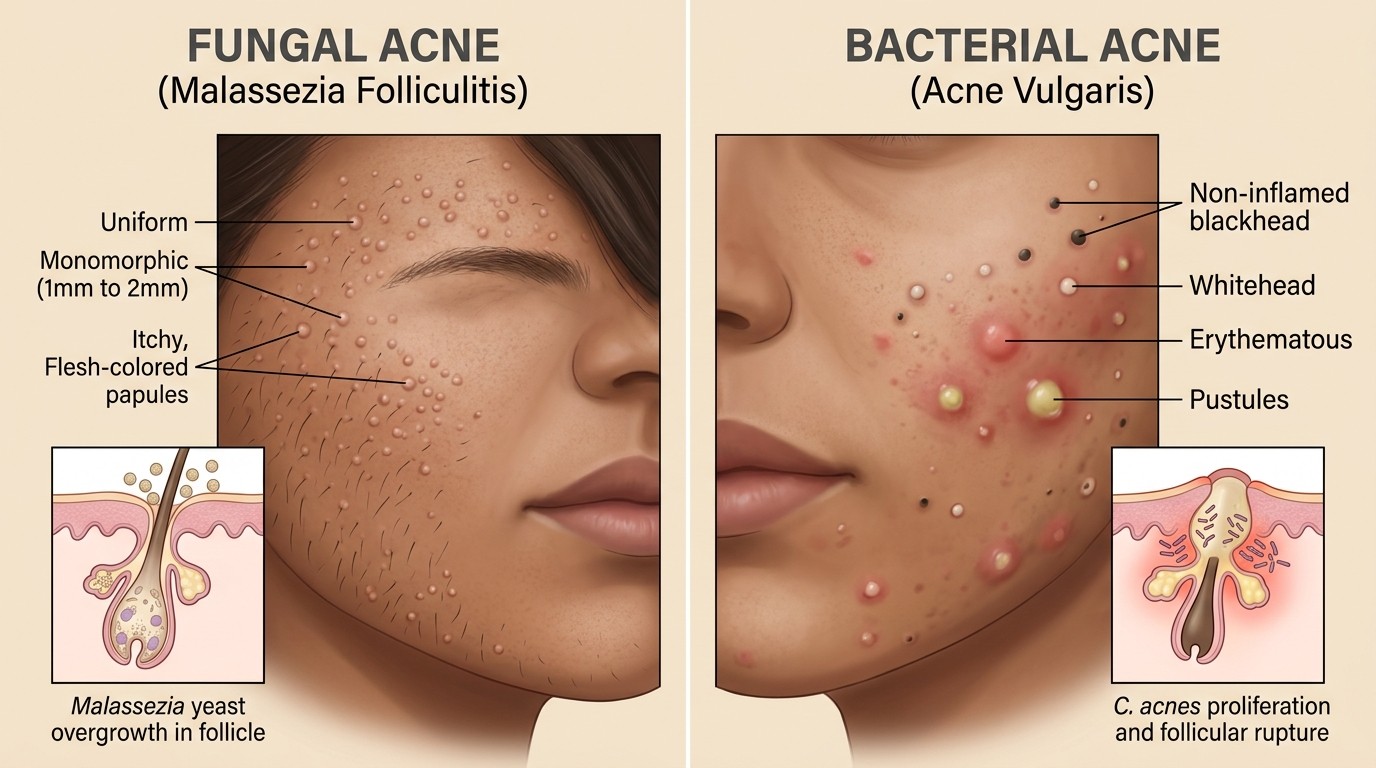
Misdiagnosing forehead breakouts guarantees treatment failure. Treating fungal acne with regular bacterial acne antibiotics (like Clindamycin) will actually make fungal acne explode by destroying healthy competing flora. Use this table to differentiate your breakout immediately:
| Diagnostic Feature | Malassezia (Fungal Acne) | Acne Vulgaris (Bacterial) | Pomade / Champi Oil Acne |
|---|---|---|---|
| Lesion Appearance | Uniform, monomorphic 1–2mm tiny flesh bumps; no pop-able core | Polymorphic: open blackheads, closed whiteheads, tender red pustules | Clustered micro-comedones hugging hairline and upper frontal bone |
| Itch Sensation | Severe itching & prickling (worse in humidity/sweat) | No itching; throbbing or pressure pain when inflamed | Zero itching; rough sandpaper-like textural occlusion |
| Causative Microbe | Malassezia yeast (opportunistic fungal overgrowth) | Cutibacterium acnes proliferation + oxidized sebum | Mechanical blockage by heavy exogenous plant lipids |
| Primary Triggers | Gym sweat, humid monsoon, scalp dandruff, heavy emollients | Fluctuating hormones, high GI diet, stress cortisol, sebum spikes | Overnight coconut/almond hair oils, hair styling gels, waxes |
| Gold-Standard Active | 2% Ketoconazole wash, Zinc Pyrithione, Ciclopirox | 2% Salicylic Acid, 0.1% Adapalene, Benzoyl Peroxide | Stopping overnight oils + gentle Salicylic Acid foaming wash |
| Fatal Treatment Mistake | Applying Clindamycin gel or steroid creams (causes massive rebound) | Aggressive physical scrubbing with walnut/apricot face scrubs | Continuing bedtime hair oiling while applying expensive serums |
| Top Indian Pharmacy Pick | Nizoral 2% / Scalpe Plus Shampoo | Cipla Saslic DS Foam / Sebogel / Differin Gel | The Derma Co 1% Gel Wash / Minimalist 2% SA Cleanser |
💡 The Cardinal Dermatologist Differentiating Clue
If your forehead bumps are completely identical in size, look like a uniform rash of tiny goosebumps, and itch when you sweat, you are dealing with Malassezia folliculitis. Traditional acne treatments will fail until you incorporate an antifungal active.
Forehead Anatomy: Why the T-Zone Breaks Out First
The forehead is structurally distinct from the cheeks and jawline. Understanding its unique biology explains why standard body acne washes or heavy facial creams trigger instant congestion here.
Massive Gland Concentration
The frontal bone dermis contains an astonishing 400 to 900 sebaceous glands per cm². In contrast, the lower cheeks have fewer than 250 glands/cm². This creates a continuous reservoir of sebum that pools in the follicular infundibulum.
Squalene Peroxidation
Sebum contains ~12% squalene. When exposed to urban pollution, UV radiation, and atmospheric ozone, squalene readily oxidizes into squalene monohydroperoxide. This toxic lipid peroxide degrades keratinocyte turnover, producing sticky follicular plugs.
Furthermore, the forehead is home to a dense network of eccrine sweat glands. When high ambient humidity pairs with 400+ sebaceous glands, sweat and sebum emulsify into a warm, occlusive film that serves as an optimal breeding broth for both C. acnes and Malassezia species.
The 3 Biggest Indian Triggers for Forehead Acne
In clinical dermatology across metropolitan Indian centers, over 70% of persistent forehead breakouts trace back to three specific everyday lifestyle vectors:
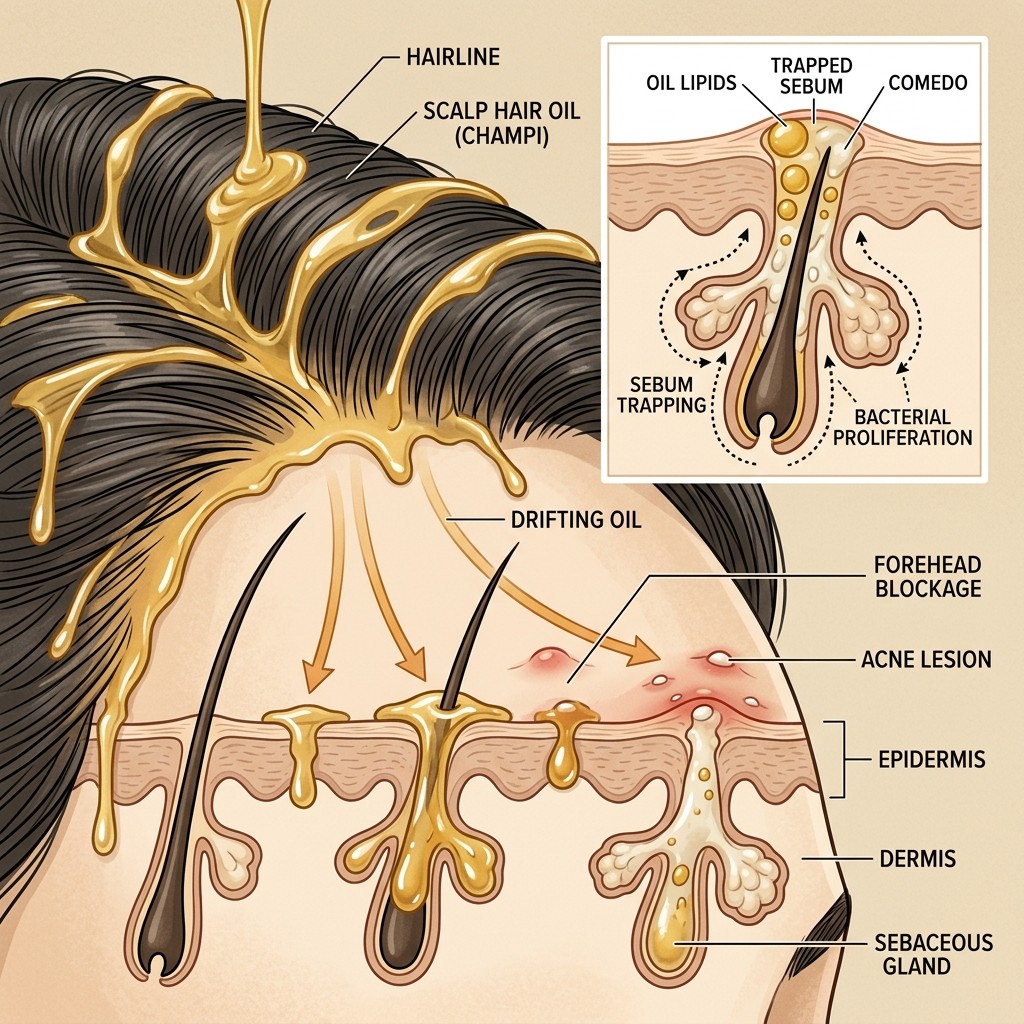
1. The "Champi" Overnight Hair Oil Vector
Overnight scalp oiling with coconut oil (which scores a staggering 4 out of 5 on the comedogenicity scale) or mustard oil is deeply rooted in Indian haircare. However, hair oils migrate via capillary action across the hairline within 90 minutes. During sleep, pillowcase friction transfers these dense lauric acid triglycerides onto the upper forehead, creating immediate follicular plugs and nourishing Malassezia yeast.
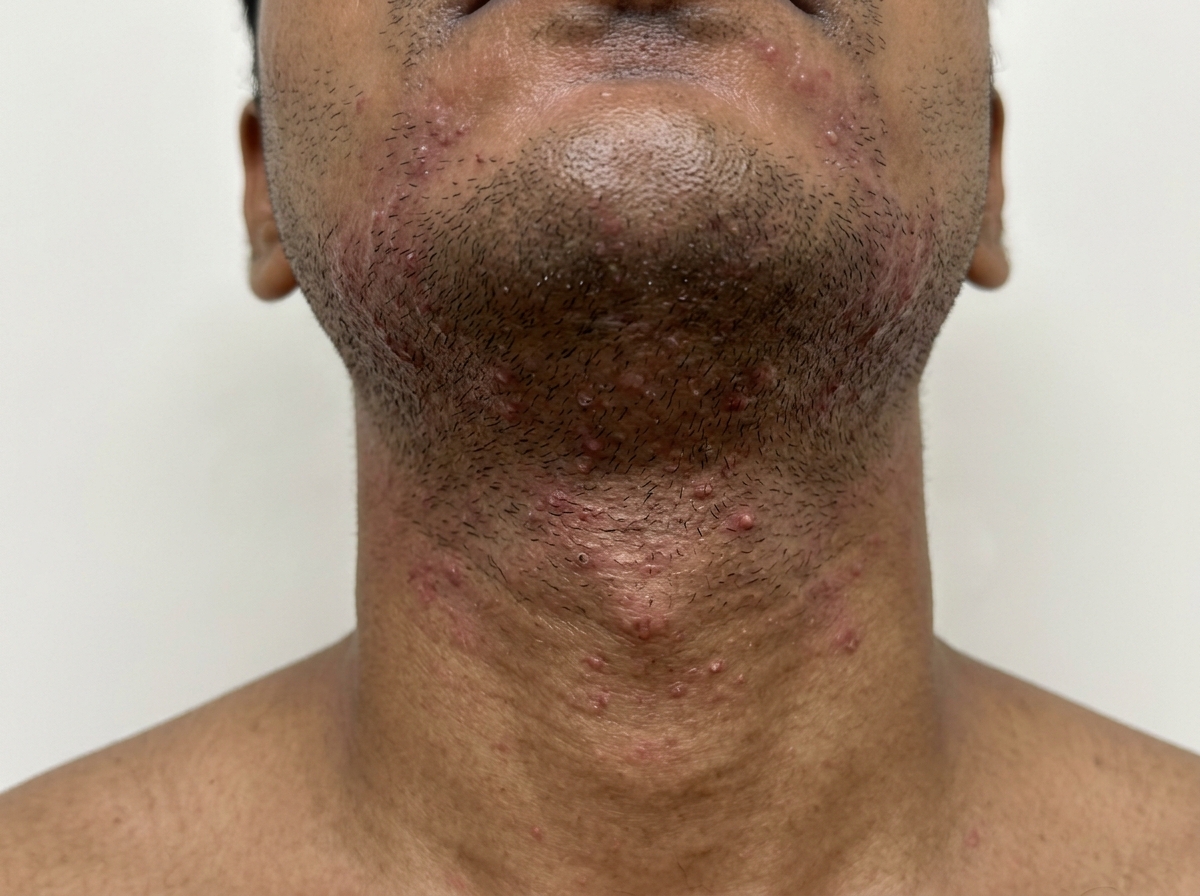
2. Helmet & Friction Mechanica in Two-Wheeler Commuters
Indian two-wheeler riders routinely suffer from Acne Mechanica across the mid-forehead and temples. Helmet foam exerts continuous physical friction while sealing sweat, exhaust particulate matter, and sebum into a high-temperature greenhouse. This pressure bursts fragile follicular walls, transforming subclinical microcomedones into deep inflammatory pustules.
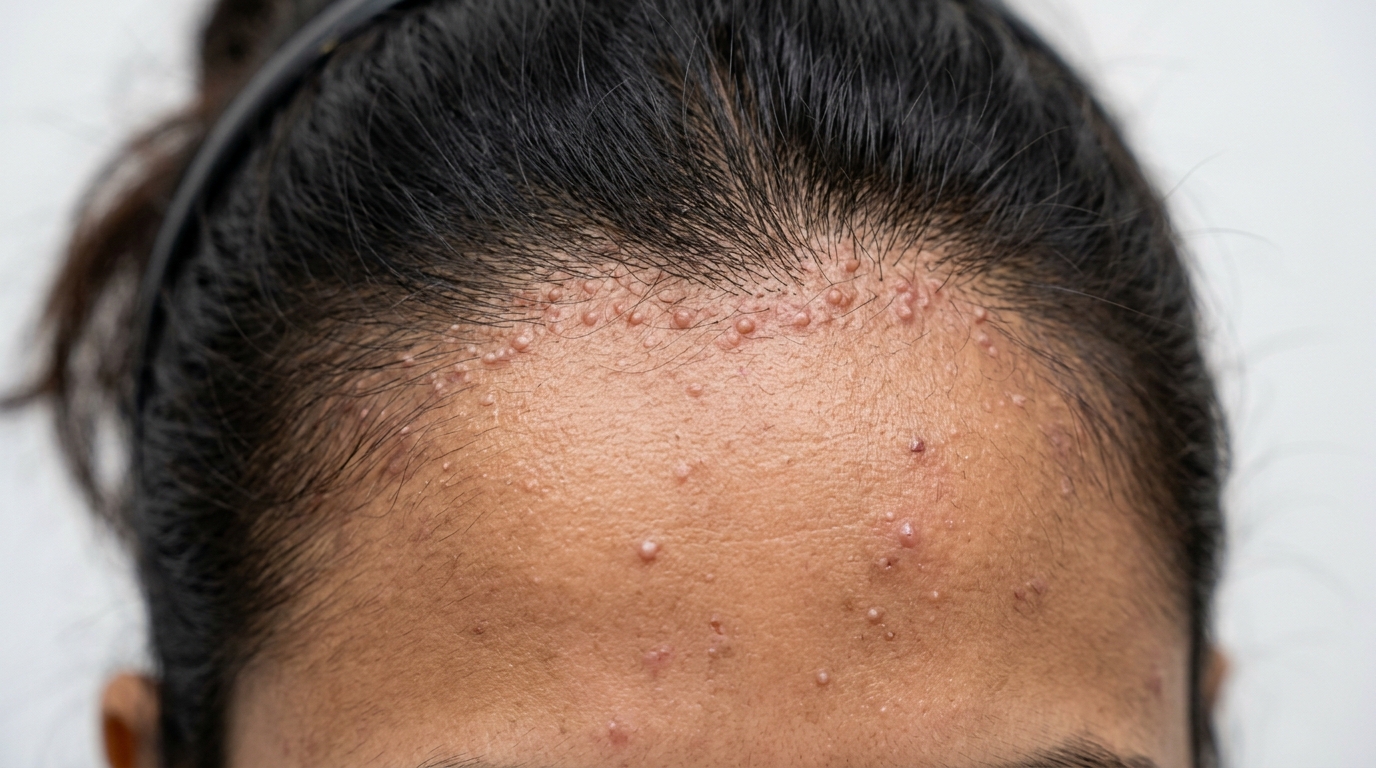
3. Dandruff & Malassezia Yeast Migration
Seborrheic dermatitis (dandruff) and fungal forehead acne are two manifestations of the same microbial disturbance. Malassezia globosa and M. restricta thrive on scalp sebum. As scalp flakes detach, billions of fungal spores migrate down onto the forehead, colonizing the sebaceous openings and generating free fatty acids that provoke an immediate inflammatory rash.
Clinical Treatment Protocols by Breakout Type
Select the protocol matching your diagnosis from Section 1. Do not combine multiple heavy actives simultaneously, as barrier disruption in Indian phototypes III–VI triggers intense hyperpigmentation.
Fungal Acne (Malassezia) Regimen
AM: Rinse with lukewarm water → Apply light oil-free, fungal-safe moisturizer (e.g. Sebamed Clear Face Care Gel) → Non-nano mineral sunscreen SPF 50.
PM: Wash forehead & scalp with 2% Ketoconazole wash, allowing 3–5 minutes contact time before rinsing (3 nights/week). On off-nights, use a ultra-gentle hydrating cleanser.
Comedonal & Sebum Acne Regimen
AM: 2% Salicylic Acid foaming wash (60s lather) → Lightweight Niacinamide 4% serum → Matte gel sunscreen SPF 50+.
PM: Gentle cleanser → Wait 15 mins → Pea-sized Adapalene 0.1% Gel on forehead (alternate nights) → Barrier repair ceramide cream.
The 3–5 Minute Ketoconazole Short-Contact Rule
When using an antifungal shampoo (such as Nizoral or Scalpe Plus) on facial skin, leaving it on like a leave-on serum will destroy your lipid barrier, while washing it off immediately does not kill the yeast. Follow this exact dermatologist-approved short-contact method:
Lather Both Scalp and Hairline
In the shower, dispense 5ml of 2% Ketoconazole wash onto wet hands. Create a dense foam and massage thoroughly across both your scalp and down onto your affected forehead and temples.
Execute the 3 to 5-Minute Leave-On Dwell Time
Keep the foam resting on your forehead without touching or scrubbing. Ketoconazole is a synthetic imidazole antifungal that requires 180 to 300 seconds of aqueous contact to permeate and inhibit fungal ergosterol biosynthesis.
Rinse Thoroughly with Cool Water
Rinse away all traces of lather with cool or lukewarm water. Do not rub with harsh towels—gently pat the skin dry with a soft microfiber cloth.
Seal with a Fungal-Safe Gel
Immediately follow with a lightweight, fungal-safe moisturizer (free of polysorbates, isopropyl palmitate, and coconut derivatives) to lock in hydration and prevent rebound sebum.
The 5-Step Nighttime Hairline Defense
Protecting your frontal skin during sleep is critical to preventing nocturnal comedone formation:
🚿 1. Wash Forehead Last in the Shower
Hair conditioners and hair masks are loaded with silicones, cetearyl alcohol, and conditioning polymers. Always wash your face after rinsing out all hair products so residue does not settle into your pores.
🛏️ 2. Switch to Silk or Satin Pillowcases
Cotton absorbs hair oils and skin sweat, creating a microbial breeding pad. Satin or silk pillowcases cause minimal friction and should be laundered every 3 to 4 days with fragrance-free detergent.
💇 3. Pin Bangs & Fringes Away from Forehead
Hair strands naturally accumulate natural scalp sebum and styling products. Keep bangs clipped back while sleeping or studying to stop mechanical friction against frontal skin.
🚫 4. Ban Bedtime Heavy Hair Oiling
If you love traditional hair oiling, apply the oil 30 minutes before your morning or evening bath, then shampoo it out thoroughly. Never sleep with oiled hair.
Post-Acne Mark Recovery (PIH) for Indian Skin
Across Fitzpatrick phototypes III–VI, 85% of resolving forehead papules leave behind persistent brown post-inflammatory hyperpigmentation (PIH). The forehead receives the highest perpendicular ultraviolet exposure on the face, turning resolving marks darker if unprotected.
Azelaic Acid (10% to 15%)
Azelaic acid specifically targets hyperactive, abnormal melanocytes while leaving baseline skin tone intact. Furthermore, it exhibits dual antibacterial and mild anti-yeast properties, making it the safest active for fading forehead dark marks.
Niacinamide (4% to 5%)
Inhibits the transfer of melanin packets (melanosomes) from melanocytes to surface epidermal cells. Combined with zinc PCA, it simultaneously suppresses frontal sebum output by up to 25%.
⚠️ Avoid Hydroquinone and Steroid Bleaching Creams
Never apply over-the-counter steroid combination creams (e.g. Betnovate, Skinlite, Panderm) to fade forehead acne marks. They cause severe skin thinning, steroid-induced rosacea, and intense rebound hyperpigmentation.
5 Costly Mistakes That Worsen Forehead Acne
Dermatologists frequently see these 5 recurring habits turn mild forehead congestion into chronic scarring:
❌ 1. Squeezing Tiny Flesh Bumps
Fungal bumps do not contain an extractable keratin core. Squeezing them tears the follicular wall, introduces bacterial superinfections, and produces permanent atrophic boxcar pits.
❌ 2. Scrubbing with Walnut/Apricot Scrubs
Rough physical granules scratch micro-fissures into the epidermal barrier. This provokes reactive sebum rebound, doubling forehead oiliness within 48 hours.
❌ 3. Misusing Clindamycin on Fungal Bumps
Topical antibiotics destroy non-pathogenic bacteria on the forehead, removing natural competition and allowing Malassezia yeast colonies to multiply uncontrolled.
❌ 4. Skipping Sunscreen to "Dry Out" Pimples
The sun does not heal acne. UV rays oxidize squalene in sebum, thickening follicular plugs and baking fresh red marks into deep, intractable dark brown PIH.
❌ 5. Believing Traditional "Face Mapping" Myths
Forehead acne is not caused by "poor digestion" or "liver heat." Wasting time on unscientific liver detox teas delays evidence-based topical antifungal or retinoid therapy.
❌ 6. Layering Heavy Facial Oils for "Hydration"
Applying rosehip, argan, or marula oil onto congested T-zone skin feeds microbial lipases. Stick exclusively to lightweight, oil-free gel humectants.
Frequently Asked Clinical Questions
Evidence-based answers to the most common questions on forehead acne diagnosis and treatment: