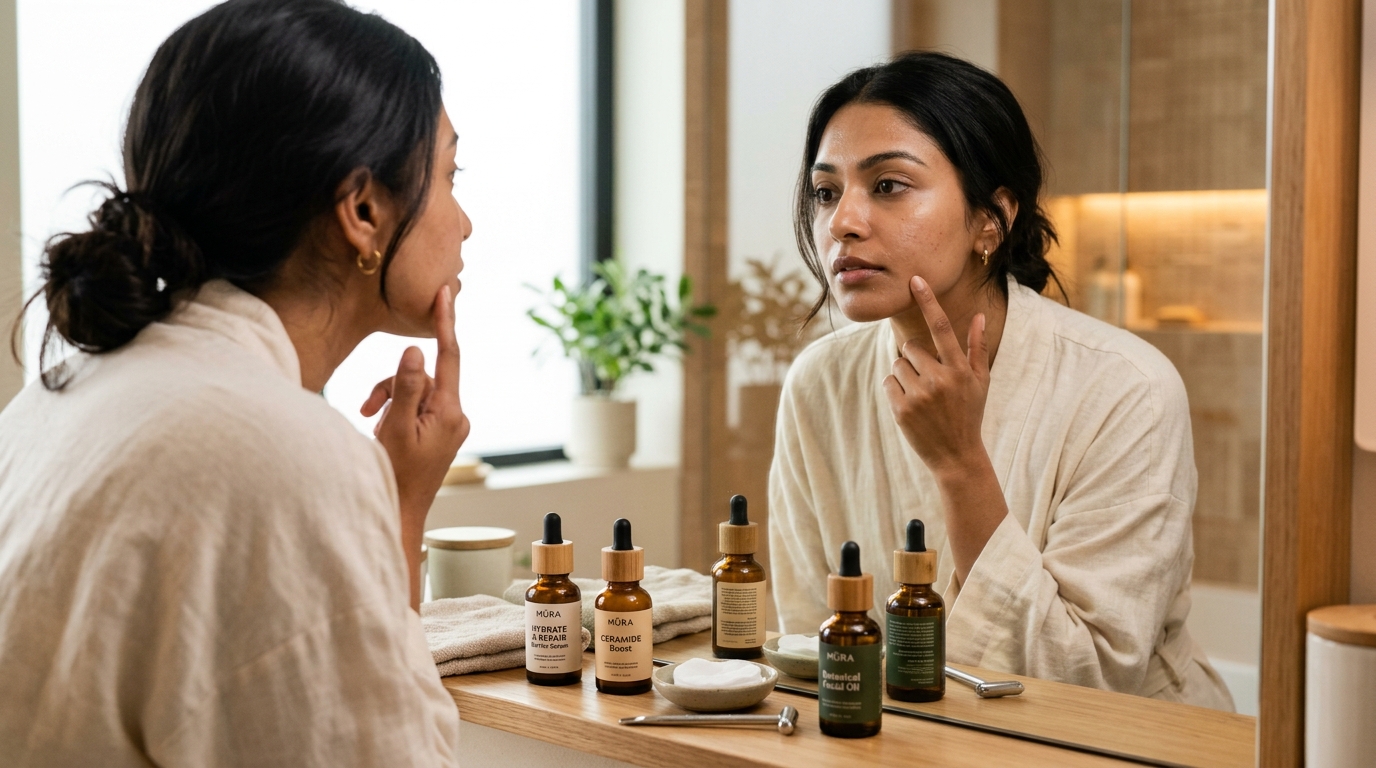
1. The Molecular Biochemistry of Niacinamide (Pyridine-3-Carboxamide)
Niacinamide (also known as nicotinamide) is the active water-soluble amide derivative of Vitamin B3. In human dermatology, it serves as a critical biochemical precursor for two essential intracellular coenzymes: Nicotinamide Adenine Dinucleotide (NAD+/NADH) and Nicotinamide Adenine Dinucleotide Phosphate (NADP+/NADPH). These coenzymes drive over 400 enzymatic reactions involved in cellular ATP bioenergetics, oxidative stress clearance, DNA damage repair (via PARP-1 activation), and lipid synthesis.
Why Niacinamide Lacks Exfoliative Properties
To understand why "Niacinamide purging" is a biological impossibility, one must examine the mechanism of true chemical exfoliants:
- Retinoids (Tretinoin, Adapalene, Tazarotene): Bind nuclear retinoic acid receptors ($\text{RAR}/\text{RXR}$) inside basal keratinocytes, accelerating the epidermal cell turnover rate from 28–40 days down to 14 days. This forces subterranean micro-comedones (brewing pimples) to erupt rapidly.
- Alpha & Beta Hydroxy Acids (Glycolic, Lactic, Salicylic Acid): Function as keratolytic agents by cleaving ionic and desmosomal bonds (corneodesmosomes) holding dead corneocytes together in the stratum corneum, unroofing clogged pores.
In stark contrast, Niacinamide possesses zero desmosomal dissolution or mitotic turnover acceleration properties. It does not exfoliate the stratum corneum, nor does it force micro-comedones to the surface. Therefore, any papules, redness, or bumps that appear after initiating a Niacinamide serum are not skin purging—they are clinical manifestations of Subclinical Irritant Contact Dermatitis (ICD), GPR109A Flushing, or Hyperosmotic Barrier Breakdown.
2. Pathomechanisms of 10% Niacinamide Damage on Indian Skin
The sudden widespread surge of 10% to 20% Niacinamide serums in commercial skincare has led to a dramatic increase in barrier disruption, particularly among individuals with Fitzpatrick IV–VI (Indian) skin types. Three primary biochemical damage cascades occur when applying high-dose Niacinamide:
Pathway A: Unconverted Nicotinic Acid & GPR109A (HCAR2) Prostaglandin Flushing
During chemical manufacturing or prolonged shelf-storage in warm tropical climates (above 30°C), Niacinamide raw materials slowly hydrolyze into free Nicotinic Acid (Niacin). Furthermore, co-applying Niacinamide with low-pH formulas (pH < 4.0) accelerates this conversion.
Nicotinic acid is a potent agonist of the GPR109A (HCAR2) G-protein coupled receptor expressed on epidermal Langerhans cells, keratinocytes, and microvascular endothelial cells. GPR109A activation triggers intracellular Phospholipase A2 ($\text{PLA}_2$), generating an acute surge of Prostaglandin D2 ($\text{PGD}_2$) and Prostaglandin E2 ($\text{PGE}_2$). These prostaglandins induce rapid arteriolar vasodilation, resulting in severe facial redness, burning heat, itching, and inflammatory hives.
Pathway B: Hyperosmotic Gradient Stress (819 mOsm/L Solute Load)
At a 10% concentration ($100\text{ mg/mL}$; molecular weight $122.12\text{ g/mol}$), topical Niacinamide exerts a massive hypertonic solute load of approximately 819 mOsm/L on the surface of the skin. In low-humidity indoor environments or dry Indian winters, this intense hyperosmotic gradient draws intracellular water out of superficial keratinocytes into the vehicle layer as moisture evaporates.
This extracellular water depletion causes keratinocyte shrinkage, micro-fissuring of the lamellar lipid matrix, and activation of stress-activated protein kinases ($\text{p38 MAPK}$), spiking Transepidermal Water Loss (TEWL) and leaving the skin feeling tight, crepey, and stinging upon water contact.
Pathway C: Irritant Contact Dermatitis & Rebound PIH in Melanin-Rich Skin
Indian skin features hyper-responsive melanocytes capable of producing large, singly dispersed eumelanosomes. When 10% Niacinamide causes subclinical micro-irritation and TEWL spikes, damaged keratinocytes release inflammatory mediators—including $\alpha\text{-MSH}$, Endothelin-1 ($\text{ET-1}$), and Interleukin-1$\alpha$ ($\text{IL-1}\alpha$).
These cytokines directly upregulate tyrosinase enzyme activity inside dermal melanocytes, converting temporary chemical irritation into dark, recalcitrant Post-Inflammatory Hyperpigmentation (PIH) that can take 6 to 12 months to fade.
3. Diagnostic Terminal: Cellular Turnover Audit
Review the automated diagnostic log breakdown comparing chemical exfoliants against Niacinamide:
4. 10% High-Risk Concentration vs. 2%–5% Ceramide Sweet Spot
Dermatological clinical consensus for Indian skin strongly favors 2% to 5% Niacinamide as the optimal therapeutic window. Exceeding 5% yields zero extra benefits while exponentially increasing irritation risks.
Hyperosmotic Dehydration: High solute density extracts water from keratinocytes, causing cell tightness and micro-tears.
Nicotinic Acid Flushing: Triggers GPR109A receptor activation, releasing PGD2/PGE2 prostaglandins that cause burning redness.
Rebound PIH: Chronic subclinical irritation stimulates melanocyte tyrosinase, resulting in long-term dark acne marks.
Ceramide Synthesis (Tanno et al.): Upregulates Serine Palmitoyltransferase (SPT) mRNA, increasing natural ceramides by 400%–500%.
Melanosome Inhibition (Hakozaki et al.): Suppresses melanosome transfer from melanocytes to keratinocytes by 35%–68% without cytotoxicity.
Sebum Regulation (Draelos et al.): Normalizes sebaceous gland excretion rates (SER) without drying the lipid barrier.
5. Exhaustive 6-Parameter Diagnostic Comparison Matrix
Differentiate your current skin symptoms between 10% Niacinamide barrier damage and true active purging:
| Diagnostic Parameter | 10% Niacinamide Barrier Damage & ICD | True Active Skin Purging (BHA / Retinoids) |
|---|---|---|
| Primary Etiology | GPR109A prostaglandin flushing, hyperosmotic dehydration, and lamellar lipid micro-fissuring. | Accelerated basal cell mitosis and desmosomal dissolution unroofing subclinical micro-comedones. |
| Lesion Morphology | Diffuse polymorphous micro-papules, red itchy hives, roughness, and uniform tiny red bumps. | Discrete whiteheads, blackheads, and inflammatory papules matching pre-existing clogged pores. |
| Anatomical Location | Widespread across the entire face, including historically clear areas (cheeks, lower jaw, neck). | Confined strictly to habitual T-zone acne zones (nose, chin, central forehead). |
| Onset & Duration | Immediate to rapid (within 12 hours to 5 days). Persists indefinitely until product is stopped. | Erupts at weeks 1–2, peaks at weeks 3–4, and completely subsides by week 6 as turnover normalizes. |
| Sensory Feel & Stinging | Sharp burning or stinging sensation upon applying simple water or bland ceramide moisturizers. | Normal skin sensation; mild localized tenderness only around active deep inflammatory papules. |
| Long-Term Sequelae | Progressive stratum corneum collapse, eczema flares, and severe Post-Inflammatory Hyperpigmentation. | Complete clearance of clogged pores, smooth texture, and refined follicular pore structure. |
6. The 4-Week Skin Barrier Rehabilitation Protocol
Follow this evidence-based 4-stage routine to heal damaged stratum corneum lipids and transition safely to 2% Niacinamide:
Discontinue all 10% Niacinamide, AHAs, BHAs, and Retinoids. Cleanse with lukewarm water or a gentle non-foaming wash twice daily.
Apply a bio-identical 1:3:1 Ceramide, Cholesterol, and Free Fatty Acid cream twice daily to seal micro-fissures and lower TEWL.
Reintroduce a low-dose 2% Niacinamide gel cream twice weekly. Stimulate natural SPT ceramide synthesis without osmotic stress.
Barrier fully restored. Sebum excretion normalized and dark PIH spots fading with zero stinging or micro-irritation.
7. Active Stacking & Chemical Compatibility Matrix
Understand how to combine Niacinamide safely with other dermatological actives in your routine:
| Active Combination | Biochemical Reaction / Compatibility | Clinical Layering Rule for Indian Skin |
|---|---|---|
| Niacinamide (2%–5%) + Ceramides + HA | 🟢 100% Synergistic Barrier Triad. Internal SPT lipid boost + exogenous barrier sealing. | Apply morning and evening. Safe for daily long-term use on sensitive skin. |
| Niacinamide (2%–4%) + Tretinoin / Adapalene | 🟢 Clinical Buffering Synergy. Niacinamide buffers against Retinoid Dermatitis and TEWL. | Apply 2% Niacinamide moisturizer 15 minutes BEFORE Retinoid application. |
| Niacinamide (10%) + High-Strength Retinol | 🔴 Dual-Barrier Collapse. Multiplies hyperosmotic irritation and triggers severe PIH. | NEVER combine 10% Niacinamide with Retinoids. Switch to 2% Niacinamide. |
| Niacinamide + Low-pH Direct Acids (< pH 3.8) | 🟡 Acid Hydrolysis Flush. Acidic pH converts Niacinamide to Nicotinic Acid -> GPR109A flushing. | Use Niacinamide 5% in the AM routine; apply AHA/BHA exfoliants in the PM routine. |
8. Recommended 2%–5% Barrier Repair Formulations
Dermatologist-evaluated ceramide and low-dose Niacinamide products available in India:
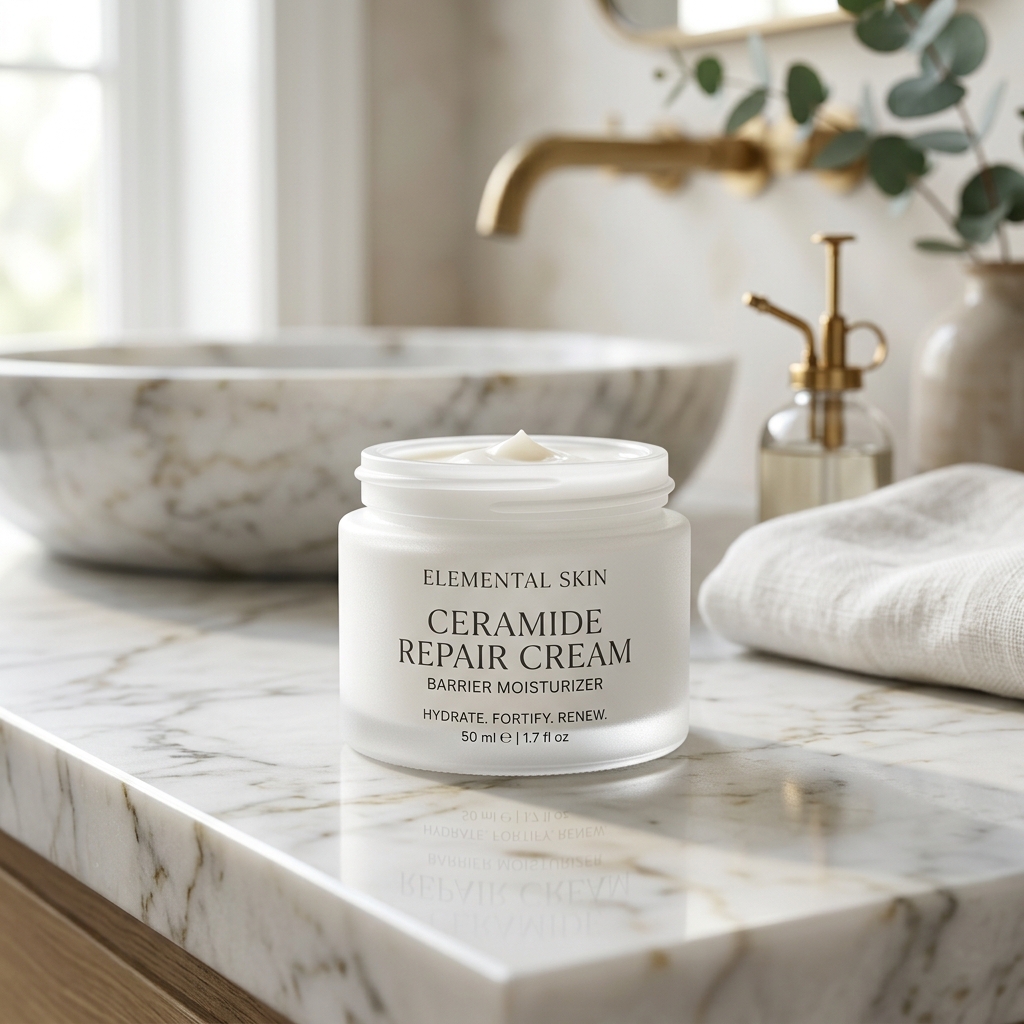
Rich Ceramide 1, 3, 6-II cream engineered to repair lamellar lipid micro-tears caused by 10% Niacinamide.
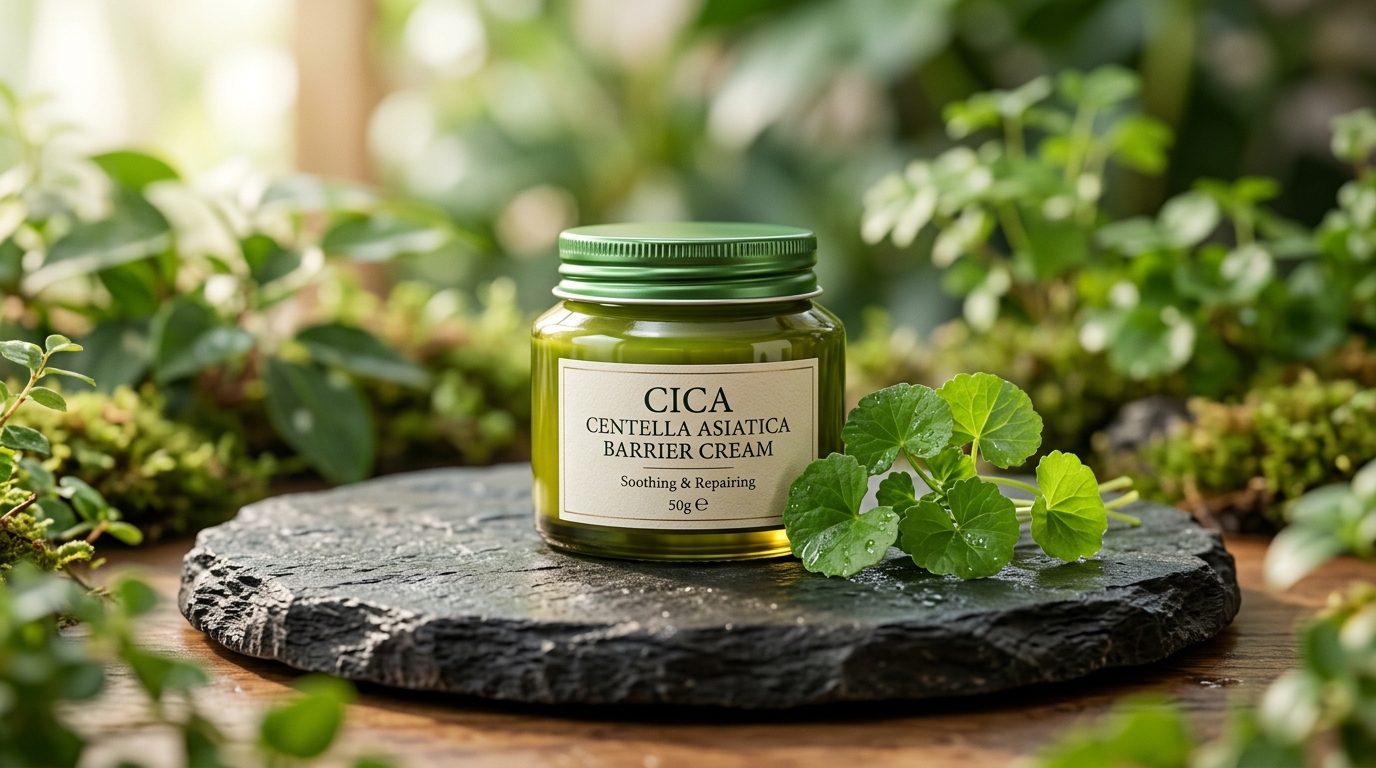
Soothing Centella Asiatica + 2% Niacinamide gel designed to calm GPR109A flushing and fortify lipid barriers.