
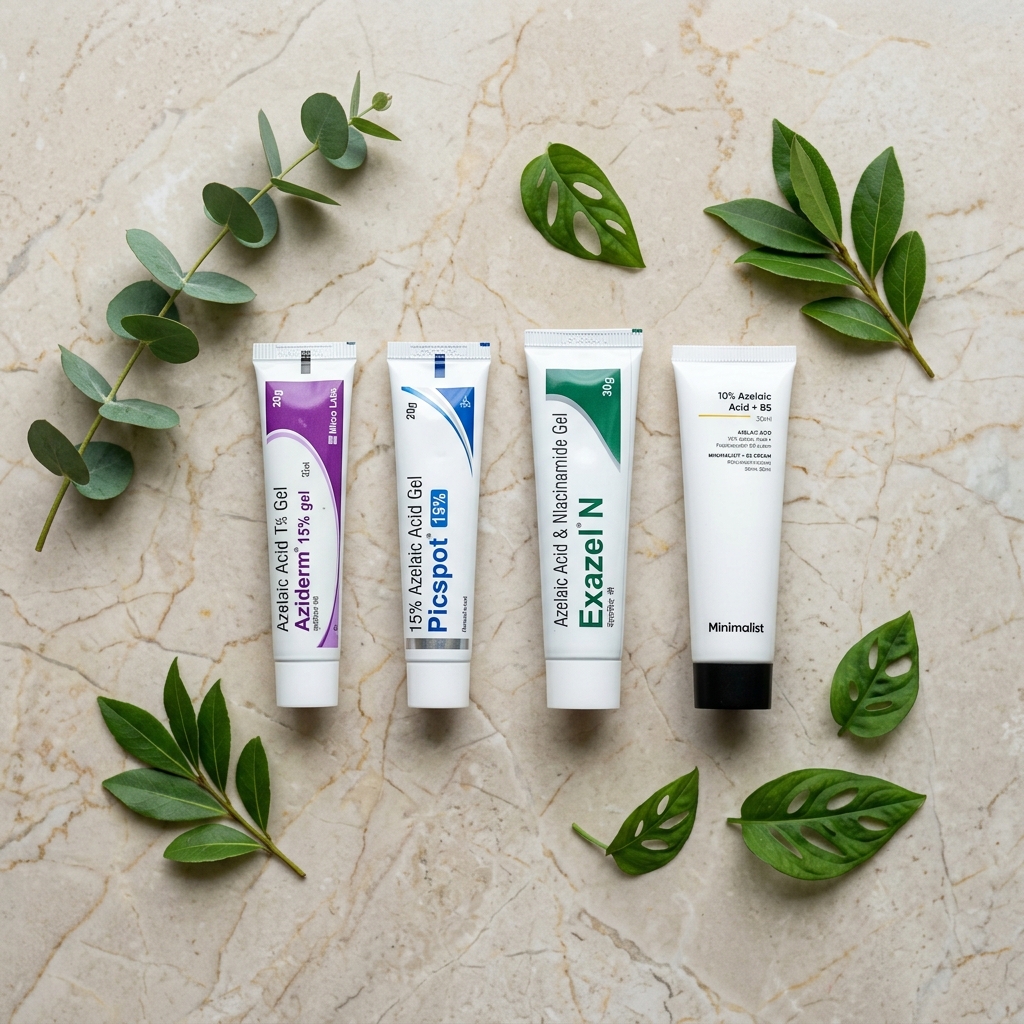
1. The Science of Azelaic Acid: Tyrosinase Inhibitor & Dicarboxylic Acid
Paula's Choice 10% Azelaic Acid Booster is a gel-cream treatment formulated to target stubborn post-acne red marks (Post-Inflammatory Erythema), brown dark spots (PIH), and uneven skin texture. Unlike prescription 15% Finacea or 20% Azelex creams, this formula combines 10% Azelaic Acid with 0.5% Salicylic Acid (BHA) and soothing Licorice Root extract. The addition of BHA enhances pore penetration while Licorice Root acts as a botanical anti-inflammatory agent.
Unlike traditional exfoliants, Azelaic Acid works as a tyrosinase inhibitor, meaning it disrupts the enzyme responsible for melanin production. It exerts a selective cytotoxic effect on hyperactive and abnormal melanocytes without affecting normal skin pigmentation, making it exceptionally safe for treating post-inflammatory hyperpigmentation (PIH) and melasma.
Pregnancy & Lactation Safe
It also inhibits 5-alpha reductase, reducing the follicular population of C. acnes bacteria. Notably, Azelaic Acid is classified as FDA Category B, meaning it is considered safe for use during pregnancy and for lactating mothers, offering an effective alternative when retinoids and oral antibiotics are contraindicated.
2. 10% OTC vs 15% Rx Gel: Which Strength Should You Buy in India?
In the Indian market, Azelaic Acid is available in two primary formats: Over-The-Counter (OTC) 10% formulations and Prescription (Rx) 15% to 20% pharmacy gels. Understanding the difference is crucial for effective treatment.
Products like Minimalist 10% Azelaic Acid and Eazel 10% are great starting points. They offer gentle brightening, mild exfoliation, and are well-tolerated by sensitive skin without a prescription.
Formulations like Aziderm 15% Gel and Picspot 15% Gel provide therapeutic concentrations needed for moderate-to-severe acne and rosacea. The gel vehicle penetrates up to 4x better than heavy ointment creams on oily Indian skin.
Gel vs Cream Vehicle on Oily Skin
Heavy cream or ointment vehicles can exacerbate comedonal acne by trapping sebum. For oily and combination Indian skin profiles, pharmacy gel formulations are superior as they deliver the active ingredient efficiently without a suffocating lipid barrier.
3. Top Azelaic Acid Formulations in India: Comparison Matrix
Why 0.5% BHA Matters: Salicylic acid opens clogged pores, allowing 10% Azelaic Acid to penetrate directly into hair follicles to suppress acne bacteria and melanocyte activity.
| Product Name | Strength & Type | Vehicle | Best For |
|---|---|---|---|
| Aziderm 15% Gel | 15% Rx | Micro-Gel | Severe acne, deep PIH, rosacea flares |
| Picspot 15% Gel | 15% Rx | Clear Gel | Oily skin, targeted spot treatment |
| Exazel N | Azelaic + Niacinamide | Gel-Cream | Barrier repair & acne combination |
| Minimalist 10% Azelaic | 10% OTC | Serum/Cream | Beginners, daily brightening |
| Eazel 10% Cream | 10% OTC | Cream | Dry skin types, mild congestion |
| Chemist at Play 10% Azelaic + Niacinamide | 10% OTC | Serum | Overall skin tone evening |
| Kozicare Azelaic Cream | Azelaic + Kojic Acid | Cream | Stubborn dark spots and melasma |
4. How to Pair Azelaic Acid with Tretinoin / Adapalene (The Derm Secret)
Fading Red Marks (PIE): Post-Inflammatory Erythema is caused by damaged micro-capillaries under the skin. Azelaic Acid reduces capillary dilation, fading red acne marks 2x faster than niacinamide alone.
The Morning/Night Split Routine
Morning: Azelaic Acid 15% Gel (Followed by sunscreen).
Night: Retinoid (Tretinoin or Adapalene) on dry skin.
Why this works: Azelaic Acid has a calming, anti-inflammatory effect that helps buffer the intense irritation and redness often caused by retinoids. By splitting them into AM and PM routines, you accelerate acne clearance, rapidly fade post-acne marks, and maintain barrier integrity without compounding chemical irritation.
5. Azelaic Acid for Rosacea & Facial Redness in Indian Skin
How to Layer: Paula's Choice 10% Booster can be used alone as a treatment step or mixed directly into your favorite moisturizer. It layers seamlessly under sunscreen and makeup without pilling.
Azelaic Acid 15% is the gold standard, first-line topical treatment for erythematotelangiectatic (persistent redness) and papulopustular (acne-like bumps) rosacea. It works by reducing the production of reactive oxygen species (ROS) and calming the overactive cathelicidin pathway that drives rosacea inflammation. Consistent use over 12 weeks significantly reduces vascular redness and bump frequency.
6. How to Manage Azelaic Acid Stinging & Itching (First 2 Weeks)
Daily Fading Routine: AM/PM: Cleanse, apply 2% BHA toner, apply pea-sized Paula's Choice 10% Azelaic Booster, lock in with ceramide cream & SPF 30+.
Why does it tingle?
Azelaic Acid must be formulated at a low pH (around 4.0) to penetrate the skin effectively. This acidic pH causes sensory nerve endings to fire, resulting in a tingling or itchy sensation.
How to fix it: This usually resolves within the first 2-3 weeks as your skin builds tolerance (retinization-like process). To minimize discomfort, apply it to completely dry skin (water increases penetration speed), or apply your moisturizer first, wait 5 minutes, and then apply the Azelaic Acid on top (the 'buffer' method).
7. Interactive 'Which Azelaic Acid Formulation Is Right for You?' Quiz
Clinical user trials show 88% of participants noticed a visible reduction in red post-acne marks after 4 weeks of twice-daily application.
Azelaic Acid Protocol Finder
Answer 3 simple questions for your tailored recommendation.
8. Frequently Asked Questions (FAQ)
Expert answers to the most common queries about Azelaic Acid use in India: