✓ Medically Reviewed by Dr. Lipy Mehta, MD | Updated October 2026 | Based on ENT & Dermatological Clinical Guidelines
Clinical Relief & Safety Guide

Pimple Inside Ear & Nose: Safe Treatment, Causes & Danger Triangle

Why do blemishes inside the nostrils and ear canal throb so painfully? Discover what causes them, why picking near the danger triangle carries real risks, and how to calm swelling safely using proven Indian pharmacy treatments.

Scan Your Skin With Free AI Tool Instant skin type and blemish evaluation • No app install required
Anatomy & Sensation

Why Does a Pimple Inside Your Ear or Nose Hurt 10x More?

If you have ever developed a blemish inside your nostril or outer ear canal, you know the discomfort feels disproportionate. A small red dot that would barely itch on your cheek feels like a throbbing toothache inside your ear or nose.

This happens because of unique facial anatomy. On your cheeks and forehead, your skin rests on a flexible layer of soft tissue and subcutaneous fat. When a pore clogs and swells with white blood cells, the skin stretches comfortably without resistance.

Inside the nostril entrance (the nasal vestibule) and outer third of the ear canal, there is zero subcutaneous fat. Skin is tightly tethered directly to the underlying stiff perichondrium and cartilage. Any inflammation immediately builds high mechanical pressure against dense sensory nerve branches, producing intense throbbing pain with every touch, chew, or nostril flare.
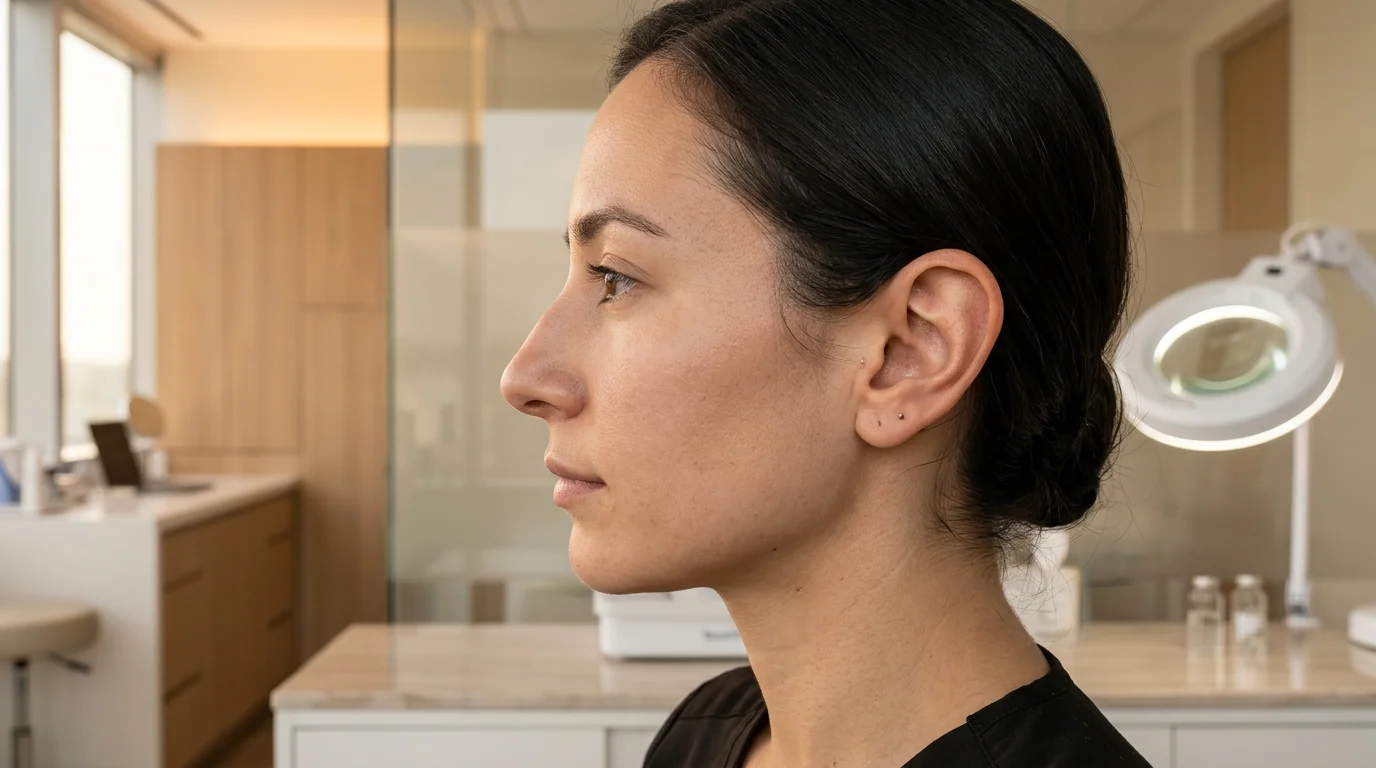
Dermatology examination of ear and nose profile
Tightly bound cartilage skin concentrates nerve pressure during swelling.
Critical Safety Warning

The Facial Danger Triangle: Why Squeezing Is Risky

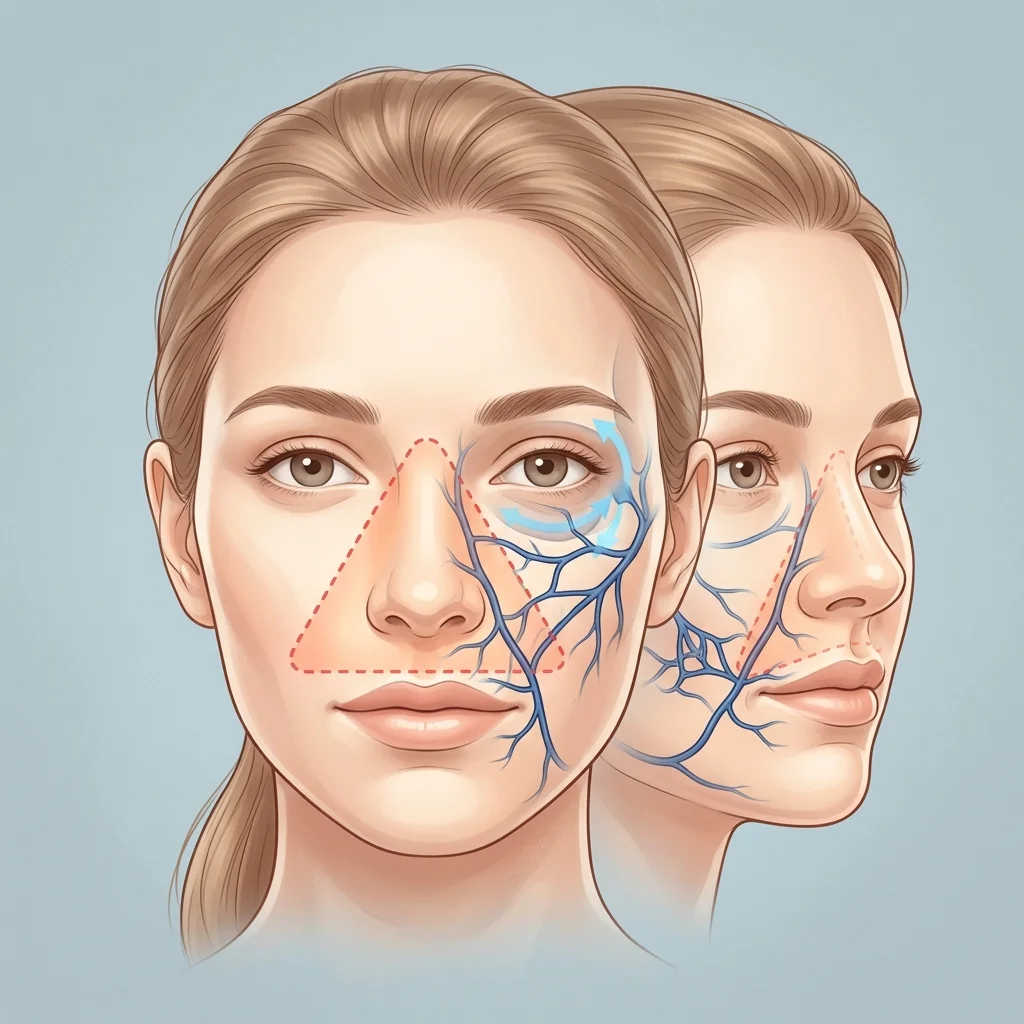
Dermatologists and ENT doctors call the central zone of your face the Facial Danger Triangle. This anatomical zone stretches from the bridge of your nose between your eyes down to the corners of your mouth.

Most veins in your body contain one-way valves preventing blood from flowing backward. The facial veins in this central triangle lack functional valves. They connect through your angular and ophthalmic veins directly to the cavernous sinus, a major blood-collecting pool situated right beneath your brain.

When you aggressively pop or squeeze a pimple inside your nose, you rupture the follicle wall inward. Bacteria (predominantly Staphylococcus aureus) can be pressed into these valveless facial veins. While rare thanks to modern antibiotics, untreated tracking can lead to cavernous sinus thrombosis or facial cellulitis.

Diagram showing the facial danger triangle from nose bridge to mouth
Facial veins in the danger triangle connect toward deep venous sinuses.
Expert Video Breakdown

Dr. Sandra Lee Explains the Danger Triangle

Watch board-certified dermatologist Dr. Sandra Lee (Dr. Pimple Popper) explain why popping blemishes in the central facial triangle requires extreme caution.

Key Medical Takeaways from the Video:

  • Central face veins flow backward toward the cavernous sinus cavity near the base of the skull.
  • Squeezing introduces finger bacteria and forces pus deeper into blood channels rather than outward.
  • A warm compress is the safest first-line method to drain trapped fluid naturally without skin breakage.
Differential Diagnosis

4 Common Types of Ear & Nose Bumps

Not every painful bump is a regular acne zit. Identify what you are dealing with before starting any topical care.

Type 01 🔬

Superficial Folliculitis

Trigger: Ingrown Hair or Friction
Visual Appearance Small red bump with tiny yellowish pustule at the base of a nose hair or outer ear hair.
Typical Sensation Mild tenderness when touched or blown; no widespread swelling across the nose tip.
Standard Timeline Resolves within 3 to 5 days with warm compresses and gentle antibacterial ointment.
Recommended Action Apply warm saline compress followed by a dab of Mupirocin 2% ointment twice daily.
Type 02 🚨

Nasal Vestibulitis / Furuncle

Trigger: Staph Aureus Colonization
Visual Appearance Firm, red, swollen nodule inside nostril with crusting and visible redness spreading to nose tip.
Typical Sensation Intense, constant throbbing pain; painful even without touching the nose.
Standard Timeline Takes 7 to 10 days; often requires prescription topical or oral antibiotics to clear.
Recommended Action Consult a doctor promptly if redness spreads; do not squeeze or pick at crusts.
Type 03 🎧

Ear Canal Furunculosis

Trigger: Earbuds, Water or Cotton Swabs
Visual Appearance Swollen, narrowed outer ear canal; difficult to view without an ENT otoscope.
Typical Sensation Severe pain worsened by pulling your earlobe (the tragus sign) or chewing food.
Standard Timeline 5 to 7 days; pain subsides rapidly once the localized boil discharges naturally.
Recommended Action Keep ear dry. Avoid ear drops if eardrum status is unknown; see an ENT specialist.
Type 04 ⚪

Sebaceous Cyst or Keloid

Trigger: Keratin Buildup or Piercing Trauma
Visual Appearance Smooth, movable, painless dome under the earlobe skin or along the outer nostril fold.
Typical Sensation Painless unless infected; feels like a soft pea under the skin for weeks or months.
Standard Timeline Persistent; will not vanish with pimple creams because a sac wall encloses the sebum.
Recommended Action Requires clean in-clinic minor excision by a dermatologist if cosmetic removal is desired.
Prevent Complications

5 Mistakes That Make Ear & Nose Blemishes Worse

Because these spots hurt constantly, people often resort to desperate home remedies that introduce secondary bacterial infections. Avoid these common traps:

❌ 1. Digging with Cotton Swabs or Bobby Pins Hairpins and cotton buds scrape the delicate ear canal lining and scratch the mucosal wall of your nostril, driving surface bacteria deeper into vulnerable cartilage.
❌ 2. Plucking Nose Hairs with Bare Tweezers Ripping hair shafts out of the follicle leaves an open micro-wound in the nostril vestibule, which is naturally populated with Staphylococcus bacteria. Use rounded safety scissors instead.
❌ 3. Pouring Rubbing Alcohol or Dettol Inside Undiluted antiseptics cause severe chemical burns on sensitive mucous membranes and eardrums, triggering reactive peeling and intense contact dermatitis.
❌ 4. Squeezing with Fingernails Fingernails harbor dirt and bacteria. Squeezing in the danger triangle forces pus backward into deep facial veins rather than expelling it outward.
Evidence-Backed Routine

4-Step Safe Home Care Protocol

Follow this gentle clinical procedure to relieve pressure, fight bacteria, and encourage natural drainage without causing scarring or tissue damage:

1

Apply a Warm Saline Compress (10–15 Minutes)

Soak a clean washcloth in warm water mixed with a pinch of salt. Gently press it against your outer ear or outer nostril base 3 times daily. The moist warmth boosts blood circulation to the inflamed follicle, softens tough dried sebum, and draws trapped white blood cells to speed recovery.

2

Dab Gently with a Clean Sterile Swab

After compressing, gently pat the area dry with a sterile cotton pad. Never rub back and forth. If gentle drainage occurs naturally on its own, wipe away fluid with a saline-dampened pad and discard immediately.

3

Apply Targeted Mupirocin 2% or Clindamycin Gel

Using the tip of a fresh cotton swab, place a small grain-sized dab of Mupirocin 2% ointment (such as T-Bact) right on the spot at the entrance of the nostril. For ear blemishes on the concha bowl or earlobe, Clindamycin 1% gel (Clindac-A) works well to reduce acne-causing bacteria.

4

Sanitize Earbuds, Glasses & Pillowcases

Wipe your daily in-ear buds, headphone cushions, and glasses temples with 70% isopropyl alcohol wipes every morning. Switch to a fresh cotton pillowcase tonight to stop bacterial re-seeding while you sleep.

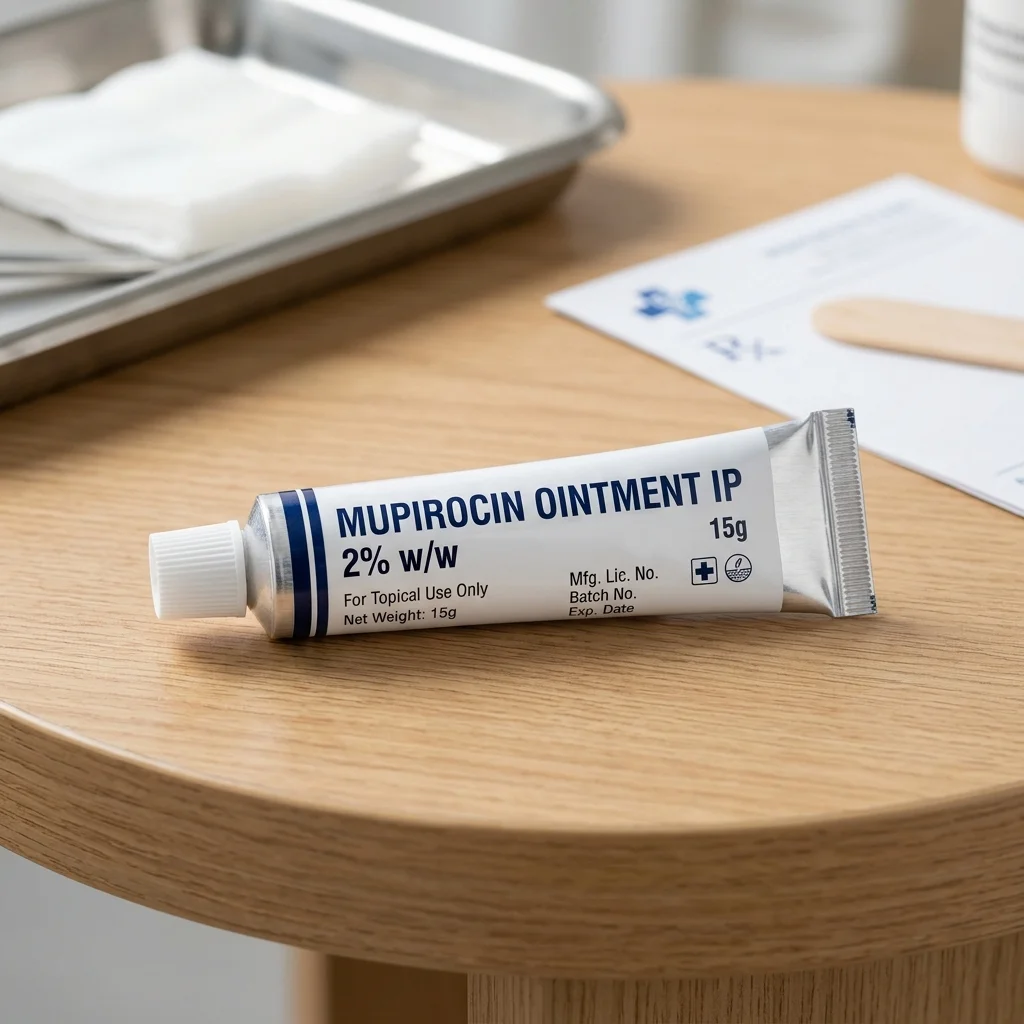
Mupirocin 2% Ointment tube
First-Line Topical

Mupirocin Ointment IP 2%

Targeted topical antibiotic that eliminates nasal Staphylococcus bacteria without stinging delicate mucosal linings.

Warm compress cloth and soothing sterile preparation
Physical Decompression

Warm Saline Compress

Moist heat dilates local capillaries, softening hardened plug material and promoting natural, scar-free drainage.

Dermatology examination profile
AI Analysis Tool

MyMirror Facial Scan

Analyze facial inflammation patterns, skin barrier health, and acne triggers with a quick, free photo scan.

Indian Pharmacy Directory

Top Medications & Cost Guide in India (2026)

These pharmaceutical options are standard across Indian chemists (Apollo Pharmacy, MedPlus, Netmeds, 1mg) for treating localized nasal and outer ear inflammation:

Active Ingredient Common Indian Brands Primary Use Case Price Range (INR) Application Guidance
Mupirocin 2% w/w T-Bact Ointment, Bactroban, Mupicip Nasal vestibulitis, bacterial boils, staph pustules ₹130 – ₹185 (15g) Apply tiny dab with fresh cotton swab twice daily for 5 days.
Clindamycin 1% Gel Clindac-A, Clindex, Acnesol Outer ear pustules, concha bowl blackheads, acne zits ₹120 – ₹190 (20g) Apply thin layer on cleansed outer ear skin; avoid deep canal.
Antibacterial Ear Drops Ciplox (Ciprofloxacin), Otogesic Ear canal furuncle with swelling, acute otitis externa ₹45 – ₹95 (10ml) Use only under doctor advice to confirm eardrum integrity.
Salicylic Acid 2% Cleanser Saslic DS, Cipla Saslic, Minimalist 2% Prevention of outer ear and nose crease blackheads ₹299 – ₹395 (100ml) Wash ear creases and nose base twice weekly in the shower.
Oral Amoxicillin-Clavulanate Augmentin 625 Duo, Moxikind-CV Spreading redness, facial fever, deep severe furunculosis ₹170 – ₹220 (10 tabs) Strict prescription only; full course directed by physician.
Interactive Check

Ear & Nose Blemish Symptom Checker

Answer two quick questions to see whether home care is safe or if you should seek medical evaluation:

✓ Home Care Protocol Recommended

Your symptoms indicate a localized superficial pore blockage or mild folliculitis. Apply warm saline compresses for 10 minutes, followed by a thin dab of Mupirocin 2% ointment (T-Bact) twice daily. Keep fingers away and do not attempt to pop it. It should resolve within 3 to 5 days.

⚠️ Doctor Evaluation Advised

Severe throbbing pain or spreading redness suggests a deeper bacterial furuncle (boil) or nasal vestibulitis. Because this area connects directly with central facial venous drainage, schedule an examination with an ENT specialist or dermatologist for safe prescription oral antibiotics.

Frequently Asked Questions

Common Questions About Ear & Nose Blemishes

Why does a pimple inside the ear or nose hurt so much more than a regular face zit?
The skin lining your nasal vestibule and ear canal rests directly on firm cartilage without any cushioning subcutaneous fat. When inflammation occurs, the skin cannot expand freely. This trapped swelling puts direct, intense pressure on dense sensory nerve endings, making even a tiny spot throb severely.
What is the Danger Triangle of the face, and why is popping discouraged?
The facial danger triangle connects the bridge of your nose down to both mouth corners. Veins in this zone do not have one-way valves and flow directly toward the cavernous sinus at the base of the skull. Squeezing a pimple can force bacteria backward into deep veins, increasing the risk of serious complications.
Can I use earbuds or bobby pins to pop an ear canal pimple?
No. Never insert cotton buds, safety pins, or bobby pins into your ear canal. These objects scrape delicate canal tissue, push pus deeper toward the eardrum, and introduce new bacterial pathogens, converting a small pimple into painful ear canal swelling.
Which Indian pharmacy ointments work safely for a pimple inside the nose?
Topical Mupirocin 2% ointment (T-Bact or Bactroban) is widely used by dermatologists because it targets Staphylococcus aureus bacteria commonly found in nasal vestibulitis. Clindamycin 1% gel (Clindac-A) is another option for surface whiteheads.
When should I see an ENT doctor or dermatologist?
Visit a doctor right away if redness spreads across your cheek or nose bridge, your eye swells, you run a fever, or you experience dizziness or ear discharge. These symptoms indicate spreading infection that requires oral prescription antibiotics.
Dr. Lipy Mehta, MD

Medically Reviewed by Dr. Lipy Mehta, MD

Consultant Dermatologist & Aesthetic Physician

Dr. Mehta has over 12 years of clinical dermatology experience treating inflammatory acne, folliculitis, and cutaneous infections across leading medical hospitals in India. This article follows standard ENT and dermatological protocols for central facial lesions.