
You finally started using that dermatologist-recommended Salicylic Acid serum or Adapalene gel to clear your skin, but three days in, you woke up with a cluster of new bumps. You are panicking, looking in the mirror, ready to throw the tube in the trash.
"Is this product actually making my skin worse, or is it just clearing out the deep layers?"
In India, where heat, humidity, and dust complicate active ingredients, telling the difference between a skin purge and an inflammatory breakout is critical. If you stop too early during a purge, you reset the clock and lose all progress. If you keep going during a breakout, you risk permanent scarring and hyperpigmentation (PIH).
Here is the science-based guide to diagnosing your skin in under 5 minutes.
1. The Science: What is a "Purge" vs. a "Breakout"?
The Biological Purge (Accelerated Turnover)
Before a pimple appears on your face, it starts deep in the pore as a microscopic blockage of sebum and dead skin cells called a microcomedone. Under normal conditions, it takes 28 to 40 days for a microcomedone to travel to the surface and become a visible blackhead, whitehead, or pimple.
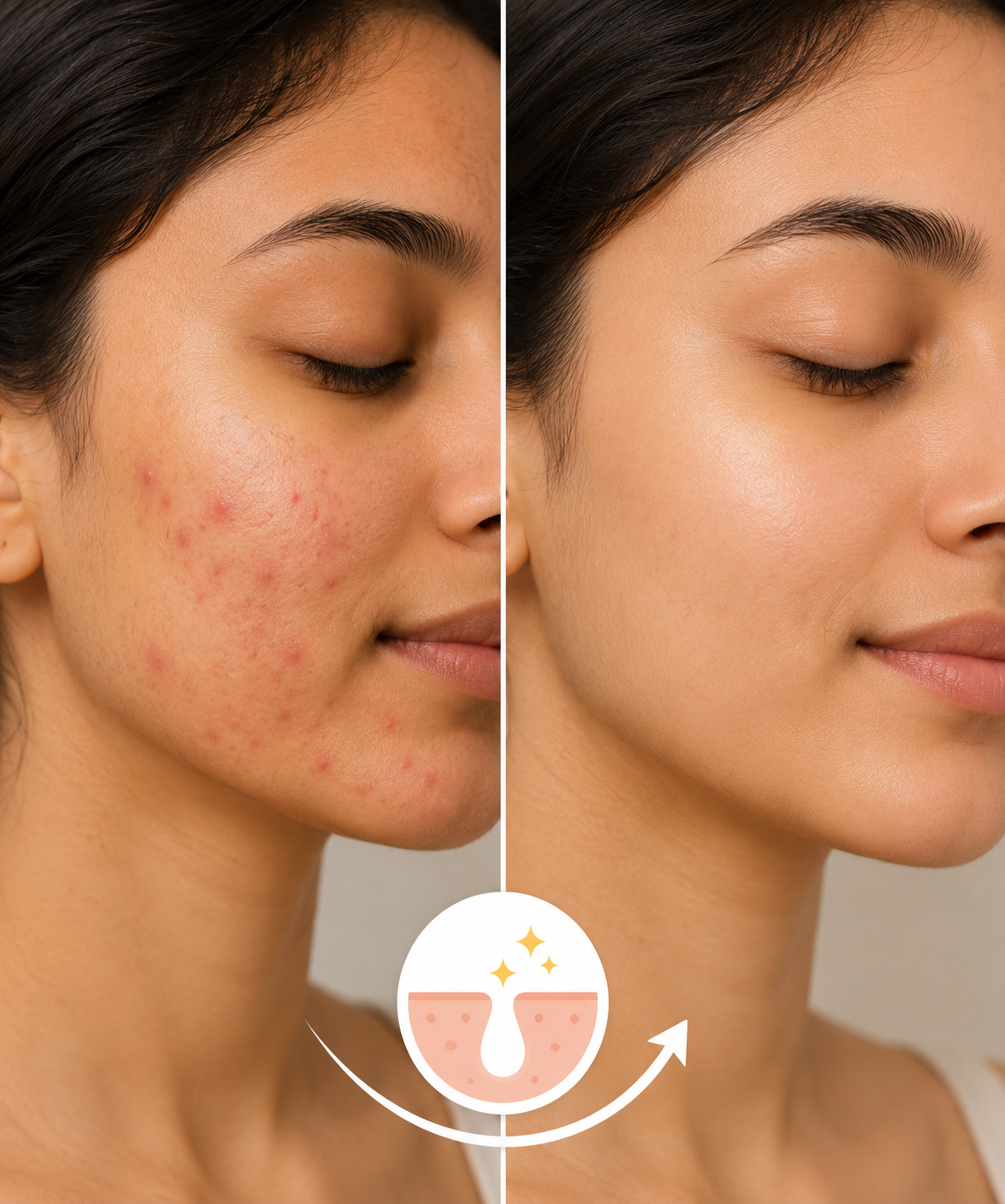
When you apply active ingredients that speed up cell turnover (like retinoids or chemical exfoliants), you accelerate this 28-day timeline into 2 to 5 days. The product is not creating new pimples; it is simply forcing existing, deep-seated blockages to the surface all at once. This is skin purging.
The True Breakout (Product Irritation or Clogging)
A breakout occurs when a product contains ingredients that clog previously clean pores, trigger allergic contact dermatitis, or irritate the skin barrier. In this case, the product is actively generating new blockages that did not exist before.
2. The 3 Diagnostic Rules: How to Tell the Difference
To analyze your skin, evaluate these three clinical parameters:
Rule 1: The Location Audit
The Purge: Bumps only appear in the specific areas where you normally get breakouts. If you always get pimples on your nose and chin, a purge will flare up on your nose and chin.
The Breakout: Bumps appear in brand new areas where you rarely or never get acne (such as your cheeks, temples, or neck).
Rule 2: The Timeline & Healing Rate
The Purge: Individual purge bumps (usually whiteheads or small red papules) mature and heal extremely fast, often disappearing within 2 to 5 days without leaving deep scars.
The Breakout: Pimple breakouts linger. They stay inflamed, turn into deep, painful cysts, and take 2 to 3 weeks to fully resolve, often leaving behind dark marks (PIH).
Rule 3: The Active Ingredient Check
Only specific categories of active ingredients can cause purging. Review the comparison table below:
| Active Category | Specific Ingredients | Does it Cause Purging? | Clinical Purpose |
|---|---|---|---|
| Retinoids | Retinol, Adapalene, Tretinoin | YES | Speeds up skin cellular renewal |
| BHA (Salicylic Acid) | Saslic Wash, Sebogel, Minimalist BHA | YES | Dissolves excess sebum inside pores |
| AHA (Glycolic/Lactic) | Glyco-6, Lactic Acid Serums | YES | Exfoliates top layer dead skin cells |
| Benzoyl Peroxide | Benzac AC Gel, Perobar | YES | Kills acne bacteria & exfoliates |
| Hydrators & Soothers | Hyaluronic Acid, Niacinamide, Ceramides | NO | Rebuilds and repairs skin barrier |
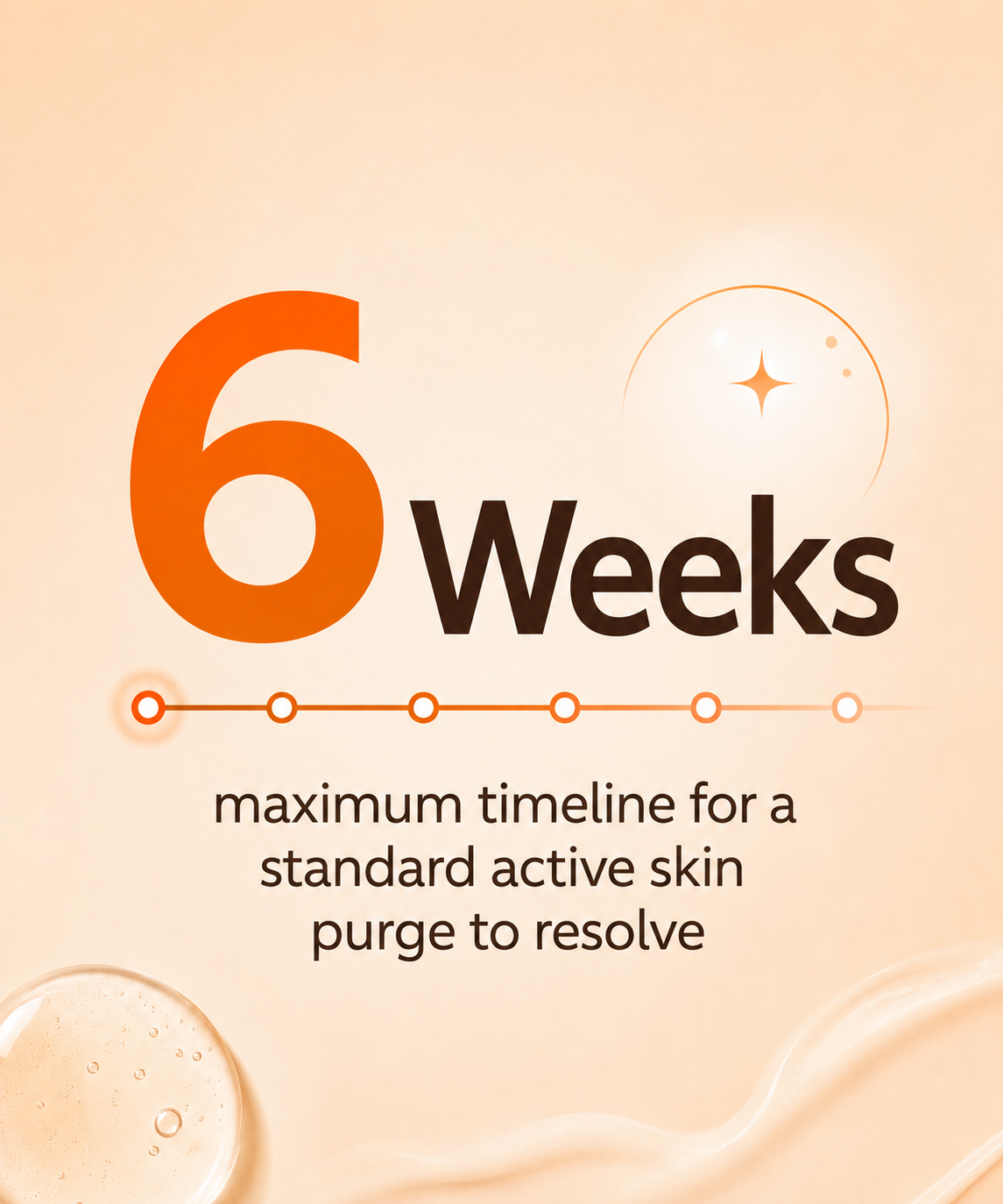
3. The 6-Week Timeline: What to Expect During a Purge
If you are indeed purging, the flare-up follows a predictable clinical timeline:
- Weeks 1–2 (The Flare): Breakouts peak. Bumps rise to the surface. Your skin may feel slightly dry, flaky, or sensitive.
- Weeks 3–4 (The Transition): New bumps stop forming. The existing purge bumps start healing rapidly. Skin texture begins to feel smoother.
- Weeks 5–6 (The Clear): The purge resolves completely. The skin barrier is stronger, and you will begin to see the true benefits of the active ingredient (fewer blackheads, reduced sebum, even skin tone).
4. How to Manage a Purge and Avoid Scarring
While you cannot stop a purge (those microcomedones have to come out), you can minimize the inflammation and prevent hyperpigmentation:
1. Introduce Actives Slowly
Do not apply new active ingredients daily. Start with 2 nights a week for the first two weeks, increase to alternate nights for weeks 3–4, and move to every night only after week 4 if your skin tolerates it.
2. Use the "Sandwich Method" (for Adapalene/Retinol)
To buffer irritation and reduce the intensity of the purge: Apply a thin layer of a basic, lightweight moisturizer (like Sebamed Clear Face Gel or Excela). Wait 10 minutes for it to dry, apply a pea-sized amount of your Adapalene gel or Retinol, and then apply a second layer of moisturizer on top.
3. Protect with Non-Comedogenic Sunscreens
Sensitized skin during a purge is highly susceptible to UV-induced dark marks. Use a lightweight gel sunscreen that won't clog pores, such as Minimalist SPF 50 or Re'equil Ultra Matte Dry Touch.
5. FAQ: Skin Purging
No. Niacinamide is a barrier-restoring, anti-inflammatory vitamin. It does not speed up cell turnover. If you break out from a Niacinamide serum, it is due to a high concentration (10% can be irritating for some) or a clogging base formulation.
Look at the location. If you are getting whiteheads on your forehead or chin where you usually clog, it is an Adapalene purge (Adaferin/Differin). If you get itchy bumps on your cheeks where you normally have clear skin, the gel’s base ingredients are likely clogging your pores.
No. Purging pimples rise from deep layers. Popping them pushes bacteria deeper, damages the skin wall, and guarantees permanent pitted scars or dark spots. Use a hydrocolloid pimple patch (like Acnes Patch or Urban Yog) to protect it instead.
Is Your Skincare Working Against You?
Many "acne-clearing" products actually contain ingredients that feed the fungus that causes breakouts. Stop the guesswork.
Scan your face with MyMirror AI to get a personalized, active-safe routine that finally clears your skin for good.
Start Your Free AI Skin Scan NowRelated Guides
Before layering BHA with retinoids, check our dermatologist guide on mixing Salicylic Acid with Retinol or Adapalene safely without burning your skin barrier.