
When a sudden breakout flares up, the immediate instinct is to throw every bottle on your bathroom shelf at your face: a salicylic acid wash, a niacinamide serum, a retinol cream, and an acne spot gel. Within two days, your face feels like it is on fire, your cheeks turn red, and applying basic moisturizer burns.
In dermatology clinics, this is known as a collapsed skin barrier. More products do not lead to faster results. Applying ingredients in the wrong order or stacking conflicting actives causes chemical irritation that triggers even more breakouts.
Layering skincare does not have to be complicated. By following a few simple rules, you can get maximum benefits from your active serums while keeping your skin calm, hydrated, and clear.
1. The Core Rule: Layer from Thinnest to Thickest
Skincare products work on a simple physical principle: lightweight, water-based formulas cannot penetrate through thick, oil-based creams. If you apply a heavy moisturizer first and pat a watery vitamin C serum on top, the serum will simply sit on the surface and evaporate.
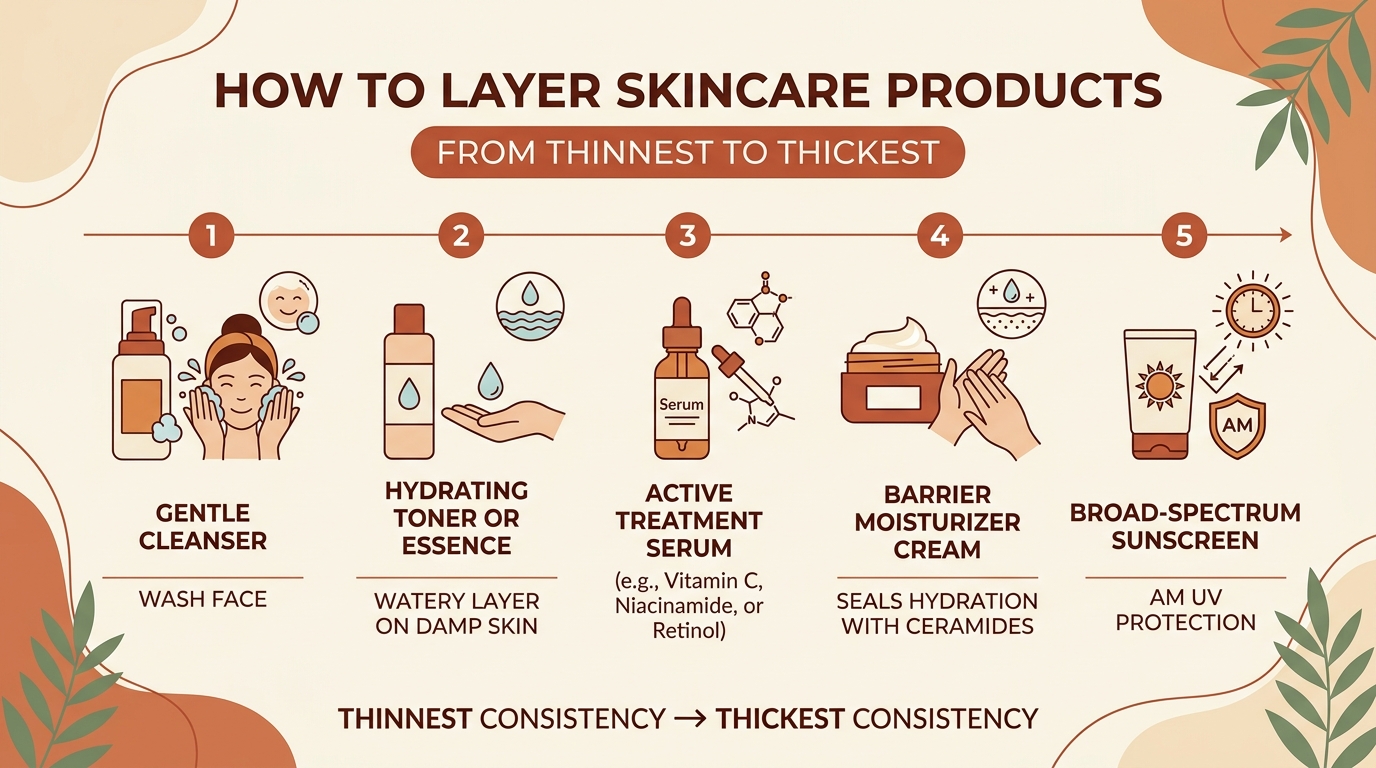
- Step 1: Gentle Cleanser: Wash away surface sweat and excess oil without stripping your natural lipids. Avoid squeaky-clean foaming soaps that leave skin tight.
- Step 2: Hydrating Toner or Essence: Water-like formulas that soften the skin and prepare it to absorb treatment serums.
- Step 3: Active Treatment Serum: Concentrated formulas like Vitamin C, Niacinamide, or Azelaic Acid that target specific concerns like dark marks or breakouts.
- Step 4: Barrier Moisturizer: Creams containing ceramides, squalane, or glycerin that lock moisture in and support the protective outer layer.
- Step 5: Sunscreen (Morning Only): Broad-spectrum SPF 50 creates an invisible shield against UV damage. Always make sunscreen the final step of your morning routine.
2. Dangerous Duos: Skincare Actives That Should Never Meet
Some active ingredients cancel each other out or cause extreme irritation when layered in the same routine. Here are the three combinations dermatologists warn against:
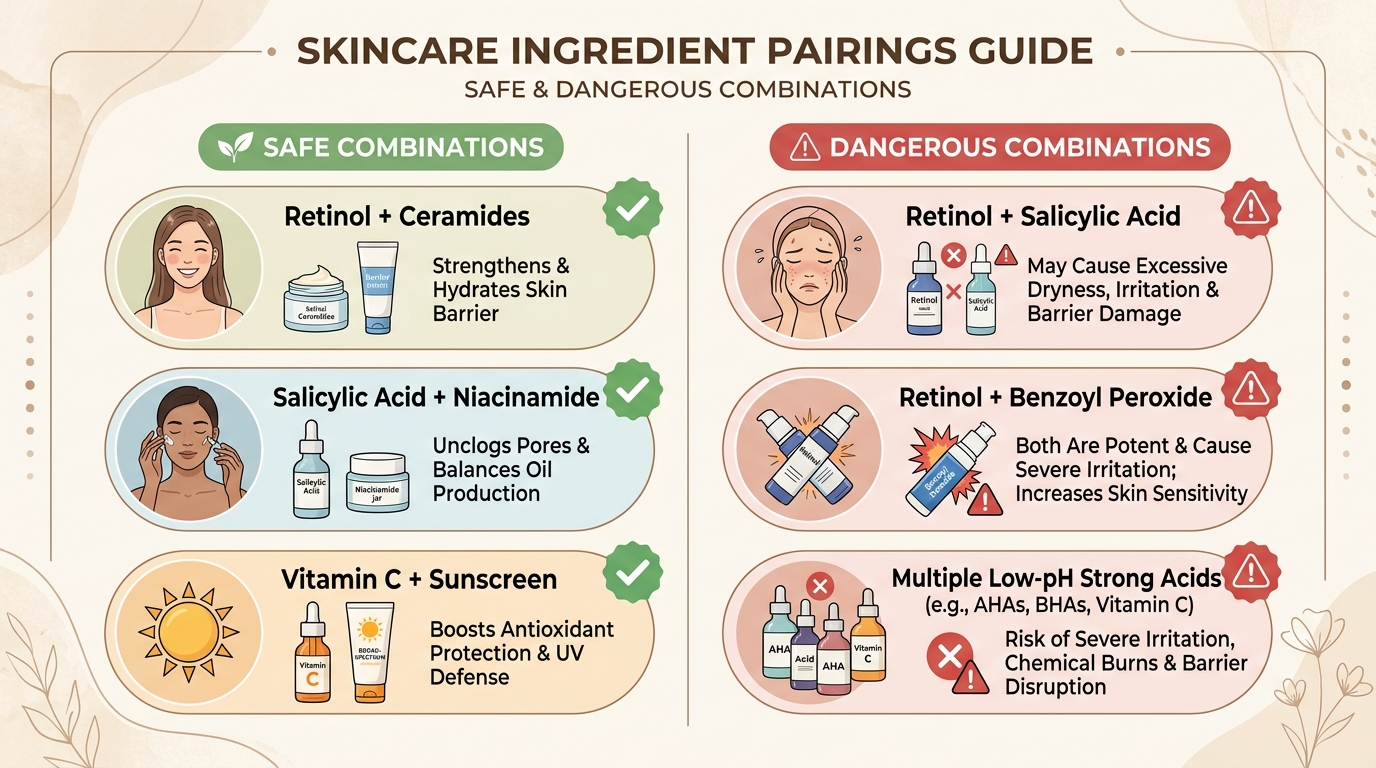
Both increase cellular turnover and exfoliation. Layering them together strips away the stratum corneum, leading to peeling, stinging, and persistent redness.
Benzoyl peroxide is a strong oxidizing agent that chemically breaks down retinol molecules, making both treatments useless while multiplying dryness.
Applying glycolic acid, salicylic acid, and pure ascorbic acid together drops your skin pH too low, causing direct chemical burns and barrier breakdown.
You do not need to throw away your products. Simply use one in the morning (like Vitamin C or Salicylic Acid) and the other at night (like Retinol or Adapalene).
3. Power Couples: Ingredients That Work Better Together
Just as some ingredients clash, others complement each other to deliver faster results with less irritation:
Salicylic acid dissolves trapped oil inside pores, while Niacinamide (Vitamin B3) calms redness and helps regulate future sebum production. Apply BHA first, wait 1 minute, and follow with Niacinamide.
Retinol speeds skin cell renewal but causes dry flakes. Ceramides replenish essential skin lipids, completely counteracting flakiness and keeping skin hydrated.
Vitamin C neutralizes free radicals caused by pollution and sun exposure. When worn under sunscreen, it enhances UV protection and prevents acne marks from turning dark brown.
4. The Complete AM & PM Routine for Indian Skin
Here is an easy-to-follow daily template designed for combination and acne-prone skin in warm climates:
☀️ Morning Routine: Protect & Brighten
-
1
Gentle Wash: Rinse face with water or a mild non-stripping cleanser.
-
2
Antioxidant Serum: 10% to 15% Vitamin C or 10% Azelaic Acid to fade dark spots.
-
3
Lightweight Moisturizer: Gel or lotion with hyaluronic acid to hydrate without heaviness.
-
4
Sunscreen SPF 50: Two finger-lengths applied evenly across face and neck.
🌙 Evening Routine: Treat & Repair
-
1
Thorough Cleanse: Remove sunscreen, makeup, and pollution buildup.
-
2
Targeted Active: Salicylic Acid (for clogged pores) OR Retinol (for texture). Alternate nights!
-
3
Barrier Cream: Rich ceramide moisturizer to rebuild skin lipids while you sleep.
-
4
Rest: Let skin absorb the ingredients overnight without adding more products.
5. The Damp Skin vs. Dry Skin Rule
A common mistake that leads to irritation is applying the wrong product at the wrong moisture level:
- Apply on DAMP Skin: Hydrating ingredients like Hyaluronic Acid and Glycerin are humectants. They act like sponges that draw in water. If you apply them to dry skin in an air-conditioned or dry room, they can pull moisture out of deeper skin layers. Mist your face with water first, apply your humectant, and seal immediately with moisturizer.
- Apply on BONE-DRY Skin: Active treatments like Retinol, Tretinoin, and Adapalene should never be applied to damp skin. Water speeds up the absorption rate of retinoids dramatically, driving them too deep too quickly and triggering severe peeling, redness, and itching. Always wait 5 minutes after washing your face before applying a retinoid.
6. Dermatologist Video: Ingredients You Should Never Mix
To see how dermatologists evaluate active ingredient combinations, watch this guide by Dr. Shah and Dr. Maxfield:
Doctorly: Skincare Ingredients You Can't Mix
- Over-exfoliating with multiple acids weakens the lipid barrier and causes reactive breakouts.
- Separate conflicting actives into morning and evening routines instead of piling them on together.
- Consistency with two well-chosen products outperforms an irregular 10-step routine every time.
7. Frequently Asked Questions
The golden rule is thinnest to thickest consistency: start with watery toners, followed by lightweight treatment serums, then richer moisturizer creams, and finish with broad-spectrum sunscreen in the morning.
Yes. Niacinamide is a gentle buffer that works well with most actives. When paired with Salicylic Acid, it calms redness while the acid unclogs pores. With Vitamin C, applying Vitamin C first, waiting 1 minute, and following with Niacinamide provides great brightening benefits.
Pilling happens when you apply products too quickly without letting them absorb, or when an oil-based product is placed under a water-based product. Waiting 30 to 60 seconds between steps and using thinner formulas first prevents pilling.
Hydrating ingredients like Hyaluronic Acid and Glycerin work best on slightly damp skin to draw in moisture. In contrast, potent active treatments like Retinoids, Salicylic Acid, and direct acids should only be applied to bone-dry skin to avoid irritation.
If even plain water causes burning or stinging, your skin barrier is compromised. Stop all active acids and retinoids immediately for 5 to 7 days. Use only a mild non-foaming cleanser, a ceramide barrier cream, and sunscreen until your skin calms down.
Skin cycling is a 4-night routine that prevents over-exfoliation: Night 1 is chemical exfoliation (AHA or BHA), Night 2 is a Retinoid (Retinol or Adapalene), Night 3 is recovery (ceramide moisturizer only), and Night 4 is recovery before repeating the cycle.
Unsure If Your Current Routine Is Damaging Your Barrier?
Scan your face to detect microscopic barrier damage, hidden pore congestion, and see whether your active serums are helping or hurting your skin.
Start Free Skin Scan