01 / RESET
Cleanse gently
Use your usual gentle cleanser, pat dry, and skip makeup or extra products for the moment.
Notice what your skin does on an ordinary day. A few calm observations can be more useful than forcing your face into a permanent label.
Start your free skin analysis now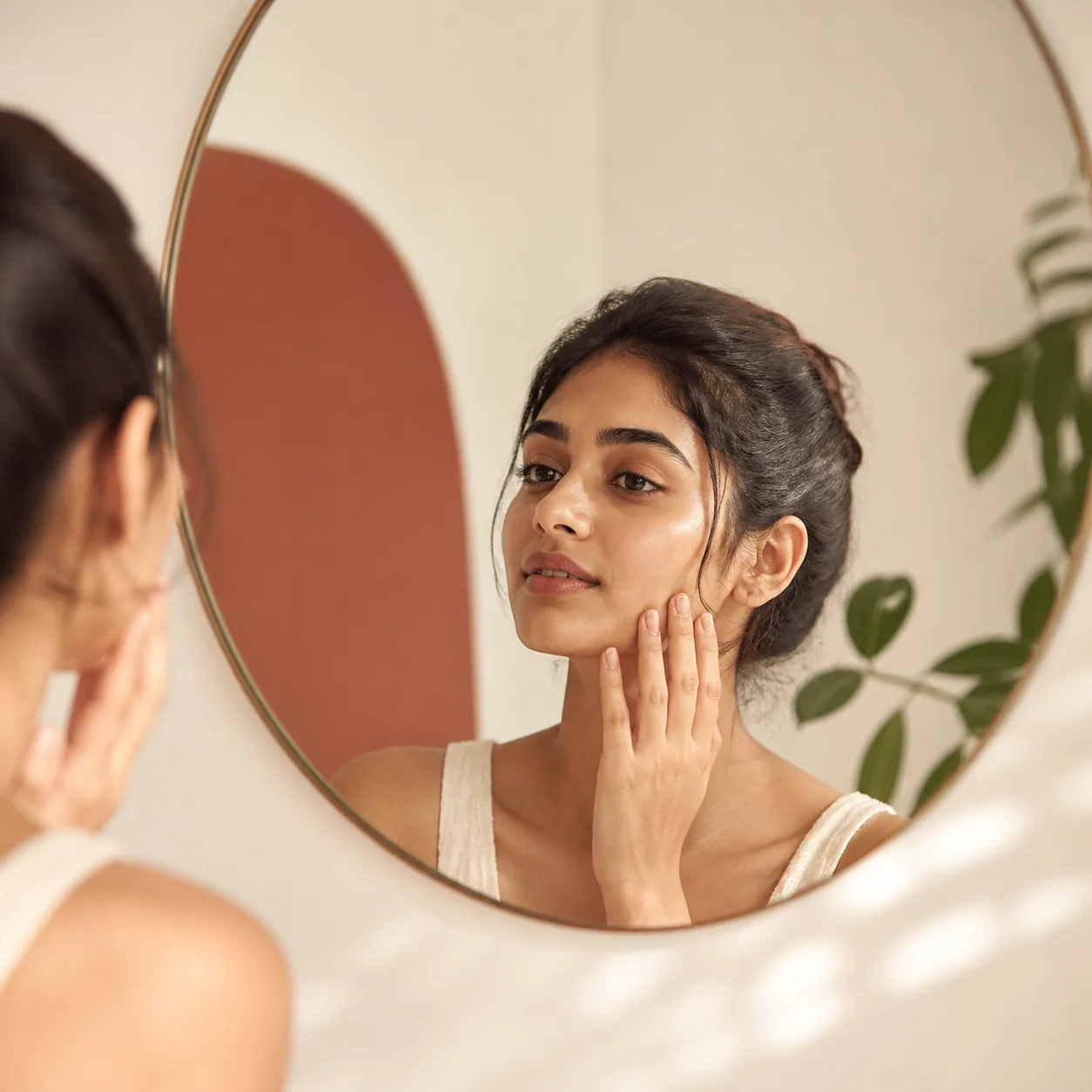
Skin-type words are useful shorthand. They can help you notice a baseline, but they cannot explain every dry patch, breakout, or reaction. Think of this as a small observation exercise—not a verdict.
Use your usual gentle cleanser, pat dry, and skip makeup or extra products for the moment.
Let your skin settle before deciding how it feels. Harsh cleansing only makes the picture less clear.
Notice your forehead, nose, chin, and cheeks separately. Shine, comfort, and tightness can vary by area.
You are looking for repeated patterns—not a perfect match. Your skin can be oily in one place and comfortable or dry in another.
Oil is most noticeable across several areas, especially later in a typical day.
Your skin may feel less comfortable or look less smooth, particularly after cleansing.
The forehead, nose, or chin can look shinier while cheeks feel normal or dry.
There is little noticeable shine or tightness in most facial areas on an ordinary day.
If a product, weather change, or routine shift leaves your skin reacting, do not force it into one type. Keep the next step simple and seek professional guidance for a concern that is painful, persistent, rapidly changing, or worrying.
Heat, humidity, over-cleansing, new products, and everyday routines can change what is visible and how your skin feels. That does not mean you need to replace everything at once.
Use it to make one thoughtful choice: simplify your routine, choose a texture that feels more comfortable, or keep observing before adding anything new.
Treat that as a reason to pause and look for context. A self-check cannot diagnose the cause of a rash, pain, or ongoing reaction.
Further reading: Vogue India on skin type and changing conditions and IADVL’s general skin-care basics.
Notice the pattern, keep the next step simple, and get extra help when your skin is asking for it.
Start your free skin analysis now