Location
Around the mouth, eyes, cheeks, hairline, and neck can each suggest different trigger conversations.
A face rash is not a product-matching problem until you know whether it is mild, spreading, painful, itchy, swollen, or linked to a trigger.
Start your free skin analysis now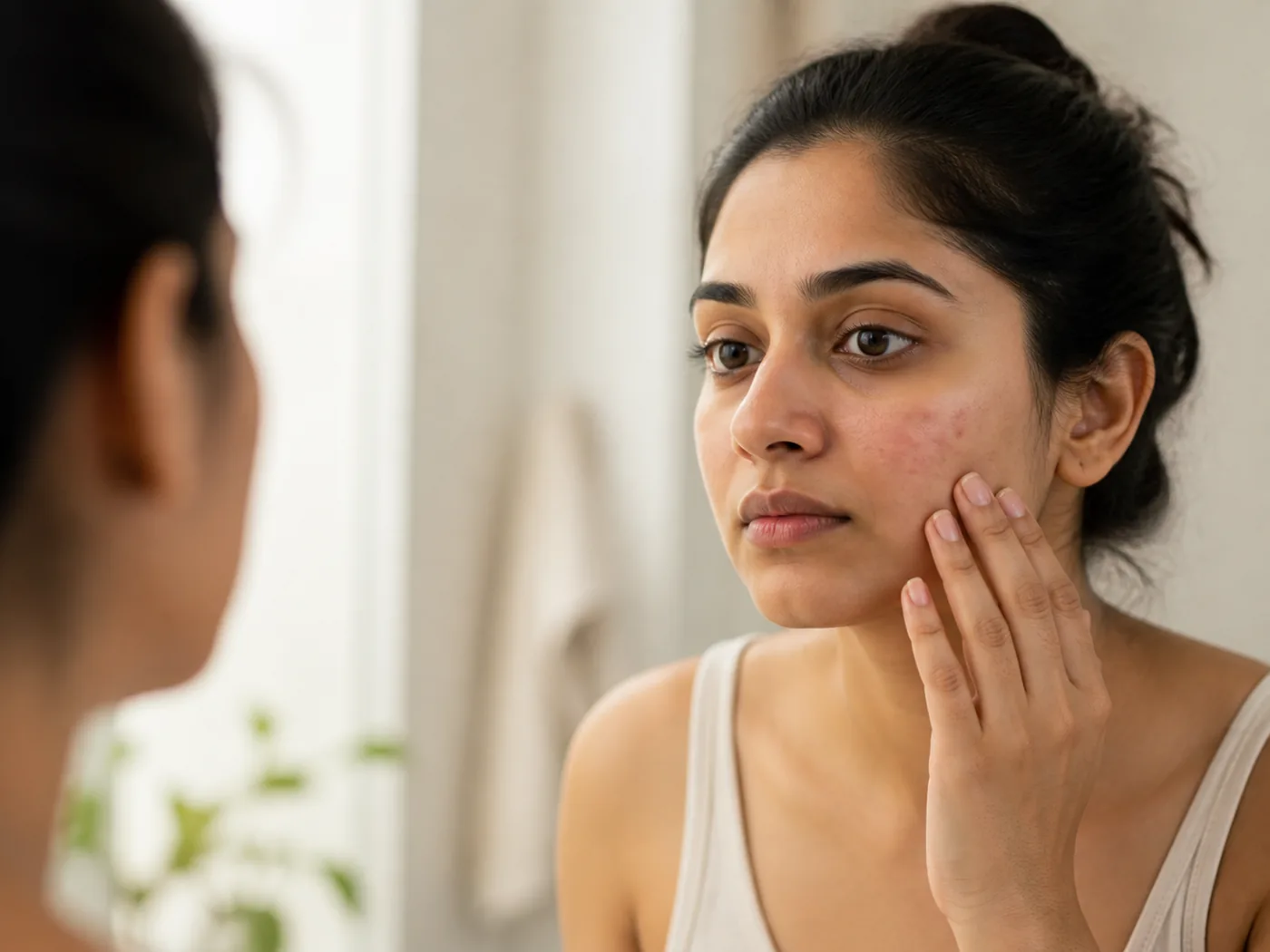
Visible rash patterns can be organized, but not diagnosed, from a photo. The practical job is to notice severity, location, speed of change, and warning signs before adding actives or home remedies.
Around the mouth, eyes, cheeks, hairline, and neck can each suggest different trigger conversations.
Flat redness, bumps, scale, crust, swelling, and warmth should not be grouped as one concern.
A rash that appears suddenly, spreads, or keeps returning needs a different response than short-lived irritation.
The best use of this page is to slow the decision down. Search intent around skin rash often jumps straight from a visible concern to a product, procedure, or home remedy. A single image should not carry that much pressure. Use the sections below to name what you can actually see: color, border, texture, location, spread, symptoms, and timing. Then decide whether the next step is a calmer routine, a cleaner scan photo, a watch-and-track period, or a clinician’s opinion.
MyMirror is most useful when you treat it as a structured note, not a final answer. The scan can help you compare visible facial areas and avoid changing five products at once. It cannot diagnose, prescribe, confirm an infection, rule out a medical condition, or replace urgent care. If the concern is painful, rapidly changing, spreading, bleeding, infected-looking, near the eyes or lips, or affecting your daily life, use the photo record as context for a professional conversation rather than as permission to keep experimenting.
A face rash deserves more caution than most cosmetic concerns because the same word can describe mild irritation, allergic contact dermatitis, eczema, infection, medication reactions, rosacea-like flushing, acneiform bumps, or urgent allergic symptoms. The photo can organize visible features, but it cannot decide the cause. Start with severity: is it spreading quickly, painful, blistering, crusting, involving the eyes or lips, accompanied by fever, or linked to breathing or swallowing trouble? Those are not routine-optimization signals. They are escalation signals. If the rash is mild and stable, the next useful layer is trigger tracking: new product, fragrance, sunscreen, hair dye, mask friction, food, medicine, plant exposure, heat, sweat, or shaving.
| Signal | What it may look like | How MyMirror helps |
|---|---|---|
| Speed | A rash that appears suddenly or spreads rapidly is more concerning than slow, mild irritation. | MyMirror can help record today’s extent so change is easier to notice. |
| Symptoms | Pain, warmth, swelling, pus, fever, or feeling unwell changes the decision from skincare to medical advice. | The scan copy keeps symptom-based escalation visible before cosmetic steps. |
| Location | Eyes, lips, mouth, and widespread facial involvement deserve more caution than a small stable patch. | A full-face photo helps show whether the rash is localized or spreading. |
| Surface | Flat redness, bumps, blisters, crust, scale, and open skin are different patterns. | Describing the surface helps avoid treating every rash like acne. |
Search results often collapse different skin patterns into one phrase. Separating lookalikes keeps the page useful and helps you avoid using a treatment meant for a different concern.
A new product, fragrance, hair dye, sunscreen, detergent, or mask material can trigger redness, itch, bumps, or swelling where contact happened.
Dryness, itch, scale, and repeated flare-ups may point toward dermatitis patterns, especially if there is a history of sensitive skin.
Bumps can look acne-like, but warmth, pain, crusting, or rapid spread changes the safety frame.
Central face redness, burning, and sensitivity can be mistaken for rash or acne and may worsen with harsh actives.
Pus, yellow crust, warmth, swelling, fever, or red streaking should not be managed as a beauty routine.
A rash routine should be boring on purpose. The aim is to remove likely irritants, protect the barrier, and decide whether the pattern is safe to observe or needs care. Strong actives, layered experiments, and “acne treatment just in case” are exactly the moves that can turn a mild rash into a confusing one.
Stop new actives, exfoliants, retinoids, fragranced products, masks, peels, and home remedies until the skin calms or a clinician advises otherwise.
Choose a gentle cleanser, simple moisturizer, and sun protection the skin already tolerates. Avoid scrubbing, steaming, or trying to dry the rash out.
Do not pick crusts, pop bumps, or apply acids to open or raw areas. Broken skin is easier to infect.
Rapid spread, blistering, eye/lip/mouth involvement, fever, severe pain, pus, warmth, or breathing/swallowing trouble should override routine plans.
List every new product, medicine, supplement, food exposure, plant exposure, hair product, detergent, or procedure from the previous two weeks.
A scan can help you record visible areas and describe whether the issue is mainly redness, bumps, scale, or marks.
A scan cannot tell you whether a rash is allergy, infection, dermatitis, rosacea, medication reaction, or another condition.
Pause strong actives, keep the routine bland, avoid picking, and get professional care when warning signs appear.
MyMirror is designed to help with visible organization, not medical certainty. Use the photo to make a calmer next choice, then escalate when the skin itself asks for it.
Seek urgent care for trouble breathing or swallowing, swelling of lips or eyes, fever, severe pain, pus, warmth, red streaks, or a rapidly spreading rash.
No. It can help organize visible signals, but a rash may need clinical diagnosis and treatment.
Do not assume a rash is acne. Benzoyl peroxide, acids, and retinoids can worsen irritation.
Use even light and include the full affected area. Avoid filters and heavy makeup.
No. Allergy is only one possibility. A rash can also reflect irritation, eczema, infection, medication reactions, heat, acne-like inflammation, rosacea-like sensitivity, or another condition.
Only if the rash is mild and you do not have warning signs. If you have trouble breathing or swallowing, swelling of the eyes or lips, fever, severe pain, pus, warmth, or rapid spread, seek medical care instead of waiting on a scan.
Many acne products dry or irritate skin. If the problem is not acne, benzoyl peroxide, acids, scrubs, and retinoids can increase burning, peeling, or redness and make the rash harder to interpret.
Be cautious. Rashes involving the eyes, eyelids, lips, mouth, or mucosal areas are listed by dermatology sources as patterns that may need medical attention. Do not apply strong skincare near the eye to “test” it.
Do not wait if warning signs appear. For a mild rash without red flags, professional care is still reasonable if it persists, keeps returning, affects sleep, or does not improve after stopping likely irritants.
This page uses the provided Google keyword stats export for topic selection and cautious public dermatology references for safety boundaries: AAD Rash 101 and Mayo Clinic dermatitis guidance and Mayo Clinic cellulitis warning signs.
Start with what is visible today, choose one sensible next step, and get professional care when the concern is painful, persistent, spreading, or worrying.
Start your free skin analysis now