Personalizing your advice...
We use your local climate data (Pollution, UV, Humidity) to provide hyper-tailored skincare tips for your PCOS-prone skin. Please allow location access when prompted.
Understanding the Link Between PCOS and Hormonal Breakouts
PCOS causes hormonal imbalances, specifically an overproduction of androgens (male hormones like testosterone). In the skin, excess androgens send your sebaceous (oil) glands into overdrive. When this excess oil mixes with dead skin cells and the daily dust and pollution of Indian cities, it creates the perfect breeding ground for acne-causing bacteria.
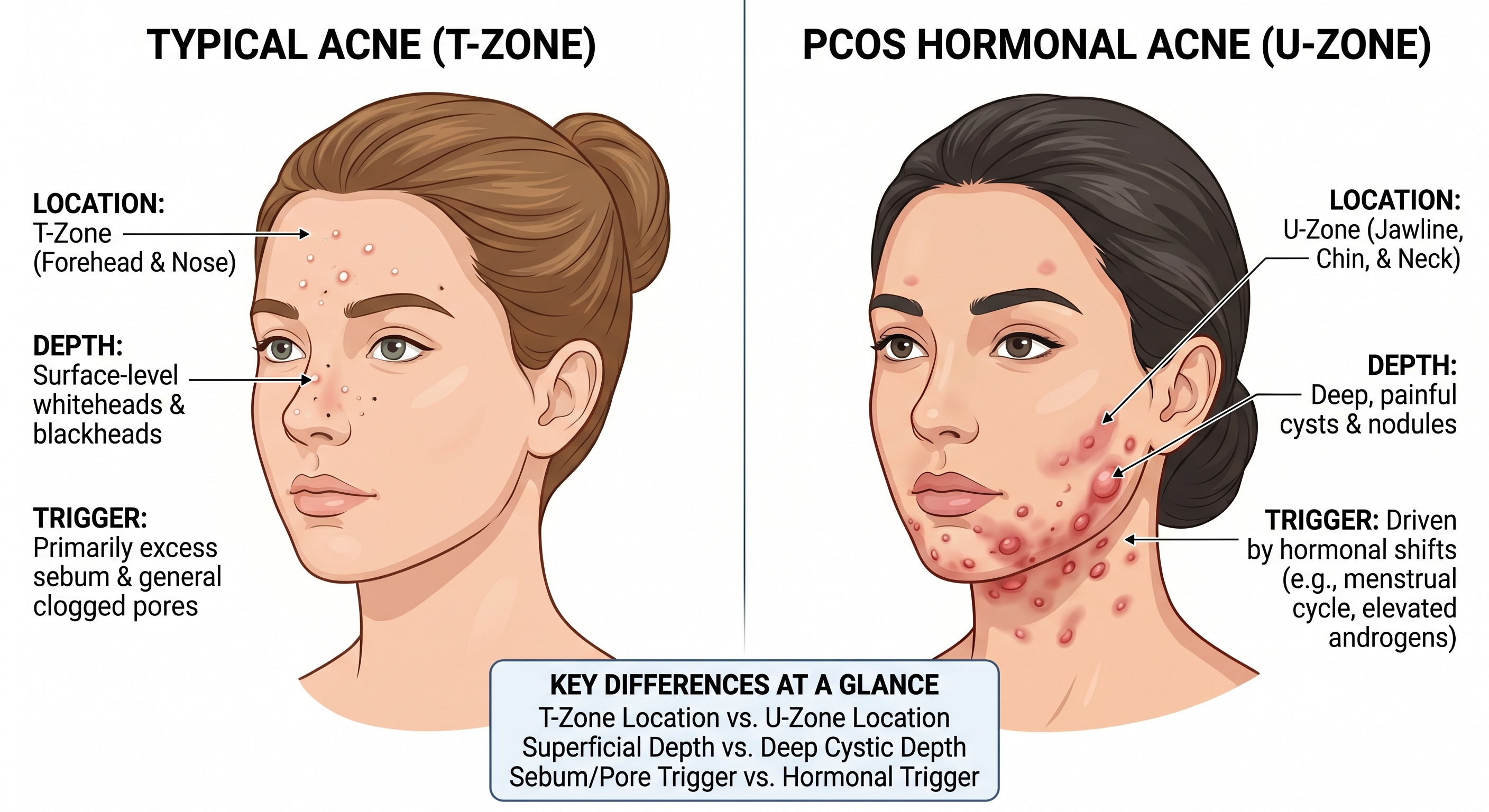
You might be wondering if your breakouts are just regular pimples or hormone-driven. If you search for pictures of PCOS acne, you will notice a distinct pattern. Unlike the superficial whiteheads of teenage acne, PCOS acne typically presents as:
- Deep, tender, and painful cysts.
- Breakouts heavily concentrated on the lower third of the face (jawline, chin, upper neck).
- Flare-ups that sync with your menstrual cycle.
Why Indian Skin Needs a Highly Tailored Approach
Treating PCOS acne in India is not as simple as buying an over-the-counter drying lotion. An effective treatment for acne with pcos must account for three uniquely Indian factors:
- The Climate and Urban Pollution: High humidity and monsoon seasons keep the skin in a constant state of dampness, leading to excess sebum production. When combined with the high particulate matter (PM 2.5) in Indian cities, your pores get clogged much faster.
- Melanin-Rich Skin and Hyperpigmentation (PIH): Indian skin types (Fitzpatrick types III to V) are rich in melanin. This means every inflammatory acne lesion leaves behind a stubborn dark mark, known as Post-Inflammatory Hyperpigmentation (PIH). Aggressive acne treatments can actually worsen these dark spots. Your routine must treat the acne while gently fading pigmentation.
- The Traditional Indian Diet: Our diets are rich and diverse, but certain staples can trigger insulin spikes—a major catalyst for PCOS symptoms. High-glycemic foods, refined carbohydrates (like white rice and maida), and heavy dairy consumption can stimulate androgen production, leading to more breakouts.
Proven Treatments for Acne with PCOS
Managing this condition requires a 360-degree approach, combining dermatological science with lifestyle shifts.
Dermatological & Medical Solutions
For severe cases, topical creams aren't enough because the root cause is internal. A dermatologist may recommend:
- Topical Retinoids: (Like Adapalene or Tretinoin) to speed up cell turnover and unclog pores, while also fading dark spots.
- Salicylic Acid (BHA): An oil-soluble acid that penetrates deep into the pores to clear out trapped sweat, oil, and city pollution.
- Anti-Androgen Medications: Prescription treatments like Spironolactone can block the effects of androgens on the skin.
- Oral Contraceptives: Certain birth control pills can regulate hormone levels and significantly reduce acne. (Always consult a gynecologist).
Natural Treatment for PCOS Acne & Dietary Shifts
Many women prefer to support their medical treatments with holistic, science-backed lifestyle changes. An effective natural treatment for pcos acne focuses on lowering inflammation and improving insulin resistance:
- Spearmint Tea: Clinical studies suggest that drinking two cups of organic spearmint tea daily has mild anti-androgen properties, helping to reduce hormonal breakouts.
- Zinc Supplements: Zinc is a powerful anti-inflammatory mineral that helps regulate sebum production and immune function.
- Dietary Adjustments: Swap high-GI foods for complex carbs. Consider limiting dairy (particularly A1 cow's milk), as it contains hormones that can trigger acne in PCOS-prone individuals.
- Ayurvedic Support: Ingredients like Neem and Tulsi have powerful antibacterial properties. While they won't balance hormones internally, mild, natural cleansers containing these can help keep the skin surface clean during humid Indian summers.
Your Step-by-Step Daily Skincare Routine
To keep your skin clear without triggering PIH, follow this dermatologist-approved daily framework:
- Cleanse: Use a gentle, foaming Salicylic Acid cleanser twice a day to cut through urban pollution and humidity-induced oil.
- Treat (Morning): Apply a Vitamin C or Niacinamide serum. Niacinamide is fantastic for Indian skin as it controls oil, reduces redness, and fades dark spots safely.
- Protect: Use a broad-spectrum, non-comedogenic gel sunscreen (SPF 50). Sun protection is non-negotiable to prevent acne marks from getting darker.
- Repair (Night): Apply a pea-sized amount of a topical retinoid (as prescribed by your dermatologist) followed by a lightweight, oil-free moisturizer with ceramides to protect your skin barrier.
Take Control of Your Skin Today
Acne caused by PCOS is stubborn, but with the right blend of hormonal management, climate-appropriate skincare, and targeted hyperpigmentation treatment, clear skin is absolutely achievable.
Consult with our board-certified dermatologists today to get a customized treatment plan designed specifically for your skin profile.
Frequently Asked Questions
Yes, but it requires a long-term strategy. Since the root cause is hormonal, topical treatments alone are not a cure. You need a combination of a tailored skincare routine, dietary adjustments to control insulin, and often medical treatments prescribed by a dermatologist or endocrinologist.
Not entirely, but certain staples like white rice, maida (refined flour), and heavy dairy (like standard milk and paneer) can spike insulin levels. High insulin triggers androgen production, which in turn causes acne. Swapping to complex carbohydrates (like millets and brown rice) and limiting dairy can make a significant difference.
Absolutely. Many Indian cities have hard water, which contains high levels of calcium and magnesium. These minerals can leave a film on your skin that clogs pores and reduces the effectiveness of your cleansers. Using a gentle toner or rinsing your face with filtered water can help prevent this.