
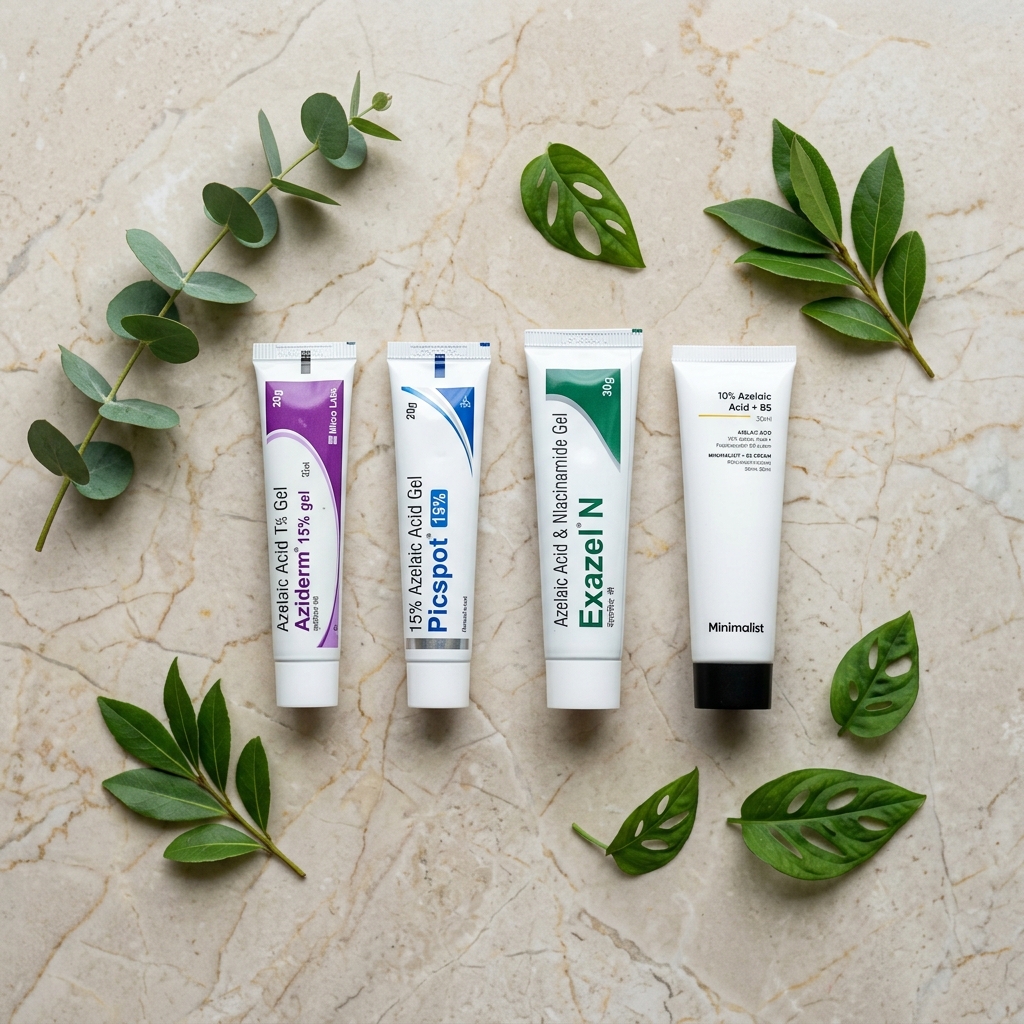
1. Biochemistry of Azelaic Acid: Tyrosinase Inhibitor & Anti-Inflammatory
Azelaic acid is a 9-carbon dicarboxylic acid that naturally occurs in grains like wheat, rye, and barley. Unlike typical alpha or beta hydroxy acids, azelaic acid functions through a unique set of biochemical pathways.
It selectively targets hyperactive melanocytes by inhibiting tyrosinase, the key enzyme in melanin production. This makes it exceptional at fading post-acne dark spots (PIH) and melasma without bleaching normal skin. Furthermore, it actively reduces the C. acnes bacteria population within pores and profoundly downregulates inflammatory cytokines, curbing the red, angry inflammation seen in acne and rosacea.
Keratolytic & Comedolytic Action
Beyond its anti-inflammatory properties, azelaic acid normalizes the shedding of dead skin cells (keratinization) inside the pore. This prevents the formation of comedones (blackheads and whiteheads) while remaining gentle enough for sensitive skin types.
2. 10% OTC vs 15% Rx Finacea: What You Need to Know
In the United States, azelaic acid is available in two distinct regulatory categories: Over-The-Counter (OTC) cosmetics at 10% and Prescription (Rx) at 15% to 20%.
OTC Accessibility vs Rx Strength
10% OTC: Creams and serums containing 10% azelaic acid are accessible without a prescription at retailers like Sephora, Target, and Ulta. They are excellent for mild to moderate acne, early rosacea, and general skin brightening.
15% Rx (Finacea): Formulated as a gel or foam, Finacea 15% is FDA-approved specifically for the inflammatory papules and pustules of mild to moderate rosacea. It offers superior penetration and is prescribed when OTC 10% proves insufficient. 20% Rx (Azelex) is an older cream formulation used for acne vulgaris.
3. Product Comparison Matrix
Comparing the top azelaic acid formulations available in the USA:
| Product | Azelaic % | Formulation | Target Concern | $ Price (USA) |
|---|---|---|---|---|
| Paula's Choice 10% Azelaic Acid Booster | 10% OTC | Cream-gel with Salicylic Acid | Acne & Post-Acne Marks | $39.00 |
| The Ordinary Azelaic Acid Suspension 10% | 10% OTC | Silicone-based cream | Texture & Redness | $11.10 |
| Naturium Azelaic Topical Acid 10% | 10% OTC | Serum with Vitamin C & Niacinamide | Hyperpigmentation | $20.00 |
| Peach Slices Acne Oil-Free Serum | OTC Blend | Lightweight Serum | Oily Acne-Prone Skin | $10.99 |
| Urban Skin Rx Even Tone Gel | OTC Blend | Gel | Dark Spots | $24.00 |
| Prescription Finacea 15% Foam/Gel | 15% Rx | Aqueous Gel / Foam | Rosacea Pustules | Varies (Insurance) |
| Prescription Azelex 20% Cream | 20% Rx | Heavy Cream | Acne Vulgaris | Varies (Insurance) |
4. Azelaic Acid + Tretinoin / Differin Layering Protocol
Combining azelaic acid with retinoids like Tretinoin or Differin (Adapalene) creates a powerful synergistic effect. The retinoid accelerates cell turnover, while azelaic acid reduces inflammation and fades the pigmentation left behind by acne.
AM Azelaic / PM Retinoid Synergy
To minimize irritation, apply your Azelaic Acid 10% in the morning (AM), followed by sunscreen. Apply your Retinoid (Tretinoin or Differin) in the evening (PM). If your skin is highly tolerant, you may layer them both in the PM, applying azelaic acid after the retinoid, but proceed with caution.
5. Azelaic Acid for Pregnancy Acne (FDA Category B Safety)
Acne during pregnancy is common due to hormonal fluctuations, but many standard treatments (like retinoids and high-strength salicylic acid) are unsafe.
Azelaic acid is an FDA Pregnancy Category B medication, meaning animal reproduction studies have failed to demonstrate a risk to the fetus, and there are no adequate and well-controlled studies in pregnant women. It is widely recommended by dermatologists as a first-line, pregnancy-safe treatment for acne, rosacea, and melasma during gestation.
6. How to Manage First-Week Tingling & Itching
A hallmark side effect of azelaic acid, especially during the first week of use, is a distinct tingling or mild itching sensation upon application. This is entirely normal and not an allergic reaction.
Never apply azelaic acid to damp or wet skin. Water enhances rapid penetration, which intensifies the tingling. Always wait 5 minutes after cleansing until your skin is bone dry.
If the itching is bothersome, apply a light layer of plain ceramide moisturizer first, let it absorb, and then apply the azelaic acid over it. This "buffering" reduces the sensory sting.
7. Interactive: Is Azelaic Acid Right for Your Acne?
Take this short quiz to see if azelaic acid is the right active for your specific skin concerns.
Azelaic Acid Suitability Quiz
Answer 3 questions to evaluate your protocol.
Azelaic Acid 10%
Azelaic acid is excellent for redness, rosacea, and fading dark spots.
Confirm Routine via Free AI Scan →8. Frequently Asked Questions (FAQ)
Expert answers on azelaic acid integration and usage: