When standing in an Indian pharmacy aisle or browsing online skincare platforms, Benzoyl Peroxide (BPO) and Salicylic Acid (SA) are the two most widely recommended over-the-counter actives for acne. However, treating them as interchangeable options is one of the most common mistakes patients make on Indian skin.
Benzoyl Peroxide functions as an antibacterial oxidizing agent. Upon application, BPO breaks down to release Reactive Oxygen Species (ROS) directly inside the hair follicle. Because Cutibacterium acnes (C. acnes) are strictly anaerobic bacteria, they cannot survive in an oxygenated environment. BPO kills C. acnes rapidly through lipid peroxidation without causing bacterial resistance, making it superior to topical antibiotics like Clindamycin for long-term use.
Salicylic Acid, on the other hand, is a Beta-Hydroxy Acid (BHA) that acts as a keratolytic exfoliant. Unlike Alpha-Hydroxy Acids (AHAs like glycolic acid) which are water-soluble and act only on the surface, SA is lipophilic (oil-soluble). It penetrates deep into sebum-filled pores to dissolve desmosomes (the intercellular protein bonds holding dead skin cells together). This thins out sticky pore plugs and prevents blackheads and microcomedones from forming.
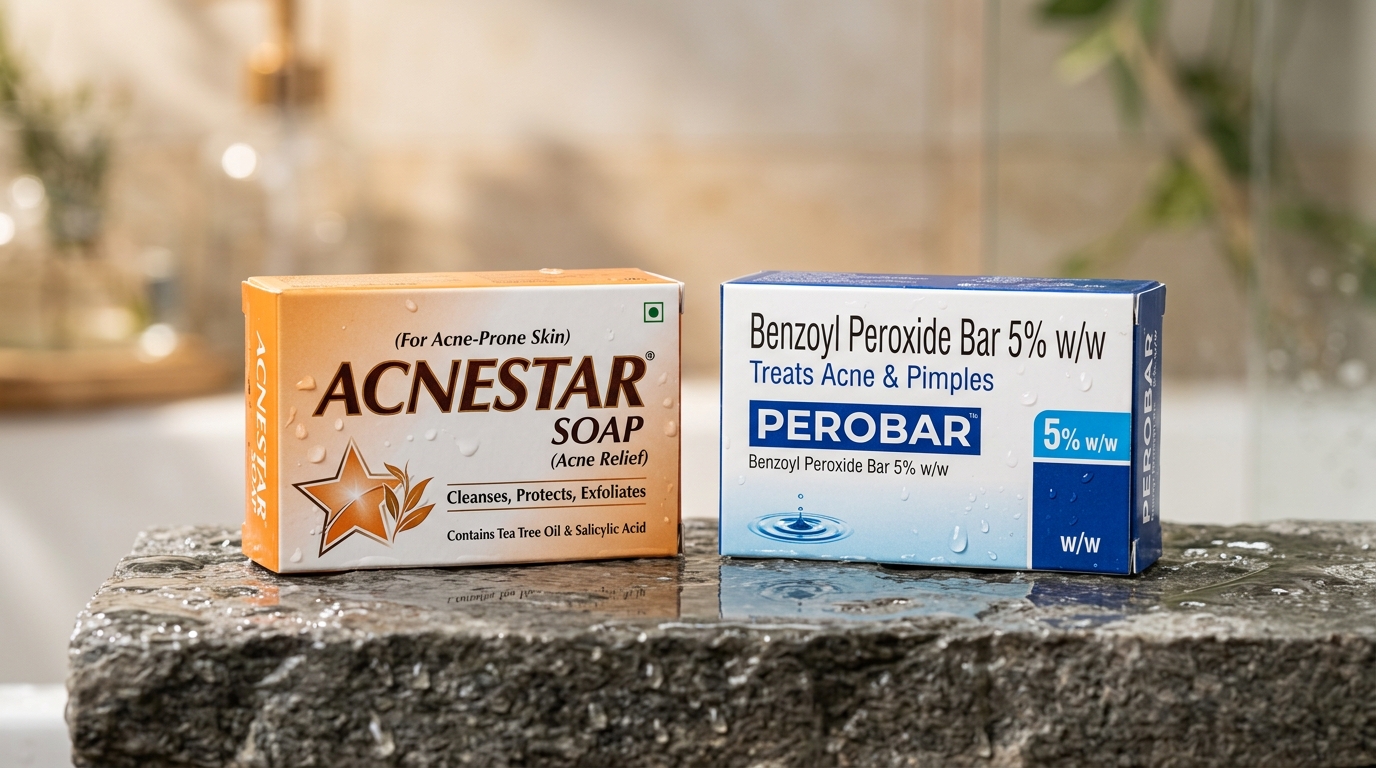
Compare the key clinical parameters of Benzoyl Peroxide and Salicylic Acid tailored specifically to Indian skin types and local pharmacy formulations:
| Feature | Benzoyl Peroxide (BPO) | Salicylic Acid (SA) |
|---|---|---|
| Mechanism | Antibacterial oxidant (releases reactive oxygen species to destroy bacteria) | Exfoliant / keratolytic (dissolves lipid desmosomes inside oil-filled pores) |
| Primary Acne Target | Inflammatory pustules, red swollen papules & painful cysts | Blackheads, whiteheads, closed comedones & bumpy texture |
| Strength Options | 2.5%, 5.0%, 10% (gels, washes, soaps) | 0.5%, 1.0%, 2.0% (cleansers, serums, toners) |
| Antibacterial Effect | YES (kills C. acnes via lipid peroxidation; 0% resistance) | Mild anti-inflammatory only (does not directly kill C. acnes) |
| PIH Risk on Indian Skin | Moderate (can worsen PIH if used in high strengths causing irritation) | Low (anti-inflammatory action reduces Post-Inflammatory Hyperpigmentation) |
| Fabric/Towel Bleaching | YES (permanently bleaches colored towels, shirts & pillowcases) | NO (completely safe on all fabrics and clothing) |
| Purging Risk | Low (causes initial dryness/flaking, but rarely purges non-inflamed pores) | Low to Moderate (accelerates cell turnover, surfacing hidden microcomedones) |
| Best Indian Formulations | Perobar 5% Soap / Persol AC 2.5% Gel / Brevoxyl 4% | Minimalist 2% SA / Paula's Choice 2% BHA / Cipla Saslic DS |
Benzoyl Peroxide is your primary weapon when dealing with red, painful, swollen, pus-filled pustules and deep inflammatory papules. Because inflamed pimples are caused by an overgrowth of C. acnes inside trapped sebum, BPO's rapid antibacterial action halts infection within 48 to 72 hours.
Superficial Red Pimples
If your face has tender, red bumps with visible white or yellow pus heads, BPO neutralizes the bacterial load and reduces localized tissue swelling faster than any hydroxy acid.
Gel vs Wash Formats
Leave-on Gels (Persol AC 2.5%): Ideal for localized spot application on individual pimples.
Wash-off Bars/Cleansers (Perobar 2.5%/5%): Perfect for short contact therapy (60 sec) on larger areas or body acne.
Salicylic Acid is the unmatched standard for non-inflammatory acne: blackheads, open and closed whiteheads, rough bumpy forehead texture (subclinical acne), and congested T-zones. It is also exceptionally beneficial for post-acne dark marks on Indian skin.
Deep Pore Penetration
Because SA is lipid-soluble, it easily mixes with natural skin oils (sebum) and flows deep into the lining of the hair follicle. AHAs (like glycolic acid) stay on top, but SA clears oil blockages from within.
Smooth Texture & Dark Spot Fading
By dissolving intercellular glue, SA accelerates the shedding of melanin-laden dead cells, helping fade post-acne dark spots (PIH) while smoothing out rough texture on the forehead and nose.
Because BPO and SA address two complementary causes of acne, combining them yields superior clinical results compared to single-agent therapy. However, applying them incorrectly will ruin your skin barrier. Follow this dermatologist-recommended daily regimen:
Salicylic Acid 2% Face Wash
Use a 2% Salicylic Acid cleanser (e.g., Cipla Saslic DS or Minimalist 2% SA Cleanser). Massage into damp skin for 60 seconds to allow SA to penetrate pores, then rinse. Follow with a lightweight non-comedogenic moisturizer and broad-spectrum sunscreen.
Benzoyl Peroxide 2.5% Spot Treat
Cleanse with a gentle hydrating cleanser. Apply moisturizer first (sandwich method), then apply a thin dab of Persol AC 2.5% Gel directly onto active red, inflamed pimples. Do NOT spread it across clear skin.
-
1
AM: Unclog Pores & Sebum Control
Salicylic Acid in the morning dissolves oil built up overnight and keeps pores clear under humid daytime conditions.
-
2
PM: Targeted Bacterial Destruction
Benzoyl Peroxide at night works undisturbed while you sleep to destroy C. acnes inside active pustules.