
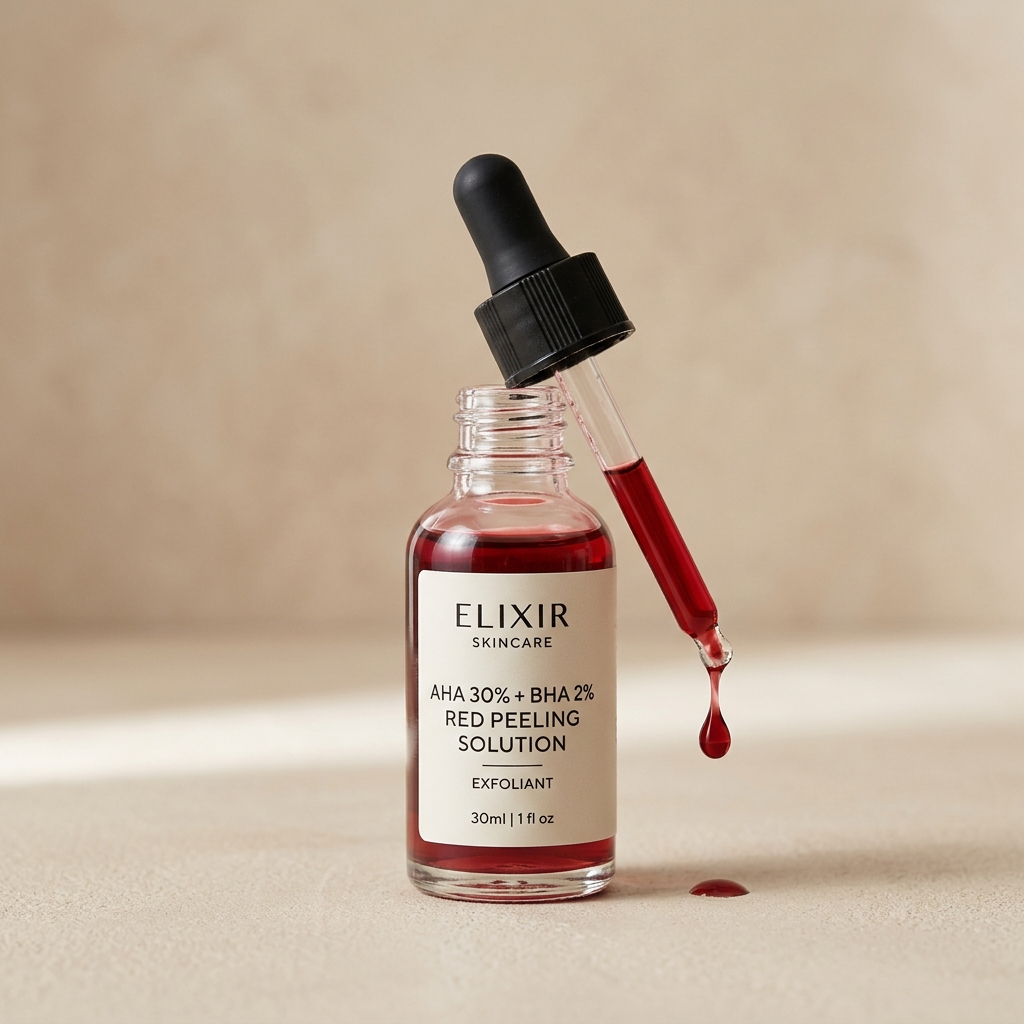
1. The Biochemistry of Chemical Peeling: AHA vs BHA Acid Science
Chemical peels utilize organic acids to accelerate the natural desquamation (shedding) of dead skin cells. The most effective at-home peeling solutions combine both Alpha Hydroxy Acids (AHAs) and Beta Hydroxy Acids (BHAs) to target different layers of the skin simultaneously.
AHAs (Glycolic, Lactic, Tartaric, Citric, Mandelic) are water-soluble acids derived from sugary fruits. They operate primarily on the surface of the stratum corneum by dissolving the desmosome bonds holding dead, dull skin cells together. This surface exfoliation reveals brighter skin, fades hyperpigmentation, and smooths rough texture.
BHA (Salicylic Acid) is an oil-soluble acid. Because of its lipophilic nature, BHA can bypass the skin's surface lipid barrier and penetrate deep inside the sebaceous follicles (pores). Once inside, it dissolves sebum, clearing out blackheads, whiteheads, and congestions that lead to acne.
Why Multi-Acid Blends Attack Both Surface Texture AND Pore Congestion
A multi-acid blend—like a 30% AHA + 2% BHA solution—delivers a comprehensive resurfacing treatment. While the AHAs sweep away the superficial layers of dead skin to improve radiance and texture, the BHA works concurrently to deep-clean the pores and reduce inflammation. This dual-action approach makes these peels highly effective for treating both acne and the post-acne marks left behind.
2. Free Acid Value & pH: Why Label Percentage Doesn't Tell the Full Story
When you purchase an at-home chemical peel, the percentage written on the bottle (e.g., 30% AHA) is not the most important factor. The true measure of a peel's potency is its Free Acid Value (FAV), which is determined by the formula's pH level.
The pH scale measures how acidic or alkaline a substance is. For chemical exfoliants to be active, they must be formulated at an acidic pH. If a product's pH is too high (alkaline), the acids are neutralized into salts, rendering them ineffective for exfoliation.
⚠️ The Importance of pH in Chemical Peels
Consider this: A 30% glycolic acid formula at a pH of 3.6 delivers a significantly higher amount of active, available acid (Free Acid Value) than a 30% formula buffered to a pH of 4.5.
How buffering agents neutralize acid potency: Formulators often add buffers (like sodium hydroxide) to raise the pH, making the peel less irritating but also less potent. Why The Ordinary's peeling solution is so powerful is precisely because it is formulated at a very low pH of ~3.6, meaning a vast majority of its 30% AHA concentration is 'free' and active to rapidly exfoliate your skin.
3. Product Comparison Matrix: Best AHA/BHA Peels in the USA
We analyzed the top peeling solutions available in the US market. Here is how they stack up in terms of acid concentrations, pH, and price:
| Product | AHA% | BHA% | pH | Format | Frequency | $ Price (USA) |
|---|---|---|---|---|---|---|
| The Ordinary AHA 30% + BHA 2% Peeling Solution | 30% | 2% | 3.6 | Wash-off Liquid | 1x/Week | $9.50 |
| Paula's Choice Skin Perfecting 25% AHA + 2% BHA Peel | 25% | 2% | 3.5-3.9 | Wash-off Gel | 1x/Week | $42.00 |
| Drunk Elephant T.L.C. Sukari Babyfacial | 25% | 2% | 3.5 | Wash-off Cream | 1x/Week | $80.00 |
| COSRX AHA/BHA Clarifying Treatment Toner | 0.1% | 0.1% | 4.0 | Leave-on Toner | Daily | $20.00 |
| Good Molecules Overnight Exfoliating Treatment | 10% | ~0.5% | 3.5 | Leave-on Serum | 2-3x/Week | $6.00 |
| Murad AHA/BHA Exfoliating Cleanser | ~2% | ~0.5% | 5.0 | Wash-off Cleanser | 2-3x/Week | $46.00 |
| Dr. Dennis Gross Alpha Beta Universal Daily Peel | Proprietary | Proprietary | 3.5 | Leave-on Pads | Daily | $92.00 |
4. The Ordinary 30%+2% vs Paula's Choice 25%+2%: Head-to-Head
The two most popular high-strength at-home chemical peels in the US are The Ordinary's iconic red peeling solution and Paula's Choice's 25% AHA + 2% BHA Peel. While their percentages seem similar, their formulations yield different experiences.
Known for its blood-red color derived from Tasmanian Pepperberry, this liquid formula is incredibly potent. With a total acid concentration of 32% and a pH of 3.6, it provides aggressive exfoliation. The high free acid value means it acts fast—tingling intensely upon application. It's best suited for advanced acid users who want maximum resurfacing on a budget.
This peel utilizes a thicker gel texture that stays put without dripping. While it has slightly less AHA (25%), its blend of glycolic, lactic, mandelic, tartaric, and malic acids offers a more elegant, multi-level exfoliation. It is buffered with soothing ingredients like allantoin and bisabolol, making it significantly more comfortable to use than The Ordinary, despite similar potency.
5. The 10-Minute At-Home Peel Protocol (Step-by-Step)
High-strength peeling solutions are not daily serums; they are flash treatments that require strict adherence to protocol to prevent chemical burns.
6. ⚠️ Chemical Peel Safety: When NOT to Use At-Home Peels
While at-home peels are safer than professional in-office treatments, they are still potent acids capable of causing severe damage if misused.
🚨 DO NOT USE AT-HOME PEELS IF:
- You have an active sunburn: Exfoliating sun-damaged skin will cause intense pain and scarring.
- You have open wounds or picked pimples: The acid will enter the dermis directly, causing severe chemical burns and risking infection.
- It's your retinoid night: Never layer strong peels with Tretinoin, Adapalene, or Retinol.
- You have a compromised barrier: If your skin is currently stinging, red, tight, or flaking, your barrier is broken. Adding acids will worsen the condition.
- You have active Rosacea: High-strength acids can trigger severe rosacea flare-ups.
- During Pregnancy: Consult your OB-GYN; high doses of Salicylic Acid (BHA) are generally contraindicated during pregnancy.
7. Interactive 'Which Chemical Peel Strength Is Right for You?' Quiz
Unsure if you're ready for a 30% AHA peel? Take this quick assessment to find the right strength for your current routine:
Peel Strength Selector
Answer 3 questions to find your safest exfoliation starting point.
Start Low and Slow
If you are new to acids, do not start with a 30% peel. Begin with a gentle daily toner like COSRX AHA/BHA or a mild 5% lactic acid serum to build tolerance.
Confirm Routine via Free AI Scan →8. Frequently Asked Questions (FAQ)
Expert answers regarding AHA BHA peeling solutions and at-home safety: