
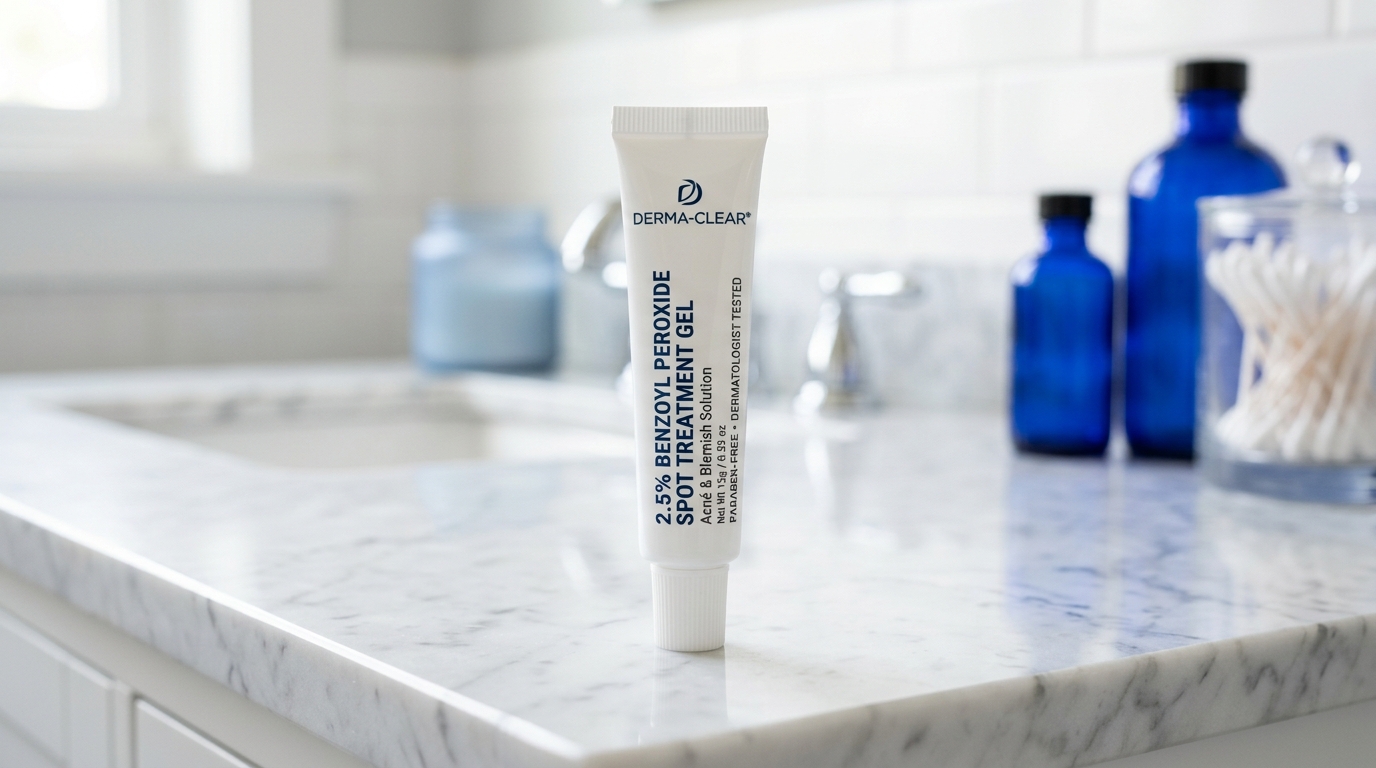
1. The Science of Benzoyl Peroxide: How BP Kills C. acnes Bacteria
Benzoyl Peroxide (BP) is a potent antimicrobial and comedolytic agent. When applied to the skin, BP breaks down into benzoic acid and generates free oxygen radicals deep inside the pilosebaceous unit.
This creates an aerobic (oxygen-rich) environment that is instantly lethal to Cutibacterium acnes (C. acnes), which are anaerobic bacteria that thrive in oxygen-depleted clogged pores. Unlike topical antibiotics, bacteria cannot develop resistance to Benzoyl Peroxide. BP also possesses mild keratolytic properties, helping to unclog pores and reduce closed comedones.
2. 2.5% vs 5% vs 10% BP: Why Higher Isn't Always Better
A persistent myth in skincare is that maximum strength (10%) clears acne faster. However, the landmark Brandman et al. study proved that 2.5% Benzoyl Peroxide is equally effective as 10% in reducing inflammatory lesions for mild-to-moderate acne, but with nearly 50% less irritation, peeling, and erythema.
When is 10% BP Appropriate?
While 2.5% to 5% is ideal for facial skin, 10% Benzoyl Peroxide is highly effective for severe truncal acne (back and chest acne). The stratum corneum on the body is significantly thicker and more resilient, requiring higher concentrations to penetrate effectively. It can also be used on the face strictly as a short-contact wash-off therapy.
3. Product Comparison Matrix
Comparing the top Benzoyl Peroxide face washes and treatments available at US retailers (Target, Walmart, CVS, Amazon).
| Product | BP % | Formulation | Contact Time | Best For | Price (USA) |
|---|---|---|---|---|---|
| PanOxyl Acne Foaming Wash 10% | 10% | Foaming Wash | 1-2 mins | Severe body acne, backne | ~$9.99 |
| PanOxyl Creamy Wash 4% | 4% | Cream Wash | 1-2 mins | Daily facial acne control | ~$9.99 |
| CeraVe Acne Foaming Cream Cleanser 4% | 4% | Cream-to-Foam + Ceramides | 1-2 mins | Sensitive/dry facial skin | ~$14.99 |
| Neutrogena Stubborn Acne Cleanser | 10% | Gel Wash | 1-2 mins | Stubborn oily skin breakouts | ~$11.99 |
| La Roche-Posay Effaclar Duo Dual Action | 5.5% | Leave-on Cream | Leave-on | Targeted spot treatment | ~$22.99 |
| Differin Daily Deep Cleanser | 5% | Liquid Cleanser | 1-2 mins | Everyday maintenance | ~$13.49 |
| Humane Benzoyl Peroxide 10% Wash | 10% | Non-foaming Wash | 1-2 mins | Body acne (vegan/cruelty-free) | ~$14.99 |
4. Short-Contact Therapy: The 2-Minute Wash-Off Protocol
If leave-on Benzoyl Peroxide creams cause severe redness and peeling, Short-Contact Therapy (SCT) is the dermatological solution. Using a BP face wash minimizes irritation and barrier damage while still effectively killing bacteria.
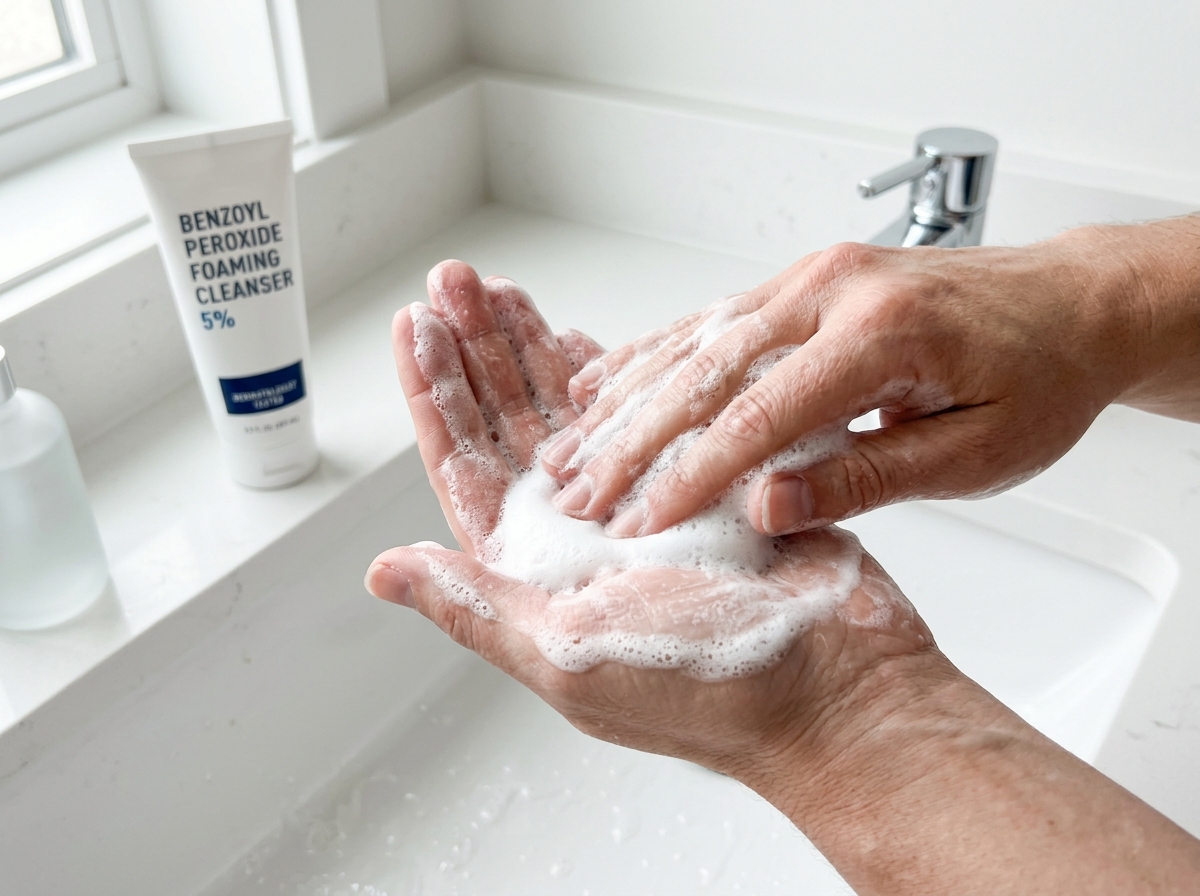
5. ⚠️ BP Bleaching Warning: Towels, Pillowcases & Fabric Damage
Benzoyl Peroxide is a potent oxidizing agent. It will permanently bleach and discolor fabrics, hair, and clothing upon contact.
🚨 WARNING: Protect Your Linens
Even after washing off a BP cleanser, trace amounts left on the skin or hairline can transfer to fabrics and cause orange/yellow bleach stains.
- Use White Towels: Only use white face towels to dry your skin after using BP.
- White Pillowcases: Sleep on white pillowcases if using leave-on BP treatments at night.
- Wash Hands Thoroughly: Always wash your hands with regular soap after applying BP to prevent bleaching your clothing.
6. BP + Adapalene (Epiduo): The Derm Gold Standard Combo
Pairing Benzoyl Peroxide with Adapalene (a retinoid) is considered the #1 Over-The-Counter (OTC) acne protocol recommended by the American Academy of Dermatology (AAD). This combination is commonly prescribed as Epiduo or Epiduo Forte.
Why it works: Adapalene speeds up cell turnover and clears clogged pores (comedolytic), while Benzoyl Peroxide kills the acne-causing bacteria inside the newly cleared pores. To mimic this OTC, use a BP face wash in the morning and Adapalene (Differin Gel) at night.
7. Interactive 'Which Benzoyl Peroxide Strength Do You Need?' Quiz
Not sure which BP product to pick up at Target or CVS? Take this quick quiz:
BP Strength Selector
Answer to find your ideal Benzoyl Peroxide protocol.
8. Frequently Asked Questions (FAQ)
Expert answers to common questions about Benzoyl Peroxide in the US: