
1. The Multi-Pathway Approach to Fading Dark Spots (Melanogenesis Inhibitors)
Hyperpigmentation requires attacking melanogenesis at 4 distinct stages. Unlike single-ingredient formulas, the best modern dark spot correctors use a "stacking" approach to inhibit pigment production comprehensively.
Inhibiting the initial signals that tell melanocytes to produce melanin. Tranexamic Acid (TXA) excels here by blocking the plasminogen/plasmin pathway, reducing UV-induced arachidonic acid and prostaglandins.
Directly blocking Tyrosinase, the enzyme responsible for converting tyrosine into melanin. Key ingredients: Kojic Acid, Alpha Arbutin, Azelaic Acid, and Vitamin C.
Preventing melanin-filled melanosomes from transferring into the surrounding keratinocytes (skin cells). Niacinamide (Vitamin B3) is the gold standard for this stage.
Accelerating epidermal desquamation to shed pre-existing pigmented skin cells faster. AHAs (Glycolic/Lactic Acid) and Retinoids are highly effective here.
2. Hydroquinone vs Non-Hydroquinone Pigment Correctors
For decades, Hydroquinone (HQ) 2% was the over-the-counter and prescription standard in the USA for skin bleaching. However, it has fallen out of favor and faces stricter regulations due to long-term safety concerns.
Why Hydroquinone is Fading Out
Prolonged use of HQ (beyond 3-5 months) increases the risk of exogenous ochronosis—a paradoxical and often permanent bluish-black darkening of the skin. Additionally, rapid rebound hyperpigmentation is common when HQ is stopped abruptly.
This is why dermatologists now prefer non-hydroquinone multi-ingredient stacks (like combining TXA + Kojic + Niacinamide). These combinations are significantly safer for long-term maintenance, especially for skin of color, and avoid the cellular toxicity associated with HQ.
3. Product Comparison Matrix
Compare the top-selling hyperpigmentation serums and treatments available at US retailers like Sephora, Ulta, Amazon, and Dermstore.
| Product | Key Actives | Mechanism | Best For | Fragrance-Free? | $ Price (USA) |
|---|---|---|---|---|---|
| Topicals Faded Serum | TXA + Azelaic + Kojic + Niacinamide | Multi-Pathway Blocker | Stubborn PIH & PIE | Yes (Sulfur scent) | $38 |
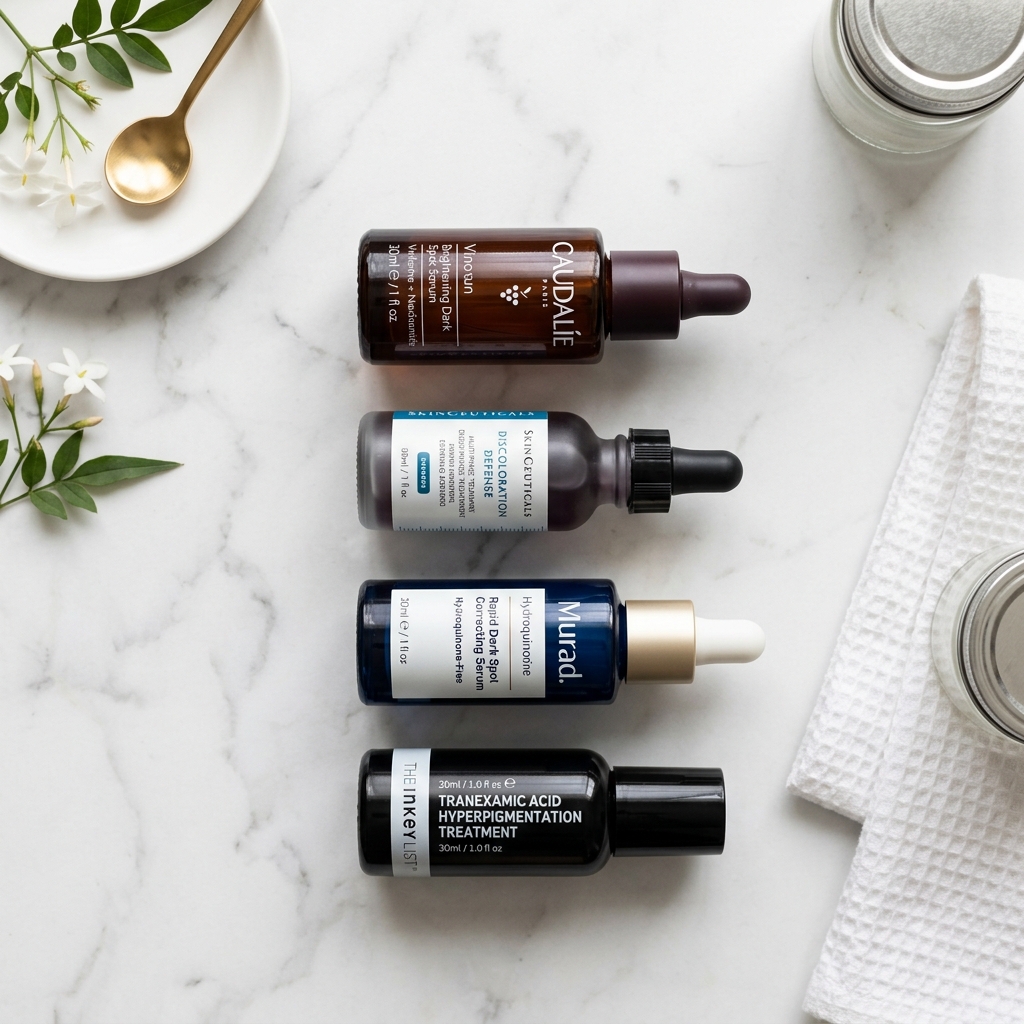
| SkinCeuticals Discoloration Defense | 3% TXA + 1% Kojic + 5% Niacinamide | Synergistic Tyrosinase/Plasmin Block | Melasma & Sun Spots | Yes | $110 |
| Paula's Choice Clinical Discoloration Repair Serum | 3% TXA + 5% Niacinamide + 0.5% Bakuchiol | Pigment Transfer + Turnover | Aging & Uneven Tone | Yes | $55 |
| Murad Rapid Dark Spot Correcting Serum | Tranexamic Acid + Glycolic Acid | Exfoliation + Brightening | Fast surface fading | No | $83 |
| CeraVe Resurfacing Retinol Serum | Encapsulated Retinol + Licorice Root | Cellular Turnover | Post-Acne Texture & Marks | Yes | $22 |
| Good Molecules Discoloration Correcting Serum | 3% TXA (Cetyl Tranexamate Mesylate) | Pre-Tyrosinase inhibition | Budget-friendly daily use | Yes | $12 |
| Hyper Skin Brightening Clear Dark Spot Vitamin C Serum | 15% Vitamin C + Kojic Acid | Antioxidant + Tyrosinase Inhibition | Glow & Protection | Yes | $58 |
| Urban Skin Rx Even Tone Cleansing Bar | Kojic Acid + Azelaic Acid + Niacinamide | Wash-off brightening | Body Pigmentation & Pre-cleanse | No | $15 |
4. Topicals Faded vs SkinCeuticals Discoloration Defense: Head-to-Head
Two of the most popular multi-pathway serums on the market are often compared. Here is the clinical breakdown:
Topicals Faded Serum ($38): A powerhouse of active ingredients including TXA, Azelaic Acid, Kojic Acid, and Niacinamide in a moisturizing cream-gel tube. It is incredibly effective for post-inflammatory hyperpigmentation (PIH). However, it has a distinct sulfur-like scent that some find unpleasant.
SkinCeuticals Discoloration Defense ($110): A refined, elegant liquid serum boasting 3% TXA, 1% Kojic Acid, 5% Niacinamide, and 5% HEPES (an exfoliant). It is completely fragrance-free, lightweight, and clinically proven to address stubborn melasma patches.
The Verdict: Choose Topicals Faded for maximum value and aggressive post-acne mark clearing. Choose SkinCeuticals if you have a larger budget, want a cosmetically elegant liquid for layering, and are targeting chronic sun damage or melasma.
5. The 8-Week Dark Spot Routine Protocol
Fading hyperpigmentation is a marathon. Implement this protocol consistently for 8 weeks before assessing results.
2. Vitamin C Serum (Antioxidant + Brightening)
3. Moisturizer
4. SPF 50+ Sunscreen (Crucial)
2. Dark Spot Corrector (e.g., Multi-pathway TXA Serum)
3. Barrier Repair Moisturizer
Note: If using Retinol, alternate nights with your dark spot corrector to prevent irritation, or seek a formulated hybrid product.
6. ⚠️ Sunscreen Is Non-Negotiable: Why UV Reverses Pigment Fading
🚨 WARNING: UV Exposure Reactivates Melanocytes
Treating dark spots without wearing daily sunscreen is counterproductive. UV rays and visible light penetrate the skin and immediately stimulate melanocytes to produce more pigment.
Even 10 minutes of unprotected sun exposure can reverse weeks of progress from your expensive serums.
- Apply a generous 1/4 teaspoon of Broad-Spectrum SPF 30 or higher to your face daily.
- Reapply every 2 hours if outdoors.
- Consider tinted sunscreens with iron oxides for added protection against visible light (which triggers melasma).
7. Interactive 'Find Your Ideal Dark Spot Corrector' Quiz
Need help deciding which product from our matrix fits your skin profile? Answer 4 quick questions.
Dark Spot Corrector Selector
Find your ideal match based on your skin type and budget.