
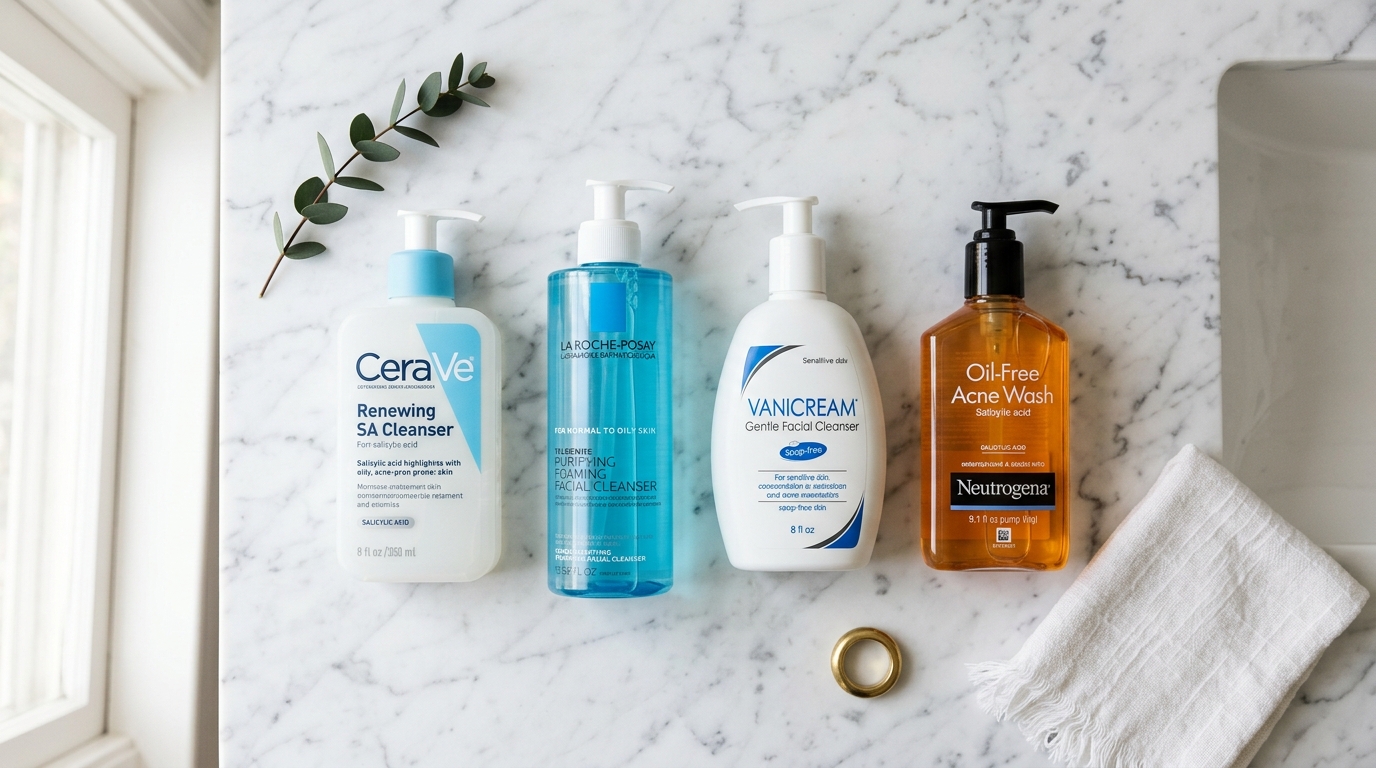
1. The Science of Cleansing: Why pH 4.5-5.5 Is Non-Negotiable
The acid mantle of healthy skin sits at pH 4.5-5.5. Alkaline cleansers (like traditional bar soaps at pH 9-10) strip the lipid bilayer, trigger compensatory sebum overproduction, and disrupt the microbiome. In fact, Cutibacterium acnes, the bacteria responsible for acne, thrives at an alkaline pH. Ideal cleanser pH must be between 4.5-5.5.
Maintaining a pH of 4.5-5.5 prevents the growth of acne-causing bacteria and preserves the skin barrier.
Avoid harsh Anionic SLS. Opt for Amphoteric (Cocamidopropyl Betaine) or Non-ionic surfactants.
Active cleansers require a minimum of 60 seconds on the skin to penetrate sebum and be effective.
Essential for removing water-resistant sunscreen and makeup before using your water-based cleanser.
2. Active Cleansers (SA/BP/Glycolic) vs Gentle Non-Active Cleansers: Which Do You Need?
Active cleansers (such as CeraVe SA or Neutrogena Oil-Free Acne Wash with SA 2%) deliver treatment ingredients during wash time. Gentle cleansers (like Vanicream or La Roche-Posay Toleriane) focus entirely on preserving barrier integrity while removing impurities.
When to use Active Cleansers: If your skin is extremely oily and can handle daily exfoliation, or if you aren't using strong leave-on actives (like Tretinoin) at night.
When to use Gentle Cleansers: If you use strong prescription retinoids, have a damaged skin barrier, or suffer from sensitive skin prone to redness and flaking.
3. Product Comparison Matrix
Compare the top face washes available in US drugstores and retailers (Target, Walmart, CVS, Ulta, Amazon):
| Cleanser | Active Ingredient | pH | Surfactant Type | Best For | Fragrance-Free? | $ Price (USA) |
|---|---|---|---|---|---|---|
| CeraVe Renewing SA Cleanser | Salicylic Acid | 5.5 | Amphoteric | Closed comedones & texture | Yes | ~$13 - $16 |
| La Roche-Posay Toleriane Purifying Foaming Cleanser | None (Niacinamide + Ceramides) | 5.5 | Amphoteric | Normal to oily sensitive skin | Yes | ~$16 - $18 |
| Vanicream Gentle Facial Cleanser | None | 5.0 - 5.5 | Mild Glucosides | Extremely sensitive/eczema skin | Yes | ~$9 - $11 |
| Neutrogena Oil-Free Acne Wash | 2% Salicylic Acid | 3.5 - 4.5 | Anionic / Amphoteric mix | Very oily, resilient skin | No | ~$8 - $10 |
| CeraVe Foaming Facial Cleanser | None (Hyaluronic Acid + Ceramides) | 5.5 | Amphoteric | Oily skin on a retinoid routine | Yes | ~$14 - $17 |
| Cetaphil Gentle Skin Cleanser | None | 5.0 - 6.0 | Non-ionic | Dry, irritated, or post-procedure | Yes | ~$11 - $14 |
| PanOxyl 4% BP Creamy Wash | 4% Benzoyl Peroxide | 5.0 - 6.0 | Amphoteric | Inflammatory papules/pustules | Yes | ~$9 - $12 |
| ELF Holy Hydration! Cleanser | Hyaluronic Acid + Ceramides | 5.5 | Non-ionic / Amphoteric | Budget-friendly gentle cleanse | Yes | ~$6 |
4. The 60-Second Contact Time Rule for Active Cleansers
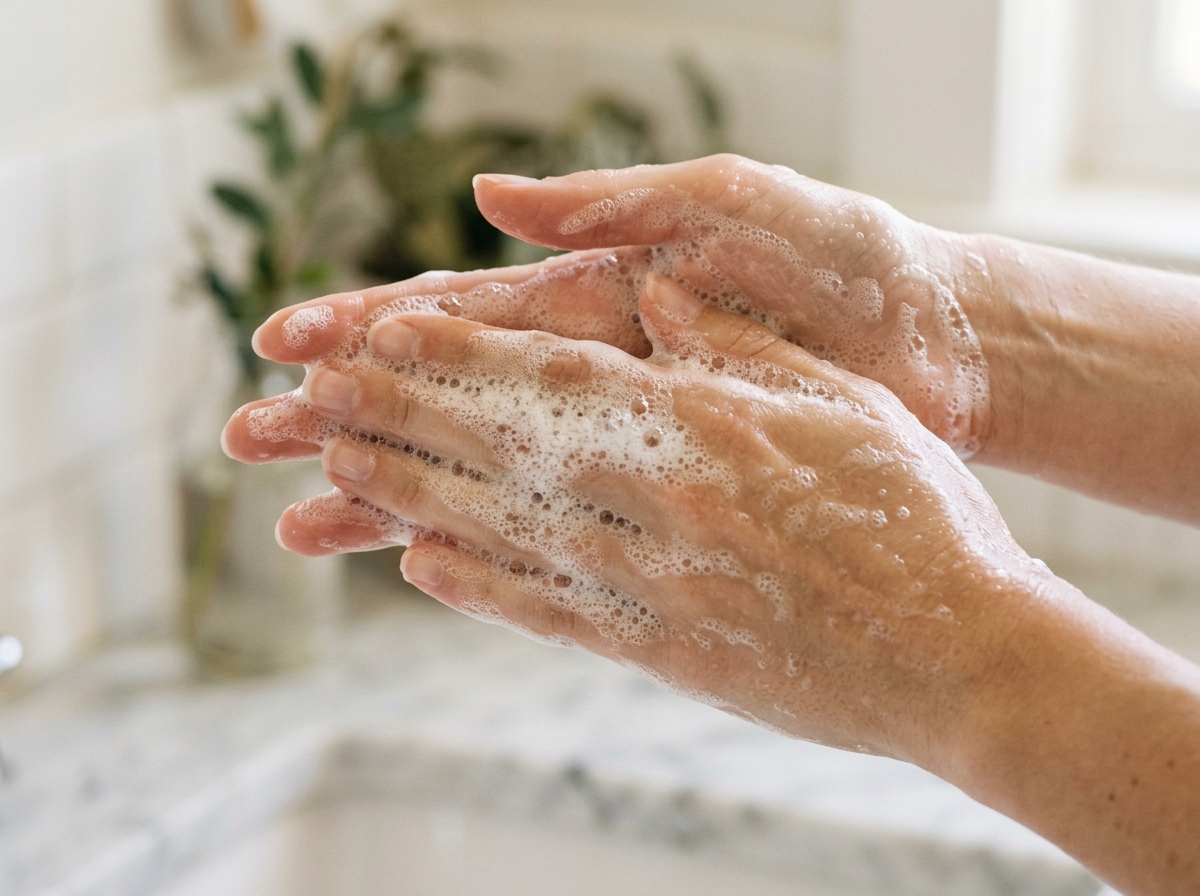
If you are using an active cleanser (SA or BP), you must massage it for 60 seconds before rinsing. Active ingredients need a minimum epidermal contact time to penetrate through sebum and reach follicular walls. Quick 10-second washes simply wash the actives down the drain.
Step-by-Step 60-Second Technique:
- Wet your face with lukewarm water.
- Apply a dime-sized amount of active cleanser to your fingertips.
- Gently massage in circular motions for a full 60 seconds, concentrating on the T-zone and problem areas.
- Rinse thoroughly with lukewarm water.
- Pat dry gently with a clean towel.
5. ⚠️ Over-Cleansing Warning: Why Washing 3x/Day Makes Acne WORSE
🚨 WARNING: Do not over-cleanse your face!
Over-cleansing strips ceramides and fatty acids from the stratum corneum, triggering compensatory sebum overproduction (reactive seborrhea). This damages the skin barrier and often leads to more acne.
- Maximum: Wash your face 2x/day (Morning and Night).
- After Exercise: Instead of a full re-cleanse, use a gentle micellar water on a cotton pad to wipe away sweat, followed by a water rinse.
6. AM vs PM Cleanser Strategy: When to Use Which
To maintain a healthy skin barrier while treating acne, consider alternating your cleansers. AM routines should focus on barrier preservation, while PM routines can handle active treatments and double cleansing.
Use a gentle non-active cleanser (like Vanicream) or just a water-only rinse if your skin is particularly dry or sensitive.
Double cleanse if wearing SPF or makeup (Micellar water/Oil cleanser first). Follow with an active cleanser (SA/BP) or a gentle cleanser if using leave-on actives.
7. Interactive 'Which Face Wash Is Right for Your Oily Skin?' Quiz
Find Your Perfect Cleanser Match
Answer 4 questions to find the ideal US pharmacy face wash for your oily skin.