
1. The Science of Hyaluronic Acid: How 1 Molecule Holds 1000x Its Weight in Water
Hyaluronic acid (HA) is a naturally occurring glycosaminoglycan found throughout the body's connective tissue, with approximately 50% of the body's total HA residing in the skin (primarily in the dermis). It acts as a powerful humectant, capable of binding to water via hydrogen bonding. Astonishingly, just 1 gram of HA can hold up to 6 litres of water.
When applied topically, HA functions by drawing water from the deeper dermal layers and from the surrounding atmosphere to plump the superficial stratum corneum, instantly hydrating the skin without clogging pores.
Smaller molecules capable of penetrating deeply into the epidermis. They help with long-lasting hydration, firming, and anti-inflammatory action.
Works effectively in the middle layers of the epidermis for surface hydration and strengthening the skin barrier.
Large molecules that sit on the skin's surface, creating a film-forming barrier to lock in moisture and prevent transepidermal water loss.
A water-soluble salt derivative of HA that is more stable and has a lower molecular size for excellent penetrability and deep hydration.
2. The Damp Skin Rule: Why Applying HA on Dry Skin DEHYDRATES You
The most critical rule of using hyaluronic acid is understanding how it behaves in different environments. Because HA is a humectant, its job is to find water and hold onto it. If you apply HA to dry skin while sitting in a dry environment (like an air-conditioned office in India), the HA cannot draw moisture from the air.
⚠️ CRITICAL WARNING: The AC Hydration Paradox
In dry/AC environments, HA applied on dry skin will pull water FROM the deeper dermal layers to the skin's surface. Once on the surface, this water will evaporate into the dry air (trans-epidermal water loss), leaving your skin significantly more dehydrated than before you applied the serum.
The Fix: ALWAYS apply HA on damp skin within 60 seconds of washing your face, then immediately SEAL it with an occlusive moisturizer.
3. Product Comparison Matrix: Top Indian Serums
Compare the best Hyaluronic Acid serums available in India for acne-prone skin, focusing on active formulation and non-comedogenic bases.
| Product | HA % | HA Types (MW range) | Supporting Actives | Best For | ₹ Price |
|---|---|---|---|---|---|
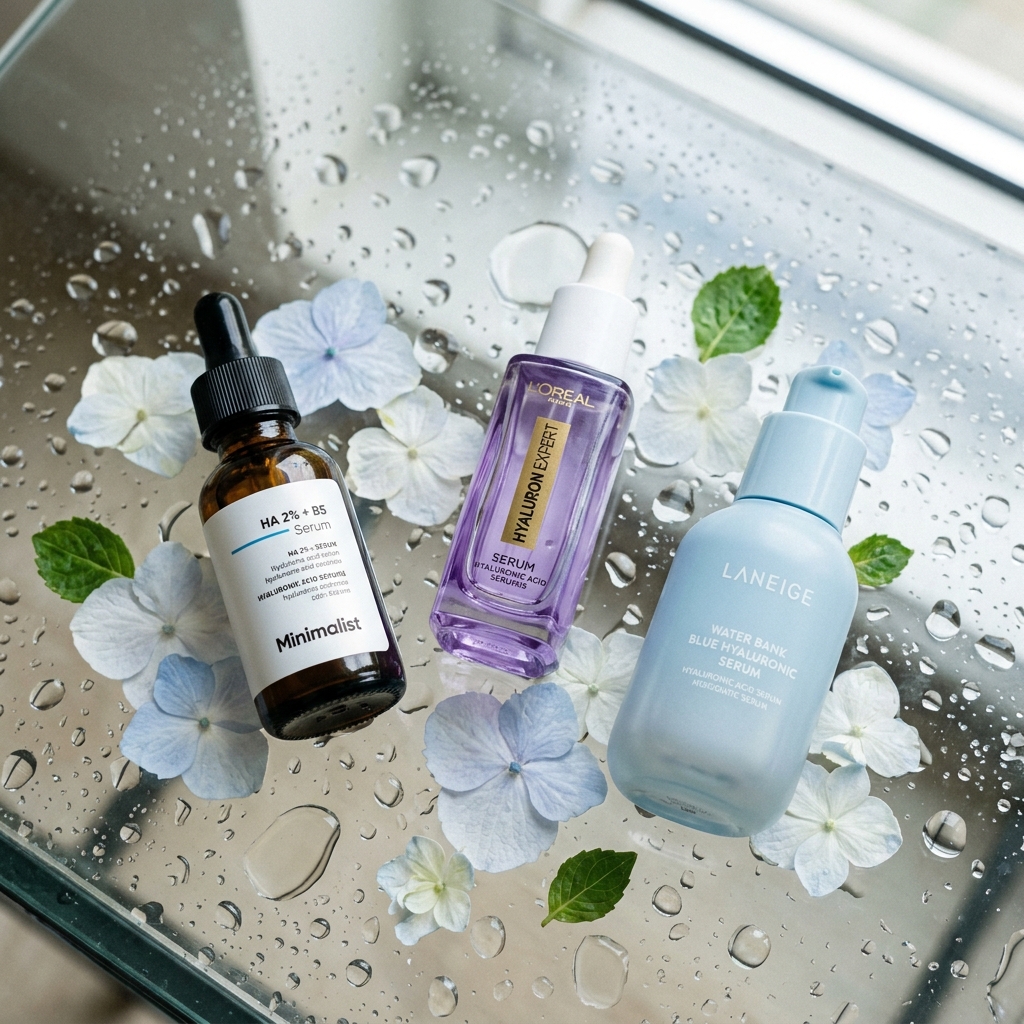
| Minimalist Hyaluronic Acid 2% + B5 | 2% | Multi-molecular | Vitamin B5 (Panthenol) | Barrier repair & plumpness | ₹599 |
| L'Oreal Paris Hyaluron Expert Serum | 1.5% | Micro & Macro HA | Glycerin | Instant glow & hydration | ₹499 |
| Laneige Water Bank Blue Hyaluronic | Not disclosed | Blue HA (micro-sized) | Peptides | Deep moisture & repair | ₹1450 |
| The Ordinary Hyaluronic Acid 2% + B5 | 2% | Multi-molecular | Vitamin B5 | All skin types, basic hydration | ₹795 |
| Dot & Key Hyaluronic + Cica Serum | 2% | Multi-molecular | Cica (Centella Asiatica) | Soothing acne inflammation | ₹495 |
| Plum 2% Hyaluronic Acid Serum | 2% | Multi-molecular | Bulgarian Rose | Brightening & soothing | ₹550 |
| Dr. Sheth's Hyaluronic Acid + Ceramide | 2% | Multi-molecular | Ceramides | Compromised barriers | ₹649 |
4. Multi-Weight HA vs Single-Weight: Why Molecular Size Matters
If a serum simply lists "Hyaluronic Acid," it is likely using high molecular weight HA. While this is great for creating a protective, hydrating film on the surface, it won't penetrate deeply. The best serums use 3 to 5 different molecular weights for full-depth hydration.
Penetrates the epidermis to provide lasting hydration from within and offers anti-inflammatory properties, which is excellent for acne-prone skin.
Sits comfortably within the skin layers to visibly plump the skin and smooth out fine dehydration lines.
Forms a breathable, invisible film on the skin's surface, preventing moisture from escaping into the environment.
5. ⚠️ Can Hyaluronic Acid Cause Breakouts?
Honest assessment: Pure hyaluronic acid is inherently non-comedogenic and is actually very beneficial for acne-prone skin because it hydrates without oil.
Watch out for added ingredients
BUT: many HA serums contain added fatty acids, silicones, or heavy fragrances that ARE comedogenic. Additionally, sodium hyaluronate crosspolymer can sometimes feel sticky and trap bacteria under occlusion during humid Indian summers if not formulated elegantly. Always look for lightweight, water-based serums if you have active acne.
6. The HA + Niacinamide + Ceramide Hydration Stack
To maximize barrier repair and control acne without drying out the skin, you should stack your actives effectively.
7. Which Hyaluronic Acid Serum Matches Your Skin Type?
Take this quick quiz to find your perfect HA match.
Find Your HA Serum
Answer a few questions to get your personalized serum recommendation.
8. Frequently Asked Questions (FAQ)
Common questions about using Hyaluronic Acid for acne-prone skin: