
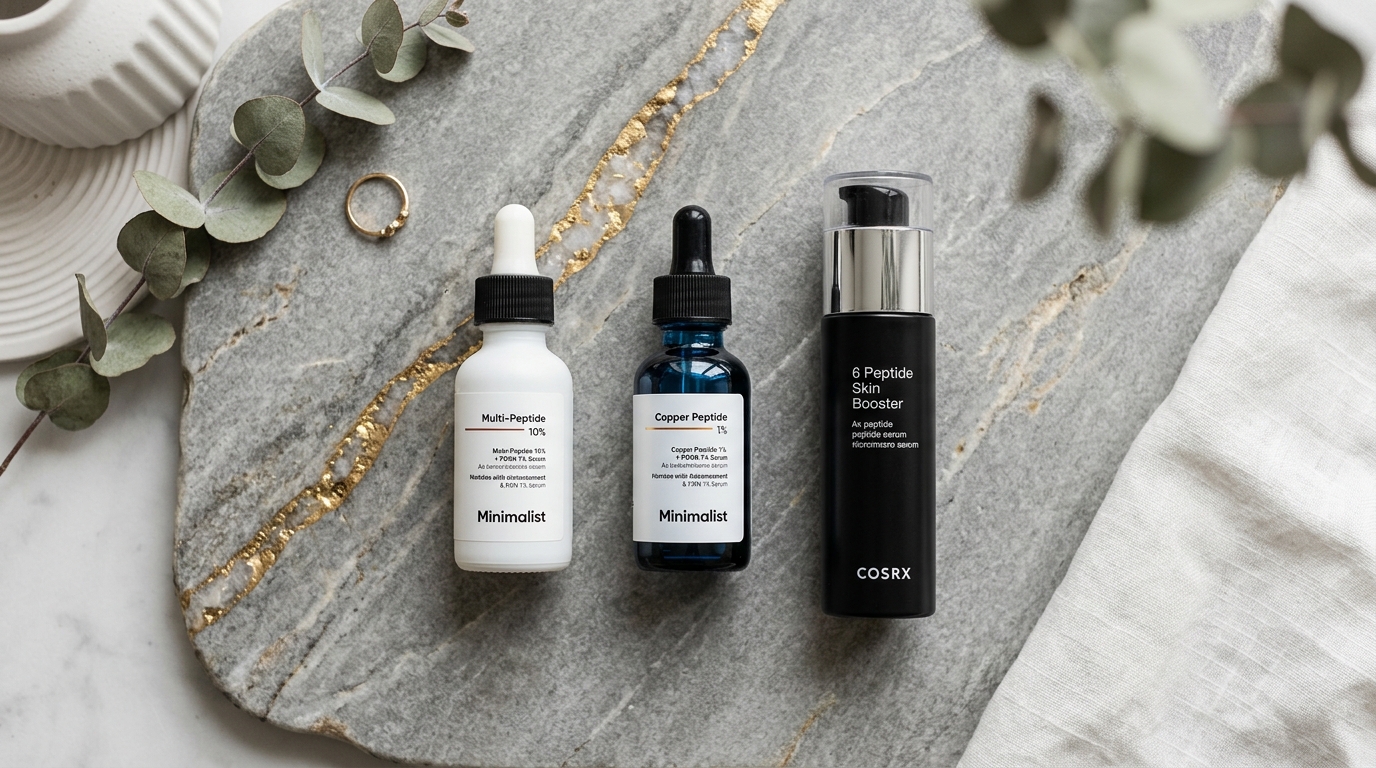
1. How Peptides Rebuild Collagen in Acne-Scarred Skin
Peptides are short amino acid chains that act as signalling molecules. When applied topically, signal peptides like Matrixyl 3000 (Palmitoyl Tripeptide-1 + Palmitoyl Tetrapeptide-7) bind to TGF-β receptors and stimulate fibroblasts to produce Type I and Type III collagen.
Copper peptide GHK-Cu goes further: it activates matrix metalloproteinases (MMPs) to clear damaged collagen scaffolding AND then triggers new collagen synthesis — a true 'remodel' rather than just 'add more'.
Such as Matrixyl 3000. They send messages to different parts of the skin to produce collagen, elastin, and other proteins, helping to "fill" depressions over time.
Such as Copper Peptides (GHK-Cu). They deliver trace minerals to the skin to boost collagen and, importantly, break down unusually large collagen build-ups in scars.
Such as Argireline. They block the release of chemicals that cause muscle contraction, similar to Botox, smoothing out expression lines.
They inhibit the breakdown of existing collagen and elastin in the skin by blocking the enzymes that degrade them.
2. Acne Scar Types: Which Ones Respond to Peptides?
Not all scars are created equal. Honest breakdown of how peptides affect different atrophic acne scars:
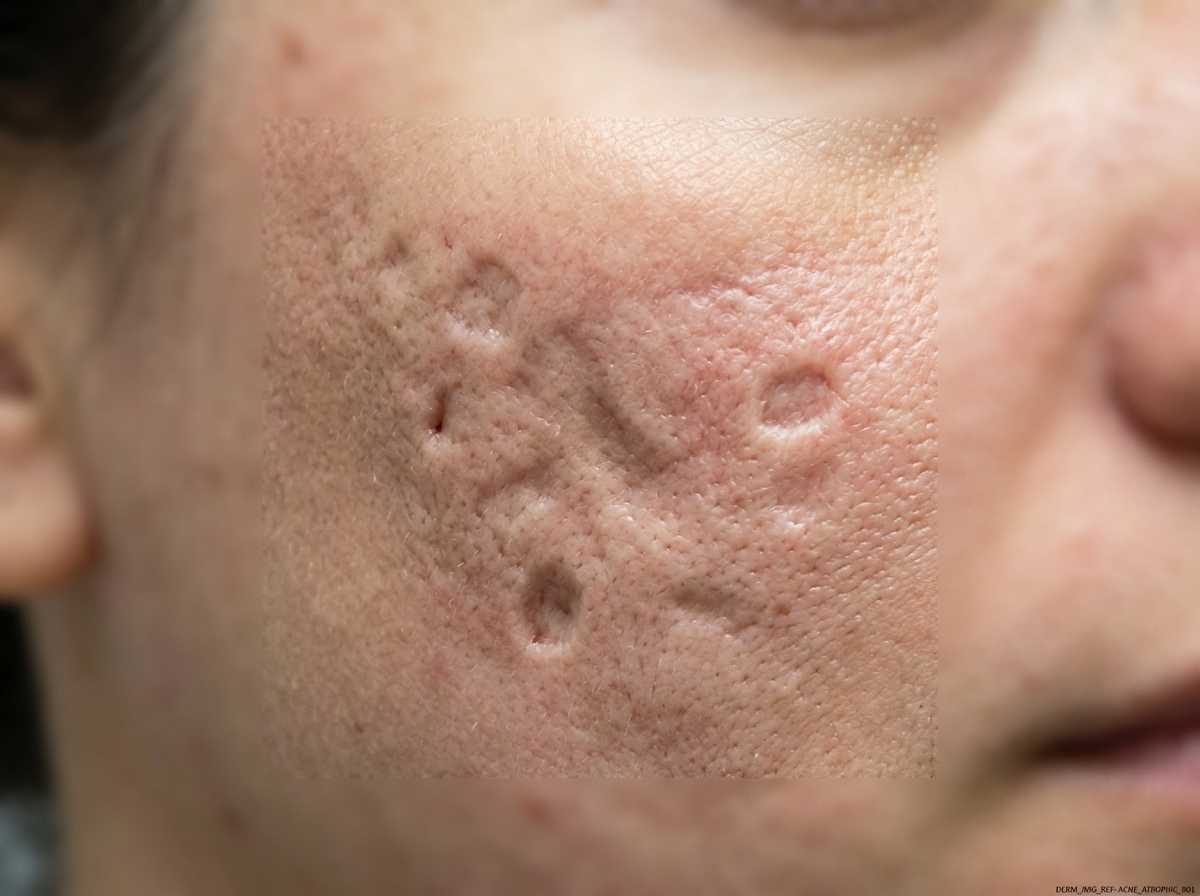
- Rolling scars (Best Response): Broad depressions with sloping edges that respond best to new collagen filling them up.
- Boxcar scars (Moderate Response): Wider depressions with sharp edges. Requires higher GHK-Cu concentrations + microneedling for best results to soften the edges.
- Ice-pick scars (Poor Response): Narrow and deep. Poor response to topical peptides alone; needs professional TCA CROSS or subcision.
Realistic Expectations with Peptides
Topical peptides are not magic erasers. They provide gradual, incremental improvement over 3 to 6 months. For severe atrophic scarring, they should be viewed as an adjunct to in-clinic procedures rather than a standalone cure.
3. Product Comparison Matrix
Comparing the top peptide serums available in India for acne scar remodelling:
| Product | Key Peptides | Additional Actives | Texture | Best For | Price (₹) |
|---|---|---|---|---|---|
| Minimalist Multi-Peptide 10% Serum | 7% Matrixyl 3000 + 3% Bio-Placenta | Hyaluronic Acid | Lightweight Liquid | Rolling Scars & Plumping | ~₹699 |
| Minimalist Copper Peptide + PDRN 1.25% | Copper Peptide (GHK-Cu) | PDRN | Slightly Viscous Serum | Boxcar Scars & True Remodelling | ~₹799 |
| COSRX The 6 Peptide Skin Booster Serum | 6 Peptide Complex | Niacinamide, HA | Watery Essence | Overall Texture & Prep Layer | ~₹1,500 |
| Aminu Copper Peptide Face Serum | Copper Peptides | Botanical Extracts | Silky Serum | Sensitive Skin & Scars | ~₹1,850 |
| Conscious Chemist 6 Peptide Serum | Multi-Peptide Blend | Ceramides | Cream-Serum | Dry Skin & Scars | ~₹599 |
| Dot & Key Retinal + Peptide Night Serum | Peptide Blend | Retinaldehyde | Light Cream | Anti-aging + Texture | ~₹895 |
| FCL Copper Peptide Face Serum | Copper Peptide | HA | Gel-Serum | Oily Skin & Scars | ~₹1,450 |
4. Copper Peptide vs Matrixyl 3000: Which Is Better for Scars?
Head-to-head comparison for acne scarring:
GHK-Cu (Copper Peptides) is superior for TRUE scar remodelling. It works by clearing out old, damaged collagen and stimulating the production of fresh, correctly aligned collagen. For active or older acne scars, copper peptide is the recommended choice.
Matrixyl 3000 is better for overall skin firmness, fine lines, and prevention. While it boosts collagen, it does not have the same scar-tissue-clearing enzymatic activity as copper peptides.
5. ⚠️ Do NOT Mix: Copper Peptides + AHAs/BHAs/Retinol Conflict
🚨 WARNING: Actives Conflict
Direct acids (AHAs/BHAs) and strong retinoids can chelate and destabilize copper peptide complexes, breaking the copper bond and rendering the peptide completely inactive.
Solution: Use them in alternate routines. Apply your Copper Peptide serum in the morning (AM), and use your exfoliating acids or retinol in the evening (PM).
6. The Peptide + Microneedling Protocol for Acne Scars
Professional microneedling (1.0-1.5mm) creates micro-channels in the skin. These channels bypass the stratum corneum, enhancing the delivery of topically applied peptides into the dermis by up to 400%.
At-home derma rollers (max 0.25mm) can be used cautiously with copper peptide serums to maintain collagen stimulation between professional clinic sessions. Ensure strict hygiene to avoid infection.
7. Which Peptide Serum Matches Your Scar Type?
Take this quick quiz to find the right peptide serum for your acne scars:
Peptide Serum Selector
Answer a few questions to get your personalized recommendation.