
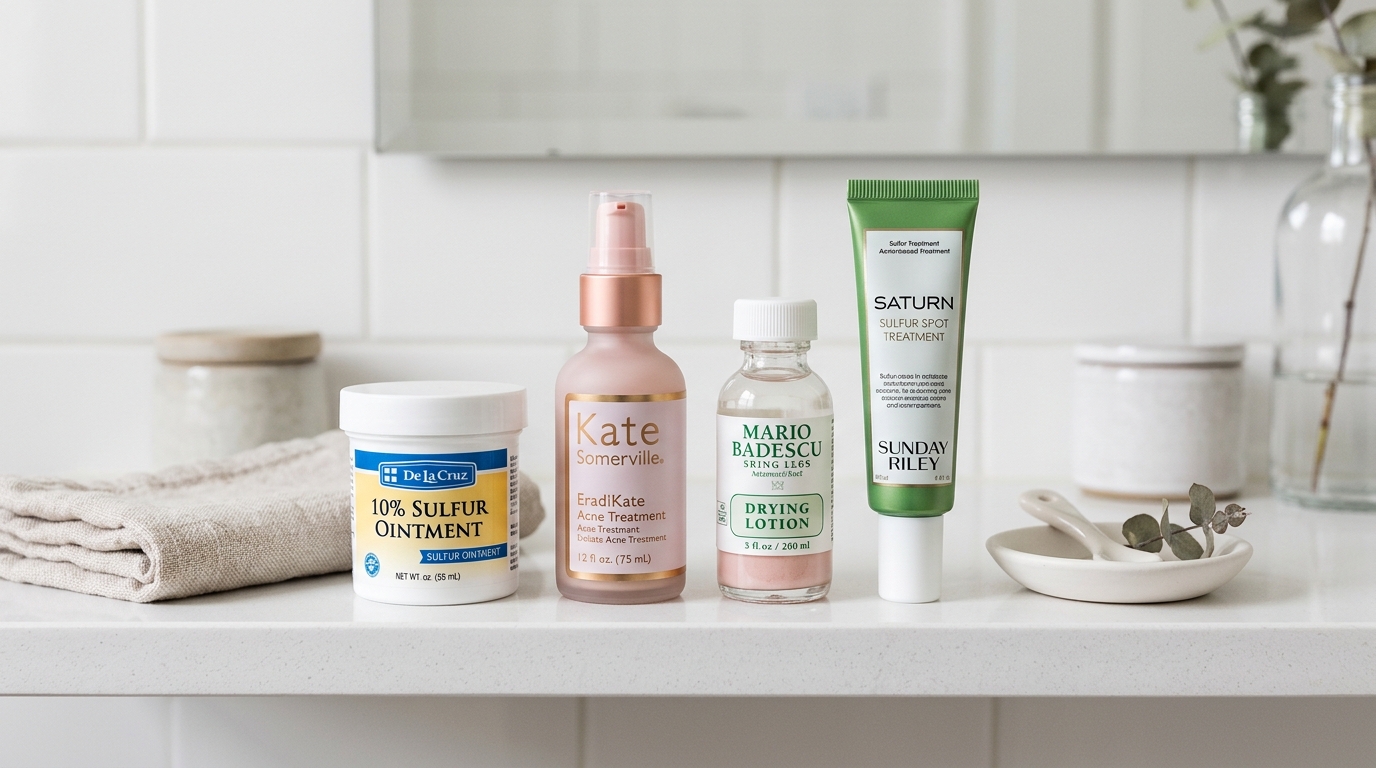
1. How Sulfur Kills Acne: Keratolytic + Antimicrobial Dual Action
Sulfur works through two powerful mechanisms that make it uniquely effective for BOTH bacterial and fungal acne. While older treatments focus on just one pathway, sulfur acts as a broad-spectrum combatant against the root causes of breakouts.
First, it's Keratolytic — it breaks disulfide bonds in keratin, dissolving the glue holding dead cells together to effectively unclog pores. Second, it provides Direct antimicrobial action — elemental sulfur is oxidized on the skin to pentathionic acid and sulfur dioxide, which are toxic to C. acnes AND Malassezia/Demodex species.
Dissolves the dead skin cells that block pores by breaking down keratin bonds, clearing out whiteheads and blackheads effectively.
When oxidized on the skin surface, it creates pentathionic acid, a compound highly toxic to the C. acnes bacteria responsible for inflammatory acne.
Highly effective against Demodex mites, which are often the hidden cause behind rosacea-related acne and stubborn skin texture issues.
Acts as an astringent, absorbing excess oil and reducing overall sebum production to keep skin matte and pores clear.
2. Sulfur for Fungal Acne: The OTC Treatment Derms Actually Recommend
Sulfur is one of the ONLY over-the-counter ingredients proven effective against Malassezia folliculitis (fungal acne). Unlike traditional acne treatments that only target bacteria, sulfur destroys the yeast that causes fungal acne.
De La Cruz 10% Sulfur Ointment used as a 10-minute wash-off mask 3x/week is the go-to dermatologist recommendation before prescribing strong oral antifungals like ketoconazole. It's affordable, effective, and works rapidly on stubborn forehead bumps.
How to Identify Fungal Acne
Not sure if you have fungal or bacterial acne? Look for these key signs:
- Uniform Bumps: Clusters of tiny, uniform whiteheads or red bumps (no deep cysts).
- Intense Itching: Fungal acne is notoriously itchy, especially when sweating.
- Location: Often found on the forehead, hairline, chest, and back.
- Treatment Resistance: Does not respond to Benzoyl Peroxide or traditional antibiotics.
3. Product Comparison Matrix
Compare the top sulfur treatments available in the USA to find the right formulation for your acne type and budget.
| Product | Sulfur % | Formulation Type | Best For | Contact Time | Comedogenic Risk | $ Price (USA) |
|---|---|---|---|---|---|---|
| De La Cruz 10% Sulfur Ointment | 10% | Ointment (PEG Base) | Fungal acne, wash-off mask | 10-15 mins (Rinse) | Low (Wash-off) | ~$6 |
| Kate Somerville EradiKate | 10% | Pink Drying Lotion | Deep cysts, targeted spot | Overnight | Low | ~$28 |
| Mario Badescu Drying Lotion | Unknown | Lotion (Cal/Sulf/BHA) | Whiteheads, surface spots | Overnight | Low | ~$19 |
| Sunday Riley Saturn Sulfur Mask | 10% | Clay Mask + Niacinamide | Oily skin, overall clearing | 20-30 mins | Moderate | ~$20 |
| Peter Thomas Roth Sulfur Masque | 10% | Clay Mask + Aloe | Weekly deep pore cleanse | 10-15 mins | Low | ~$52 |
| Clearasil Sulfur Spot Treatment | 10% | Cream | Quick daytime spot fading | Leave-on / Overnight | Moderate | ~$10 |
| Proactiv Skin Purifying Mask | 6% | Clay Mask | Sensitive skin, T-zone oil | 10 mins | Low | ~$38 |
4. The 10-Minute Sulfur Mask Protocol: How to Use De La Cruz Properly
Using a 10% sulfur ointment effectively requires a strict protocol. Because it is highly concentrated, leaving it on too long can cause severe dryness and barrier damage.
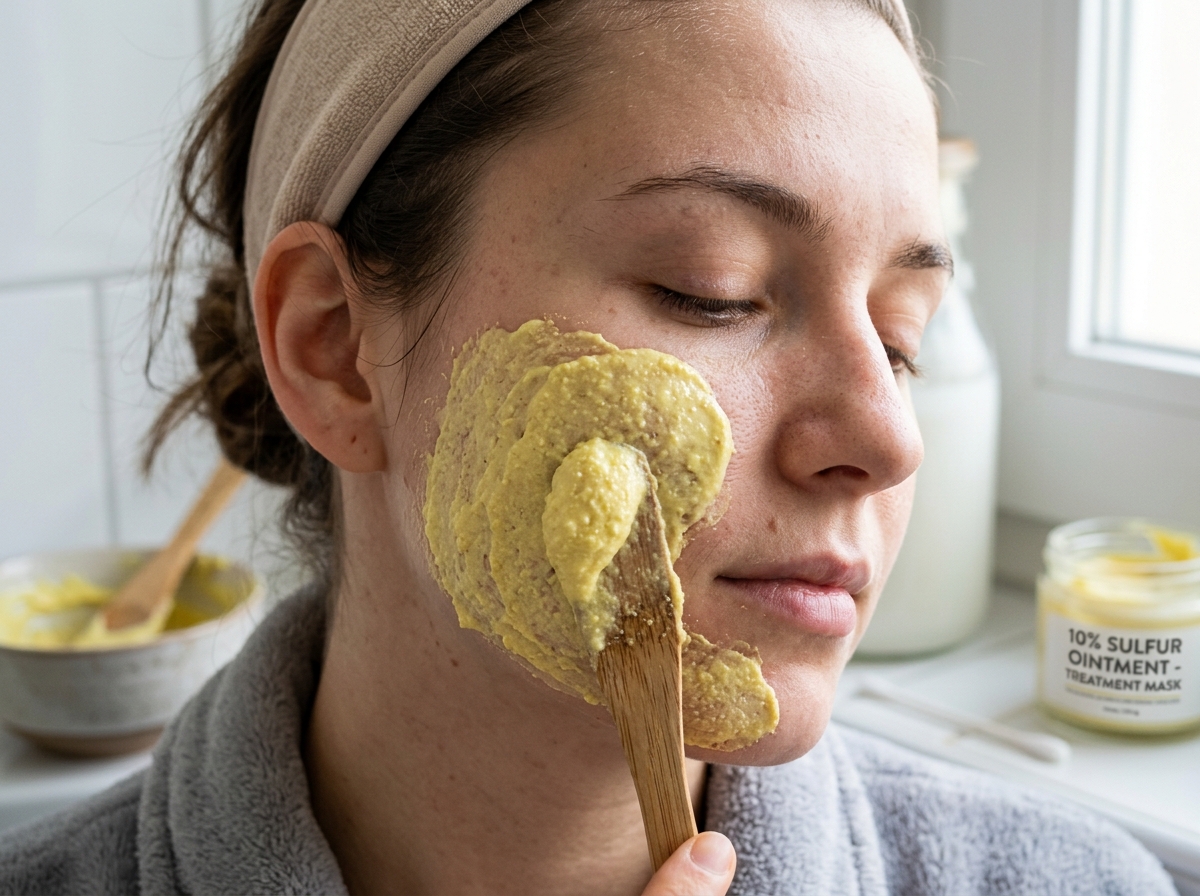
Step-by-Step Guide
Frequency Guide: Start with 2x per week. As your skin builds tolerance, you can gradually increase to 3-4x per week for stubborn fungal acne or persistent breakouts.
5. ⚠️ The Sulfur Smell Problem: How to Minimize the Rotten Egg Odor
One of the biggest hurdles to using sulfur is its distinct, pungent aroma.
⚠️ The Unavoidable Scent of Healing
Sulfur's characteristic hydrogen sulfide smell (often compared to rotten eggs or matches) is unavoidable. It is a natural byproduct of the element reacting with your skin's chemistry.
Tips to minimize the odor:
- Use it only as a wash-off mask instead of a leave-on treatment.
- Apply only at night so the scent doesn't linger during the day.
- Follow up with a pleasantly scented moisturizer or soothing serum.
- Store the jar tightly sealed in a cool, dry place.
- Warning: Sulfur can stain white towels and pillowcases yellow. Always wash it off thoroughly and use dark-colored fabrics when applying.
6. Sulfur vs Benzoyl Peroxide vs Salicylic Acid: Which Anti-Acne Active Do You Need?
Not all acne is created equal, and choosing the wrong active can worsen your skin. Here is an honest 3-way comparison to help you choose:
When to choose which active:
- Sulfur is BEST for: Fungal acne (Malassezia), Demodex mites, combination bacterial+fungal presentations, and sensitive skin that cannot tolerate Benzoyl Peroxide.
- Benzoyl Peroxide (BP) is BEST for: Purely inflammatory, deep, and red C. acnes acne (cystic acne and severe pustules).
- Salicylic Acid (SA) is BEST for: Comedonal acne (blackheads and whiteheads) without significant inflammation, and unclogging deeply congested pores.
7. Interactive 'Which Sulfur Treatment Matches Your Acne Type?' Quiz
Find the perfect sulfur treatment tailored to your specific skin concerns with our quick 4-question quiz:
Sulfur Treatment Selector
Answer 4 questions to find your ideal sulfur product.
8. Frequently Asked Questions (FAQ)
Expert answers to common questions about sulfur acne treatments: