
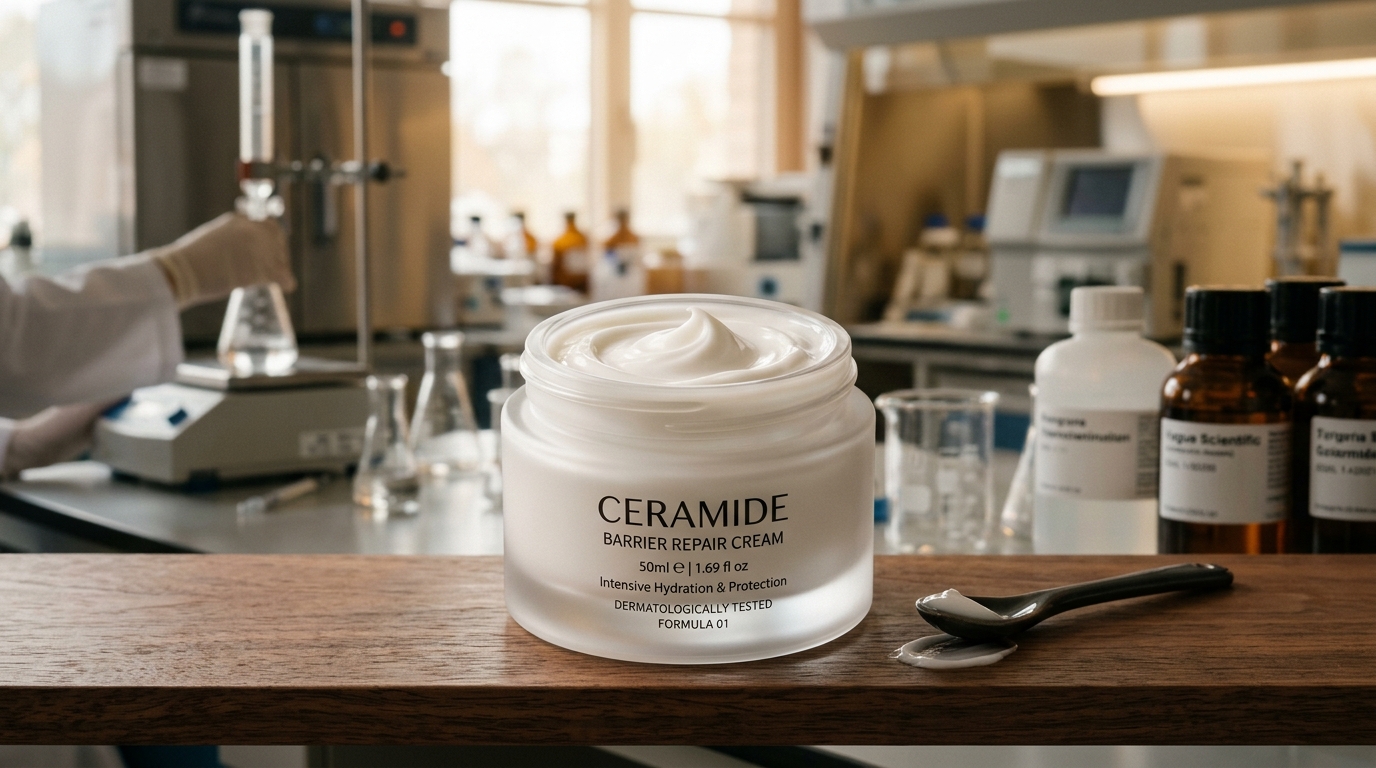
1. The Cult Gold Standard: 3 Essential Ceramides & MVE Controlled-Release
In the United States skincare landscape, CeraVe Moisturizing Cream (affectionately known across dermatology clinics and skincare communities as "CeraVe in the tub") has maintained an unmatched reputation as the gold standard for barrier repair. Developed alongside board-certified US dermatologists, this heavy-duty barrier restoration cream addresses the core physiological deficiency of dry, compromised skin: a depleted intercellular lipid matrix.
Healthy human stratum corneum consists of approximately 50% ceramides, 25% cholesterol, and 15% free fatty acids arranged in tightly packed lamellar sheets. When exposed to harsh US climate variations—such as sub-zero Midwestern winter winds, dry indoor heating, or aggressive topical acne medications like prescription Tretinoin (0.025%–0.1%) and Differin (Adapalene 0.1%)—this natural lipid shield breaks down. The result is rapid Transepidermal Water Loss (TEWL), erythema, stinging, micro-fissuring, and secondary acne flare-ups.
🧪 The Tri-Ceramide Lipid Complex
CeraVe Moisturizing Cream supplies three physiologically identical ceramides essential for stratum corneum integrity:
- Ceramide 1 (EOP): Binds the lipid bilayer to the outer cornified envelope, strengthening physical tensile strength.
- Ceramide 3 (NP): Works synergistically with hyaluronic acid to hold water molecules tight within the extracellular space.
- Ceramide 6-II (AP): Promotes natural desquamation, preventing flaky skin flakes from accumulating in enlarged pores.
What truly sets CeraVe Moisturizing Cream apart from basic heavy ointments is its patented MultiVesicular Emulsion (MVE) Delivery Technology. Traditional moisturizers release their active ingredients in a single surface burst upon application, offering temporary relief before evaporating within hours. MVE technology encapsulates ceramides, Hyaluronic Acid, and Petrolatum within concentric microscopic spheres. As each outer sphere layer slowly dissolves throughout the day and night, fresh hydrating actives are released into the stratum corneum sphere-by-sphere for full 24-hour sustained hydration.
Recognized with the official National Eczema Association (NEA) Seal of Acceptance, CeraVe Moisturizing Cream is fragrance-free, paraben-free, allergy-tested, and formulated to restore even severely damaged, raw skin back to physiological balance.
2. US Rich Barrier Moisturizer Matrix
Selecting the ideal barrier repair cream in the US market requires balancing occlusive depth, active lipid density, comedogenic risk, and price efficiency. Below is an exhaustive comparison matrix of the top dermatologist-recommended rich barrier creams available at major American retailers including Target, Walmart, CVS, Walgreens, Amazon, and Ulta.
| Product Name | Key Actives | Texture & Thickness | Comedogenic Risk | Average US Price (16oz) | Best For |
|---|---|---|---|---|---|
| CeraVe Moisturizing Cream (Tub) | Ceramides 1, 3, 6-II + Hyaluronic Acid + Petrolatum | Heavy rich cream, semi-matte finish | Low to Moderate | $17–$19 (16 oz tub) | Dry skin, winter scaling, & Tretinoin/Accutane barrier repair |
| Vanicream Moisturizing Cream | Petrolatum + Cetearyl Alcohol + Purified Water | Very rich, thick occlusive paste | Zero (Free of 11 Irritants) | $14–$16 (16 oz tub) | Ultra-sensitive, reactive, & contact allergy-prone skin |
| CeraVe Daily Moisturizing Lotion | Ceramides 1, 3, 6-II + Hyaluronic Acid | Lightweight fluid lotion | Low | $14–$16 (12 oz bottle) | Normal to combination skin seeking oil-free hydration |
| La Roche-Posay Lipikar AP+M Triple Repair | Prebiotic Thermal Water + Shea Butter + Ceramide-3 + Niacinamide | Rich lipid-replenishing baume | Low | $20–$22 (13.5 oz pump) | Extra dry, eczema-prone skin needing microbiome balance |
| First Aid Beauty Ultra Repair Cream | Colloidal Oatmeal (0.5%) + Shea Butter + Ceramides | Whipped rich cream | Low | $38 (8 oz tub) | Eczema itch relief, extreme winter redness, & barrier distress |
3. Is CeraVe Cream Safe for Acne-Prone Facial Skin?
A frequent dilemma among American acne patients using prescription topical retinoids (Tretinoin, Tazorac, Differin) is whether CeraVe's thick tub formula will clog facial pores. The answer lies in analyzing its molecular chemistry: Petrolatum vs. Emollient Fatty Alcohols.
Why Petrolatum Is Facial-Safe
Despite myths surrounding mineral oil derivatives, USP-grade Petrolatum is rated 0 on the comedogenicity scale. Its high molecular weight prevents it from physically entering or plugging hair follicles. Instead, it sits strictly on top of the stratum corneum to reduce TEWL by up to 98%.
The Cetearyl Alcohol + Ceteareth-20 Combination
While CeraVe Cream is oil-free, its rich texture relies on emulsifying fatty alcohols (Cetearyl Alcohol & Ceteareth-20). In a small subset of highly oily or micro-comedone-prone individuals, this specific emulsifier blend can cause subclinical bumps (closed comedones).
Ideal for Tretinoin & Accutane Users
If your barrier is peeling, raw, or burning from prescription retinoids or oral Isotretinoin (Accutane), the lipid replenishment of CeraVe Cream far outweighs comedogenic risks. It accelerates retinoid tolerance without worsening inflammatory papules.
When to Switch to CeraVe PM
If you have naturally oily skin with active acne lesions and live in a humid climate, opt for CeraVe PM Facial Moisturizing Lotion instead. It offers the same 3 ceramides and HA with 4% Niacinamide in a weightless, petrolatum-free gel-lotion.
4. Slugging with CeraVe Cream vs Pure Petrolatum (Vaseline)
"Slugging"—the skincare technique of coating the face in an occlusive layer before sleep to lock in hydration—has gained immense popularity in the US. However, choosing between CeraVe Moisturizing Cream and 100% Pure Vaseline Petrolatum Jelly requires understanding their functional differences.
| Feature / Factor | CeraVe Moisturizing Cream Slugging | Pure Petrolatum (Vaseline) Slugging |
|---|---|---|
| Active Barrier Repair | High: Actively delivers Ceramides 1, 3, 6-II & HA into the lipid layer | Passive: Traps existing surface moisture without adding active lipids |
| Occlusive Capacity | Medium-High (~80–85% TEWL reduction): Semi-breathable rich emulsion | Maximum (~98% TEWL reduction): Complete physical occlusive barrier |
| Skin Feel & Finish | Rich cream that absorbs into a velvety, semi-matte protective cushion | Thick, sticky, shiny ointment seal that remains on the surface overnight |
| Acne Safety Protocol | Can be used nightly over clean skin; low risk of smothering pores | Caution: Traps sebum & anaerobic bacteria if applied over active breakouts |
⚠️ Dermatologist Rules for Safe Facial Slugging
Rule #1: Never slug over strong prescription actives. Sealing Tretinoin, Adapalene, or Glycolic Acid under an occlusive layer dramatically increases transdermal penetration, causing severe chemical burns and contact dermatitis.
Rule #2: Cleanse thoroughly first. Always double-cleanse to remove sweat, pollution, and bacteria before slugging to prevent trapping acne-causing microbes under the seal.
5. How to Use CeraVe Cream in a Dermatologist-Approved Routine
To maximize skin barrier recovery while avoiding pore congestion, follow this dermatologist-designed morning and evening application protocol using US drugstore essentials.
AM Morning Routine (Protection & Moisture)
1. Wash face with lukewarm water or a mild non-foaming cleanser (e.g., CeraVe Hydrating Facial Cleanser).
2. While skin is slightly damp, apply a pea-sized amount of CeraVe Moisturizing Cream evenly across face and neck.
3. Allow 2 minutes for MVE absorption, then apply a broad-spectrum SPF 30+ mineral sunscreen (e.g., CeraVe Hydrating Mineral Sunscreen Sheer Tint).
PM Evening Routine (Prescription Sandwich Method)
1. Double-cleanse to eliminate sunscreen, oil, and atmospheric grime.
2. Apply a thin cushion layer of CeraVe Moisturizing Cream to damp skin and let dry for 5 minutes.
3. Apply pea-sized prescription Tretinoin (0.025%–0.05%) or Differin Gel.
4. Seal with a second light layer of CeraVe Cream ("Sandwich Method") to eliminate flaking and irritation.
6. Frequently Asked Questions
CeraVe Moisturizing Cream is officially dermatologist-tested, non-comedogenic, and oil-free. Pure petrolatum has a molecular weight too large to penetrate or plug hair follicles. However, its rich emollient fatty alcohol base (cetearyl alcohol and ceteareth-20) can occasionally trigger mild closed comedones (subclinical bumps) in a small subset of severely oily or breakout-prone facial skin.
CeraVe Moisturizing Cream (in the tub) contains occlusive petrolatum in a heavy rich emulsion engineered for dry to extra-dry skin, winter barrier repair, and Tretinoin peeling. CeraVe Daily Moisturizing Lotion is a lightweight, oil-free fluid lotion formulated for normal to combination skin that absorbs rapidly without petrolatum heavy occlusivity.
Yes. CeraVe Moisturizing Cream qualifies as an HSA (Health Savings Account) and FSA (Flexible Spending Account) eligible health expense across major US healthcare retailers including Target, CVS, Walgreens, Walmart, and Amazon when used for dermatologist-directed eczema management or dry skin barrier care.
Yes. CeraVe Moisturizing Cream carries the official National Eczema Association (NEA) Seal of Acceptance. It contains 3 essential ceramides (1, 3, 6-II) and hyaluronic acid using MVE technology to restore the lipid bilayer, soothe intense itching, and seal transepidermal water loss in eczema-prone skin.