
If you are dealing with deep, painful cystic acne clustered along your jawline, chin, and neck, topical serums will only do so much. If your breakouts flare up predictably right before your cycle, or are accompanied by irregular periods, thinning hair, or excess facial hair, the root cause is hormonal.
Yet, ordering random blood tests is expensive and confusing.
To identify hormonal imbalances (such as Polycystic Ovary Syndrome - PCOS), you need a specific, dermatologist-approved blood panel. Let's break down the exact hormones you need to test, why they trigger acne, the critical cycle window for testing, and how to interpret your results.
1. The Science: How Hormones Cause Acne
Acne is ultimately a disease of the sebaceous (oil) glands. Inside your skin, these glands contain receptors that are highly sensitive to androgens (male sex hormones, which are present in both men and women).
When your body produces too many androgens, or when your receptors are hyper-sensitive:
- Sebum Hyper-secretion: Your glands enlarge and produce excessive, thick sebum.
- Follicular Hyperkeratinization: Dead skin cells inside the pore stick together instead of shedding.
- Anaerobic Environment: The combination of thick sebum and trapped skin cells creates an oxygen-free environment.
- Bacterial Colonization: Cutibacterium acnes bacteria feed on this sebum, multiply rapidly, and trigger deep, painful cystic inflammation.
Because this process is driven internally by hormones, topical salicylic acid or benzoyl peroxide can only treat the surface symptoms, not stop the root trigger.
2. The Panel: What Tests to Order
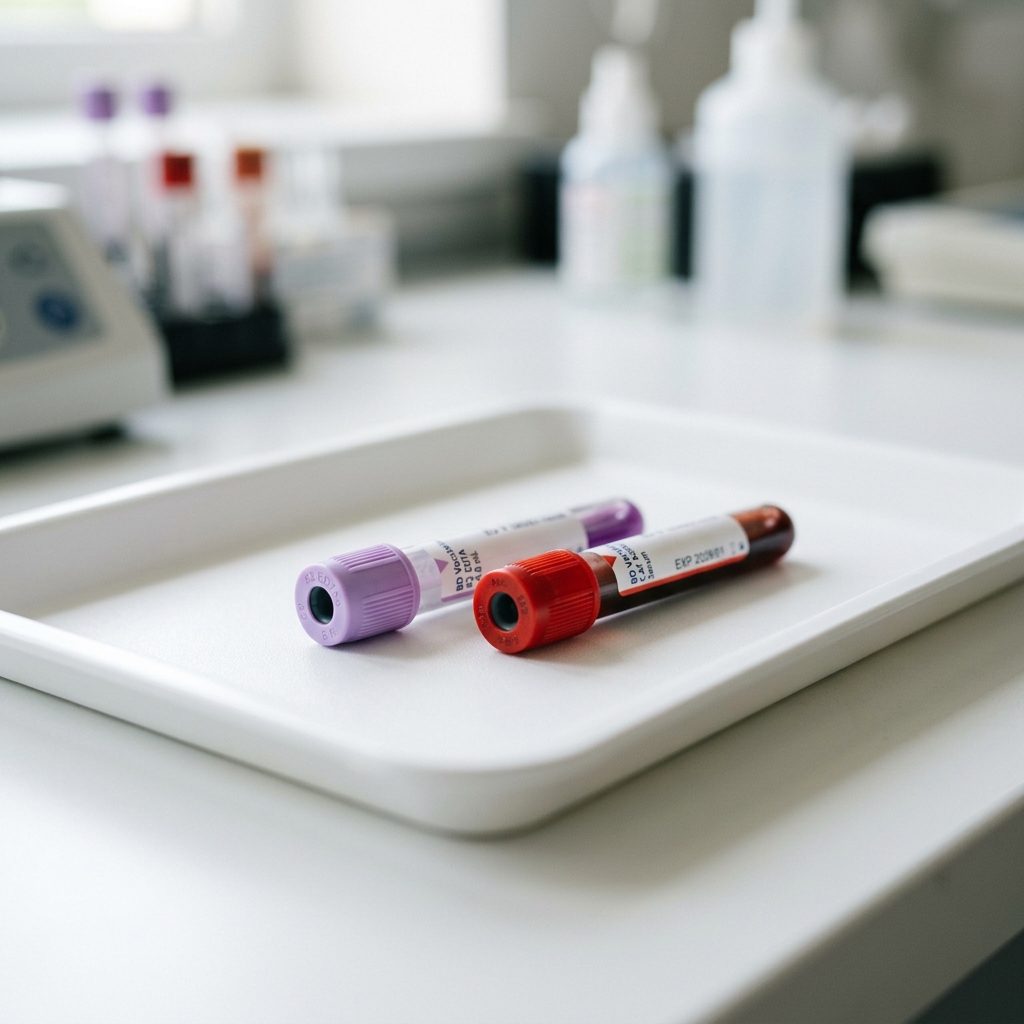
When requesting an acne/PCOS diagnostic panel from lab providers (such as Tata 1mg, Dr. Lal PathLabs, or Metropolis), ensure it includes these core markers:
1. Free & Total Testosterone
Testosterone is the primary androgen. Total Testosterone measures all testosterone in your blood, while Free Testosterone measures the active hormone not bound to proteins. Often, Total Testosterone looks normal, but Free Testosterone is elevated, triggering acne.
2. DHEA-S (Dehydroepiandrosterone Sulfate)
DHEA-S is an androgen produced almost exclusively by your adrenal glands (not your ovaries). High DHEA-S points to adrenal/stress-driven hormonal acne rather than ovarian PCOS.
3. LH (Luteinizing Hormone) & FSH (Follicle-Stimulating Hormone)
These pituitary hormones control your ovarian cycle. In a balanced body, LH and FSH are roughly equal (a 1:1 ratio). In PCOS, LH is often double or triple the FSH level (a 2:1 or 3:1 ratio), which stops ovulation and increases androgen production.
4. Fasting Insulin & HOMA-IR
Insulin is a master hormone. If you have insulin resistance, your pancreas produces excess insulin. Elevated insulin stimulates your liver to produce IGF-1 (Insulin-like Growth Factor-1), which directly enlarges sebaceous glands and increases oil production.
5. Prolactin & TSH (Thyroid-Stimulating Hormone)
Elevated Prolactin or Thyroid imbalances (Hypothyroidism) can disrupt reproductive hormones, leading to irregular ovulation and reactive androgen spikes.
3. The Critical Timing Window
When you take these tests is just as important as what you test. Hormones fluctuate dramatically throughout the month. To get an accurate baseline, follow these rules:
- Menstrual Cycle Timing: You must take reproductive hormone tests (LH, FSH, Testosterone) on Day 2, 3, or 4 of your natural period (counting the first day of active bleeding as Day 1).
- Fasting State: The test requires blood draw in the morning after a 10 to 12-hour overnight fast (to ensure accurate Fasting Insulin and glucose readings).
- Birth Control Break: You must be off oral contraceptive pills (OCPs) for at least 3 months before testing. Birth control pills chemically suppress your natural hormone production, making test results completely artificial.
4. Lab Cost & Interpretation Guidelines
A comprehensive PCOS/Hormonal Acne panel (including androgens, insulin, LH/FSH, and thyroid) generally costs between ₹1,500 and ₹3,500 in India depending on the lab provider and home-sample collection options.
| Marker | Normal Range (Female Baseline) | High Levels Indicate | Acne Correlation |
|---|---|---|---|
| Free Testosterone | < 4.2 pg/mL | Ovarian androgen excess (PCOS) | Triggers high sebum production and jawline cysts. |
| DHEA-S | 35 – 430 ug/dL | Adrenal stress response | Cortisol-linked oil production and stress breakouts. |
| LH:FSH Ratio | 1:1 ratio | Ovulatory dysfunction / PCOS | High LH triggers testosterone synthesis in ovaries. |
| Fasting Insulin | < 8 uIU/mL | Insulin Resistance | Promotes IGF-1, clogging follicles and increasing sebum. |
| TSH | 0.4 – 4.0 uIU/mL | Hypothyroidism (if high) | Slows skin healing, leading to lingering red marks (PIE). |
5. FAQ: Hormonal Acne Tests
Yes. In fact, it is mandatory. Reproductive hormones must be tested on Days 2, 3, or 4 of active menstrual bleeding. This is when estrogen and progesterone are at their lowest baseline levels, allowing accurate measurements of LH, FSH, and androgens.
It is very common to have "normal" blood levels but still suffer from hormonal acne. This occurs because your sebaceous glands have hypersensitive androgen receptors. Even normal amounts of testosterone are enough to trigger excess sebum. Your dermatologist will treat this by blocking receptors topically or systemically.
Yes. High fasting insulin signals insulin resistance. This raises free IGF-1 levels in your blood, which directly enlarges sebum-producing glands, stimulates follicular cell division, and increases systemic inflammation, worsening breakouts.
Is Your Skincare Working Against You?
Many "acne-clearing" products actually contain ingredients that feed the fungus that causes forehead bumps. Stop the guesswork.
Scan your face with MyMirror AI to get a personalized, active-safe routine that finally clears your skin for good.
Start Your Free AI Skin Scan Now