
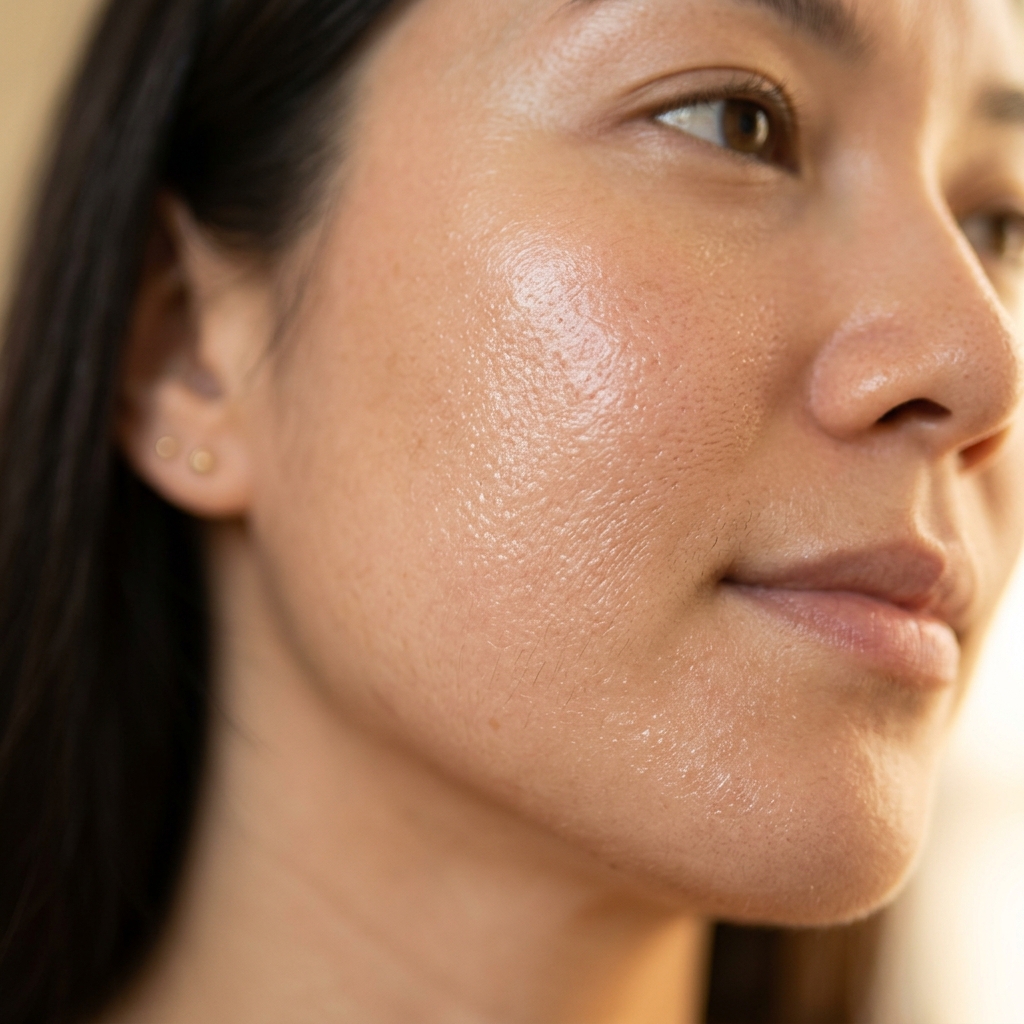
You have naturally dry, tight skin, but you are still breaking out with painful pimples. You reach for a standard salicylic acid face wash or a benzoyl peroxide gel, but within three days, your face is flaking, burning, and the acne looks even more inflamed.
Why? Because most acne products are formulated to strip oil.
When you apply these stripping ingredients to naturally dry skin, you tear apart your moisture barrier. This creates micro-fissures in the skin surface where bacteria can easily enter and trigger reactive, inflammatory breakouts.
You do not need to strip your skin to clear your pimples. You need a hydration-first acne protocol that heals the barrier while clearing the pore.
1. The Paradox: How Does Dry Skin Get Acne?
Acne is classically defined as an "oily skin problem." However, dry skin types suffer from acne due to two completely different biological mechanisms:
1. Skin Barrier Dysfunction
Dry skin lacks essential lipids—specifically Ceramides, Cholesterol, and Free Fatty Acids. When these lipids are missing, the skin barrier becomes cracked and compromised. This allows external irritants and Cutibacterium acnes bacteria to easily slip inside the hair follicles, triggering an immune response that manifests as inflammatory pimples.
2. Comedogenic Over-Compensation
Because dry skin feels tight and uncomfortable, users often apply rich, heavy creams. Many of these creams contain highly comedogenic ingredients (like isopropyl myristate, heavy coconut derivatives, or thick waxes). While they relieve dryness, they physically clog the pores, forming microcomedones that eventually turn into active breakouts.
2. Forbidden Practices for Dry Skin Acne
If you have dry skin, immediately stop these three common acne-clearing practices:
- No Foaming or Salicylic washes: Standard foaming cleansers contain harsh surfactants (like Sodium Lauryl Sulfate) that wash away your skin's remaining natural oils, leaving the barrier raw.
- No High-Strength Daily Spot Treatments: Applying 10% Benzoyl peroxide or high-strength salicylic acid directly to dry patches will cause chemical burns, leading to flaking and deep post-inflammatory hyperpigmentation (PIH).
- No Stripping Clay Masks: Clay masks (like bentonite or kaolin) are designed to absorb excess oil. On dry skin, they draw out essential moisture, completely dehydrating the epidermis.
3. Dry vs. Oily Skin Acne: The Diagnostic Check
Here is how the two conditions stack up side-by-side:
| Feature | Dry Skin Acne | Oily Skin Acne |
|---|---|---|
| Root Cause | Compromised skin barrier & micro-cracks | Excess sebum production & blocked pores |
| Skin Sensation | Tight, itchy, rough, or flaking patches | Shiny, greasy, especially in the T-zone |
| Pimple Type | Small red papules and flaky pustules | Deep cysts, blackheads, and oily whiteheads |
| Stripping Wash Effect | Severe irritation (causes raw, red patches) | Temporary relief (removes surface oiliness) |
| Primary Goal | Rebuild lipid barrier + calm inflammation | Control sebum + exfoliate follicular walls |
4. The Hydrating Acne Routine Playbook
To clear dry skin acne, your routine must focus on anti-inflammatory actives that do not strip moisture, paired with non-comedogenic barrier sealants.
- Step 1: Cleanse (Non-Foaming Cream Cleanser): Wash your face with a non-foaming, hydrating cleanser (like *Cetaphil Hydrating Foaming Cleanser* or *Episoft Cleansing Lotion*). These cleansers use gentle emulsifiers that clean away dirt and makeup without disrupting the skin's lipid barrier.
- Step 2: Treat (Azelaic Acid & 5% Niacinamide): Skip harsh acids. Instead, use actives that calm inflammation and fade marks while supporting the barrier:
- Azelaic Acid (10%): A gentle active (such as *Aziderm Gel*) that kills acne bacteria and reduces inflammation without drying the skin.
- Niacinamide (5%): Stimulates the natural synthesis of ceramides, directly rebuilding the moisture barrier while fading post-acne dark marks.
- Step 3: Moisturize (Ceramide-Rich, Non-Comedogenic Cream): You must seal in moisture, but you must avoid pore-clogging lipids. Look for moisturizers containing ceramides in a lightweight, non-comedogenic base (like *Excela Max* or *Re'equil Atorep Barrier Cream*).
- Step 4: Protect (Hydrating Hybrid Sunscreen): Use a sunscreen formulated in a moisturizing base that does not contain drying denatured alcohols. Episoft AC acts as a dual moisturizer-sunscreen, providing broad-spectrum protection while keeping dry skin hydrated.
5. FAQ: Dry Skin Acne
This is a clear sign of a damaged moisture barrier. When the skin is dehydrated, cells do not shed properly, clustering together as visible flakes. Avoid picking or scrubbing these flakes, as physical exfoliation will worsen the acne inflammation.
Yes, but you must introduce it slowly and use the Sandwich Method. Apply a thin layer of your ceramide moisturizer, wait 10 minutes, apply a pea-sized amount of Retinol or Adapalene, and follow with another layer of moisturizer. This buffers the active ingredient, reducing dryness and flaking.
No. While hydration is important, dry skin lacks lipids (oils), not just water. Drinking water cannot replace the missing ceramides in your skin barrier. You must apply topical lipids to lock in hydration and seal the barrier.
Is Your Skincare Working Against You?
Many "acne-clearing" products actually contain ingredients that feed the fungus that causes forehead bumps. Stop the guesswork.
Scan your face with MyMirror AI to get a personalized, fungal-safe routine that finally clears your skin for good.
Start Your Free AI Skin Scan Now