
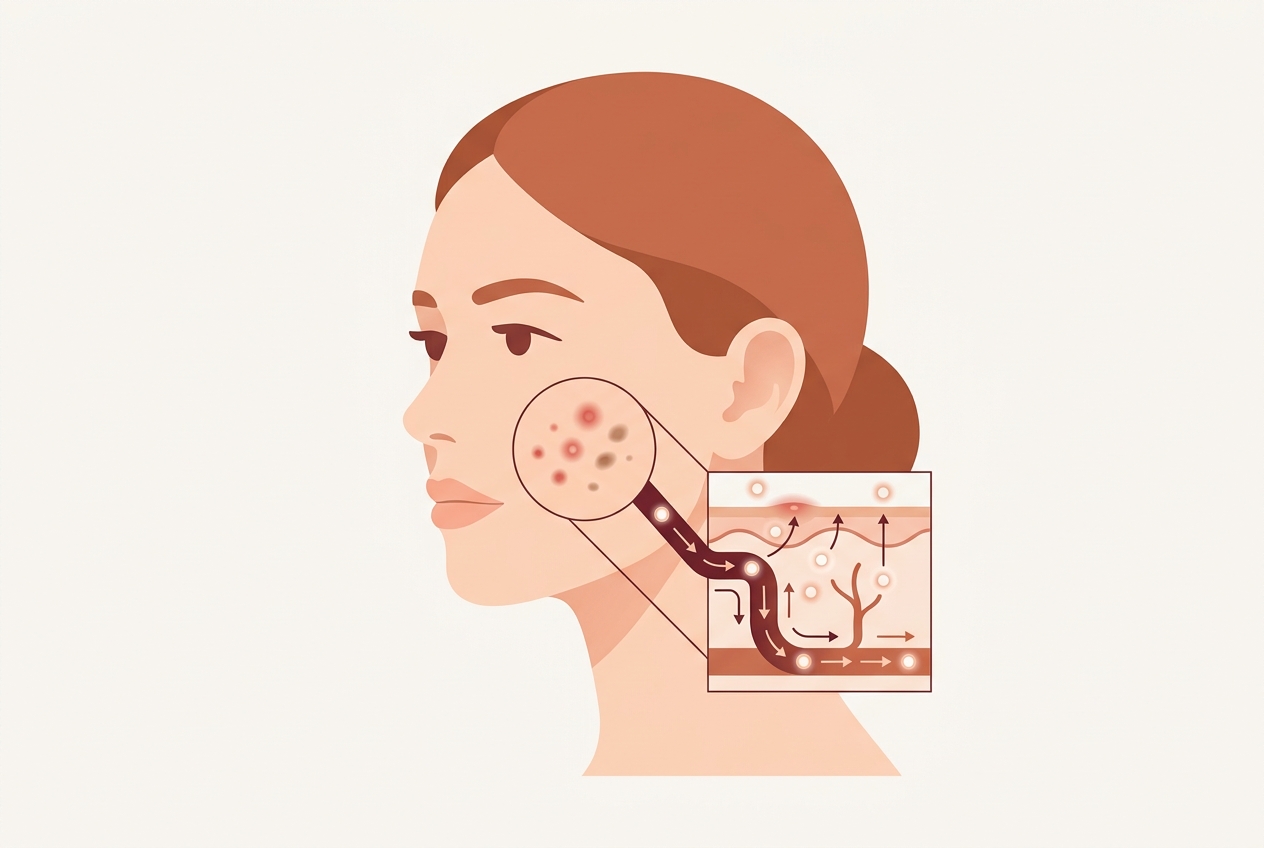
1. The Biological Pathway: How Low Iron Stalls Skin Healing
Iron plays a fundamental role in maintaining healthy skin. It acts as an essential cofactor for the enzymatic hydroxylation of proline and lysine—a crucial step in producing stable, healthy collagen fibers. Without sufficient iron, these structural proteins cannot properly cross-link, which leads to thinner, more fragile skin and delayed epidermal repair.
Furthermore, iron is the central component of hemoglobin, the protein in red blood cells that delivers oxygen to tissues. When your body is low on iron, it prioritizes oxygen distribution to vital organs, leaving the skin cells hypoxic. Sluggish tissue oxygenation stalls the cellular turnover of keratinocytes, causing dead cells to accumulate in the follicles and making the healing of active pimples highly inefficient.
2. When to Suspect Low Iron as Your Acne Culprit
If you suspect low iron storage is contributing to your skin concerns, look for these specific diagnostic signs:
- Acne Spot Healing Time > 4 Weeks: A minor pimple or whitehead remains inflamed, open, or crusty for over a month despite using active spot treatments.
- Prolonged Post-Inflammatory Marks (PIH/PIE): Flat red or dark marks left behind by acne linger for 6+ months without fading, even with regular use of niacinamide or vitamin C.
- Generalized Systemic Indicators: Unexplained daily fatigue, feeling abnormally cold in hands and feet, brittle nails, and diffuse hair thinning (especially near the temples).
3. Blood Diagnostics: Understanding Clinical vs. Skin-Optimal Ferritin
Many clinical experts note that ferritin levels on the lower end of the standard lab "normal" range may still be insufficient to support optimal physiological skin repair. The table below outlines the difference between clinical normal ranges and skin-optimal iron levels:
| Ferritin Level | Clinical Status | Impact on Skin & Acne Healing |
|---|---|---|
| < 15 ng/mL | 🔴 Clinical Deficiency / Anemia | Severe tissue hypoxia, very slow healing, dry flaking skin, persistent red scars. |
| 15 - 30 ng/mL | 🟡 Subclinical Low Iron | Sluggish collagen synthesis, lingering post-inflammatory hyperpigmentation (PIH). |
| 30 - 100 ng/mL | 🟢 Skin-Optimal Range | Efficient cellular turnover, rapid wound healing, healthy collagen structure. |
| > 150 ng/mL | ⚠️ High Iron / Risk of Overload | Excess iron acts as a pro-oxidant, contributing to oxidative stress and worsening inflammatory acne. |
4. The Suspected Iron Deficiency Action Checker
Use this decision matrix to determine your next steps based on your symptoms and lab test results:
5. Skincare Actives & Oral Iron Compatibility
When supplementing with oral iron, keep these biochemical interactions in mind to prevent stomach irritation and ensure optimal skin benefits:
- Vitamin C Co-Ingestion: Taking your iron supplement with Vitamin C (or a glass of fresh lemon water) significantly increases iron solubility and absorption.
- Avoid Calcium and Tea: Do not take iron supplements within 2 hours of consuming dairy, calcium supplements, or black tea (tannins and calcium bind to iron, blocking absorption).
- Topical Active Support: While raising iron levels internally, support surface healing by applying barrier-repair creams containing ceramides and niacinamide daily. Refer to our guide on avoiding skin barrier damage.
6. Indian Dietary Guide: Foods to Raise Ferritin & Boost Absorption
Before considering high-dose supplements, you can optimize your daily iron intake with traditional Indian foods and absorption strategies. Iron exists in two dietary forms: Heme (animal-based, highly absorbed) and Non-Heme (plant-based, moderately absorbed).
Vegetarian Iron Sources (Non-Heme):
- Green Leafy Vegetables (GLVs): Spinach (Palak), Fenugreek leaves (Methi), Mustard greens (Sarson), and Drumstick leaves (Moringa) are traditional, iron-rich staples.
- Seeds & Nuts: Garden cress seeds (Halim/Aliv seeds) are a powerhouse of iron (containing ~7.6mg of iron per tablespoon). Sesame seeds (Til), roasted pumpkin seeds, and almonds are also highly beneficial. Consume traditional Til Laddoos or peanut chikki made with iron-rich Jaggery (Gur) instead of white sugar.
- Lentils & Beans (Dals): Black chickpeas (Kala Chana), kidney beans (Rajma), whole red lentils (Masoor Dal), and green gram (Moong Dal) provide reliable non-heme iron.
- Iron-Boosting Fruits: Pomegranates (Anar), Beetroot (Chukandar), dates (Khajur), and dried figs (Anjeer) are nutrient-dense sources that support red blood cell synthesis. Soaking 2 dry figs and 2 dates overnight in water and consuming them in the morning is a standard clinical suggestion.
Non-Vegetarian Iron Sources (Heme):
- Organ Meats: Goat liver (Kaleji) or chicken liver represent the most bioavailable dietary iron source (heme iron absorption is up to 20-30%).
- Eggs & Fish: Egg yolks and fresh water fish (such as Rohu or Katla) provide highly bioavailable proteins and trace minerals that support dermal repair.
1. The Vitamin C Boost: Non-heme iron is poorly absorbed on its own (2-8% absorption rate) because of plant phytates. Always squeeze fresh lemon juice (Vitamin C/Ascorbic acid) on your dals, palak, and iron-rich meals. This converts non-heme iron into a soluble form that your gut absorbs up to 3 times better.
2. The Tea/Dairy Blocker: Never consume tea, filter coffee, or milk within 2 hours of an iron-rich meal. Tannins in tea/coffee and calcium in dairy bind to iron in the digestive tract, blocking its absorption by up to 60%.
7. Cost Guide & Indian Pharmacy Diagnostics
Getting tested and treated in India is highly accessible. Below is a practical guide to diagnostics and pharmacy options:
- Diagnostic Costs in India: A stand-alone Serum Ferritin test costs approximately ₹350 to ₹600. A combined Ferritin + CBC blood panel ranges from ₹500 to ₹900 across major diagnostic chains (e.g. Lal PathLabs, SRL Diagnostics, Tata 1mg, Apollo Diagnostics).
- Indian Pharmacy Iron Options: Commonly prescribed iron supplements include Ferrous Ascorbate (e.g., Orofer-XT, Autrin, Dexorange). Chelated forms like Iron Bisglycinate are gentler on the stomach. Do not start these without a doctor's prescription.
- Common Side Effects: High-dose iron supplements can trigger gastrointestinal distress, stomach cramps, or dark stools. If this occurs, speak to your doctor about reducing the dosage or taking chelated formulations.
7. Frequently Asked Questions
Low iron does not directly trigger acne breakouts, but it severely impairs the skin's biological healing response. When iron is low, microcomedones heal extremely slowly, causing spots to linger and leave prolonged dark marks (PIH).
Yes. Iron is a necessary cofactor for prolyl hydroxylase, an enzyme responsible for stabilizing and cross-linking collagen fibers. Depleted iron storage stalls collagen synthesis, making it harder for the skin to rebuild dermal tissue over pitted scars.
While standard clinical labs define normal ferritin starting from 15 ng/mL, optimal wound healing and skin barrier repair typically require ferritin levels above 30-50 ng/mL.
Yes, if your pimples heal extremely slowly (taking over 3-4 weeks to resolve) or if they leave dark marks that refuse to fade after 6 months. It is particularly recommended if you also experience fatigue or hair thinning.
Under iron-depleted conditions, skin cellular turnover is sluggish. A typical acne spot can take 4-6 weeks to fully close and resolve, compared to a healthy timeline of 7-10 days.
No. Iron is not an anti-acne active. Correcting a deficiency optimizes your skin's healing and repair mechanism, but it does not replace primary topical acne treatments like retinoids or salicylic acid.
Standard inorganic iron salts (like ferrous sulfate) release free iron in the gut, which can irritate the mucosal lining. Speak to your physician about swapping to chelated iron bisglycinate or ferrous ascorbate, which are gentler on the digestive tract.
Yes. Excess iron accumulates in tissues and acts as a pro-oxidant, generating free radicals that can worsen inflammation. Never start iron supplements without confirming a deficiency through blood tests first.
Track Your Skin Marks with AI
Not sure if your slow skin healing is due to surface barrier damage or internal nutritional triggers?
Use the MyMirror AI skin scan to track redness, active breakouts, oiliness-looking shine, and texture changes over 2 weeks after changing your routine.
Start Your Free AI Skin Scan NowReferences & Peer-Reviewed Sources
- Wright JA, Richards T, Srai SK. The role of iron in the skin and cutaneous wound healing. Frontiers in Cell and Developmental Biology. 2014;2:56.
- O'Toole EA, Goel M, Woodley DT. Hydrogen peroxide inhibits human keratinocyte migration. Dermatologic Surgery. 1996;22(6):525-529.
- Indian Association of Dermatologists, Venereologists and Leprologists (IADVL) Task Force Guidelines on Nutrition and Skin Health (2023).