
Niacinamide vs Azelaic Acid: How They Actually Differ
Both ingredients are gentle and widely recommended by dermatologists, but they do completely different jobs inside your skin. Understanding what each active tackles prevents you from buying redundant products or overloading your face.
Niacinamide
Niacinamide is a restorative vitamin that helps your skin produce ceramides and fatty acids. It calms surface oil glands and strengthens your skin barrier.
- Main Strengths: Oil control, reducing midday shine, strengthening barrier lipids, and calming general redness.
- Best Starting Dose: 5% is the sweet spot. Clinical research shows oil control at 2% and pigment support at 5%.
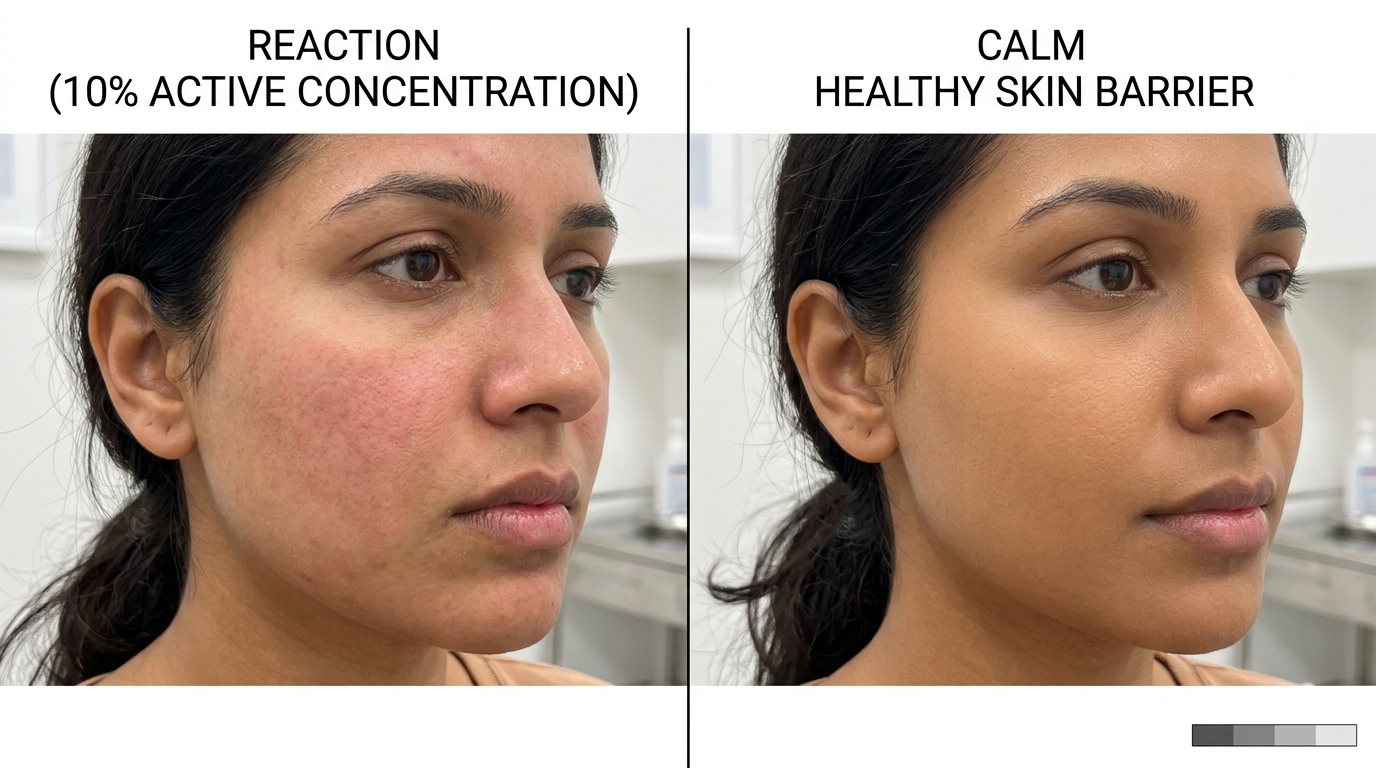
- Common Pitfall: High 10% to 12% serums can cause burning or tiny red bumps on sensitive skin types.
- Texture: Lightweight, water-based serums that soak in quickly without leaving residue.
Azelaic Acid
Azelaic acid is a naturally occurring grain-derived acid that slows down acne-causing bacteria and targets overactive pigment-producing cells.
- Main Strengths: Fading stubborn brown marks (PIH), calming angry red blemish spots (PIE), and smoothing bumpy papules.
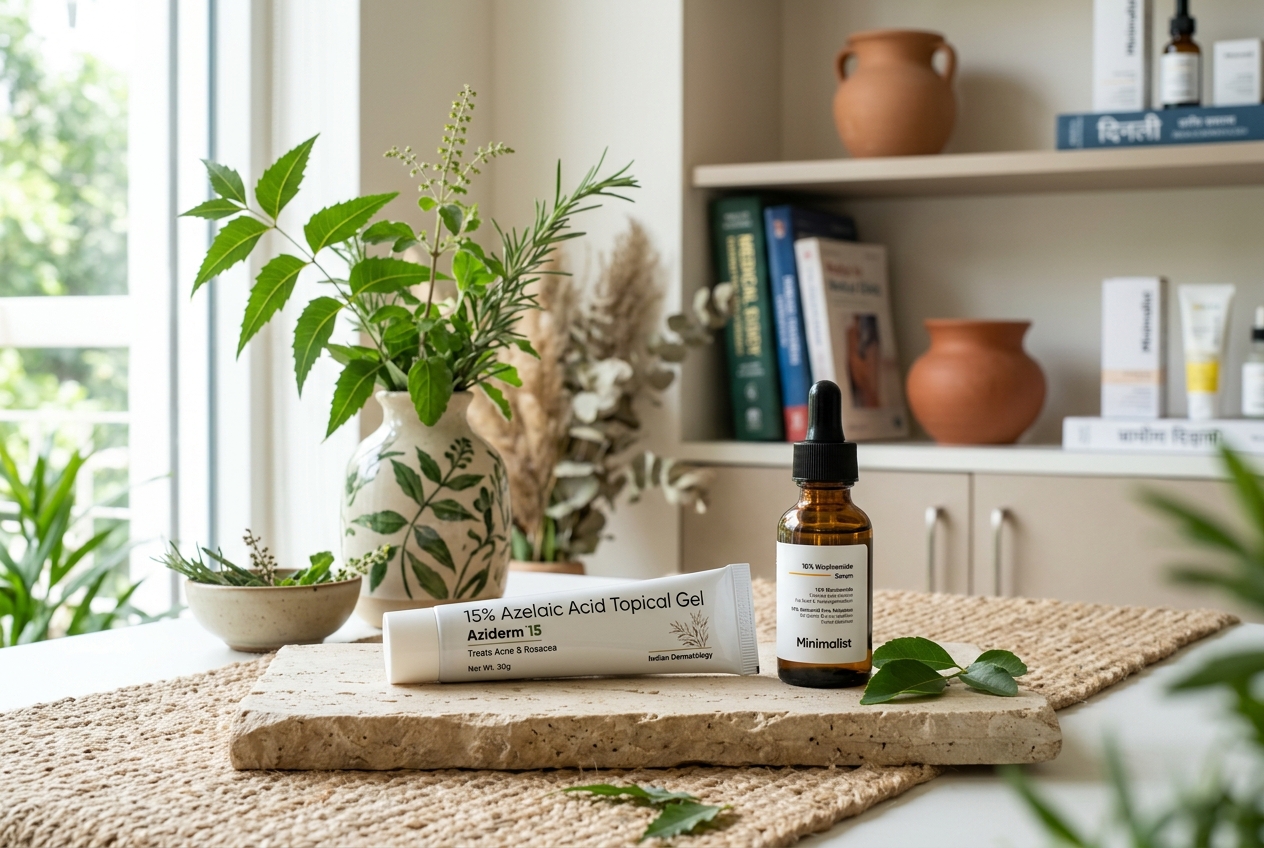
- Best Starting Dose: 10% over-the-counter cream, gel, or serum. (15% to 20% formulations are prescription medicines in India).
- Common Pitfall: Can cause temporary itching, prickling, or dryness during the first two weeks of use.
- Texture: Usually formulated as creamy suspensions or gels because the molecule is tricky to dissolve in plain water.
Which Mix Fits You? The Primary Concern Guide
Instead of guessing which bottle to buy, identify your primary facial concern. Here is the direct recommendation for each common situation:
| Primary Skin Concern | Sensible Starting Active / Mix | What to Look for on the Label |
|---|---|---|
| Acne Marks or Red Spots (PIH / PIE) | 10% Azelaic Acid + 2% to 5% Niacinamide | Pick a formula with hydrating ingredients like glycerin or panthenol. Azelaic acid calms active inflammation and blocks melanin enzymes, while niacinamide prevents pigment transfer. |
| Mostly Oily Skin & Midday Shine | Niacinamide First (5% or 10%) | Look for simple water-based serums containing zinc PCA. Add azelaic acid later only if active bumps or red spots remain after oil production normalizes. |
| Mostly Blackheads & Rough Clogged Pores | Use Salicylic Acid (BHA) or a Retinoid Instead | Salicylic acid directly dissolves oil plugs inside your pores. Neither niacinamide nor azelaic acid will dissolve deep blackheads on their own. |
| Easily Irritated or Sensitive Skin | One Plain 10% Azelaic Product OR Plain 5% Niacinamide | Skip multi-active serums with five competing acids. Choose simple formulations with soothing oat or cica extract and pair with a ceramide cream. |
10 Niacinamide Serums Available in India
These are comparison options across Indian retail shelves, not a sponsored sales ranking. Strengths and supporting ingredients come from current product packaging.
| Product | Strength | Other Notable Ingredients | Best Fit / Pros | Main Caution |
|---|---|---|---|---|
| Minimalist Niacinamide 5% | 5% | Oat extract, bifida ferment, hyaluronic acid | Simple, hydrating starting option for dry or reactive skin | Less focused on heavy oil control than its 10% sibling |
| Deconstruct Dark Spot Clearing | 5% | 2% alpha arbutin, ethyl ascorbic acid, sodium PCA | Aimed at flat post-acne dark marks and uneven skin tone | Multi-active formula; check the ingredient list on your delivered pack |
| The Ordinary Niacinamide + Zinc | 10% | 1% zinc PCA | Straightforward water-based formula for visible midday shine | Can feel less comfortable than a 5% serum on reactive skin |
| Minimalist Niacinamide 10% | 10% | Zinc PCA, zinc glycinate, acetyl glucosamine, allantoin | Oil-focused formula supported by soothing humectants | Start slowly if 10% concentration is new to your routine |
| The Derma Co Niacinamide + Zinc | 10% | 2% zinc PCA, glycerin | Short ingredient list focused on oiliness and post-acne spots | High-strength combination can feel drying for dry skin types |
| Plum Niacinamide & Rice Water | 10% | Rice extract, squalane, licorice, hyaluronic acid | More moisturizing feel alongside tone-brightening botanicals | Contains rose flower water; check tolerance if floral extracts irritate you |
| Dot & Key Cica + Niacinamide | 10% | Cica, alpha arbutin, allantoin, ceramides | Combines tone-focused actives with calming barrier ingredients | Complex multi-ingredient mix; patch test on your jawline first |
| Pilgrim Niacinamide with Kojic | 10% | 1% zinc PCA, kojic acid, rice extract | Targets surface oiliness and stubborn brown patches | Check current pack details as formulas update; kojic strength is unstated |
| Chemist at Play Clarifying Serum | 10% | 3% tranexamic acid, 1% alpha arbutin, ceramides | Heavy pigmentation focus combining three brightening agents | Multiple actives at once can complicate a routine already using acids |
| Foxtale Niacinamide + Azelaic | 12% | Azelaic acid, zinc PCA, acetyl glucosamine, allantoin | For people who tolerate niacinamide well and want an oil-focused duo | Highest niacinamide strength here; azelaic acid percentage is unstated |
10 Azelaic Acid Products Available in India
Here is a breakdown of 10 comparison options in India. We separate cosmetic serums from prescription pharmaceutical gels and identify derivatives like potassium azeloyl diglycinate (PAD).
| Product | Form & Strength | Other Stated Ingredients | Pros | Cons / Cautions |
|---|---|---|---|---|
| The Ordinary Azelaic Suspension | Suspension · 10% | Dimethicone, tocopherol | Straightforward azelaic acid without added competing actives | Silicone texture can pill if layered under heavy creams |
| Paula's Choice Azelaic Booster | Cream-Gel · 10% | 0.5% salicylic acid, licorice extract | Addresses active blemishes and rough texture together | Adds BHA; be careful if you already use a salicylic acid cleanser |
| Anua Azelaic Acid 10 Hyaluron | Serum · 10% | Panthenol, allantoin, hyaluronic acid, centella | Hydrating serum texture with multiple calming humectants | Contains betaine salicylate; check tolerance if salicylates bother you |
| NXTFACE Fadeout Serum | Serum · 10% | Betaine, bengkoang root extract | Short ingredient list from an Indian indie brand | Limited independent product data; ignore overnight miracle claims |
| Peau AZ Peau Serum | Serum · 10% | Niacinamide, tranexamic acid, panthenol, ceramides | All-in-one mix aimed at red spots, brown marks, and skin comfort | Multiple actives make it tricky to identify what helps or causes stinging |
| The Derma Co Nia-Zelaic | Serum · 5% + 2% PAD | 10% niacinamide, sarcosine, acetyl glucosamine | Gentler azelaic dose aimed directly at oily, shiny skin | PAD is a derivative; 2% PAD cannot be treated as pure azelaic acid |
| The Derma Co Tran-Zelaic | Serum · Undisclosed % | Tranexamic acid, niacinamide, alpha arbutin | Broad ingredient cocktail targeting uneven skin tone | Azelaic percentage is unstated; hard to compare with 10% formulas |
| Aziderm 10% Gel | Medicated Gel · 10% | Aqueous gel base | Clearly stated drug concentration in a light gel base | Prescription required on pharmacy platforms; initial itching is common |
| Aziderm 15% Gel | Medicated Gel · 15% | Aqueous gel base | Higher clinical strength for stubborn bumps and dark marks | Prescription required; use strictly under medical supervision |
| Aziderm 20% Cream | Medicated Cream · 20% | Emollient cream base | High-strength cream option for severe hyperpigmentation | Prescription required; higher strength increases risk of dry peeling |
How to Layer Niacinamide and Azelaic Acid Safely
Because these two ingredients do not cancel each other out chemically, you can combine them in your routine. Here are the three most reliable ways to layer them without stinging or barrier damage:
The AM / PM Split (Easiest & Most Comfortable)
Apply your water-based 5% niacinamide serum in the morning after cleansing. Follow with a light moisturizer and broad-spectrum sunscreen. Apply your 10% azelaic acid product in the evening after washing your face, followed by your nighttime moisturizer. This gives you oil control by day and blemish repair by night.
Same Evening Layering (Thinnest to Thickest)
If you prefer using both at night, apply your watery niacinamide serum first to clean skin. Wait 60 to 90 seconds until it absorbs completely and feels dry to the touch. Then apply a pea-sized amount of azelaic acid suspension or gel over your blemish-prone areas. Finish with a gentle ceramide cream to lock in hydration.
If You Already Use a Retinoid (Adapalene or Tretinoin)
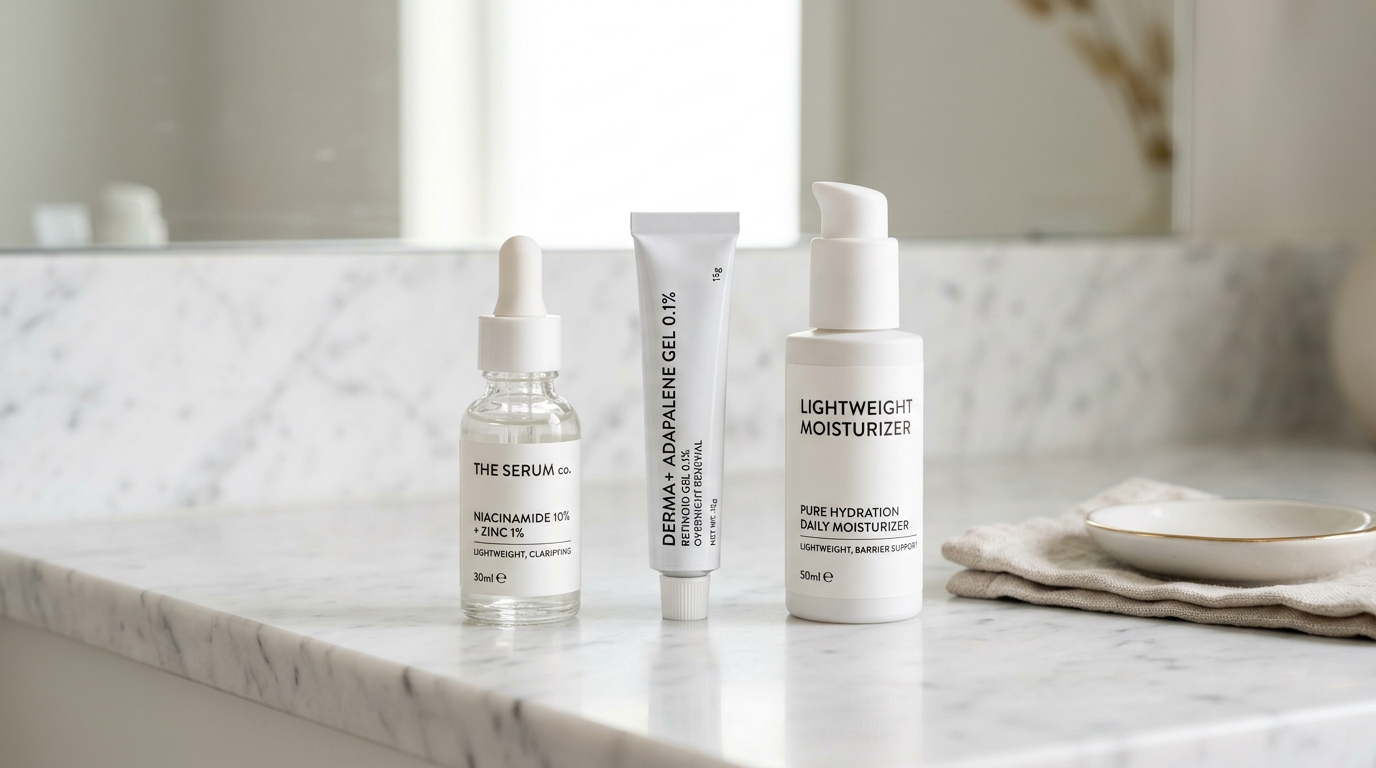
Do not smear high-strength azelaic acid and a prescription retinoid together on the same night when starting out. Alternate nights: use your retinoid on night one, azelaic acid on night two, and take night three as a rest night with gentle niacinamide and moisturizer.
Doctor Video Guide: How Azelaic Acid Works on Real Skin
Watch board-certified dermatologists Dr. Shah and Dr. Maxfield (Doctorly) break down the clinical science behind azelaic acid, who benefits most, and how it differs from harsh exfoliating scrubs:
Frequently Asked Questions
Clear answers to common questions about niacinamide and azelaic acid routines in India:
Can you use niacinamide and azelaic acid together every day?
Yes. Both ingredients pair well together because they target different steps of blemish formation. Niacinamide supports your skin barrier and eases oiliness, while azelaic acid calms active inflammation and blocks melanin-making enzymes. The easiest approach is using niacinamide in the morning and azelaic acid at night.
Does azelaic acid cause skin purging?
Mild purging can happen during the first 2 to 4 weeks because azelaic acid encourages gentle skin shedding. However, this is usually much milder than purging from retinoids like adapalene or tretinoin. If you experience burning, peeling, or widespread red irritation, that points to barrier stress rather than true purging.
Why do 10% niacinamide serums irritate some people?
Clinical studies show proven benefits at 2% for oil regulation and 5% for hyperpigmentation. Formulas with 10% or 12% niacinamide can cause temporary flushing, tingling, and tiny surface bumps on reactive or sensitive skin. If 10% irritates your face, switching to a gentle 5% serum often fixes the problem.
Which ingredient is better for dark brown post-acne marks?
Azelaic acid has stronger clinical backing for dark brown marks (PIH) and melasma because it directly blocks tyrosinase inside overactive pigment cells. Niacinamide provides helpful support by preventing pigment transfer, making the combination very effective.
Do either of these products clear stubborn blackheads?
No. Neither niacinamide nor azelaic acid penetrates deep into oily pores to dissolve hard plugs. For stubborn blackheads, a leave-on salicylic acid (BHA) liquid or a prescription retinoid is the primary treatment choice.
How long does it take to see visible results?
Oiliness and surface shine often improve within 2 to 3 weeks of daily niacinamide use. Redness and active inflammatory bumps start settling within 4 weeks of azelaic acid use. Fading deep brown marks requires consistent daily sun protection and 8 to 12 weeks of steady routine adherence.
Not Sure What Kind of Marks You Have?
Red marks (PIE), brown pigment spots (PIH), and active clogged pores respond to different active ingredients. Run our free facial scan to understand your skin profile:
MyMirror AI Facial Diagnostic
Take a quick photo in clean daylight. Our facial AI evaluates redness patterns, pigment depth, and pore congestion in 60 seconds.
Run Free Facial Scan Now →