When you introduce prescription topical retinoids like Tretinoin (0.025%, 0.05%) or Adapalene (0.1%, Differin/Adaferin) into your Indian skincare routine, your skin often undergoes a dramatic flare-up within the first 14 to 28 days. This alarming reaction leads many patients to abandon their treatment prematurely. However, understanding the underlying cellular mechanism reveals why this temporary aggravation is actually a hallmark of successful drug activity.
Cellular Turnover Acceleration: From 28 Days to 14 Days
In untreated skin, keratinocytes undergo a natural maturation cycle that lasts approximately 28 to 30 days. Under the influence of topical retinoids, nuclear retinoic acid receptors (RARs) are bound, accelerating basal epidermal cell division and reducing corneocyte stickiness. This compresses your skin's renewal cycle from 28 days down to a rapid 14-day cycle.
This rapid cellular acceleration acts like a high-speed elevator for microscopic blockages lurking beneath your stratum corneum:
Microcomedones Forced Upward
Invisible clogged pores (microcomedones)—composed of sticky sebum, dead skin cells, and Cutibacterium acnes—that would have taken 2 to 3 months to erupt are all forced to the surface simultaneously.
NOT New Acne Formation
Retinoid purging does NOT create new acne. It simply unearths pre-existing micro-clogs that were already formed deep inside your hair follicles prior to starting treatment.
Use this clinical diagnostic matrix to determine whether your current skin reaction is expected retinoid purging or an adverse product reaction requiring immediate discontinuation:
| Diagnostic Feature | Skin Purging (Retinoid Adaptation) | Real Breakout (Product Reaction) |
|---|---|---|
| Timing | First 2–6 weeks after introducing a new active (Tretinoin, Adapalene) | Appears after 6+ weeks of use OR immediately after starting a new non-active product |
| Pimple Location | SAME zones where you normally get acne (e.g., chin, T-zone, jawline) | NEW zones where you rarely or never break out (e.g., hairline, upper cheeks, neck) |
| Pimple Type | Same type as usual: superficial whiteheads, small papules, microcomedones | New cyst types: deep, painful nodules, blind pimples, or allergic itchy bumps |
| Improvement Pattern | Gradually improving after Week 4; individual lesions heal faster than usual | Getting consistently worse over time with continuous fresh inflammatory clusters |
| Skin Reaction | Mild localized redness and light flaking strictly at retinoid application sites | Persistent diffuse redness, stinging, burning, itching, or contact dermatitis all over |
| Duration | Resolves completely by Week 6–8 as fresh, unclogged skin emerges | Persists beyond 8 continuous weeks with zero signs of improvement |
Not every ingredient is capable of causing a skin purge. True purging only occurs when an ingredient actively increases cell renewal or exfoliation:
Purging Triggers
Active ingredients that increase cell renewal and force microcomedones to the surface:
- Topical Retinoids: Tretinoin, Adapalene, Retinol, Retinaldehyde, Trifarotene.
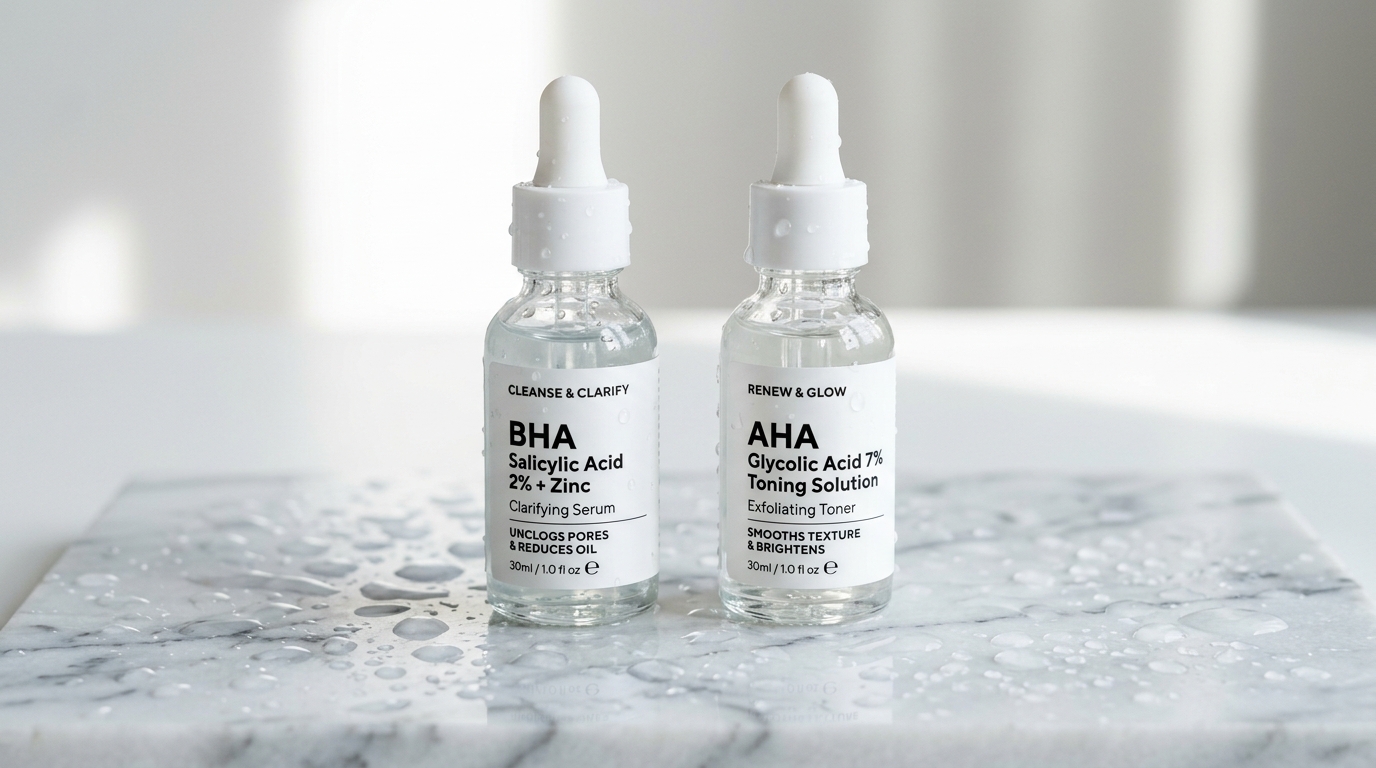
- AHA/BHA Acids: Salicylic Acid (2%), Glycolic Acid (6-10%), Lactic Acid.
- Potent Actives: L-Ascorbic Acid (Pure Vitamin C above 15%), Benzoyl Peroxide.
Breakout Triggers
Ingredients and factors that physically clog pores or disrupt the barrier:
- Comedogenic Ingredients: Coconut oil, Cocoa butter, Heavy Isopropyl Myristate, Pure Shea Butter.
- Occlusive Formulations: Heavy non-comedogenic creams that trap sweat in Indian humidity.
- Microbiome Overuse: Prolonged topical antibiotic overuse (Clindamycin) triggering resistant bacterial strain growth.
To navigate the mandatory 6-week adaptation window without damaging your skin barrier or suffering severe hyperpigmentation (PIH), follow these 4 dermatological survival protocols:
1. Reduce Application Frequency
Do not start retinoids nightly! Ramp up slowly to allow epidermal adaptation:
• Weeks 1–2: Apply 1x per week.
• Weeks 3–4: Build to 2–3x per week.
• Weeks 5+: Transition to alternate nights or nightly as tolerated.
2. The Sandwich Method
Cushion the retinoid to minimize irritation without reducing efficacy:
• Step 1: Apply a lightweight ceramide moisturizer to clean skin.
• Step 2: Wait 10 minutes, then apply pea-sized Tretinoin/Adapalene.
• Step 3: Seal with a second light layer of moisturizer.
3. Azelaic Acid PM Alternate Nights
Introduce Azelaic Acid 10% gel on alternate non-retinoid nights. Azelaic Acid calms inflammatory erythema, inhibits tyrosinase (preventing dark marks), and kills P. acnes without deactivating or competing with your retinoid.
4. Mineral SPF 50 Every Morning
Retinoids make fresh epidermal cells highly photosensitive. Daily morning application of a broad-spectrum Mineral SPF 50 (Zinc Oxide based) is non-negotiable under Indian UV indices to prevent severe post-inflammatory hyperpigmentation (PIH).
Pushing through a purge is necessary, but pushing through severe barrier breakdown causes long-term scarring and PIH. Immediately discontinue your retinoid and consult a dermatologist if you encounter any of these 4 danger signals:
Worsening Stinging & Burning
Severe stinging or burning when applying basic, gentle non-active moisturizers or plain water. This signals a severely compromised lipid barrier requiring immediate barrier recovery.
New Cysts in Non-Acne Zones
Eruption of deep, painful nodular cysts in facial zones where you have historically never experienced acne (e.g., temples, upper cheeks, neck).
Contact Dermatitis & Hives
Appearance of a hive-like rash, intense itching, facial swelling, or raw peeling skin separate from standard mild retinoid flaking.
Purging Lasting Beyond 8 Weeks
Continuous flare-ups lasting past 8 to 10 weeks of regular use with no visible reduction in breakout frequency or severity.