When treating comedonal acne (blackheads, whiteheads, and microcomedones) during the hot, humid months of an Indian summer, the choice of retinoid is critical. High heat and humidity increase sebum production and transepidermal water loss (TEWL), while the intense UV index exacerbates photosensitivity.
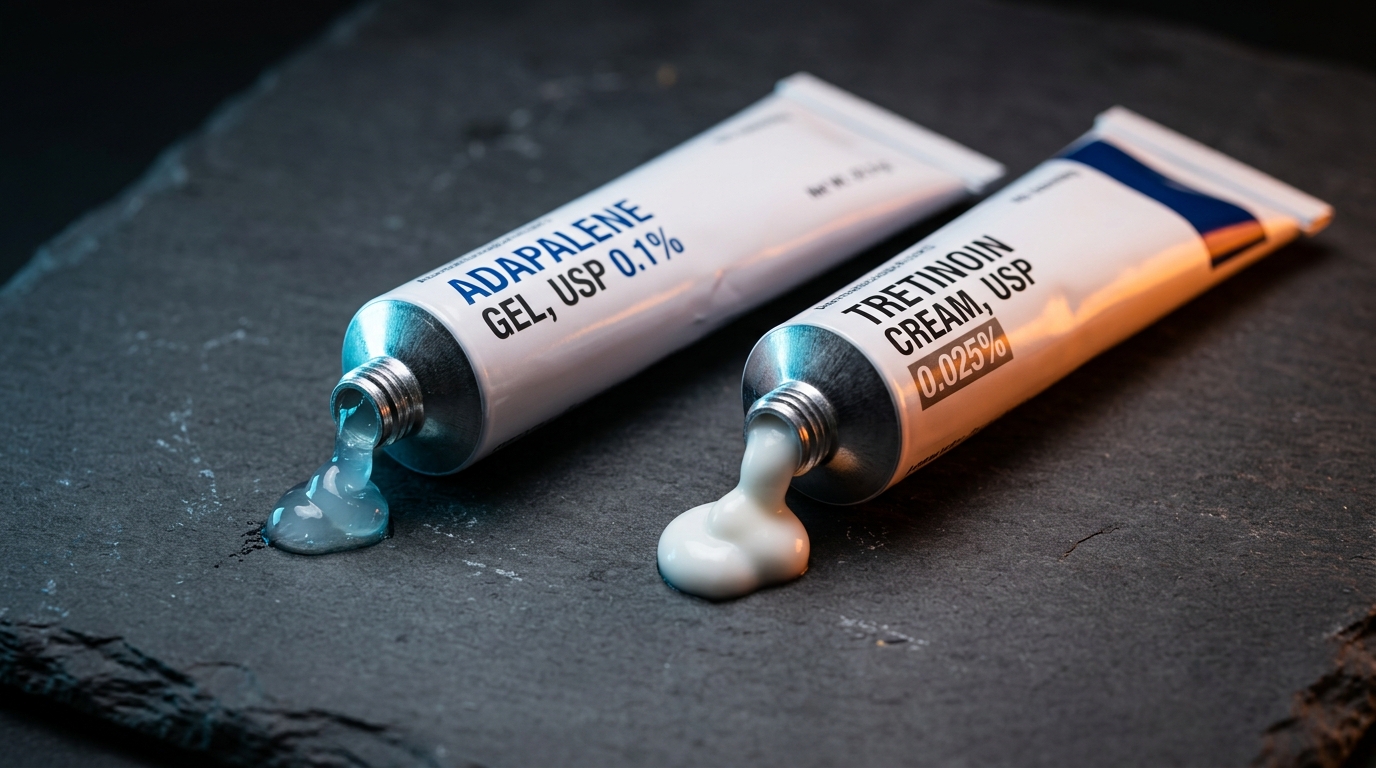
This report evaluates two benchmark topical retinoids available in Indian pharmacies: Adapalene (Adaferin 0.1%) and Tretinoin (Retino-A 0.025%), analyzing their formulation, stability, and real-world tolerability.
1. Formulation & Stability Analysis
Adapalene (Adaferin 0.1% Gel)
- Receptor Specificity: Adapalene is a third-generation synthetic naphthoic acid derivative. It selectively binds to RAR-β and RAR-γ receptors, completely bypassing the RAR-α receptor associated with severe epidermal irritation.
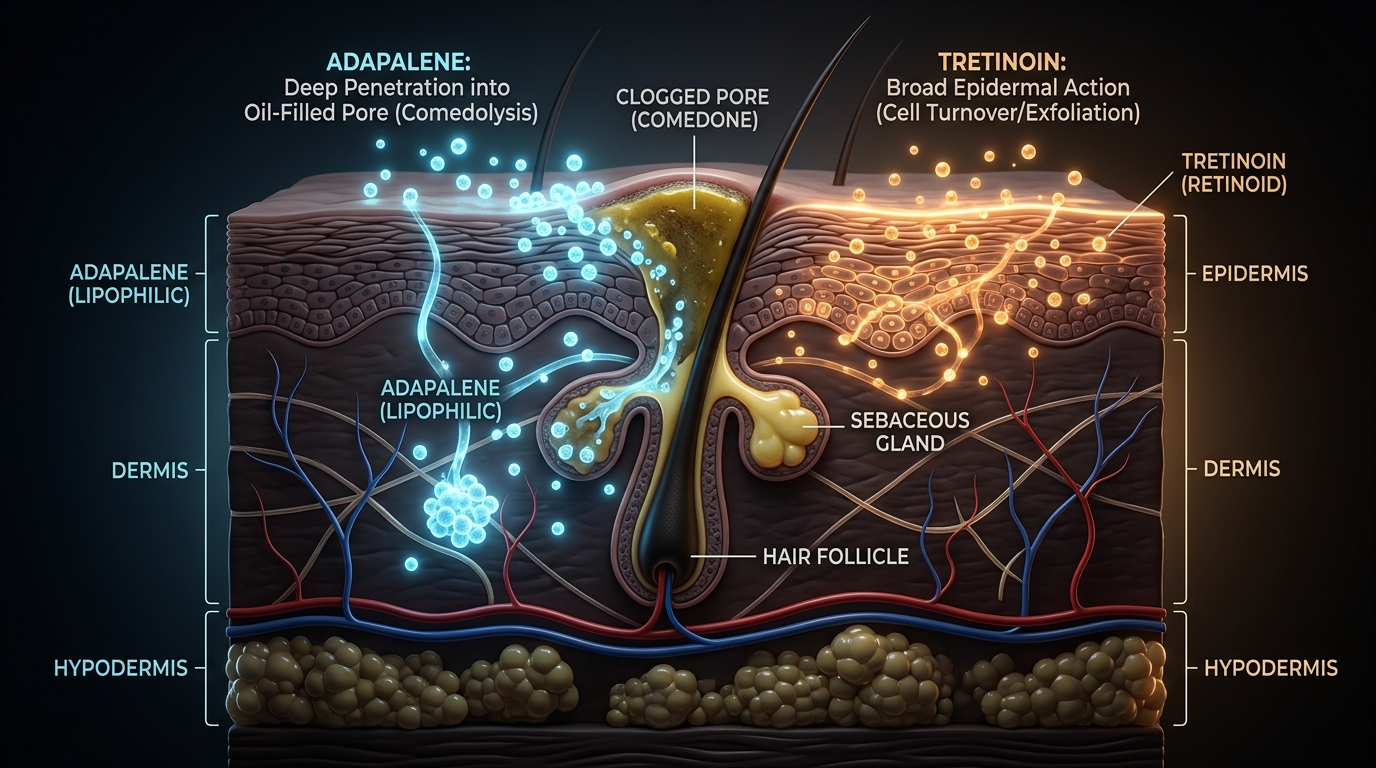
- Lipophilicity (The "Sebum-Seeking" Missile): Adapalene is highly lipophilic. In a humid summer where sebum production goes into overdrive, Adapalene uses this oil as a delivery mechanism, dissolving into the sebum and diving straight into the lipid-rich pilosebaceous unit (the pore).
- Photostability: Unlike first-generation retinoids, Adapalene is highly photostable and resilient against oxidation. While night-time application is still standard, incidental UV exposure the morning after will not degrade the active compound.
Tretinoin (Retino-A 0.025% Cream)
- Receptor Specificity: Tretinoin is a first-generation, naturally occurring retinoid (all-trans retinoic acid). It binds indiscriminately to all RAR receptors. While this makes it the gold standard for anti-aging, it can be overkill for simple comedonal acne.
- Photolability & Degradation: Tretinoin is highly unstable in the presence of UV light. When exposed to morning sunlight, it rapidly degrades. Furthermore, Tretinoin drastically thins the stratum corneum, leading to severe photosensitivity.
- Hydrophilicity: It does not penetrate sebum as efficiently as Adapalene, meaning it can cause more surface-level irritation (erythema, stinging) when mixed with sweat.
2. Product Review & Comparison for Indian Skin
Indian skin (typically Fitzpatrick Type III-V) is highly prone to Post-Inflammatory Hyperpigmentation (PIH). Irritation from retinoids can easily trigger melanocytes, leaving dark spots that take months to fade.
| Feature | Adaferin 0.1% (Adapalene) | Retino-A 0.025% (Tretinoin) |
|---|---|---|
| Primary Action | Highly comedolytic, anti-inflammatory | Highly comedolytic, aggressive cell turnover |
| Tolerability | High. Safe for summer sweat. | Low. Often causes burning/peeling. |
| Purging Phase | Mild to moderate; resolves in 2-4 weeks. | Often severe; can last 4-6 weeks. |
| PIH Risk | Low (anti-inflammatory action). | High (irritation triggers dark spots). |
3. Actionable "How-To-Layer" Protocols (Summer Adaptation)
To maximize efficacy and minimize the "retinoid uglies" (peeling, redness) during sweaty, humid months, adherence to a strict protocol is required.
The Sandwich Method (Buffering)
Do not apply retinoids directly to bare, damp skin, as water increases penetration and irritation.
- Cleanse: Use a gentle cleanser. Pat dry completely (wait 3 mins).
- Base Layer: Apply a lightweight gel moisturizer or hydrating essence (Snail Mucin/Ceramides). Let it dry.
- The Active: Apply a pea-sized amount of the retinoid evenly across the face.
- Top Layer: Follow up with a thicker (non-comedogenic) moisturizer to seal the barrier.
Ingredient Conflicts & What to Avoid
- Strictly Avoid AHAs & BHAs: Do NOT use Salicylic Acid or Glycolic Acid in the same routine. Using these alongside a retinoid destroys the acid mantle, leading to severe chemical burns. Reserve BHA for a non-retinoid morning.
- Benzoyl Peroxide (BPO): While Adapalene can be safely combined with BPO (as seen in Epiduo), Tretinoin is instantly oxidized and deactivated by Benzoyl Peroxide.
- Vitamin C: Avoid L-Ascorbic Acid in the same PM routine. It can be used in the AM, provided a broad-spectrum SPF 50 is applied generously.
4. Final Verdict
For an Indian patient dealing with comedonal acne during the summer, Adaferin 0.1% (Adapalene) is the undisputed winner.
Its sebum-seeking properties make it perfectly suited for oily, sweaty skin, and its photostability provides a crucial safety net against the harsh summer sun and PIH risks. Tretinoin, while a powerhouse anti-aging ingredient, introduces unnecessary risk and barrier compromise for this specific indication.