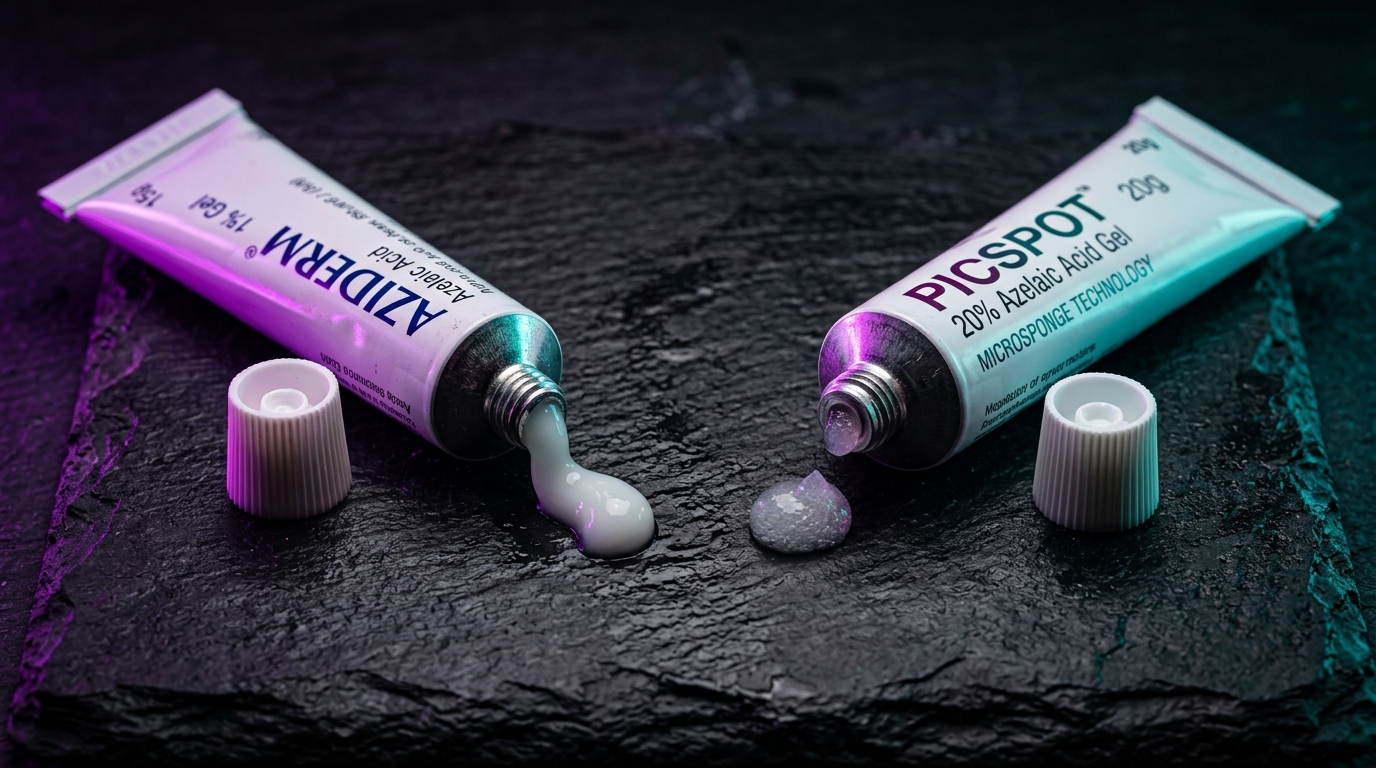
Azelaic acid (AzA) is notoriously difficult to formulate. It is a large dicarboxylic acid with poor solubility in both water and oil, meaning it must be suspended in a base. The choice of base directly dictates the product's texture, penetration, and tolerability.
In this guide, we evaluate two of the most popular Indian pharmacy Azelaic Acid 15% gels—Aziderm (Micro Labs) and Picspot (Glenmark Pharmaceuticals)—to determine which provides the superior user experience for oily, acne-prone skin.
1. Deep Formulation & Delivery Analysis
Aziderm 15% Gel
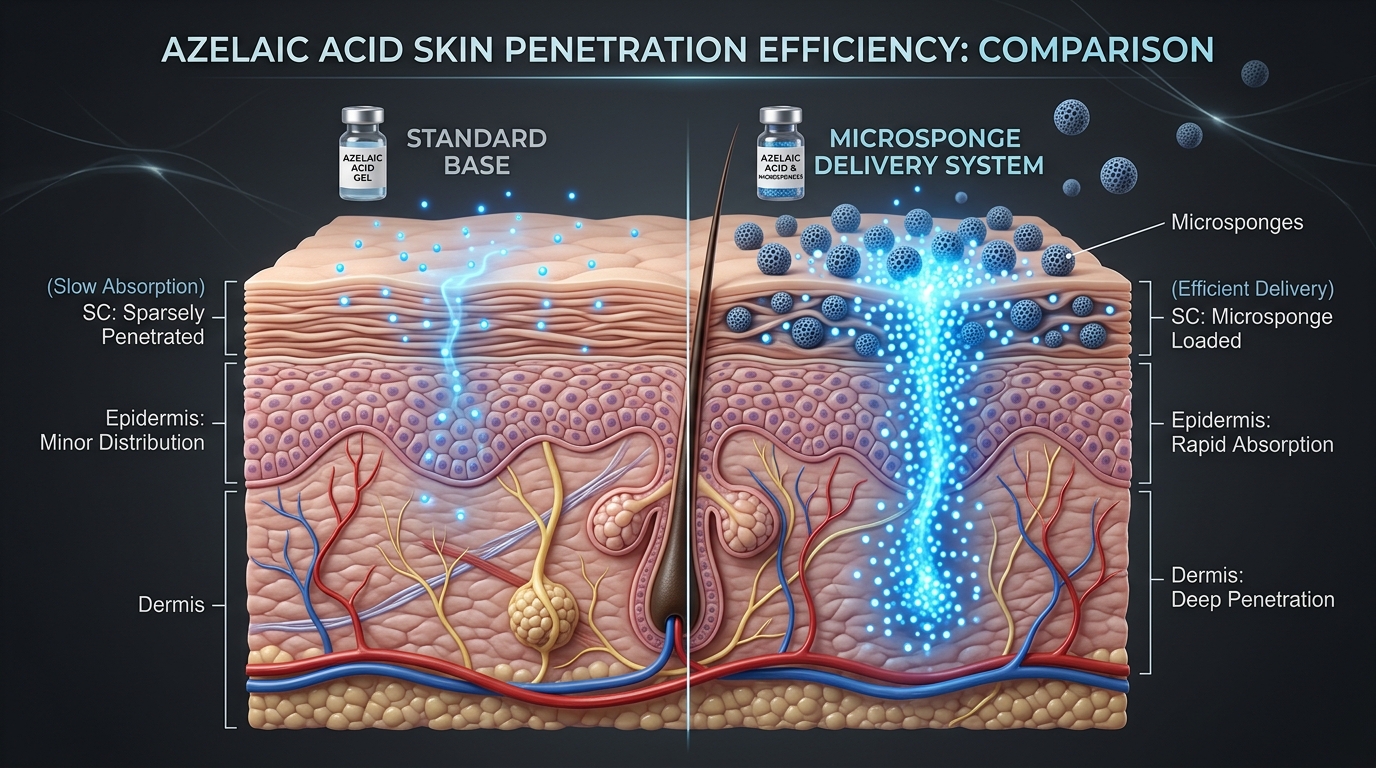
Base/Delivery System: Standard polymer-based gel/cream suspension. Aziderm relies on standard excipients (often including propylene glycol) as penetration enhancers and solvents.
Inactive Ingredients & Penetration: Because the active is simply suspended, it relies on an immediate release mechanism. The propylene glycol aids in breaking the stratum corneum barrier to deliver the AzA. While effective, this rapid influx of the active is what causes the classic localized "tingling," stinging, or pruritus (itching) associated with AzA.
Formulation Drawbacks: The suspended AzA crystals tend to give the product a slightly gritty or chalky feeling. The gelling agents used are prone to clumping when rubbed.
Picspot 15% Gel
Base/Delivery System: Microsponge Delivery System (MDS).
How MDS Works: MDS utilizes highly porous, microscopic cross-linked polymeric spheres. The azelaic acid is entrapped within these spheres. When applied, the microsponges sit on the skin's surface and slowly release the active ingredient over time through the pores of the polymer.
The Oily Skin Benefit
Once the AzA is released, the empty polymeric microsponges do not just disappear—they act as microscopic oil-absorbents, actively soaking up excess sebum and sweat produced throughout the day.
Penetration & Tolerability: The sustained-release mechanism flattens the absorption curve. By avoiding a sudden spike in epidermal concentration, Picspot significantly reduces the initial stinging/itching phase, making it far more tolerable without sacrificing efficacy.
2. Texture, Finish, and Patient Compliance
When treating oily, acne-prone skin, cosmetic elegance is paramount for patient compliance, particularly in hot and humid Indian climates.
| Feature | Aziderm 15% Gel | Picspot 15% Gel |
|---|---|---|
| Spreadability | Moderate; requires quick blending before it sets. | High; smooth slip, similar to a silicone primer. |
| Texture | Thicker, opaque gel-cream; slightly gritty/chalky. | Lightweight, cosmetically elegant gel; smooth. |
| Finish | Matte, but leaves a powdery white cast if applied heavily. | Transparent, true matte finish; no white cast. |
| Pilling Risk | High. Prone to rolling/pilling under sunscreen. | Low. Layers beautifully due to the MDS base. |
| Sebum Control | Good (absorbs oil via its powdery residue). | Excellent (actively absorbs oil via microsponges). |
3. Actionable "How-to-Layer" Protocols
Because 15% Azelaic Acid is a highly potent therapeutic concentration, incorrect layering can lead to a compromised skin barrier and severe pilling.
🟢 What to Mix (Synergistic Pairings)
- Niacinamide (5-10%): The ultimate powerhouse combination for oily skin. Niacinamide regulates sebum and strengthens the ceramide barrier, while AzA targets C. acnes bacteria and fades PIE/PIH.
- Hyaluronic Acid / Snail Mucin: Apply these humectants first on damp skin, let them dry completely, and then apply the AzA. This buffering technique prevents the acid from penetrating too quickly and causing irritation.
- Centella Asiatica / Panthenol: Excellent for soothing any background irritation caused by the keratolytic nature of AzA.
🔴 What to Avoid (High-Risk Pairings)
- High-Strength BHA (Salicylic Acid 2%+): Both are exfoliants/keratolytics. Using them concurrently heavily increases the risk of dehydration, peeling, and chemical burns. Use BHA in the morning and AzA at night.
- Strong Retinoids (Tretinoin, Adapalene): While dermatologists do prescribe them together for severe acne, starting both simultaneously is a recipe for barrier failure. Alternate nights, or apply AzA in the AM (since it's not photosensitizing).
- Vitamin C (L-Ascorbic Acid): Layering both can cause severe stinging due to competing low-pH profiles. It's best to separate them (Vit C in AM, AzA in PM).
💡 The "Anti-Pilling" Application Technique
- Less is more: Use only a pea-sized amount for the entire face.
- Pat, don't rub: Rubbing standard gels (like Aziderm) causes the polymers to ball up. Gently pat or press the product into the skin.
- Wait times: Wait 3-5 minutes for the AzA to completely set into a dry film before applying moisturizer or sunscreen.
4. Cost-Effectiveness & Final Verdict
Aziderm 15% Gel: ~₹250 - ₹300 for 15g.
Picspot 15% Gel: ~₹350 - ₹450 for 15g.
Which is better for Oily Skin?
Picspot 15% Gel is the definitive winner for oily, acne-prone skin types.
While Aziderm is the classic, budget-friendly option, its cosmetic elegance leaves much to be desired. The gritty texture, tendency to pill, and chalky white finish make it frustrating for daytime use or layering under other products.
Picspot easily justifies its slightly higher price point through its Microsponge Delivery System. This technology solves the two biggest complaints regarding azelaic acid: it drastically minimizes the initial stinging sensation via slow-release delivery, and the microsponges act as an all-day sebum absorber. It provides a primer-like, transparent matte finish that sits beautifully under sunscreen and makeup, offering a vastly superior user experience and better overall compliance.