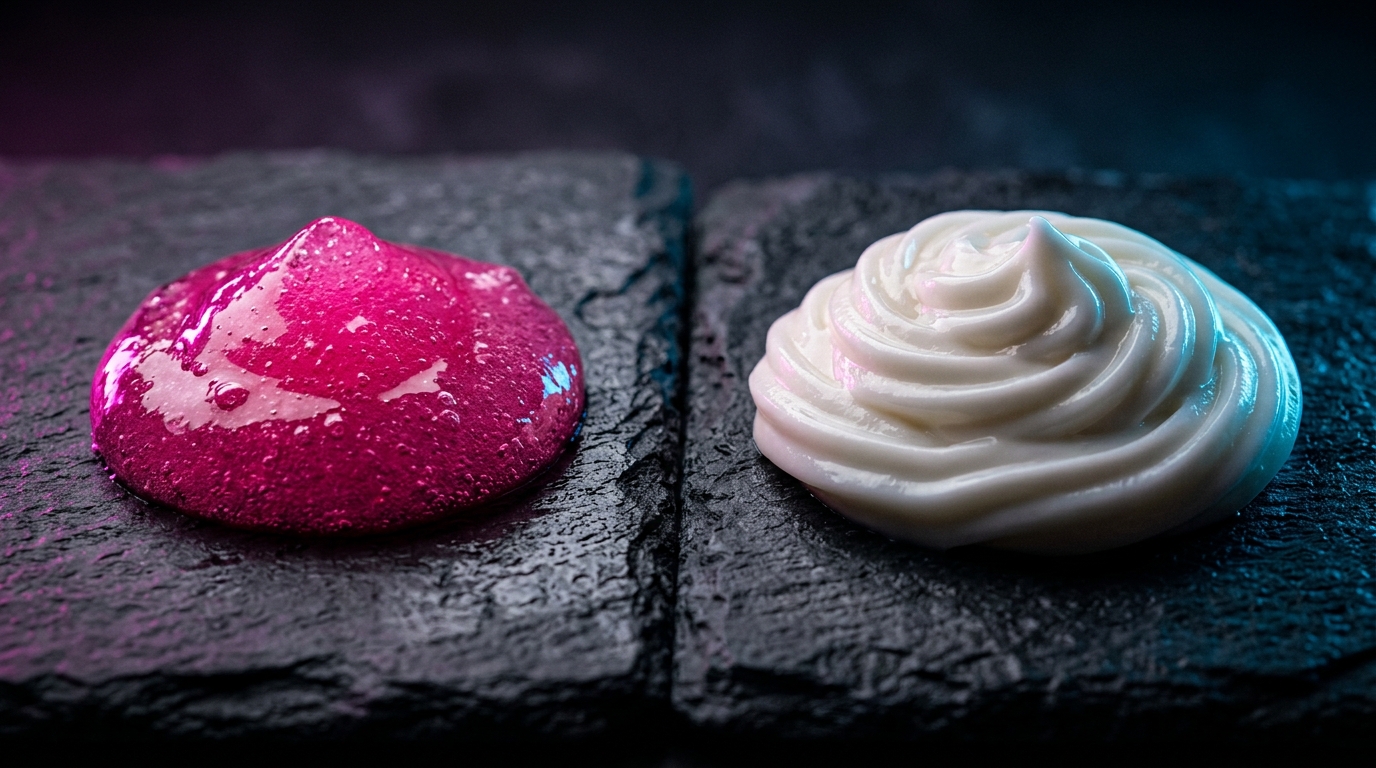
Malassezia folliculitis, colloquially known as "fungal acne," presents a unique dermatological challenge. While Ketoconazole 2% is a highly effective, broad-spectrum synthetic imidazole antifungal, clinical outcomes are heavily dictated by the formulation's inactive vehicle.
This report details the biochemical paradox where Ketoconazole creams frequently fail or exacerbate the condition, whereas shampoos—despite being barrier-disrupting—yield superior clinical clearance when utilized via Short-Contact Therapy (SCT).
1. Pathophysiology & The Lipid-Dependent Nature of Malassezia
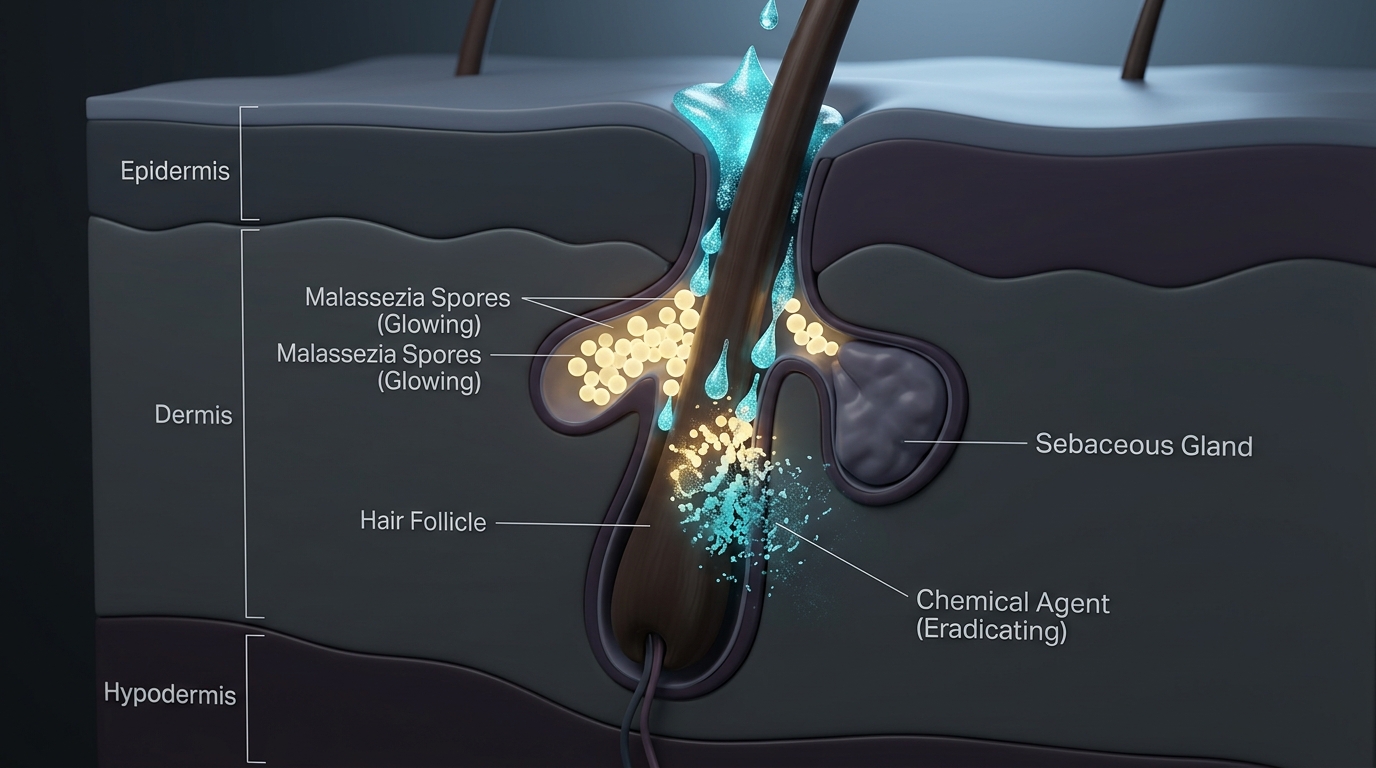
Malassezia species (primarily M. globosa and M. furfur) are lipophilic, obligate lipid-dependent yeasts. They lack the fatty acid synthase gene, meaning they cannot synthesize their own lipids.
Consequently, they survive by hydrolyzing human sebum (triglycerides) into free fatty acids. Specifically, Malassezia feeds voraciously on carbon chain lengths of C11 to C24 (such as lauric, myristic, palmitic, stearic, and oleic acids). Understanding this metabolic limitation is critical when evaluating dermatological vehicles.
2. Deep Formulation Analysis: The Ketoconazole 2% Cream Paradox
In theory, a cream (e.g., Nizral Cream) is the standard dermatological vehicle for facial afflictions, offering a localized, prolonged delivery of the active pharmaceutical ingredient (API). However, in the context of Malassezia folliculitis, antifungal creams frequently induce a refractory or exacerbated state. We call this the "Trojan Horse" Paradox.
Inactive Carrier Ingredients: Exogenous Yeast Food
To formulate a cosmetically elegant emulsion, manufacturers utilize specific emulsifiers and emollients. Common inactive ingredients in Ketoconazole creams include:
- Isopropyl Myristate: An ester of isopropyl alcohol and myristic acid (C14).
- Polysorbates (e.g., Polysorbate 60, Polysorbate 80): Ethoxylated sorbitan esters derived from fatty acids like stearic acid (C18) and oleic acid (C18:1).
- Cetyl/Stearyl Alcohol & Stearic Acid: Long-chain fatty acids and their derivatives.
Clinical Impact: These carrier bases literally act as an exogenous food source for Malassezia. When a patient applies the cream, the Ketoconazole begins to inhibit the yeast's cell membrane synthesis. Simultaneously, the vehicle is feeding the surviving yeast colonies with the exact C11-C24 lipids they require for explosive proliferation. In many cases, the proliferation outpaces the fungicidal activity, rendering the 2% Ketoconazole clinically useless.
3. Deep Formulation Analysis: Ketoconazole 2% Shampoo
Shampoos (e.g., Nizoral, Scalpe, Keraglo) are formulated for the scalp, featuring heavy anionic surfactants like Sodium Laureth Sulfate (SLES) or Sodium Lauryl Sulfate (SLS) to strip sebum and environmental debris.
- The Benefit (Penetration Enhancement): SLES is a powerful degreaser. By temporarily stripping the protective lipid matrix of the stratum corneum, it acts as a potent penetration enhancer, allowing Ketoconazole to aggressively enter the pilosebaceous unit where the Malassezia yeast resides.
- The Drawback (Barrier Disruption): The facial stratum corneum is significantly thinner than the scalp. Prolonged exposure to anionic surfactants extracts intercellular lipids, leading to elevated Transepidermal Water Loss (TEWL), erythema, and impaired barrier function.
The Protocol: Short-Contact Therapy (SCT)
Because shampoos lack the lipid-rich emulsifiers that feed Malassezia, they are the superior delivery system. To mitigate the barrier-disrupting effects of SLES on the delicate facial epidermis, Short-Contact Therapy (SCT) is the gold standard protocol.
- Mechanism: The shampoo is applied to dampened skin as a "mask" and left on for 3 to 5 minutes, then thoroughly rinsed.
- Rationale: This specific window allows the Ketoconazole adequate contact time to exert its fungicidal effect, while minimizing the time SLES has to extract structural lipids.
4. pH Dynamics and the Skin Microbiome
Malassezia exhibits optimal growth in environments with a pH ranging from 5.5 to 7.5. A healthy human stratum corneum maintains an "acid mantle" with a pH between 4.5 and 5.5, which acts as a natural antimicrobial defense restricting yeast overgrowth.
Vehicle pH Impact
- Shampoos: Often formulated at a higher pH (5.5 - 7.0) to facilitate foaming. While this alkaline shift temporarily creates a hospitable pH for Malassezia, the combination of immediate rinse-off (SCT) and the absence of lipid-feeders prevents the yeast from capitalizing on the pH shift. The skin naturally recovers its acidic pH within 1-2 hours post-cleansing.
- Creams: While some creams are pH-balanced closer to the skin's natural acidity (5.0 - 5.5), they are designed to be left on the skin. Any potential benefit of an acidic pH is entirely negated by the constant, prolonged supply of lipophilic sustenance provided by the cream's vehicle.
Barrier Repair Post-Treatment is Mandatory
Because the shampoo's surfactants (SLES) induce barrier disruption, the SCT must be followed immediately by a "fungal-acne safe" hydrator—specifically one devoid of C11-C24 fatty acids (e.g., pure squalane, glycerin, or hyaluronic acid serums) to restore the acid mantle and repair TEWL without feeding the yeast.