
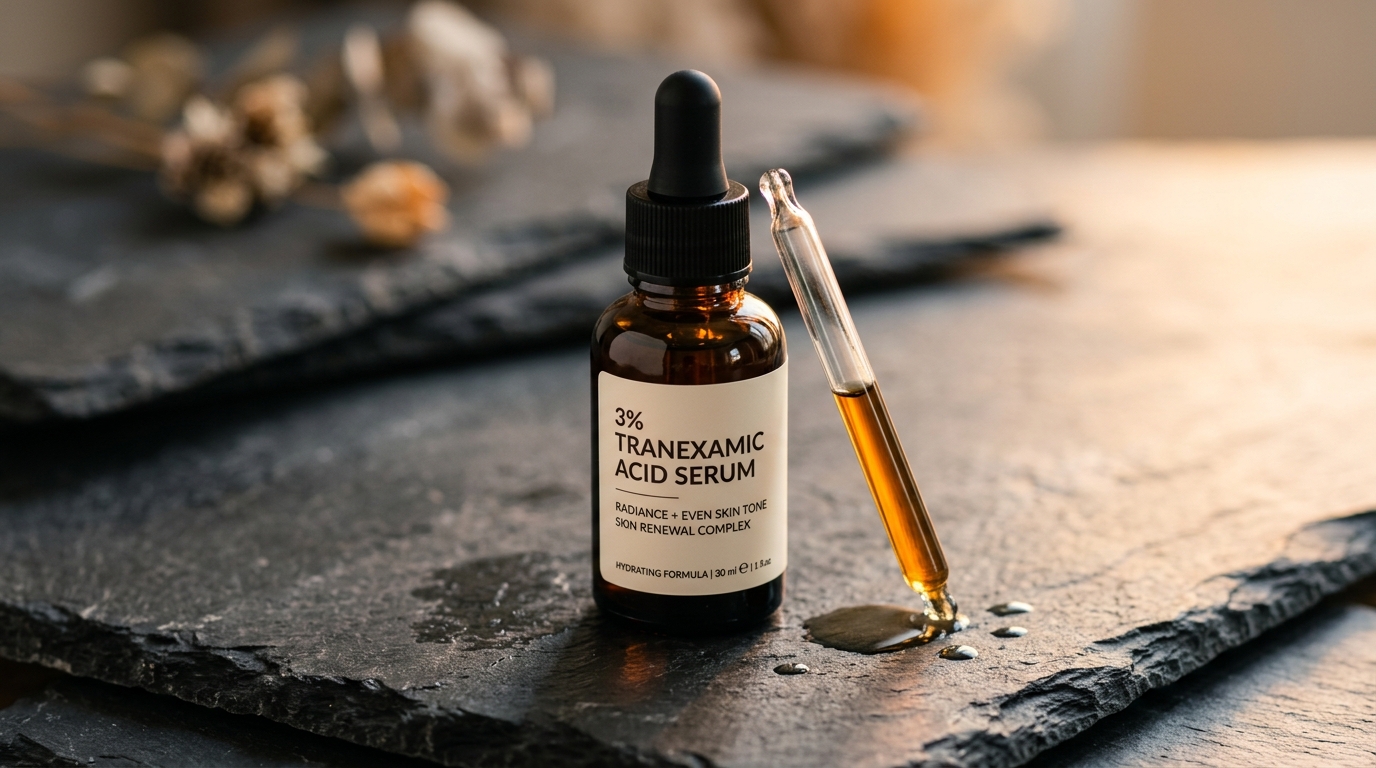
1. How Tranexamic Acid Fights Melasma: The Plasminogen Pathway
Tranexamic Acid (TXA) is a revolutionary ingredient in treating stubborn pigmentation on Indian skin. It works by blocking the plasmin-mediated pathway that triggers melanocyte activation. When your skin is exposed to UV light or inflammation, keratinocytes produce plasminogen activators. These activators convert plasminogen to plasmin, which in turn stimulates melanocytes to produce excess melanin.
Unlike hydroquinone, which is a direct tyrosinase inhibitor and can be cytotoxic (damaging to cells), TXA works upstream by preventing the UV-triggered keratinocyte signalling to melanocytes. This mechanism makes it exceptionally gentle, non-cytotoxic, and safe for long-term use on darker skin tones (Fitzpatrick IV-VI).
Interrupts communication between skin cells (keratinocytes) and pigment-producing cells (melanocytes), preventing melanin synthesis before it even starts.
Non-cytotoxic and extremely gentle compared to Hydroquinone. No risk of exogenous ochronosis or permanent cell damage, making it ideal for Indian skin.
Because it works by preventing new pigment formation, you must wait for existing pigmented cells to shed. Significant fading typically takes 8 to 12 weeks of daily use.
Pairs beautifully with other melanin-inhibitors like Alpha Arbutin, Vitamin C, and Kojic Acid without increasing irritation or compromising the skin barrier.
2. Topical vs Oral Tranexamic Acid for Melasma: What Indian Derms Prescribe
For decades, Tranexamic Acid was primarily used orally to control heavy menstrual bleeding. However, Indian dermatologists increasingly prescribe low-dose oral TXA (typically 250mg twice daily) for recalcitrant melasma alongside topical formulations.
Comparing Oral vs Topical Efficacy
Topical Tranexamic Acid (3% - 10%): Excellent for mild to moderate melasma, post-inflammatory hyperpigmentation (PIH), and overall brightening. It has a high safety profile with minimal side effects and can be bought over the counter.
Oral Tranexamic Acid (Prescription): Often yields faster and more dramatic results for severe, deep dermal melasma. However, because it affects blood clotting, it comes with serious contraindications (e.g., deep vein thrombosis (DVT) risk) and requires strict medical supervision and blood tests. It is never a first-line treatment for simple dark spots.
3. Product Comparison Matrix
Comparing the best Tranexamic Acid formulations available in the Indian market:
| Product | TXA % | Supporting Actives | Texture | Best For | ₹ Price |
|---|---|---|---|---|---|
| Minimalist 3% Tranexamic Acid Serum | 3% | 1% HPA, 3% Mandelic Acid | Lightweight Liquid | PIE, PIH, Overall Brightening | ₹699 |
| Deconstruct Pigmentation Control Serum | 3% | 2% Glycolic Acid | Slightly Viscous Serum | Stubborn Dark Spots, Tanning | ₹699 |
| The Derma Co Tran-Zelaic Serum | 3% | Azelaic Acid | Creamy Emulsion | Acne Marks & Mild Melasma | ₹599 |
| Fixderma 10% Tranexamic Acid Serum | 10% | Kojic Acid | Gel Serum | Severe Hyperpigmentation | ₹850 |
| Be Bodywise 2% Tranexamic + Alpha Arbutin | 2% | Alpha Arbutin | Lightweight Gel | Beginners, Sensitive Skin | ₹599 |
| Dr. Sheth's Gulab & Tranexamic Acid Serum | 2.5% | Rose Extract, Niacinamide | Milky Serum | Dry Skin, Redness | ₹649 |
| Pharma-grade Tranexamic Acid Cream | 5% | Various (e.g. Kojic Acid) | Thick Cream | Targeted Spot Treatment | ₹300 - ₹500 |
4. The Triple Pigmentation Stack: TXA + Alpha Arbutin + Vitamin C
To achieve maximum melanin inhibition, layering multiple actives that target different stages of the melanogenesis pathway is highly effective. Here is how to build the ultimate AM pigmentation-fighting routine:
5. ⚠️ Sun Exposure Warning: Why TXA Without SPF 50 Is Useless
Treating pigmentation in India requires extreme diligence regarding sun protection. The harsh UV index combined with melanin-rich skin makes hyperpigmentation easily triggered.
⚠️ Critical Warning: Melanin-Inhibitors Require SPF
ALL melanin-inhibiting actives, including Tranexamic Acid, Alpha Arbutin, and Vitamin C, are rendered completely useless without rigorous broad-spectrum SPF 50+ PA++++.
The Indian climate makes this non-negotiable. If you apply TXA at night but fail to re-apply sunscreen every 2 hours during the day, the UV exposure will immediately undo any progress and reactivate melanocytes.
6. Hormonal Melasma vs PIH: Which Responds Better to TXA?
While Tranexamic Acid is an excellent all-rounder, its efficacy varies depending on the type of pigmentation you are treating.
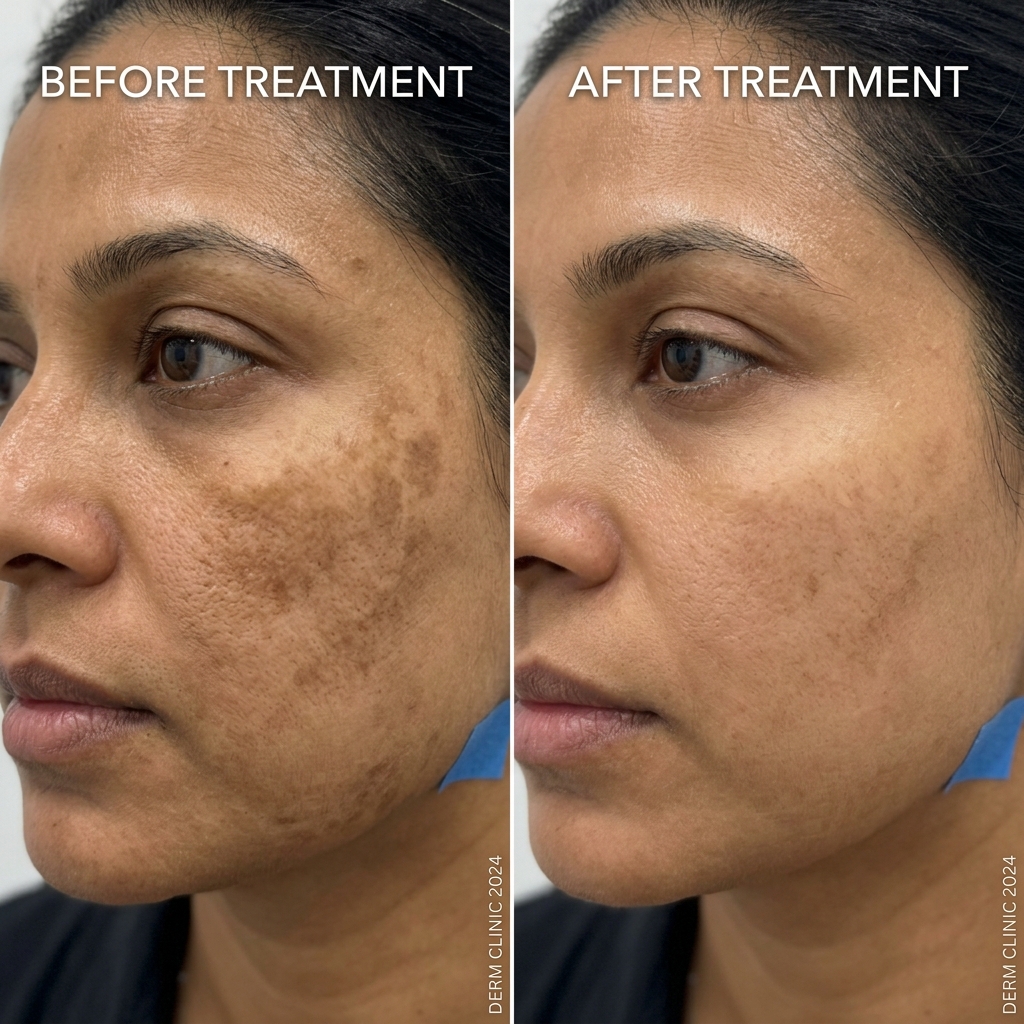
Hormonal Melasma: TXA is MOST effective for hormonal/pregnancy-related melasma (often seen in a malar or centrofacial pattern). Because melasma is heavily influenced by vascular factors and inflammation (which plasmin regulates), TXA's unique mechanism addresses the root cause better than many other actives.
Post-Inflammatory Hyperpigmentation (PIH): While TXA will fade PIH from acne, it might not be the fastest acting. For fresh acne marks, Alpha Arbutin or Azelaic Acid may provide quicker visible results. However, TXA is excellent for PIE (Post-Inflammatory Erythema - the red marks left by acne) due to its vascular-calming properties.
7. Is Tranexamic Acid Right for Your Pigmentation Type?
Take this interactive quiz to see if Tranexamic Acid is the best choice for your skin concerns:
Pigmentation Actives Selector
Find out which active ingredient matches your hyperpigmentation.
Tranexamic Acid
Based on your answers, Tranexamic Acid is an excellent choice for gently fading your pigmentation without causing irritation.
Confirm Routine via Free AI Scan →8. Frequently Asked Questions (FAQ)
Expert answers about Tranexamic Acid usage in India: