🧪 Facial Oils Desk 🩺 Reviewed by Dr. Lipy Mehta, MD 📅 Updated October 2026
💧 Face Oil Deep-Dive

Marula Oil for Face: Clogged Pores, Skin Types & True Benefits

Hyped as a luxury miracle for glowing skin, Marula oil is packed with rich fatty acids. But on the wrong skin type or in Indian humidity, it can trigger closed comedones and fungal bumps. Here is the doctor-reviewed guide to using it safely.

⚡ 3 Golden Rules Before Touching the Dropper
  • 💧 Damp Skin Only: Oil is a sealant, not a water hydrator. Always apply over damp skin or your daily lotion.
  • 🤏 Strictly 2 Drops: More than two drops overwhelms your pores and leaves a heavy, greasy film.
  • 🛑 Avoid Fungal Acne: If you have itchy forehead bumps or dandruff, skip Marula oil completely.
Start Free AI Skin Scan ✨ Scan your lipid barrier & pore clogging risk in 60s · Free & private

Glass dropper dispensing a pure golden drop of cold pressed virgin Marula oil Cold-Pressed Virgin Marula Oil
LM
Dr. Lipy Mehta, MD
Dermatologist · MyMirror Medical Advisor
"Marula oil is exceptional for parched, flaky skin and mature barriers because its 73% oleic acid acts like an occlusive blanket. But applying it to oily or fungal-prone skin in warm Indian weather is an immediate recipe for microcomedones."
73%
Oleic acid
3–4
Comedogenic
2 Drops
Full face dose
Night
Best routine
What Exactly is Marula Oil? (The 60-Second Breakdown)

Extracted from the nut kernels of the African Sclerocarya birrea tree, Marula oil has been used for centuries to protect skin against arid, harsh weather.

🛡️

High Oleic Acid (70–78%)

A monounsaturated Omega-9 fatty acid that provides a rich, cushioning moisture seal. It sinks into intercellular lipid spaces to stop trans-epidermal water loss.

🍊

Potent Antioxidants

Contains high concentrations of Vitamin E (tocopherol), sterols, and flavonoids. It resists rancidity and neutralizes pollution-induced free radicals on the skin surface.

💧

Occlusive Emollient Action

Marula oil is a protective lipid barrier. It does not add water to your skin cells—it locks in existing hydration so it cannot evaporate into dry air.

Does Marula Oil Clog Pores? The Comedogenic Truth

Skincare marketing often brands Marula oil as a universal dry oil. Dermatologically, that claim falls apart when tested on acne-prone or congested skin.

Factor Marula Oil What This Means for Your Face
Comedogenic Rating 3 to 4 out of 5 (Moderate to High) Has a documented tendency to clog pores, especially when mixed with natural sebum on oily skin.
Fatty Acid Profile 73% Oleic Acid vs. 7% Linoleic Acid Acne-prone skin naturally lacks linoleic acid. Adding more thick oleic acid turns sebum waxy and sticky.
Absorption Speed Slow to Medium (Leaves Dewy Film) Leaves a visible protective glaze. Excellent for parched cheeks, but heavy for an oily T-zone.
Fungal Acne Safety ❌ Strictly Unsafe (Feeds Yeast) Malassezia fungus requires fatty acids with carbon lengths C12 to C24. Oleic acid (C18:1) triggers rapid flare-ups.
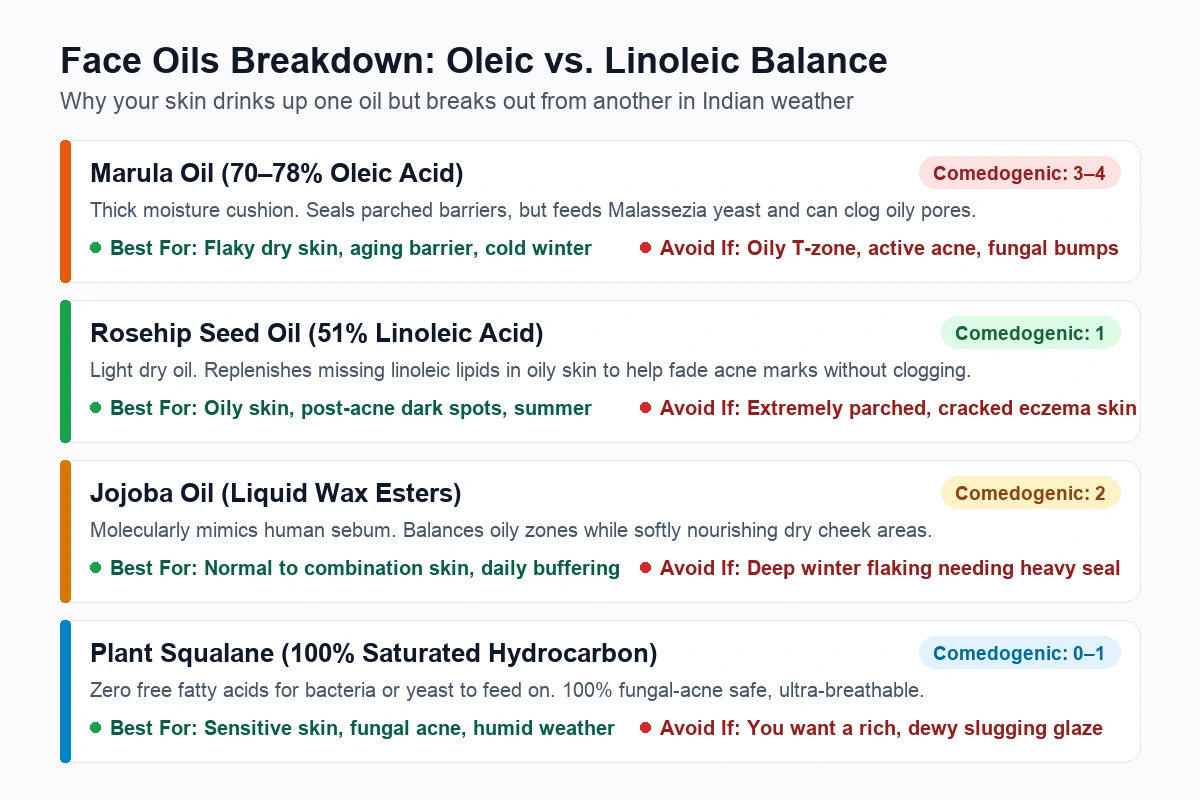
Visual guide comparing fatty acid profiles and comedogenic ratings of Marula, Rosehip, Jojoba, and Squalane oils

Face Oils Decoded: Oleic vs. Linoleic Balance

Understanding fatty acids explains why your skin drinks up one oil but breaks out from another. Marula provides rich winter barrier relief, while light linoleic oils like Rosehip or non-lipid Squalane suit acne-prone skin.

The 30-Minute Tissue Blot Test: Does Your Skin Need Oil?

A huge skincare mistake is confusing dry skin (lacking oil) with dehydrated skin (lacking water). Putting Marula oil on dehydrated skin seals in the tightness. Here is how to test your face before buying a bottle.

📋 The At-Home Tissue Blot Protocol
Takes 30 Minutes
1

Cleanse Gently

Wash your face with plain lukewarm water or a gentle non-foaming cleanser. Pat dry with a clean towel.

2

Wait Bare-Faced

Do not apply any toner, serum, or moisturiser. Sit in a comfortable room for 30 full minutes.

3

Press Single-Ply Tissue

Gently press a clean single-ply facial tissue across your forehead, nose, and cheeks for 10 seconds.

🟢 Tissue is Bone Dry + Skin Feels Tight Your skin is truly lipid-dry. It lacks protective oils and struggles to retain moisture. Marula oil will provide immediate relief and repair flaking.
🟡 Oil on T-Zone + Skin Feels Stretched Your skin is dehydrated (lacks water, not oil). Applying Marula oil will suffocate pores. You need hydrating glycerin or hyaluronic acid, not heavy oils.
🔴 Tissue Shows Oil Spots Across All Zones Your sebaceous glands are already producing ample lipids. Adding Marula oil will trap dead cells and cause clogged bumps. Choose lightweight Squalane instead.

Skin Type Match: Who Should and Shouldn't Use Marula Oil

Before adding Marula oil to your cart, check where your facial skin type stands on the clinical compatibility scale.

🟢 Flaky, Parched & Cracked Skin

Verdict: Excellent Match. Marula oil acts as an occlusive shield, patching microscopic tears in the stratum corneum and softening rough, peeling patches during cold weather.

🟢 Mature & Aging Skin

Verdict: Excellent Match. As estrogen and natural lipid production decrease with age, skin loses elasticity. The dense antioxidants and oleic cushion restore a healthy, supple bounce.

🟡 Combination Skin (Oily T-Zone, Dry Cheeks)

Verdict: Zone Application Only. Keep Marula oil strictly away from your nose, chin, and central forehead. Pat one single drop across dry outer cheekbones only during winter.

🔴 Oily, Congested & Acne-Prone Skin

Verdict: High Breakout Risk. Natural sebum is already high in oleic acid in acne sufferers. Adding Marula oil increases comedone formation. Opt for light Rosehip seed oil or Squalane.

🔴 Fungal Acne (Malassezia Folliculitis)

Verdict: Strict Avoid. If you struggle with uniform, itchy little bumps across your hairline or forehead that do not respond to normal acne creams, Marula oil feeds the fungal yeast colony directly.

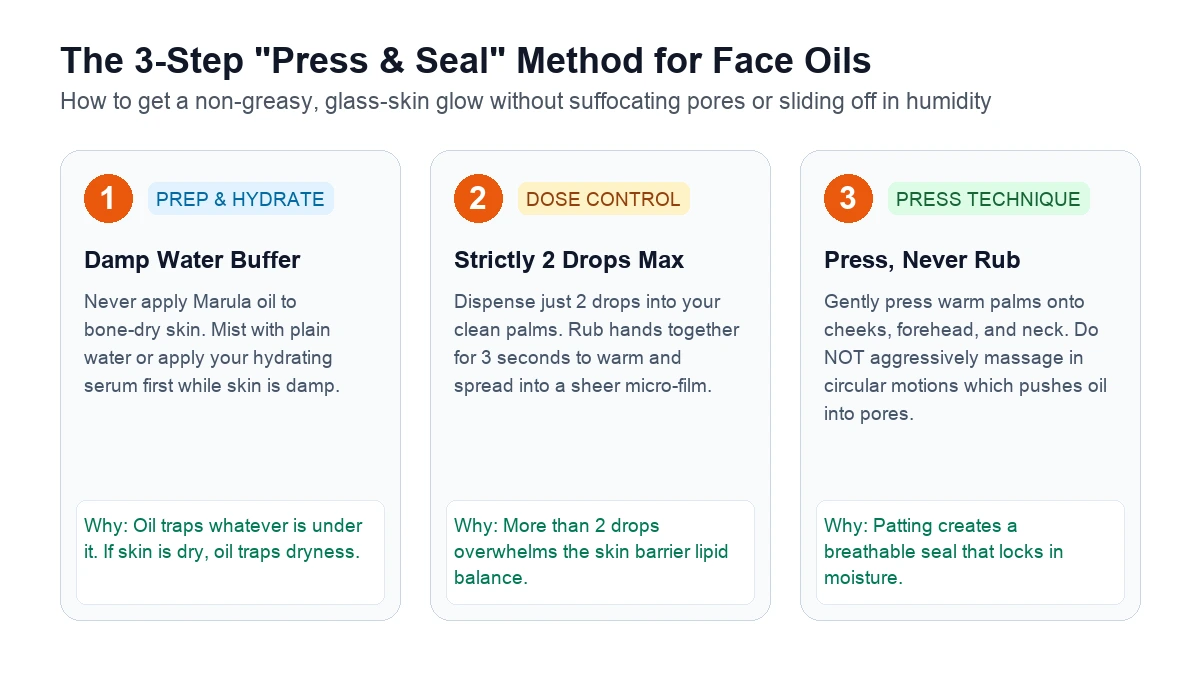
The 3-Step "Press & Seal" Application Method

Applying face oil the wrong way leaves a greasy film on top of your face. Follow this method to ensure rapid, non-greasy absorption.

Step by step visual guide showing how to apply face oil using the press and seal method

How to Apply Without Clogging Pores

Never apply Marula oil to bone-dry skin. Hydrate with water or a light gel first, warm two drops in your palms, and gently press onto your face. Patting locks in moisture without rubbing oil deep into hair follicles.

3 Common Mistakes People Make with Marula Oil

Avoid these everyday application traps to keep your skin clear and calm.

☀️

Mixing Into Morning Sunscreen

Never add drops of face oil to your sunscreen. Oils break down sunscreen chemical filters and emulsifiers, creating unprotected micro-gaps that invite UV damage and dark spots.

🏜️

Applying on Bone-Dry Skin

Oils do not contain water molecules. If you apply Marula oil directly over dehydrated, dry skin, it seals that parched state under an oil seal, making flaking look worse.

🌦️

Using in Coastal Humidity

In high-humidity climates like Mumbai, Chennai, or monsoon months, heavy facial oils trap sweat against skin follicles, leading to heat bumps and prickly breakouts.

The ₹6,000 vs. ₹600 Reality: Is Expensive Marula Oil Worth It?

Drunk Elephant made Virgin Marula Oil famous at 72 dollars (over 6,000 rupees). But does a luxury price tag change the biological oil on your skin?

Product Approx Price (India) Ingredient Deck Clinical Reality
Drunk Elephant Virgin Marula Oil ₹6,400 (30ml) 100% Unrefined Sclerocarya Birrea Seed Oil Raw cold-pressed oil in a UV-coated luxury bottle. Identical fatty acid composition to budget pure oils.
The Ordinary 100% Cold-Pressed Marula ₹950 (30ml) 100% Virgin Sclerocarya Birrea Seed Oil Organic, unrefined, pure cold-pressed oil in an amber UV-protective dropper bottle. Exceptional value.
Minimalist Marula Oil 05% + HA ₹599 (30ml) Marula Oil buffered with Hyaluronic Acid Lighter emulsion hybrid crafted for Indian weather. Easier absorption than 100% pure oil.

Watch: Dermatologist Analysis on Marula Oil

Board-certified dermatologist Dr. Andrea Suarez (Dr. Dray) explains the science of Marula oil for hair, skin, and nails, and how to avoid heavy oil breakouts.

Supportive Basics to Pair with Marula Oil

Pairing Marula oil with hydrating water humectants and gentle cleansers ensures balanced, clear skin.

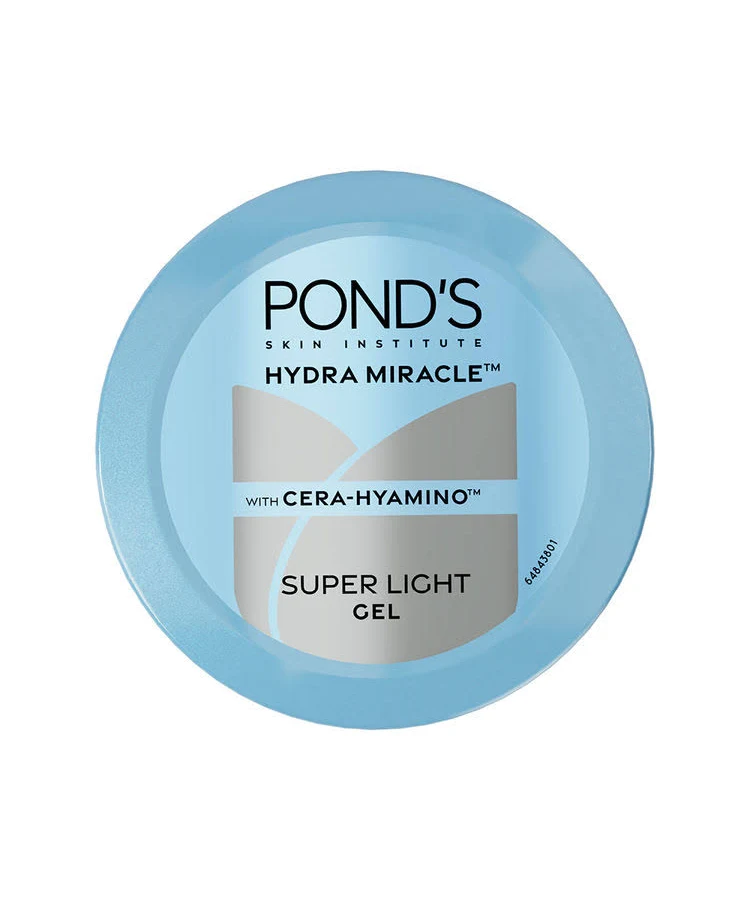
Pond's Super Light Gel
Hydration Buffer
Pond's Super Light Gel
Oil-free water gel with Hyaluronic Acid. Apply while skin is damp before pressing in your Marula oil.
Step 1: Water Buffer
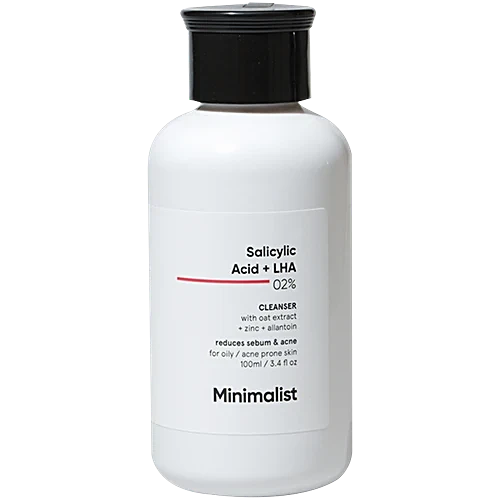
Minimalist Oat Cleanser
Gentle Wash
Minimalist Oat Cleanser
Non-foaming soothing wash that cleanses off evening oils without stripping natural lipid moisture.
Step 2: Gentle Cleansing
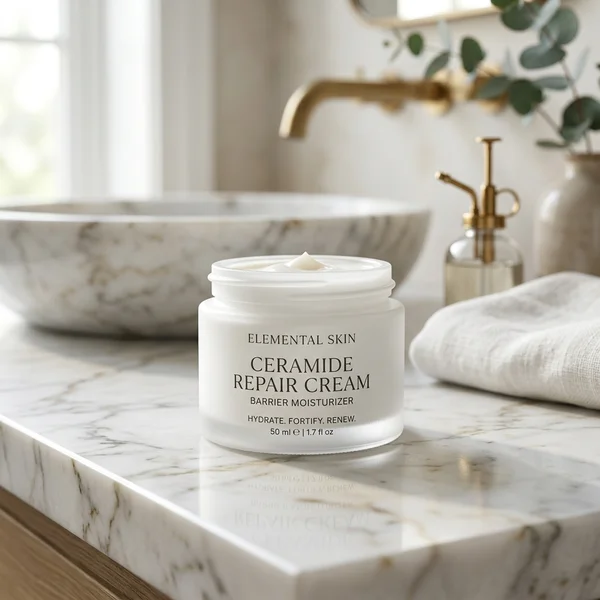
Minimalist Ceramide Moisturiser
Barrier Support
Minimalist Ceramide 0.3%
Replenishes ceramides and cholesterol. Mix one drop of Marula oil into this cream for overnight dry relief.
Step 3: Barrier Seal
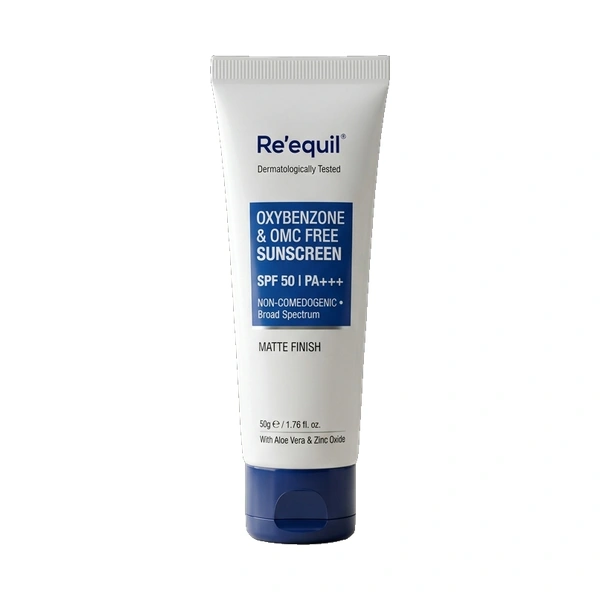
Re'equil Dry Touch Sunscreen
Day Protection
Re'equil Dry Touch SPF 50
Velvety matte sunscreen that never feels greasy over nighttime oil treatments. Keeps UV damage away.
Step 4: Morning SPF

Frequently Asked Questions About Marula Oil

Everything you need to know before putting Marula oil on your face.

Does Marula oil clog pores on acne-prone skin?
Yes. Marula oil has a comedogenic rating of 3 to 4 out of 5 due to its high concentration of oleic acid (70 to 78 percent). For oily or acne-prone skin, thick oleic lipids can mix with dead skin cells and trap sebum inside follicles, triggering closed comedones.
Is Marula oil safe for fungal acne (Malassezia folliculitis)?
No. Malassezia yeast feeds on fatty acids with carbon chain lengths between C12 and C24. Oleic acid (C18:1) is the main component of Marula oil and triggers rapid fungal flare-ups. If you have itchy forehead bumps, choose 100 percent pure Squalane instead.
Should I apply Marula oil before or after moisturiser?
Always apply Marula oil after your water-based moisturiser or mix a single drop directly into your night cream. Oils are occlusives that seal water in; applying oil before lotion stops water humectants from penetrating into your skin.
Can I use Marula oil during Indian summers or monsoon?
In hot, humid weather like Mumbai or Chennai summers, pure Marula oil can feel suffocating and trap sweat against your skin. It is best reserved for dry winter months, cool air-conditioned rooms, or dry climates.
Is expensive Marula oil (like Drunk Elephant) better than budget options?
No. Chemically, 100 percent cold-pressed virgin Sclerocarya birrea seed oil delivers the same fatty acids, antioxidants, and sterols whether it costs 600 rupees or 6,000 rupees. The difference lies in packaging, scent filtration, and brand prestige.
Can I mix Marula oil with my morning sunscreen?
Never mix any facial oil directly into your sunscreen. Oils break down sunscreen emulsifiers, creating uneven UV protection gaps that cause sun spots and sunburn. Reserve facial oils for your night routine.

Not Sure if Your Skin Needs Oil or Water?

Upload a clear photo to the MyMirror AI Skin Scanner. Receive a clinical barrier report and custom routine for your exact skin type in 60 seconds.

Start Free AI Skin Scan ✨
Scan Your Skin Barrier in 60s ✨