
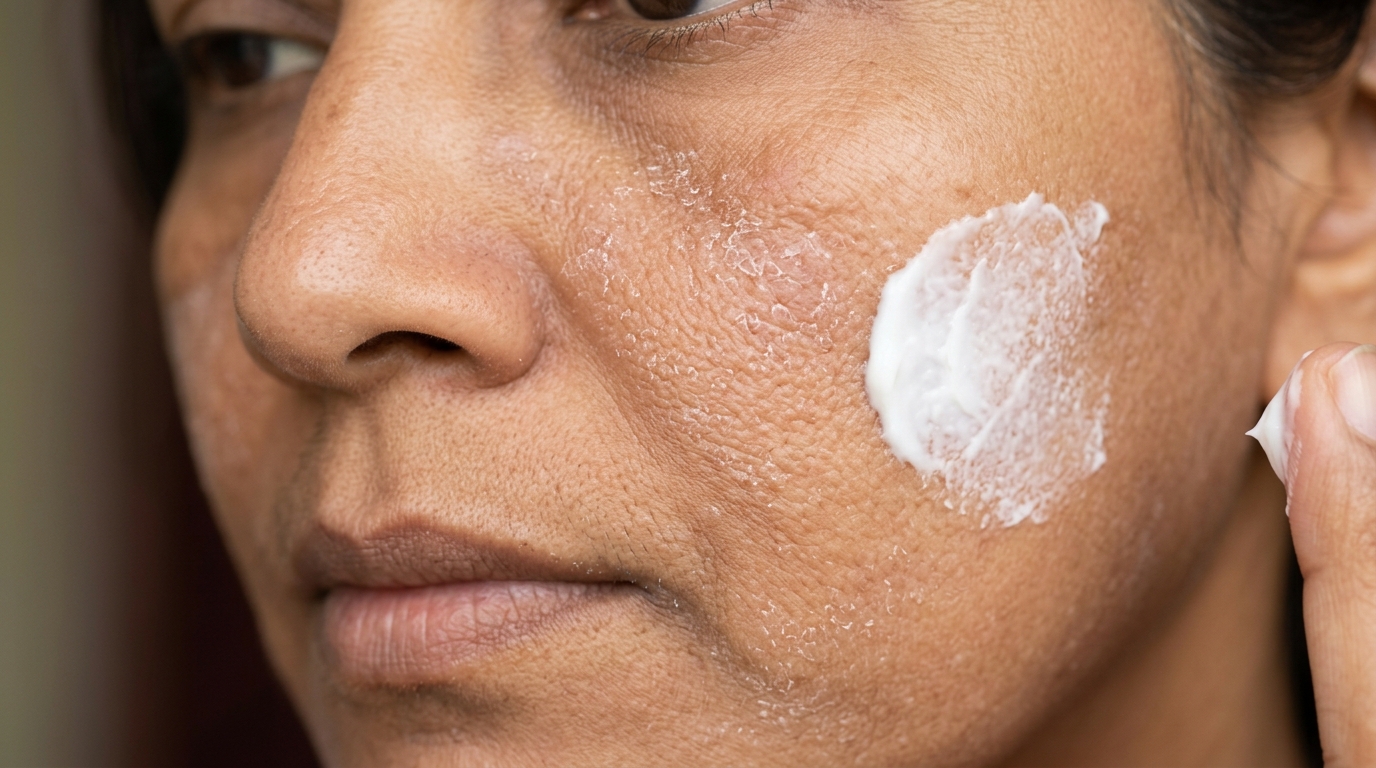
1. TEWL & Stratum Corneum Physics: Why Dry Skin Triggers Acne Flares
Many people assume that acne is exclusively an "oily skin" problem. However, dermatologists in India treat thousands of patients suffering from dry, tight, flaking skin accompanied by persistent inflammatory acne.
The upper layer of your skin (the stratum corneum) functions like a brick wall: dead skin cells (corneocytes) are the bricks, and intercellular lipids (Ceramides, Cholesterol, Free Fatty Acids) are the mortar. When harsh cleansers, dry ambient air, or excessive exfoliants strip this lipid mortar, Trans-Epidermal Water Loss (TEWL) spikes rapidly.
The Dehydrated Sebum Paradox
When the skin barrier detects acute moisture loss, sebaceous glands receive emergency signals to overproduce sebum. However, because the barrier lacks natural hydration factors (NMFs), this emergency sebum is viscous, sticky, and poorly spreadable. It mixes with dry, flaking corneocytes, trapping Cutibacterium acnes inside pores to form comedones and inflammatory breakouts.
2. Interactive Remedy Showcase Stage: Natural vs Clinical vs OTC Ceramides
Explore evidence-based dry skin remedies categorized by dermatological mechanism:
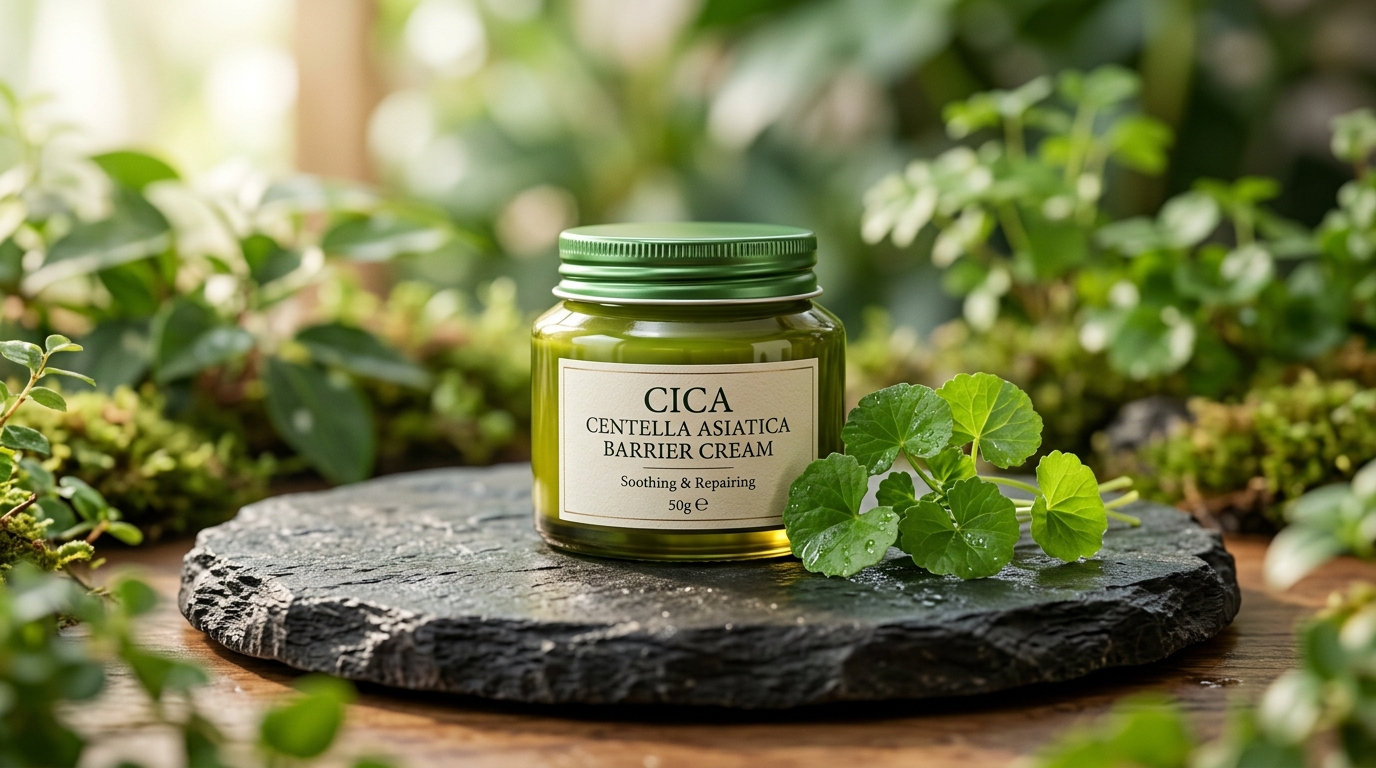
Centella Asiatica (Cica) & Squalane
Purified Centella Asiatica (Cica) provides anti-inflammatory triterpenoids (Madecassoside) that soothe burning dryness without oleic oil triggers. Plant-derived Squalane mimics natural human skin lipids, sealing moisture without clogging acne-prone pores.
- ✓ Non-comedogenic lipid sealant
- ✓ Calms stinging & facial tightness
- ✓ Safe for acne-prone skin barriers
3. The 3 Pillars of Epidermal Hydration
To permanently cure dry skin, your daily routine must support all three biological pillars of hydration:
The 1:1:1 Ceramide Ratio
The mortar between skin cells consists of Ceramides (50%), Cholesterol (25%), and Free Fatty Acids (15%). Formulations with a 1:1:1 equimolar ratio accelerate lipid bilayer repair by 40% compared to single-moisturizer oils (read our Cica Barrier Repair Guide).
Humectants
Glycerin, Hyaluronic Acid, and Sodium PCA attract water into the stratum corneum (see Hyaluronic Acid Guide).
Emollient Seals
Lightweight Dimethicone and Squalane lock in humectant moisture without pore congestion.
4. Dermatological Moisturizer Comparison Matrix
Compare dry skin moisturizer categories for acne-prone Indian skin:
| Moisturizer Class | Active Lipid Formula | Comedogenicity Risk | Best Skin Indication |
|---|---|---|---|
| Ceramide Barrier Cream | Ceramides NP/AP/EOP + Cholesterol + Phytosphingosine | 0 / 5 (Non-comedogenic) | Dry flaking skin, compromised barrier, post-retinoid peeling |
| Hyaluronic Gel-Cream | Multi-molecular Sodium Hyaluronate + Panthenol (B5) | 0 / 5 (Non-comedogenic) | Dehydrated oily skin, summer humidity, active acne breakouts |
| Natural Heavy Oils (Coconut/Mustard) | Lauric Acid & Oleic Fatty Acid Triglycerides | 4 – 5 / 5 (High Risk) | Body skin only. Avoid on facial skin (triggers fungal acne) |
| Heavy Ointments (Vaseline/Petrolatum) | 100% White Petrolatum Jelly | 0 / 5 (Occlusive) | Dry cracked lips only. Slugging on acne-prone face risks comedones |
5. Hard Tap Water Defense for Dry Skin in India
In major Indian cities (Bengaluru, Delhi NCR, Mumbai, Hyderabad), municipal tap water contains high levels of dissolved calcium and magnesium (TDS > 300 ppm).
Hard Water Lipid Lipolysis
When hard tap water minerals combine with facial cleansers, they create insoluble calcium soap scum (curd) that deposits onto facial skin. This scum alters natural acid mantle pH (raising it from 5.5 to > 7.0), denaturing stratum corneum enzymes and causing persistent, tight tightness post-wash.
Dermatological Fix: Wash your face with lukewarm filtered or RO water, and immediately apply a pH 5.5 syndet cleanser (such as Acnemoist Cleanser or Cetaphil) followed by a ceramide barrier moisturizer within 60 seconds of drying.
6. 4-Step Clinical Dry Skin Recovery Routine
Follow this daily recovery sequence to repair your skin barrier while treating acne:
- Step 1: Non-Foaming Gentle Wash (AM & PM): Wash face with a non-foaming, sulphate-free syndet cleanser. Avoid rough loofahs or scrubbing brushes.
- Step 2: Damp Skin Humectant Application: Apply 3–4 drops of Hyaluronic Acid 2% Serum onto damp skin to trap moisture.
- Step 3: Ceramide Barrier Seal: Apply a nickel-sized amount of 1:1:1 Ceramide Cream over the face and neck.
- Step 4: Non-Drying Sun Protection (AM): Finish with a hydrating gel-cream mineral sunscreen (read Best Sunscreen for Acne Prone Indian Skin).
Need a Customized Dry Skin & Acne Barrier Diagnosis?
If your skin is flaking, red, or breaking out from dry barrier damage, take our 60-second AI Skin Scan to analyze your exact moisture barrier score.
Start Free AI Skin Scan →7. Frequently Asked Questions
Yes. When the skin barrier is dry and dehydrated, the sebaceous glands overcompensate by producing sticky, micro-comedogenic sebum. Combined with dry dead cell accumulation, this clogs pores and triggers inflammatory acne flares.
The stratum corneum intercellular lipid matrix consists of ceramides, cholesterol, and free fatty acids in an equimolar 1:1:1 ratio. Using barrier moisturizers formulated with this ratio accelerates skin barrier recovery by 40%.
Heavy natural oils like coconut oil are highly comedogenic (Rating 4/5) and feed Malassezia yeast. They coat the skin surface without replenishing intercellular ceramides, trapping bacteria inside dry pores.
Hard water contains high calcium and magnesium minerals (high TDS) that react with skin lipids to form insoluble soap scum, stripping Natural Moisturizing Factors (NMF) and elevating skin pH above 6.5.