
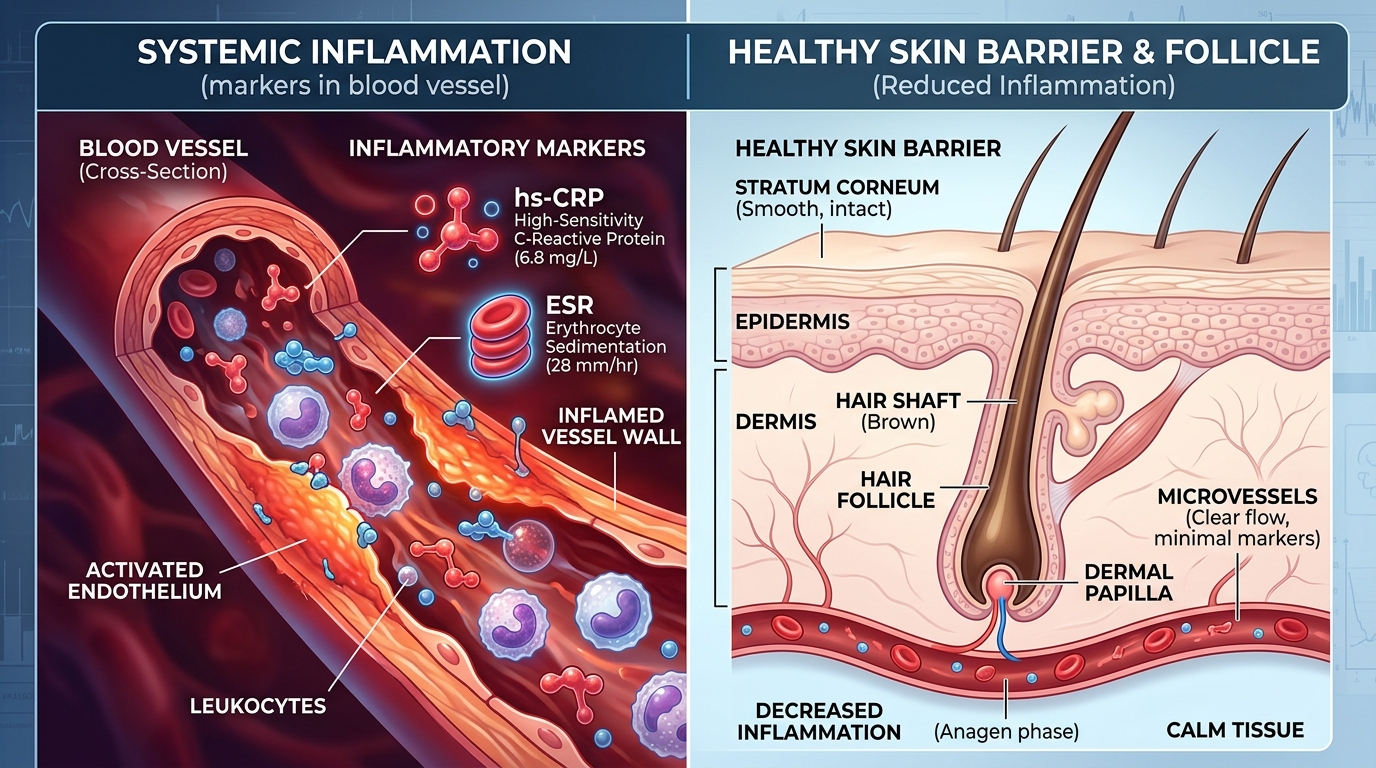
If your acne consists of severe, swollen, and red nodulocystic breakouts that refuse to resolve with standard spot creams, your body might be in a state of chronic systemic inflammation. Blood tests like hs-CRP and ESR measure general inflammatory activity, helping identify systemic triggers.
1. Biological Pathway & Connection to Breakouts
Systemic inflammation hypersensitizes skin hair follicles, causing them to overreact to normal bacteria and sebum. High hs-CRP indicates that minor clogs quickly turn into massive, painful cysts. Managing diet, sleep, and internal inflammatory root causes is essential.
2. Diagnostic Panel & What to Look For
When investigating internal factors, standard reference ranges can sometimes miss subtle tissue deficiencies. For skin health and optimal barrier recovery, functional dermatology targets optimized values.
3. Lab Ranges & Estimated Cost in India
You can request these specific markers from major Indian laboratory networks (Tata 1mg, Dr. Lal PathLabs, Apollo Diagnostics, Metropolis, or Thyrocare).
| Marker | Role in Acne | General Lab Normal | Optimal Skin Range | Est. Cost (India) |
|---|---|---|---|---|
| hs-CRP | High-sensitivity C-reactive protein (liver marker) | < 3.0 mg/L | < 1.0 mg/L | ~₹550 |
| ESR | Erythrocyte Sedimentation Rate (general flare marker) | < 20 mm/hr | < 10 mm/hr | ~₹250 |
4. Frequently Asked Questions
Yes. Systemic inflammation keeps your body's immune system in a hyper-reactive state. This means your follicles swell rapidly in response to normal sebum and dead cells, creating nodules.
Is Your Skincare Working Against You?
Many "acne-clearing" products actually contain ingredients that feed the fungus that causes forehead bumps. Stop the guesswork.
Scan your face with MyMirror AI to get a personalized, active-safe routine that finally clears your skin for good.
Start Your Free AI Skin Scan Now