
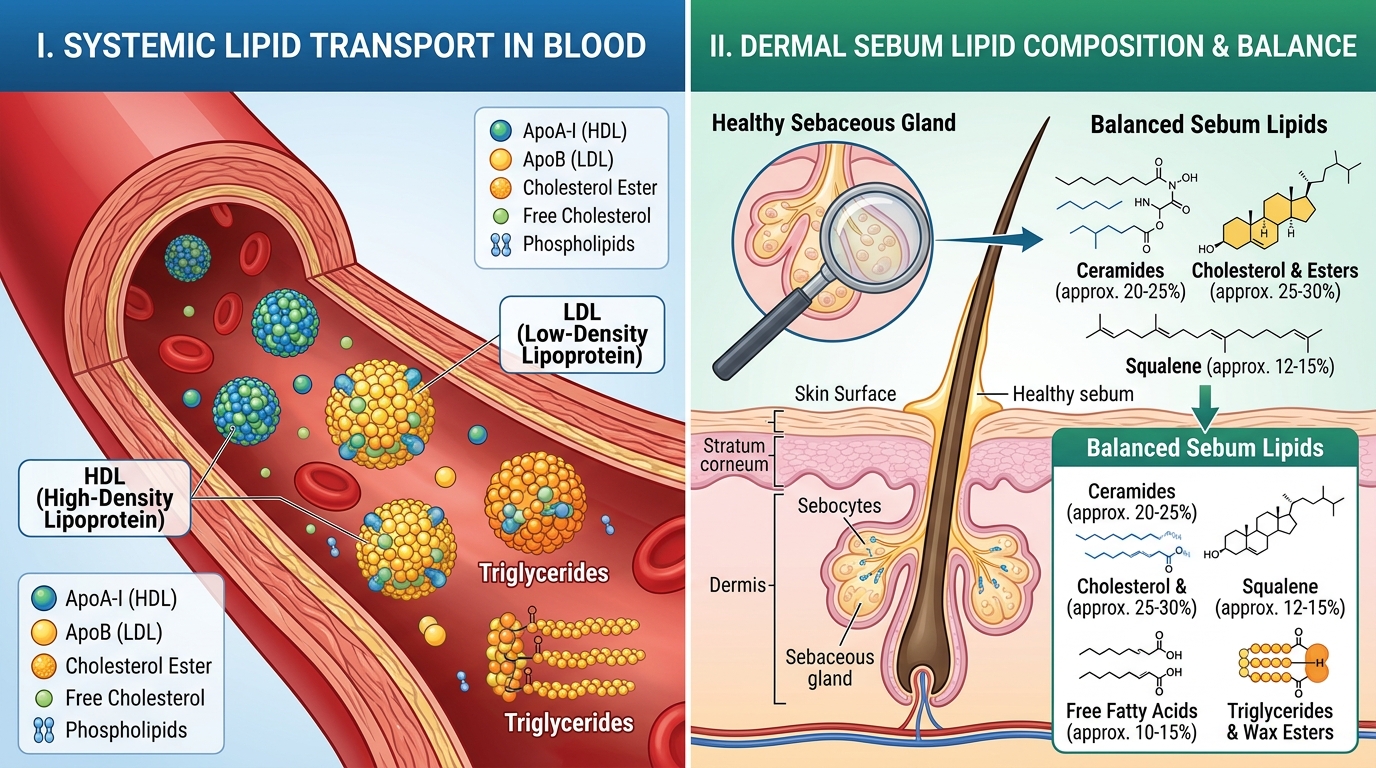
Did you know that the lipid composition of your blood directly influences the composition of your skin's sebum? Elevated triglycerides and imbalanced cholesterol profiles can make your sebum thick, sticky, and highly comedogenic, causing rapid pore blockages.
1. Biological Pathway & Connection to Breakouts
Healthy skin sebum relies on a precise balance of squalene, wax esters, cholesterol, and ceramides. When serum lipids are abnormal, your skin sebum lacks essential protective fats (like ceramides), leading to barrier damage, dryness, and severe cystic breakouts.
2. Diagnostic Panel & What to Look For
When investigating internal factors, standard reference ranges can sometimes miss subtle tissue deficiencies. For skin health and optimal barrier recovery, functional dermatology targets optimized values.
3. Lab Ranges & Estimated Cost in India
You can request these specific markers from major Indian laboratory networks (Tata 1mg, Dr. Lal PathLabs, Apollo Diagnostics, Metropolis, or Thyrocare).
| Marker | Role in Acne | General Lab Normal | Optimal Skin Range | Est. Cost (India) |
|---|---|---|---|---|
| Triglycerides | Fatty molecules affecting sebum viscosity | < 150 mg/dL | < 100 mg/dL | ~₹350 |
| Total Cholesterol | Hormone precursor & structural lipid | 125 - 200 mg/dL | 150 - 180 mg/dL | ~₹250 |
4. Frequently Asked Questions
Yes. Imbalanced lipid profiles affect the fatty acid makeup of your sebum, making it thicker and more likely to clog pores. It also reduces skin ceramides, weakening your barrier.
Is Your Skincare Working Against You?
Many "acne-clearing" products actually contain ingredients that feed the fungus that causes forehead bumps. Stop the guesswork.
Scan your face with MyMirror AI to get a personalized, active-safe routine that finally clears your skin for good.
Start Your Free AI Skin Scan Now