How to Treat Lower-Face Acne: Chin & Jawline Routine
When stubborn breakouts crowd the lower third of your face, harsh scrubs only make skin angrier. Here is the calm, doctor-tested roadmap to clear chin and jawline bumps while protecting your natural moisture barrier.
Salicylic Acid penetrates deep inside oil-filled pores to dissolve sticky keratin plugs without abrading sensitive lower-face skin.
Dermatology Science Made Simple
4 Core Rules for Lower-Face Clarity
Lower-face skin features dense androgen receptors that trigger excess sebum during hormonal fluctuations. Here is how to soothe inflammation and clear pores without stripping your skin.
🎯
Match the Active to the Blemish
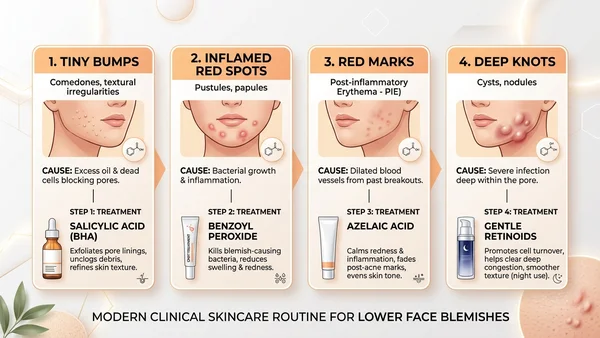
Different bumps demand different solutions. Use Salicylic Acid for tiny closed bumps, Benzoyl Peroxide for inflamed pus spots, Azelaic Acid for post-blemish redness, and gentle Retinoids for deep recurring knots.
🧊
Ice for Blind Knots vs Warm Towel for Pus
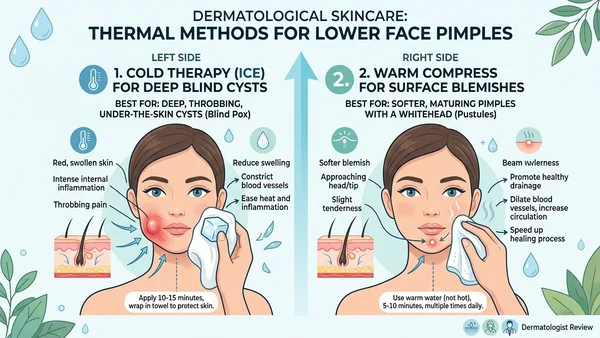
For deep, throbbing swellings without a visible head, an ice cube wrapped in a clean cloth calms internal heat. For softer blemishes that are nearing a head, a warm damp cloth encourages natural drainage without skin picking.
🛡️
Stop Sneaky Daily Friction & Oils
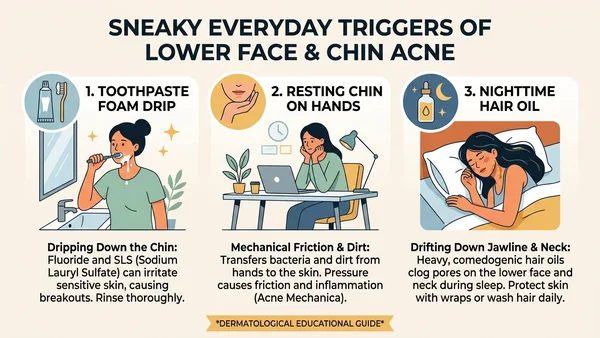
Toothpaste foam containing SLS dribbles down the chin during morning brushing, while heavy hair oils migrate down the jawline overnight. Wash your face after brushing teeth, and keep hair pulled back while sleeping.
🧴
Build Barrier Strength Instead of Scrubbing
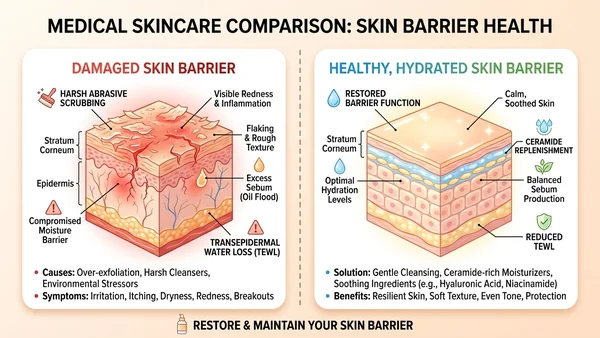
Abrasive physical scrubs tear micro-cracks into delicate skin, prompting oil glands to pump out even more sebum. Calm, ceramide-rich hydration repairs the moisture shield and stops reactive breakouts.
Dermatologist Video Guide
Doctor Guide: Treating Resistant Hormonal & Lower-Face Acne
Watch Dr. Aanchal Panth (MD Dermatology, AIIMS Alumnus) explain why breakouts gather around the chin and jawline, how hormones impact oil glands, and how to build a safe clearing routine.
Dermatologist Tested
The 5 Best Lower-Face Acne Solutions in India
Carefully vetted pharmacy and clean skincare staples that clear chin and jawline congestion without burning sensitive Indian skin.
#1 Best for Closed Comedones & Texture
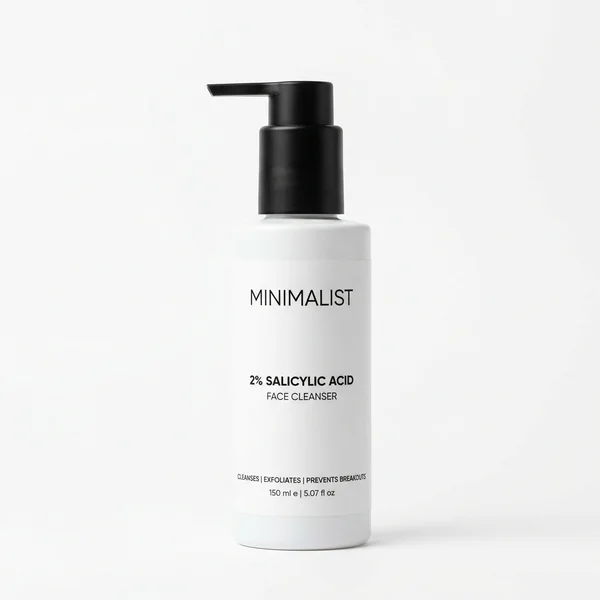
Minimalist 2% Salicylic Acid Cleanser
₹299 / 100ml
Minimalist 2% Salicylic Acid Cleanser uses oil-soluble BHA combined with gentle LHA and zinc PCA. Unlike leave-on exfoliating toners that can trigger stinging on sensitive chins, a wash-off cleanser dissolves stubborn oil plugs and surface dead cells in 60 seconds before washing away cleanly with water.
Why Doctors Value It: Clears tiny bumps along the chin curve with minimal risk of peeling or barrier breakdown.
Active Strength: 2% Salicylic Acid + Capryloyl Salicylic Acid (LHA)
Base Ingredients: Zinc PCA, Glycerin, Betaine
Texture: Gentle foaming gel wash
Best For: Sandpaper texture, closed comedones, oily jawline
Availability: Nykaa, Amazon, Blinkit, Zepto
#2 Best for Redness & Dark Marks
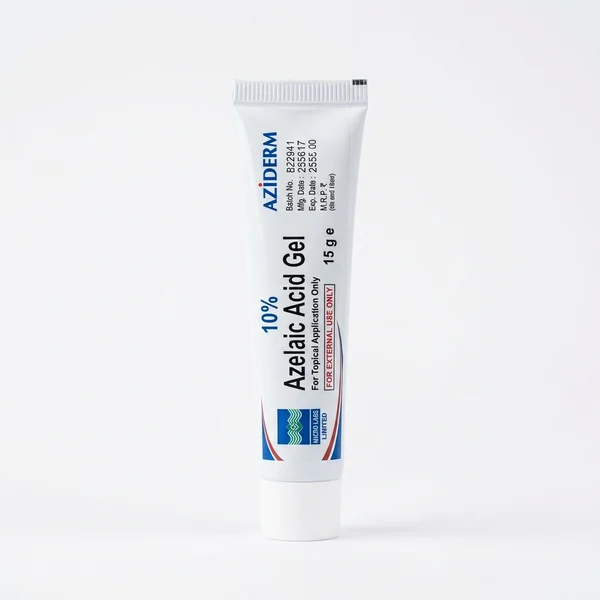
Aziderm 10% Azelaic Acid Gel
₹315 / 15g
Aziderm 10% Gel is a gold-standard pharmacy staple in Indian clinical dermatology. Azelaic acid calms sensitive red skin and reduces blemish-causing bacteria while gently putting the brakes on overactive pigment cells (tyrosinase), stopping inflamed pimples from turning into stubborn brown patches.
Why Doctors Value It: Exceptionally well tolerated on Indian brown skin where post-acne dark spots often outlast the original pimple.
Active Strength: 10% Micronized Azelaic Acid
Base Ingredients: Aqueous gel base with minimal additives
Texture: Lightweight matte gel
Best For: Post-pimple redness, brown marks (PIH), sensitive bumps
Availability: Apollo Pharmacy, Netmeds, Tata 1mg
#3 Best Spot Treatment for Pus Spots
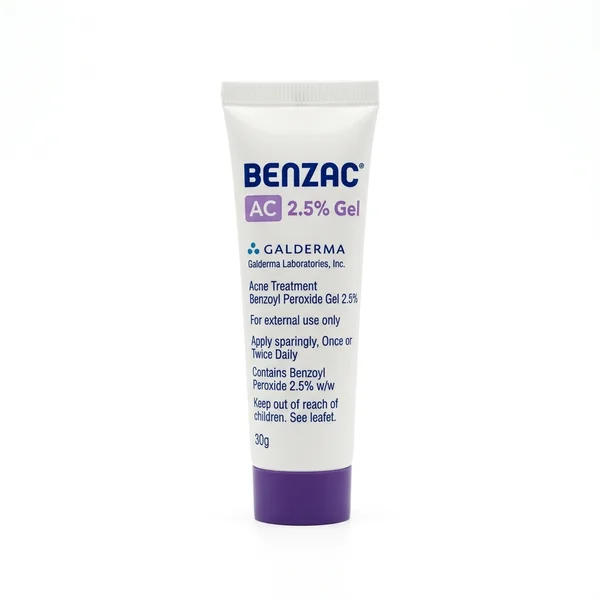
Benzac AC 2.5% Gel
₹150 / 30g
Benzac AC 2.5% Gel uses water-based micronized benzoyl peroxide with acrylates copolymer beads that absorb excess facial oil while releasing active oxygen. Clinical studies confirm that 2.5% benzoyl peroxide kills blemish bacteria just as effectively as harsh 10% formulas, with only a fraction of the flaking and redness.
Why Doctors Value It: Quick relief for tender whitehead spots without burning dark halo rings into surrounding skin.
Active Strength: 2.5% Micronized Benzoyl Peroxide
Base Ingredients: Water base, Glycerol, Acrylates Copolymer
Texture: Quick-absorbing spot lotion
Best For: Inflamed whiteheads, pustules, tender red spots
Availability: All Indian chemists, MedPlus, Amazon
#4 Best Dual-Action Pharmacy Pick
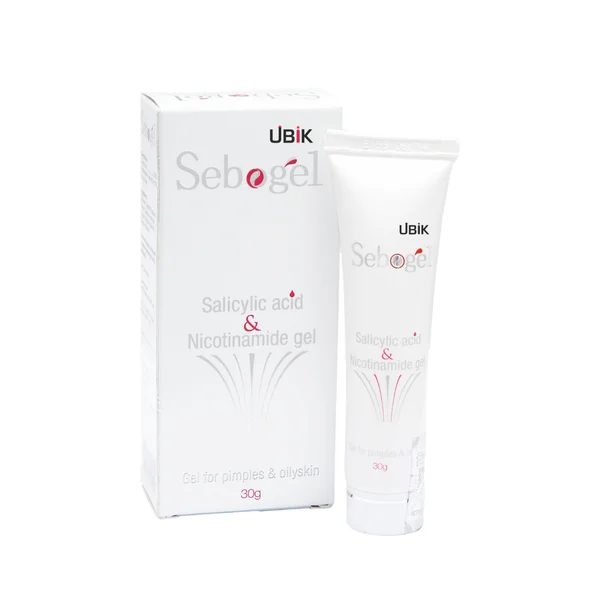
Sebogel Salicylic Acid & Niacinamide Gel
₹240 / 30g
Sebogel pairs 2% Salicylic Acid with 6% Niacinamide in a crystal-clear, lightweight gel base. While the salicylic acid dissolves sebum in clogged jawline follicles, the niacinamide soothes surface irritation, strengthens the ceramide envelope, and controls excess shine in humid weather.
Why Doctors Value It: An affordable dual-action pharmacy hero that balances clearing power with skin barrier comfort.
Active Strength: 2% Salicylic Acid + 6% Niacinamide
Base Ingredients: Aloe Vera extract, Allantoin, Carbomer base
Texture: Ultra-light cooling clear gel
Best For: Oily lower-face congestion, combined blackheads & redness
Availability: Pharmacy counters across India, 1mg, Pharmeasy
#5 Best Barrier Support Cream
Minimalist Marula & Ceramide Barrier Cream
₹399 / 50g
When the lower face has been stripped by over-washing or harsh drying gels, the skin barrier breaks down. Minimalist 0.3% Ceramide Cream replenishes identical skin lipids (Ceramides EOP, NP, AP) alongside pure Asiaticoside (Centella) to seal micro-cracks and restore natural moisture balance.
Why Doctors Value It: Accelerates healing and eliminates the dry, stinging sensation caused by active spot treatments.
Active Strength: 0.3% Active Ceramides + Madecassoside
Base Ingredients: Marula Oil, Glycerin, Sodium Hyaluronate
Texture: Comforting silky balm cream
Best For: Barrier repair, stinging chins, post-treatment flaking
Availability: Minimalist store, Nykaa, Amazon
Comparison Matrix
Lower-Face Actives at a Glance
Compare the 5 doctor-recommended solutions by active ingredient, blemish match, usage frequency, and price.
Skincare Product
Active Ingredient
Target Blemish
How Often to Use
Approx. Price
Minimalist SA Cleanser
2% Salicylic Acid + LHA
Tiny closed bumps & rough texture
Once daily (wash off)
₹299 (100ml)
Aziderm 10% Gel
10% Micronized Azelaic Acid
Redness & post-acne dark marks
Every morning
₹315 (15g)
Benzac AC 2.5% Gel
2.5% Benzoyl Peroxide
Inflamed spots with white fluid tips
Nightly spot dab
₹150 (30g)
Sebogel Gel
2% BHA + 6% Niacinamide
Oily jawline pores & shine
3 nights a week
₹240 (30g)
Minimalist Ceramide Cream
0.3% Ceramides + Centella
Raw, tight, or peeling skin barrier
Morning & night
₹399 (50g)
Step-by-Step Routine
The 5-Step Calm Routine for Lower-Face Clarity
Follow this gentle morning and evening routine designed to reduce inflammation without overwhelming your skin barrier.
1
Cleanse After Toothbrushing (Morning & Night)
Always brush teeth before washing your face. Lingering toothpaste foam contains SLS and fluoride that can irritate the chin curve. Wash face with a gentle foaming wash or lukewarm water to clear any residues.
2
Morning Redness & Mark Defense (Azelaic Acid)
Apply a pea-sized dot of Aziderm 10% Gel across the chin and jawline. Azelaic acid calms sensitive red skin and prevents pigment cells from producing dark spots while blemishes heal.
3
Lightweight Barrier Hydration
Smooth a non-comedogenic ceramide or hydrating gel moisturizer over the lower face. Keeping skin well hydrated prevents oil glands from producing reactive excess sebum in warm weather.
4
Broad-Spectrum Daily Sunscreen
UV radiation causes healing blemish sites to overproduce dark melanin, turning temporary pimples into long-lasting marks. Use a lightweight gel sunscreen (SPF 50 PA++++) every morning.
5
Nighttime Targeted Spot Care
Before sleep, dab Benzac AC 2.5% directly onto active whiteheads. For deep recurrent lumps, use Adapalene 0.1% or a gentle beginner retinoid two nights a week using the sandwich method.
Lifestyle Habits Audit
4 Hidden Everyday Triggers to Stop Today
Small daily habits frequently sabotage lower-face clearing efforts. Check these 4 routine blind spots to keep skin calm.
🪥
Toothpaste Foam Dribble
Sodium Lauryl Sulfate (SLS) and flavorings in toothpastes create red, stinging patches around the mouth and chin. Always rinse the mouth and wash the chin thoroughly after brushing.
✋
Resting Chin on Desk Hands
Resting your jaw in your hands during work or study transfers office dust and hand oils onto warm facial skin, triggering acne mechanica along the jawline.
🛏️
Hair Oil Migration While Sleeping
Heavy champi oils (coconut, mustard, almond) soak into cotton pillowcases and rub against the jawline all night. Sleep with hair tied in a silk scarf or change pillow covers every 3 days.
🚫
Aggressive Walnut & Apricot Scrubs
Physical scrubs break open healing blemishes, spreading bacteria and creating micro-tears that turn into dark marks. Replace physical friction with mild chemical cleansers.
Clear Answers
Frequently Asked Questions
Doctor-backed answers to the most common questions about persistent chin and jawline breakouts.
Why do pimples constantly appear on the chin and jawline instead of the forehead?
The lower third of your face contains hair follicles with dense androgen hormone receptors. During stress or cycle changes, these receptors instruct oil glands to produce thick, sticky sebum. Combined with friction from resting your chin on your hands, this area becomes the primary hot spot for stubborn bumps.
Can hair oil cause acne along the jawline and neck?
Yes. Heavy hair oils like coconut, mustard, or castor oil drift down the jawline and neck while sleeping on cotton pillowcases. In warm weather, these heavy lipids clog pores and create clusters of tiny bumps known as pomade acne. Always tie hair back and wash your face after applying hair oils.
Should I ice a blind pimple or use a warm compress?
Use ice for deep, hard, throbbing lumps that do not have a head. Wrap an ice cube in a clean cloth and apply it for 1 minute to shrink swelling. Use a warm damp compress only when a softer bump is developing a visible whitehead to help it clear naturally without squeezing.
How does toothpaste cause chin breakouts?
Many toothpastes contain Sodium Lauryl Sulfate (SLS), strong mint oils, and fluoride. When toothpaste foam dribbles down the chin during brushing, it damages the delicate skin barrier, creating dry red patches and small stubborn bumps. Always wash your face after brushing teeth, never before.
When should I see a dermatologist for lower-face acne?
See a dermatologist if you have painful, marble-like cysts that linger for weeks, if breakouts leave deep pitted scars, or if gentle over-the-counter care shows no improvement after 8 weeks. A doctor can check for internal hormonal patterns like PCOS and prescribe targeted oral solutions.
🩺
Medically Reviewed by Dr. Lipy Mehta
Consultant Dermatologist & Aesthetic Physician • MBBS, MD Dermatology • Verified clinical accuracy for Indian skin types and tropical climate routines.
Analyze Your Lower-Face Skin Health in 60 Seconds
Scan your face with our dermatologist AI to detect active breakout types, pore congestion, skin barrier resilience, and post-acne marks instantly.