
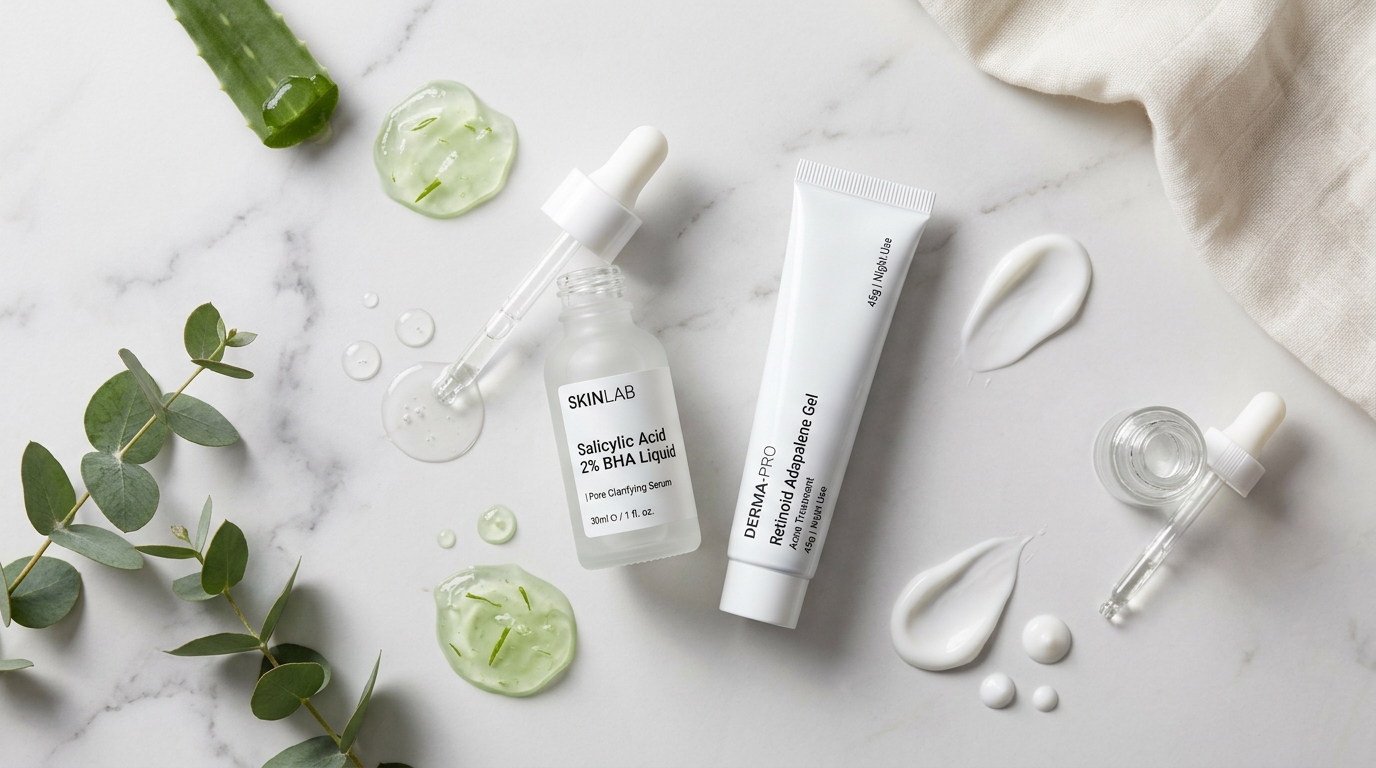
Why Putting Both on Your Face at Night Causes Burns
Both ingredients are famous for clearing clogged pores, but they work in completely different ways. Putting both leave-on bottles on your skin at the exact same bedtime step strips away your skin's protective shield.
Salicylic Acid (BHA)
Salicylic acid is oil-soluble. It sinks directly into your pores to dissolve hardened sebum, sticky oil plugs, and dead skin cells that cause blackheads.
- Loosens dead surface layers quickly
- Lowers skin surface pH to work
- Controls oiliness and shine during the day
Retinoids (Retinol & Adapalene)
Retinoids are forms of Vitamin A. They signal living skin cells beneath the surface to divide and renew faster, pushing out old blemishes.
- Speeds cellular turnover from deep below
- Can thin out the outer stratum corneum initially
- Requires intact skin lipids to avoid peeling
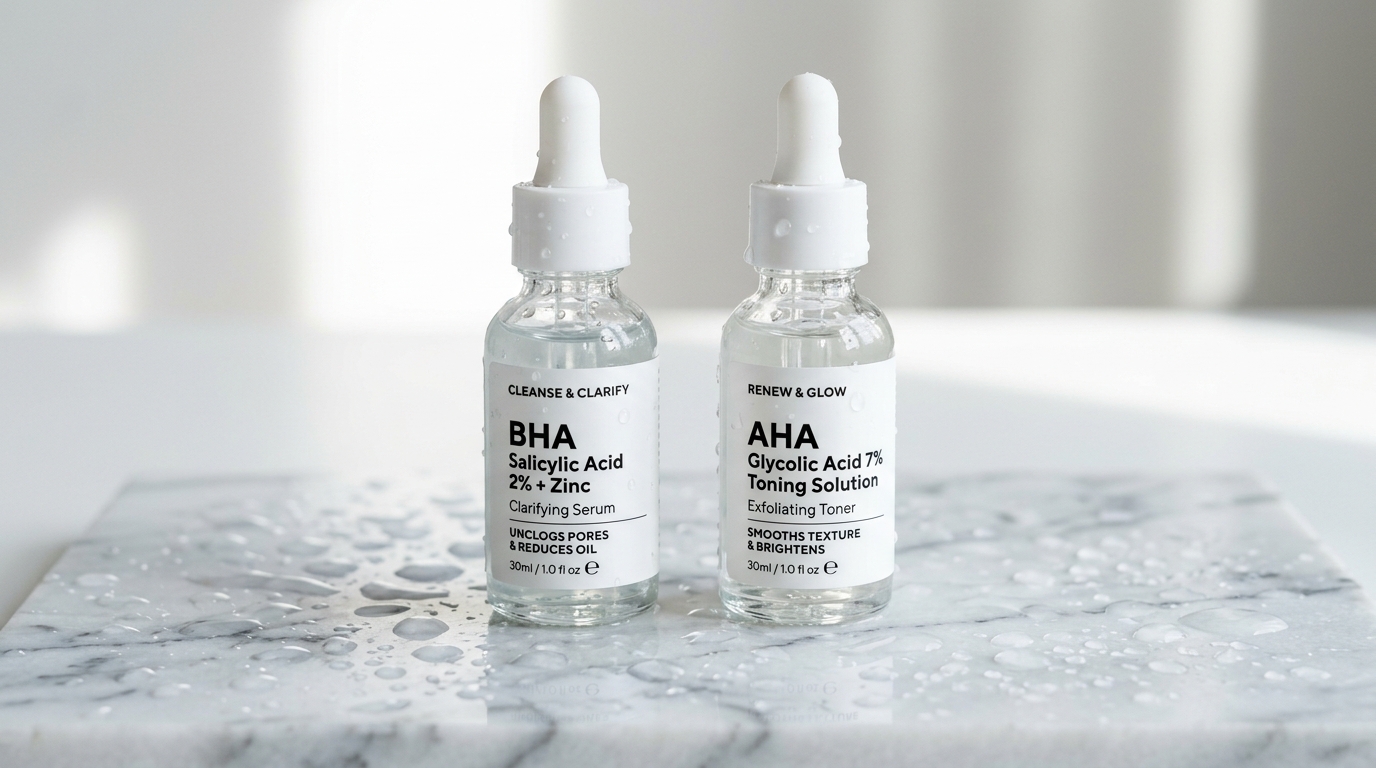
Safety Matrix: Retinol vs. Adapalene vs. Tretinoin with BHA
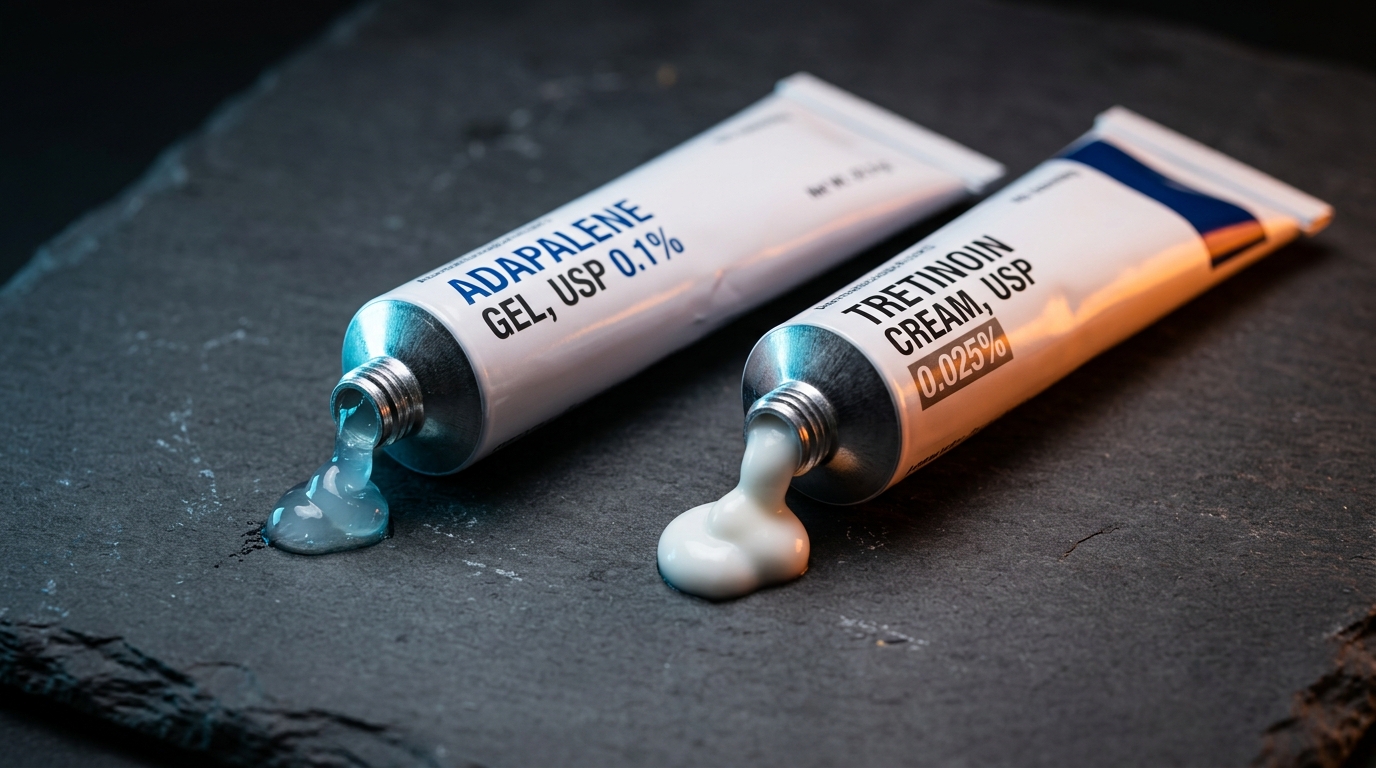
Not all retinoids behave the same way. An over-the-counter retinol serum is far gentler than prescription adapalene gel or tretinoin cream. Here is how each active pairs with salicylic acid:
| Active Retinoid | Strength Level | Leave-On BHA Pairing | Recommended Method | Risk Rating |
|---|---|---|---|---|
| Retinol (OTC) | Mild to Moderate (0.1% – 0.5%) | Do not stack at night | Alternate nights or use BHA face wash | 🟡 Moderate |
| Adapalene (0.1% Gel) | Prescription / Pharmacy Acne Gel | Never stack on same night | AM/PM split (BHA AM, Adapalene PM) | 🔴 High if Stacked |
| Tretinoin (0.025% – 0.05%) | Pure Retinoic Acid (Strong Rx) | Stop leave-on BHA completely | Gentle hydrating wash only | 🔴 Extreme Burn Risk |
The 4 Doctor-Approved Ways to Combine Them Safely
You do not need to throw away either bottle. Dermatologists routinely use both actives in patient routines by giving the skin time to recover between applications:
1. The AM / PM Split
Best for: Very oily skin with persistent blackheads and active acne.
- Morning (AM): Salicylic acid wash or 2% serum, followed by light gel moisturizer and broad-spectrum SPF 50 sunscreen.
- Evening (PM): Gentle cleanser, pea-sized Adapalene or Retinol on dry skin, followed by ceramide cream.
2. Alternate Nights
Best for: Normal to combination skin and skincare beginners.
- Monday Night: Salicylic acid serum + hydrating moisturizer.
- Tuesday Night: Pea-sized retinoid + ceramide barrier cream.
- Wednesday Night: Gentle wash + rich recovery moisturizer only.
3. The 4-Night Skin Cycling Routine
Best for: Sensitive skin or anyone who flakes easily in winter.
- Night 1 (Exfoliate): 2% Salicylic acid to clear out pores.
- Night 2 (Retinoid): Retinol or Adapalene for cellular renewal.
- Nights 3 & 4 (Recovery): Plain hydrating cleanser and barrier repair moisturizer. Zero active acids.
4. The 60-Second Wash-Off Trick
Best for: People who want a simple bedtime routine with zero daytime steps.
- Wash your face with a 1% or 2% Salicylic Acid foaming cleanser for 60 seconds.
- Rinse thoroughly with lukewarm water and pat dry.
- Wait 10 full minutes so skin surface dries completely before applying your retinoid.
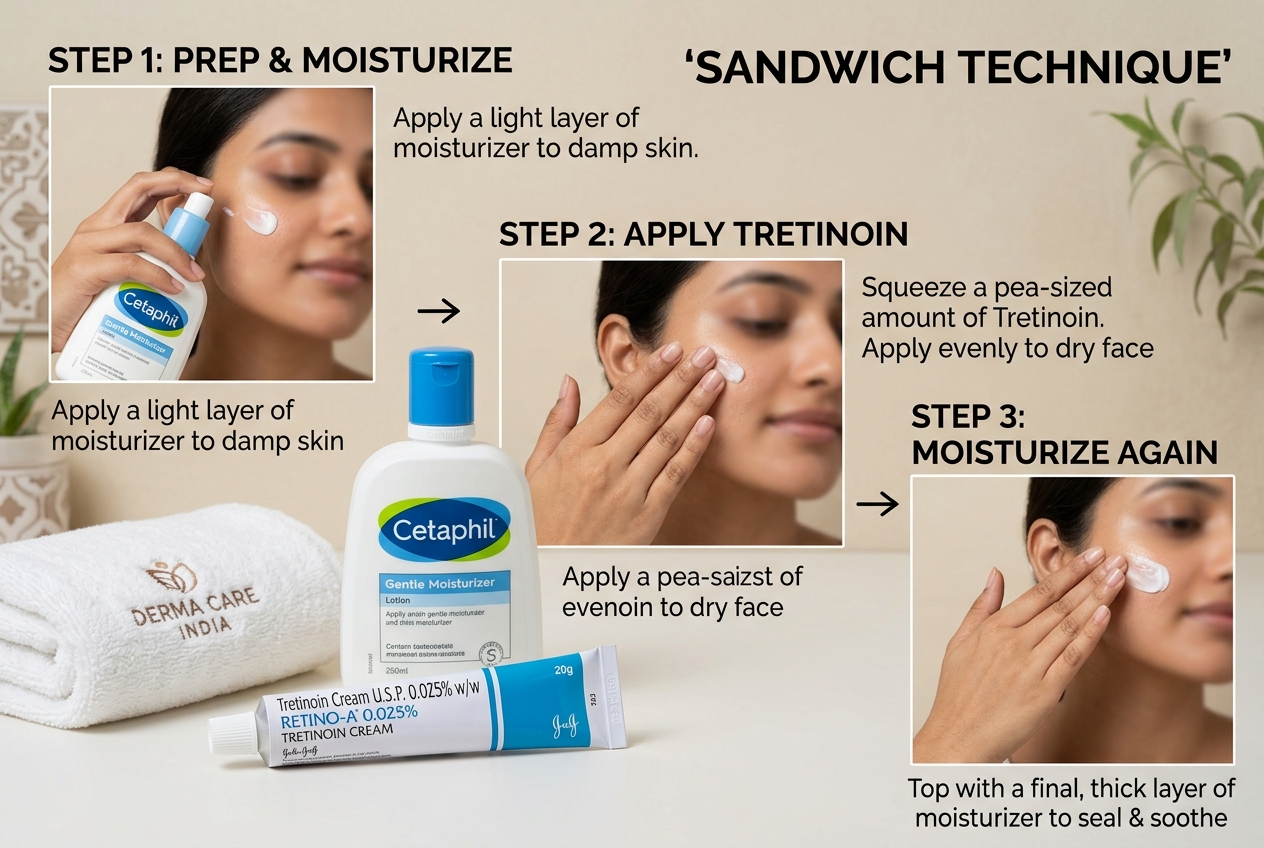
What to Do If Your Skin Burns: The 7-Day Reset
If you accidentally layered both products and your skin feels tight, looks glossy like plastic wrap, or stings with plain water, follow this emergency recovery protocol:
🚨 Warning Signs of a Damaged Barrier
- Stinging sensation when applying plain moisturizer or sunscreen
- Tightness and redness around the corners of your mouth and nose
- Flaky skin that peels off during facewash
- Sudden clusters of tiny, itchy red bumps
🛡️ The 7-Day Recovery Plan
- Stop all acids, retinoids, vitamin C serums, and facial scrubs right away.
- Wash only with plain cool water or a non-foaming gentle wash (like Cetaphil).
- Apply a thick ceramide moisturizer morning and evening.
- Wear physical zinc-based sunscreen when stepping outdoors.
🧪 Active Combination Safety Checker
Tap two products you are thinking of using together to check their doctor safety rating:
Doctor Video Guide: Skincare Ingredients You Can't Mix
Watch board-certified dermatologists Dr. Shah and Dr. Maxfield (Doctorly) explain the science of ingredient clashing and why stacking strong actives ruins skin progress:
Dermatologist-Approved Indian Skincare Pairings
Here are balanced, easily available Indian pharmacy and skincare combinations that deliver results without barrier breakdown:
| Skin Goal | Morning Step (AM) | Evening Step (PM) | Barrier Recovery Moisturizer |
|---|---|---|---|
| Beginner Texture & Oil | Minimalist 0.3% SA Cleanser + SPF 50 | Minimalist Granactive Retinoid 2% (2x/week) | Re'equil Ceramide & Hyaluronic Acid Cream |
| Moderate Oily Acne | Cipla Saslic DS Foaming Wash + Matte SPF | Adaferin 0.1% Gel (Adapalene) | Formula RX Barrier Relief / Bioderma Atoderm |
| Blackheads & Rough Skin | The Derma Co 2% SA Serum (2 mornings/week) | The Ordinary Retinol 0.2% in Squalane (2 nights) | CeraVe Moisturizing Cream |
Medically Reviewed by Dr. Lipy Mehta, MD
Specializing in acne management and post-inflammatory hyperpigmentation on Indian skin types (Fitzpatrick III to V). Dr. Mehta verifies all active ingredient combination protocols on MyMirror.