What is a Pimple Under the Skin? (Blind Pimple)
If you run a finger across your jawline or cheek and feel a tender, pebble-like ache with zero visible opening on the surface, you are dealing with a blind pimple. In clinic, we classify these as inflammatory acne nodules or deep cysts. They live deep in the lower dermis where conventional face scrubs and surface spot patches simply cannot reach.
Because the swelling sits right up against sensitive facial nerve branches, even a light brush of your hand can trigger an unmistakable throbbing ache. Squeezing or attacking it with fingernails only forces the pocket of trapped oil and pus sideways into surrounding tissue, turning a single tender bump into a weeks-long ordeal that leaves a stubborn dark spot on Indian skin.
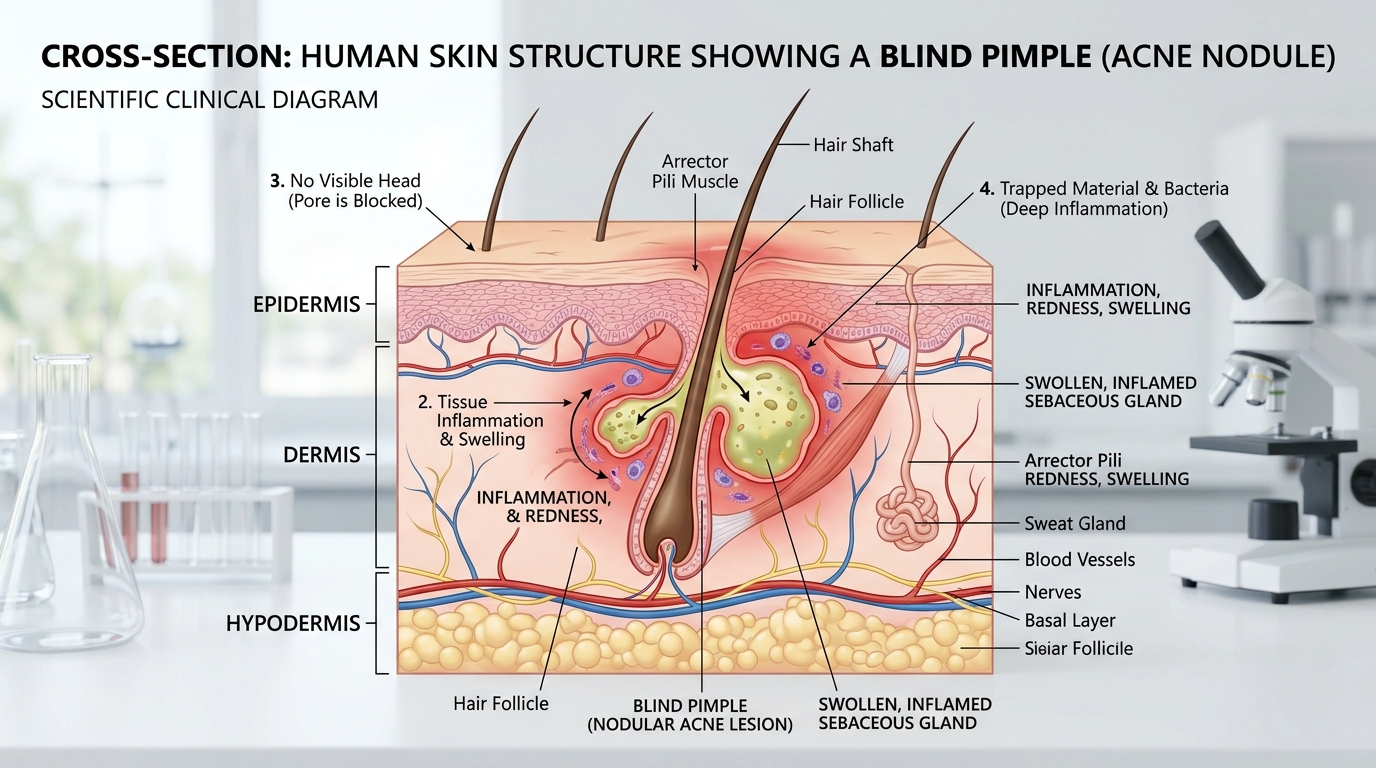
Figure 1: Cross-sectional anatomy of a blind pimple (deep acne nodule) showing severe inflammation trapped beneath the skin's surface.
How Blind Pimples Form
Every pore on your face contains a sebaceous gland that produces oil to lubricate your skin barrier. A blind pimple develops when three events happen deep beneath the surface:
When androgens, stress cortisol, or pre-menstrual hormones spike, your sebaceous glands produce heavier, more viscous oil. In warm, humid Indian weather, this thick oil fails to flow freely to the surface and pools inside the follicular canal.
Instead of shedding individual dead cells, the pore lining sheds in sticky, cohesive sheets. These clump with the thick oil, creating a firm cork across the neck of the pore that seals everything underneath.
Cutibacterium acnes bacteria thrive inside this dark, oxygen-free pocket. As white blood cells rush in to neutralize the flare, swelling pushes against sensitive dermal nerve endings, producing that familiar throbbing ache.
Surface Pimple vs. Blind Pimple: The Key Differences
Treating a deep dermal bump like a surface whitehead is the number one reason people end up with pitted scars. Here is how to tell them apart:
| Feature | Surface Pimple (Pustule / Whitehead) | Blind Pimple (Deep Nodule / Cyst) |
|---|---|---|
| Location in Skin | Epidermis (Surface Layer) | Dermis (Deep Layer) |
| Visible Head? | Yes, distinct white or yellow tip | No head, feels like a hard pebble |
| Pain Level | Mild discomfort or itching | Severe, tender, throbbing pain |
| Scarring Risk | Low (usually resolves with temporary dark spots) | 🔴 High (causes permanent atrophic pitted scars & PIH on Indian skin) |
The 4-Step Clinical Strategy to Draw It Out Safely
Because blind pimples live deep in the dermis, the goal is to calm inflammation and gently encourage the clog to soften without tearing surrounding tissue:
Warm Compress (Day 2 Onward)
Dip clean cotton gauze or a soft washcloth in comfortably warm water. Hold it lightly against the tender bump for 10 minutes, twice a day.
Gentle warmth boosts localized blood flow, bringing immune cells to soften the hardened sebum plug while easing that tight, throbbing pressure.
Salicylic Acid to Clear the Rim
After cleansing, dab a drop of 2% salicylic acid serum right over the center. Salicylic acid is oil-soluble, so it glides directly through surface sebum.
It loosens the sticky dead cells cementing the pore neck, creating micro-channels that let trapped pressure vent without any squeezing.
Pinhead Dot of 2.5% Benzoyl Peroxide
At bedtime, tap a pinpoint dot of 2.5% benzoyl peroxide gel (like Benzac AC) directly on the nodule. Keep it centered on the bump to protect surrounding skin.
Benzoyl peroxide releases oxygen inside the anaerobic follicle, knocking down acne bacteria within hours and halting tissue breakdown.
Hydrocolloid Patch Shield
Once the bump softens and inches closer to the surface, cover it with a breathable hydrocolloid patch overnight.
The patch draws out surface exudate while creating a physical barrier that stops you from absent-mindedly touching, squeezing, or picking.
What NOT to Do: The Golden Rules
When dealing with deep-seated acne nodules, what you don't do is just as important as what you do. Physical intervention on a blind pimple will almost always result in long-term skin damage.
There is no surface hole. Pressing with your fingers simply bursts the pocket sideways into healthy dermal tissue, spreading the infection and guaranteeing a deep pitted scar.
These viral DIY tricks cause actual chemical burns on Indian skin. In brown complexions, that burn leaves an ink-dark brown patch that lingers for over six months.
Piling on a glycolic toner, BHA wash, and retinol all in one night won't touch a deep cyst. It just strips surface ceramides, leaving raw peeling skin over a throbbing lump.
Piercing the skin with unsterile sewing needles or safety pins invites staph infections into deep dermal layers, turning a simple pimple into a serious medical emergency.