
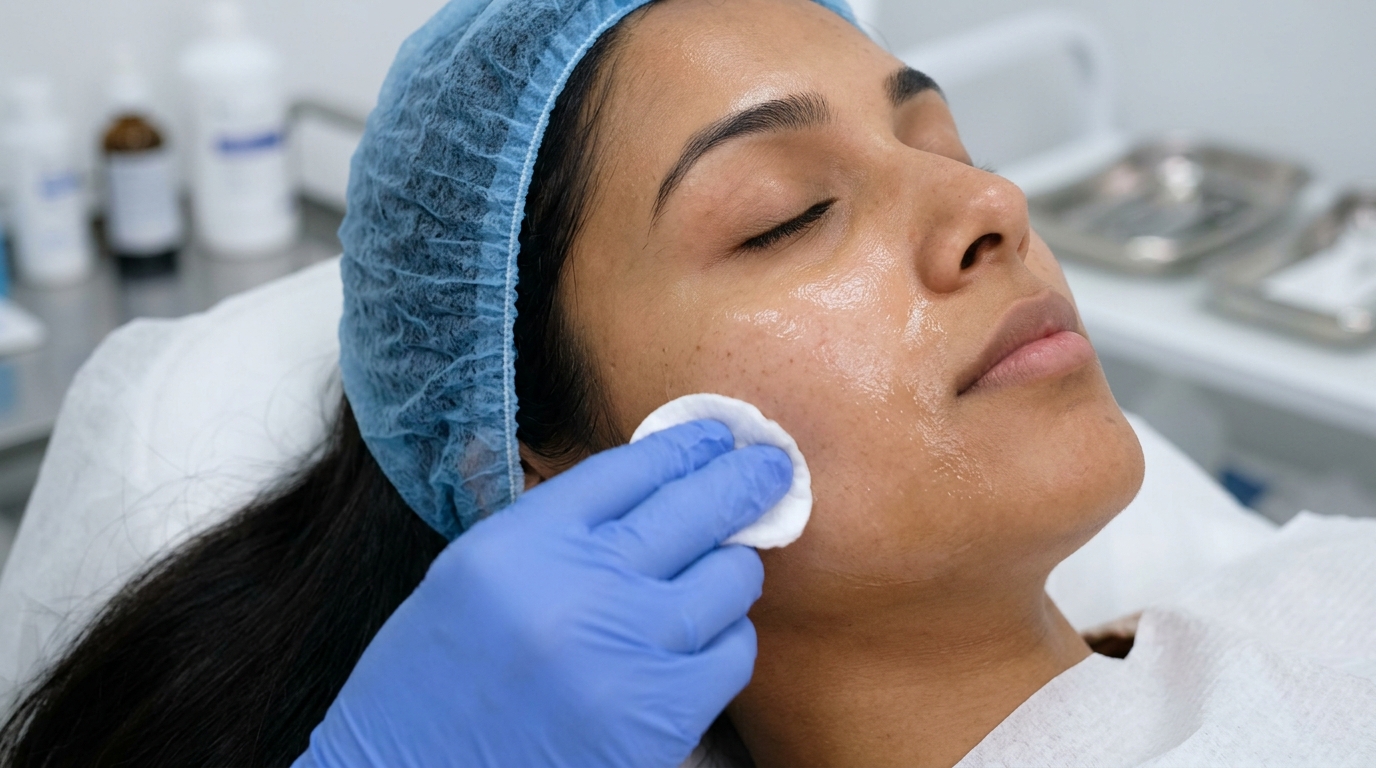
1. Corneodesmosome Cleavage: The Biological Mechanism of AHAs
Alpha Hydroxy Acids (AHAs) are a class of water-soluble organic carboxylic acids derived from natural botanical sources—such as sugarcane (Glycolic Acid), sour milk (Lactic Acid), and bitter almonds (Mandelic Acid).
In healthy skin, dead cells in the stratum corneum are bound together by microscopic protein structures called corneodesmosomes. When environmental pollution, aging, or sun damage slows down natural desquamation, these dead cells accumulate, leading to rough facial texture, clogged pore entrances, and dull tone.
The Calcium-Cleavage Desquamation Mechanism
AHAs function by chelating calcium ions required for corneodesmosomal cohesion. By lowering epidermal pH to ~3.5 to 4.0, AHAs break the protein glue holding dead corneocyte cells together. This causes the upper dead skin layer to shed evenly without abrasive physical scrubbing.
2. Glycolic vs Lactic vs Mandelic Acid: Molecular Weight Physics
Not all Alpha Hydroxy Acids perform identically on the skin. Their speed of epidermal penetration and potential for irritation are strictly dictated by their Molecular Weight (measured in Daltons):
Deep Dermal Stimulation & Rapid Renewal
With the smallest molecular size (76 Da), Glycolic Acid penetrates deepest and fastest into the epidermis. It stimulates dermal fibroblast cells to produce collagen and hyaluronic acid, making it the most potent acid for fading Post-Inflammatory Hyperpigmentation (PIH) and anti-aging (read our Glycolic Acid 6% vs 12% Guide).
Hydrating Exfoliation
Lactic Acid's medium molecular size provides gentle surface desquamation while functioning as a natural humectant, drawing water into dry skin (see Lactic Acid Serum Guide).
Gentle Dark Skin Shield
Twice the size of Glycolic Acid, Mandelic Acid penetrates slowly and uniformly, preventing post-acid redness in sensitive dark skin.
3. The 3 Clinical Pillars of AHA Benefits
Regular incorporation of dermatological AHAs delivers three distinct clinical skin transformations:
- Pillar 1 • Melanin Dispersion & Dark Spot Fading: AHAs accelerate shedding of hyper-pigmented melanocyte-laden corneocytes, rapidly fading acne marks, melasma, and sun spots.
- Pillar 2 • Dermal Collagen & Elastin Synthesis: At concentrations between 5% and 12%, Glycolic Acid increases epidermal thickness and stimulates pro-collagen gene expression.
- Pillar 3 • Natural Moisturizing Factor (NMF) Boosting: Lactic Acid increases stratum corneum ceramide levels and humectant water retention.
4. High-Contrast Molecular Weight & Clinical Indication Matrix
Compare Alpha Hydroxy Acid variants by molecular size, depth, and skin suitability:
| AHA Variant | Molecular Weight (Da) | Epidermal Penetration Rate | Primary Clinical Indication | PIH Irritation Risk |
|---|---|---|---|---|
| Glycolic Acid (Sugarcane) | 76 Daltons | Fast & Deep (Stratum Basale) | Stubborn PIH dark spots, coarse texture, fine lines | Moderate (Requires patch test in dark skin) |
| Lactic Acid (Sour Milk) | 90 Daltons | Moderate (Stratum Corneum) | Dry dehydrated skin, mild surface dullness, sensitive skin | Low (Hydrating & gentle) |
| Mandelic Acid (Bitter Almond) | 152 Daltons | Slow & Uniform (Surface Layer) | Sensitive melanated skin, inflammatory acne, rosacea | Very Low (Safest for Fitzpatrick IV-VI) |
| Citric Acid (Citrus Fruits) | 192 Daltons | Surface pH Buffer | Antioxidant protection & formula pH adjustment | Low (Used as supporting active) |
5. 4-Step Safe AHA Application Protocol
Follow this evening routine sequence to maximize AHA exfoliation while protecting your moisture barrier:
- Step 1: Gentle Cleansing: Wash face with a non-stripping, sulphate-free cleanser. Ensure skin is completely dry before applying AHA.
- Step 2: AHA Serum / Toner Application: Apply 3–4 drops of Glycolic Acid 6% Toner or Lactic Acid 10% Serum 2–3 nights weekly.
- Step 3: Ceramide Barrier Seal: Wait 5 minutes for acid absorption, then apply a rich ceramide moisturizer (such as Cica Barrier Cream) to prevent TEWL.
- Step 4: Broad-Spectrum Mineral Sunscreen (AM): AHAs increase photosensitivity by 18%. Always apply SPF 50 sunscreen the following morning (read Best Sunscreen for Acne Prone Indian Skin).
Warning: High-Percentage Chemical Peel Risks
Using strong home peeling solutions (such as 30% AHA peels) without medical supervision can cause chemical burns, severe skin barrier destruction, and rebound hyperpigmentation on Indian skin. Stick to leave-on 5% to 10% concentrations for home use.
6. AHA vs BHA: Which Acid Does Your Skin Need?
Understanding the difference between water-soluble AHAs and oil-soluble BHAs ensures correct acid selection:
• Choose AHA if: Your primary concerns are surface dark spots, uneven rough texture, dry flaking skin, or sun damage (read our Salicylic Acid vs Glycolic Acid Guide).
• Choose BHA if: Your primary concerns are deep blackheads, clogged sebum pores, active acne, or excess T-zone oiliness (read our BHA Beta Hydroxy Acid Guide).
Need Help Choosing the Right AHA Acid Strength?
Take our 60-second AI Skin Scan to analyze your exact skin barrier thickness, pigmentation depth, and receive a customized active routine.
Start Free AI Skin Scan →7. Frequently Asked Questions
Alpha Hydroxy Acids (AHAs) are water-soluble organic acids derived from sugarcane (Glycolic), milk (Lactic), or bitter almonds (Mandelic). They work by cleaving calcium bonds in corneodesmosomes—the cellular glue holding dead stratum corneum cells together—accelerating desquamation and surface cell renewal.
Glycolic Acid has the smallest molecular weight (76 Daltons), penetrating deep into the epidermis to stimulate collagen and fade dark spots, but carries higher irritation risk. Lactic Acid has a larger molecular size (90 Daltons) and intrinsic humectant properties, making it gentler and hydrating for dry or sensitive skin.
Mandelic Acid has a large molecular structure (152 Daltons)—twice the size of Glycolic Acid. It penetrates the epidermis slowly and uniformly, drastically reducing the risk of post-inflammatory hyperpigmentation (PIH) in melanated Indian skin types.
AHAs are water-soluble and exfoliate only the outer skin surface. To clean deep inside oil-filled pores, combine AHA with a lipid-soluble Beta Hydroxy Acid (BHA/Salicylic Acid).