
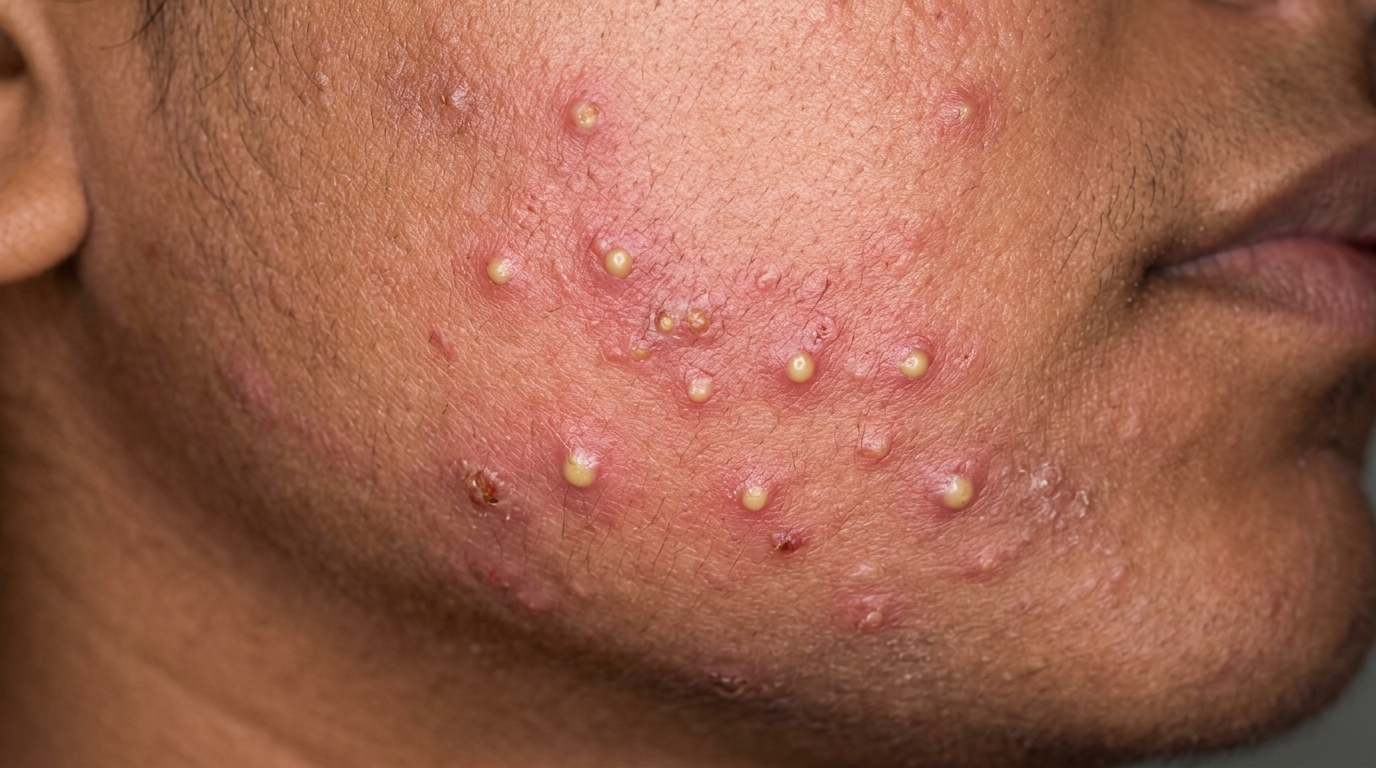
1. Pathogen Physiology: Bacterial vs Fungal Microbial Rashes
A red, inflamed facial or body skin rash can stem from vastly different microorganisms. In the Indian tropical climate—where heat, high humidity, and monsoon sweat trap moisture—microbial dysbiosis is extremely common.
A bacterial skin rash occurs when Gram-positive bacterial strains (specifically Staphylococcus aureus, Streptococcus pyogenes, or Cutibacterium acnes) breach the stratum corneum or pilosebaceous unit. Bacteria release exotoxins and proteases, causing rapid neutrophil recruitment, tissue swelling, and purulent micro-abscesses.
Microbiological Contrast: Bacteria vs Yeasts
In contrast, fungal acne is not bacterial. It is an opportunistic overgrowth of Malassezia yeast. Malassezia feeds on free fatty acids in facial sebum, converting them into irritant azelaic and oleic acid byproducts that trigger uniform, intensely itchy papules along the forehead, jawline, and upper chest.
2. 4 Differential Diagnoses for Red Facial & Body Rashes in India
Selecting the correct medical treatment requires accurate differential diagnosis:
Irregular red bumps or honey-colored crusted pustules around hair follicles. Tender or painful to pressure. Spreads rapidly when scratched.
Monomorphic (all identical size) tiny red pimples. Intensely itchy, especially after sweating or monsoon humidity. Zero blackheads/whiteheads.
Diffusely red, dry, burning patches triggered by harsh DIY remedies (Haldi, raw aloe vera, lemon) or fragrance in new cosmetic products.
Rebound erythema, burning, thin fragile skin, and visible broken capillaries (telangiectasia) caused by self-applying Betnovate C or Panderm creams.
3. The Danger of Applying Steroid Creams (Betnovate / Panderm) to Rashes
In India, one of the most dangerous consumer habits is applying over-the-counter triple combination creams (containing Betamethasone or Clobetasol) to treat facial rashes or pimples.
Immune Suppression & Rebound Flare Danger
Topical corticosteroids are potent immunosuppressants. When applied to a bacterial or fungal rash, steroids artificially vasoconstrict blood vessels, masking redness for 24 hours. However, by shutting down local skin immunity, steroids allow Staphylococcus bacteria and Malassezia yeast to multiply exponentially. When the cream is stopped, the rash explodes into a severe, angry Topical Steroid-Induced Rebound Rash.
If you have been using steroid creams on your face, stop immediately and transition to a zero-irritant barrier recovery routine (read Cica Barrier Repair Moisturizer Guide).
4. Clinical Diagnosis & Treatment Matrix Table
Compare rash features, pathogens, and correct dermatological interventions:
| Rash Type | Sensory & Visual Markers | Causative Pathogen | Gold Standard Active | Dangerous Mistake |
|---|---|---|---|---|
| Bacterial Skin Rash | Painful, irregular red lesions, honey crusting or pus | Staphylococcus aureus / C. acnes | Benzoyl Peroxide 2.5% Wash or Mupirocin 2% | Applying steroid creams (Betnovate/Panderm) |
| Fungal Acne Rash | Intensely itchy, uniform small bumps, forehead/chest | Malassezia furfur yeast | 2% Ketoconazole Wash (leave on 3 min) | Topical Clindamycin gel or heavy coconut oil |
| Contact Dermatitis | Hot stinging, red patchy flaking, recent DIY remedy | Barrier lipid breakdown / Hapten allergen | Ceramide & Squalane Barrier Cream + Cica | Exfoliating with AHA/BHA or rough scrubbing |
| Steroid Rebound Rash | Burning red skin, visible thin veins, rash on stopping cream | Iatrogenic steroid-induced addiction | Zero-therapy + Tacrolimus 0.03% (under derm supervision) | Re-applying steroid cream to "cool" burning |
5. Emergency Active Treatment Sequence for Bacterial Rashes
Follow this evidence-based sequence to clear bacterial facial rashes without causing post-inflammatory hyperpigmentation (PIH):
- Step 1: Short-Contact BPO Cleansing (Morning): Wash the rash with Benzoyl Peroxide 2.5% facewash. Leave lather on skin for 2 minutes before rinsing. BPO oxidizes bacterial cell walls instantly.
- Step 2: Topical Antibacterial Spot Treatment (Night): Apply Mupirocin 2% ointment or Clindamycin + Nicotinamide Gel strictly to active bacterial lesions.
- Step 3: Ceramide Barrier Replenishment: Apply a non-comedogenic ceramide moisturizer to rebuild the skin's protective acid mantle.
- Step 4: Broad-Spectrum Sunscreen: Protect healing skin with mineral SPF 50 sunscreen (read Best Sunscreen for Acne Prone Indian Skin).
Unsure If Your Facial Rash is Bacterial or Fungal?
If you are struggling to identify your rash type, take our 60-second AI Skin Scan to analyze your bump patterns and receive a custom clinical recovery routine.
Start Free AI Skin Scan →6. Barrier Recovery & Prevention Protocol
Once the acute bacterial rash clears, maintain skin resilience with these active maintenance steps:
- Calm Redness & Pigment: Layer Niacinamide 5% Serum to restore ceramide synthesis and prevent PIH marks.
- Exfoliate Pores Gently: Use Salicylic Acid 2% Facewash 2–3 times weekly to prevent sebum stagnation inside follicles.
- Spot Brightening: Apply Azelaic Acid 15% Gel for non-irritating red/brown mark fading.
7. Frequently Asked Questions
Bacterial skin rashes (Staph/C. acnes) present with painful, irregular red bumps or honey-crusted pustules. Fungal acne (Malassezia folliculitis) presents as intensely itchy, monomorphic (uniform size) tiny bumps along the forehead and hairline that worsen in humid weather.
Betnovate C and Panderm contain potent topical corticosteroids. While they temporarily reduce redness by constricting blood vessels, steroids suppress local skin immunity, causing explosive fungal/bacterial rebound flares, skin atrophy, and permanent telangiectasia.
Short-contact Benzoyl Peroxide 2.5% wash or gel is the gold standard OTC active. It releases free-radical oxygen that kills anaerobic bacterial pathogens without inducing antibiotic resistance.
Yes. Sweat mixes with facial sebum and occlusive clothing/helmets, creating a warm, anaerobic breeding ground for both Staphylococcus aureus and Cutibacterium acnes, leading to bacterial folliculitis.