
Hormonal and PCOS acne in Indian women is caused by an internal surge in free androgens (testosterone and DHEA-S) compounded by insulin resistance. These hormones instruct lower-face sebaceous glands to overproduce dense sebum, forming painful, recurring cysts along the jawline and chin. While surface cleansers cannot reach this root trigger, medical protocols—including oral anti-androgens (Spironolactone 50–100mg), anti-androgenic oral contraceptives (Diane-35), and insulin-sensitizing Myo-Inositol (40:1 ratio)—consistently clear breakouts within 3 to 6 months under dermatological care.
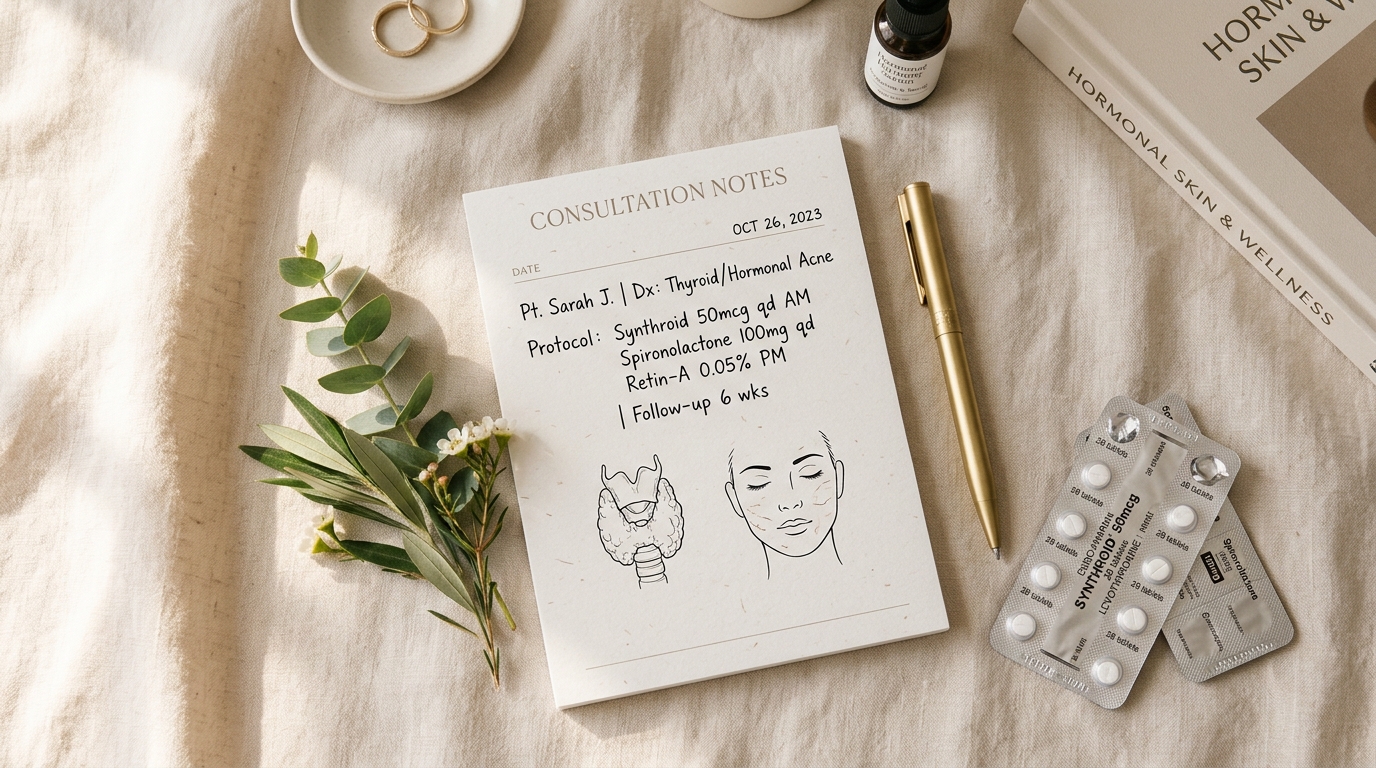
Why Normal Face Washes & Serums Keep Failing on Jawline Cysts
If you have spent thousands of rupees on salicylic acid face washes, clay masks, tea tree oils, and pimple patches only to see another cluster of painful red lumps emerge along your jawline before your period, you are not alone.
Your skin care products are not failing because they are cheap or poorly made. They fail because they are fighting the wrong battle in the wrong location.
Imagine smoke billowing out of a second-floor window because of a burning pan in your kitchen.
Applying a surface face wash to a hormonal cyst is like wiping soot off the window pane while the stove continues to burn downstairs. The surface clears for an afternoon, but smoke keeps filling the room until someone turns off the burner. Hormonal acne is an internal engine problem, not a dirty face problem.
Topical cleansers only penetrate about 0.1 millimeters into the epidermis. Hormonal cysts develop deep within the reticular dermis, roughly 3 to 4 millimeters down. The swelling, throbbing ache you feel under your jawline is triggered by internal chemical messengers traveling through your blood supply directly into the root of each hair follicle.
The 3 Internal Triggers Behind Hormonal & PCOS Acne
To understand how medical treatments clear your skin, look at the three biological gears that interact inside your body:
1. The Gas Pedal: Insulin Resistance & High Blood Sugar
In South Asian women, insulin resistance is unusually prevalent, occurring even in women with completely normal body weight (often termed "lean PCOS"). When you eat refined carbohydrates (such as white rice, maida, sweet snacks, or sweetened milky chai), your pancreas produces excess insulin.
High circulating insulin does two damaging things: it travels to your ovaries and signals the theca cells to produce more testosterone, and it halts your liver from creating Sex Hormone-Binding Globulin (SHBG).
2. The Master Key: Dihydrotestosterone (DHT)
Once testosterone is released into your bloodstream, an enzyme called 5-alpha-reductase converts it into Dihydrotestosterone (DHT). DHT is five to ten times more potent than normal testosterone. When DHT docks onto the androgen receptors inside your sebaceous glands, it flips the switch on oil production, creating thick, greasy sebum that glues dead skin cells together.
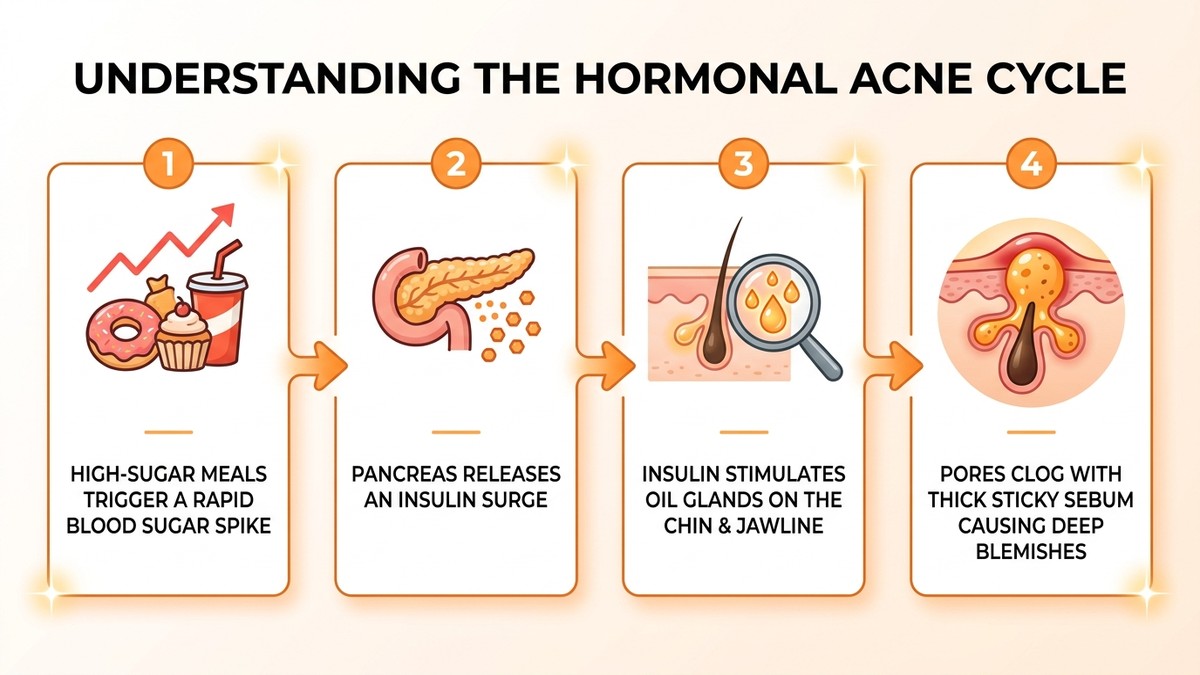
3. The Sensitive Target: Lower Face Oil Glands
Why does hormonal acne show up on the chin, jawline, and upper neck instead of your forehead? The sebaceous glands located on the lower third of female faces contain a significantly higher density of androgen receptors. Even slight hormonal variations that would not affect your forehead trigger substantial inflammation along your jaw.
Decoding Your Blood Test Panel: What to Test & How to Read It
When dermatologists suspect an endocrine driver, they request a targeted hormonal panel. Here is a clear breakdown of each marker, why it is ordered, and how to read your numbers without panic.
| Hormone Marker | Ideal Test Timing | Clinical Significance | What High Numbers Mean |
|---|---|---|---|
| Free Testosterone | Day 2 to Day 5 of period | Measures the unbound, biologically active male hormone that directly binds to oil glands. | Direct trigger for oil gland hyper-secretion and lower face cysts. |
| Total Testosterone | Day 2 to Day 5 of period | Measures total circulating testosterone (mostly bound to proteins and harmless). | Can look deceptively normal if SHBG is low, which is why Free Testosterone is vital. |
| DHEA-S | Any morning | Produced exclusively by the adrenal glands; acts as the primary adrenal stress androgen. | High numbers show your acne is fueled by adrenal stress rather than just ovarian signaling. |
| LH : FSH Ratio | Day 2 or Day 3 of period | Compares Luteinizing Hormone to Follicle-Stimulating Hormone. Normal ratio is approximately 1:1. | A ratio greater than 2:1 strongly points to Polycystic Ovary Syndrome (PCOS). |
| Fasting Insulin & Glucose | 10 to 12 hour overnight fast | Assesses cellular insulin sensitivity (HOMA-IR calculation). | Elevated levels indicate your body needs extra insulin to manage carbohydrates, driving ovarian androgens. |
| Serum Prolactin & 17-OHP | Morning, rested state | Rules out pituitary elevation and non-classical congenital adrenal hyperplasia (NCAH). | Helps doctors ensure nothing rarer is masquerading as standard adult acne. |
The 3 Medical Treatment Pillars That Stop Breakouts
When topical treatments fail, dermatologists turn to systemic medical therapies that act on the hormonal pathways directly. These are the three main options prescribed in Indian clinical practice:
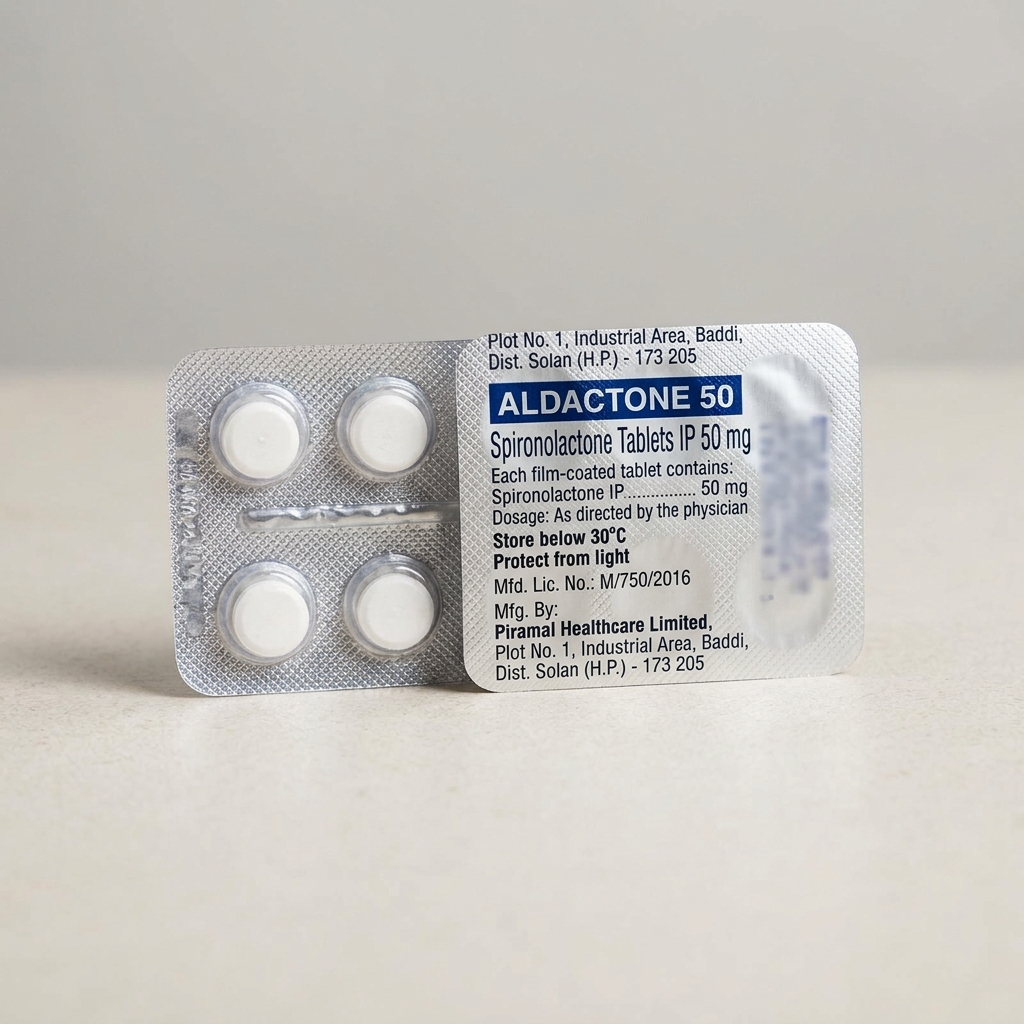
Pillar 1: Spironolactone (Aldactone) — The Receptor Blocker
Originally formulated as a gentle diuretic, dermatologists have used Spironolactone for decades as the premier off-label treatment for adult female acne.
- How it works: Spironolactone fits into the androgen receptors inside your sebaceous glands like a key stuck in a lock. With the receptor occupied, circulating DHT cannot attach. Oil production drops dramatically within weeks.
- Dosage range: Most doctors start patients at 25mg to 50mg once daily with dinner, gradually stepping up to 100mg if required.
- Expected timeline: Reduced facial shine appears by week 4. Inflammatory cysts decrease significantly by week 8 to 12. Full clearance usually requires 4 to 6 months of continuous therapy.
- Safety precautions: Because Spironolactone spares potassium in the body, avoid taking potassium supplements while on this medication. It is strictly contraindicated during pregnancy due to fetal hormone disruption.
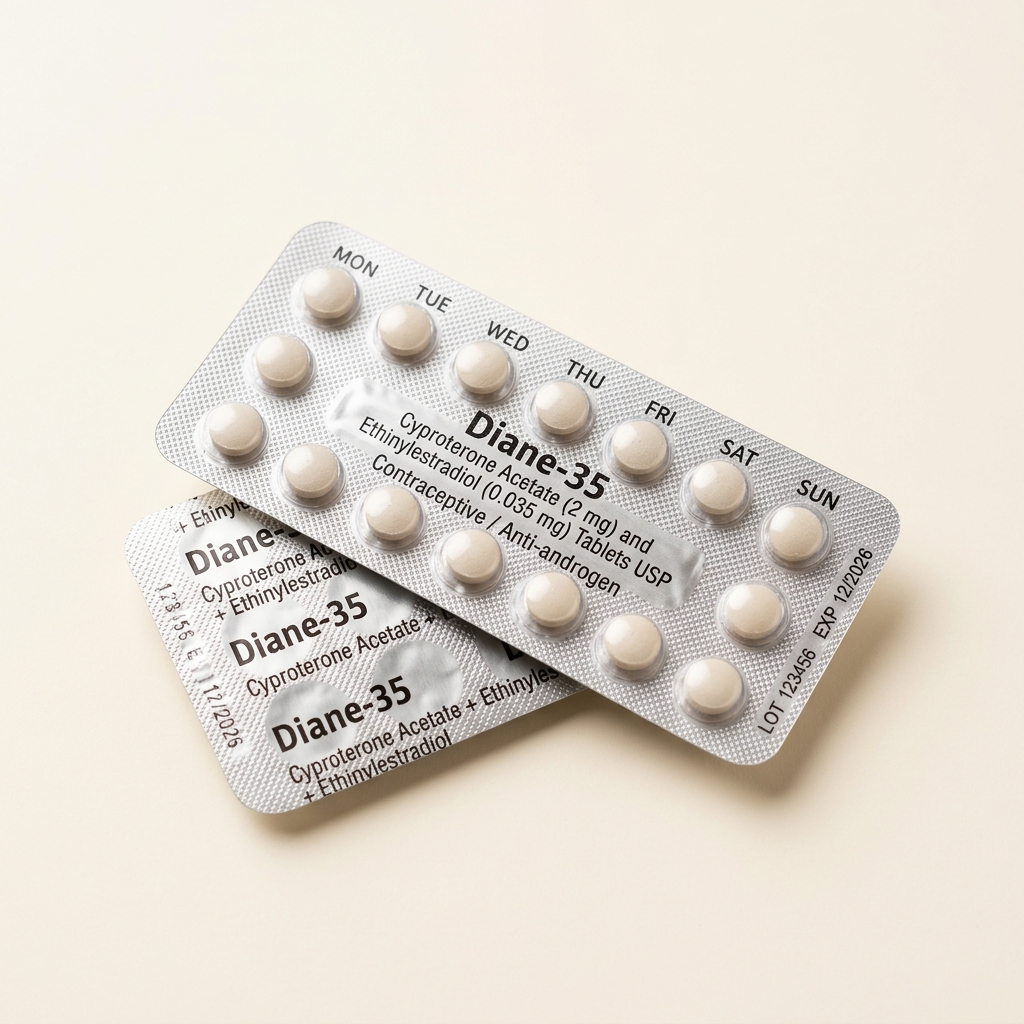
Pillar 2: Combined Oral Contraceptive Pills (Diane-35 / Krimson-35 / Yaz)
For women who also seek cycle regularity or reliable birth control, certain oral contraceptive formulations deliver powerful anti-acne benefits.
- How it works: These pills contain an estrogen (Ethinylestradiol) paired with an anti-androgenic progestin (Cyproterone Acetate or Drospirenone). They quiet down pituitary signals, reducing ovarian testosterone production, while boosting SHBG to sponge up free hormones.
- Indian formulations: Popular brands include Diane-35, Krimson-35, and Ginette-35 (all featuring 2mg Cyproterone Acetate), or Yaz/Drospera (featuring Drospirenone).
- Clinical consideration: OCPs are not suitable for individuals with a history of blood clots, migraine with aura, or heavy smoking. Your doctor will assess your overall health history first.
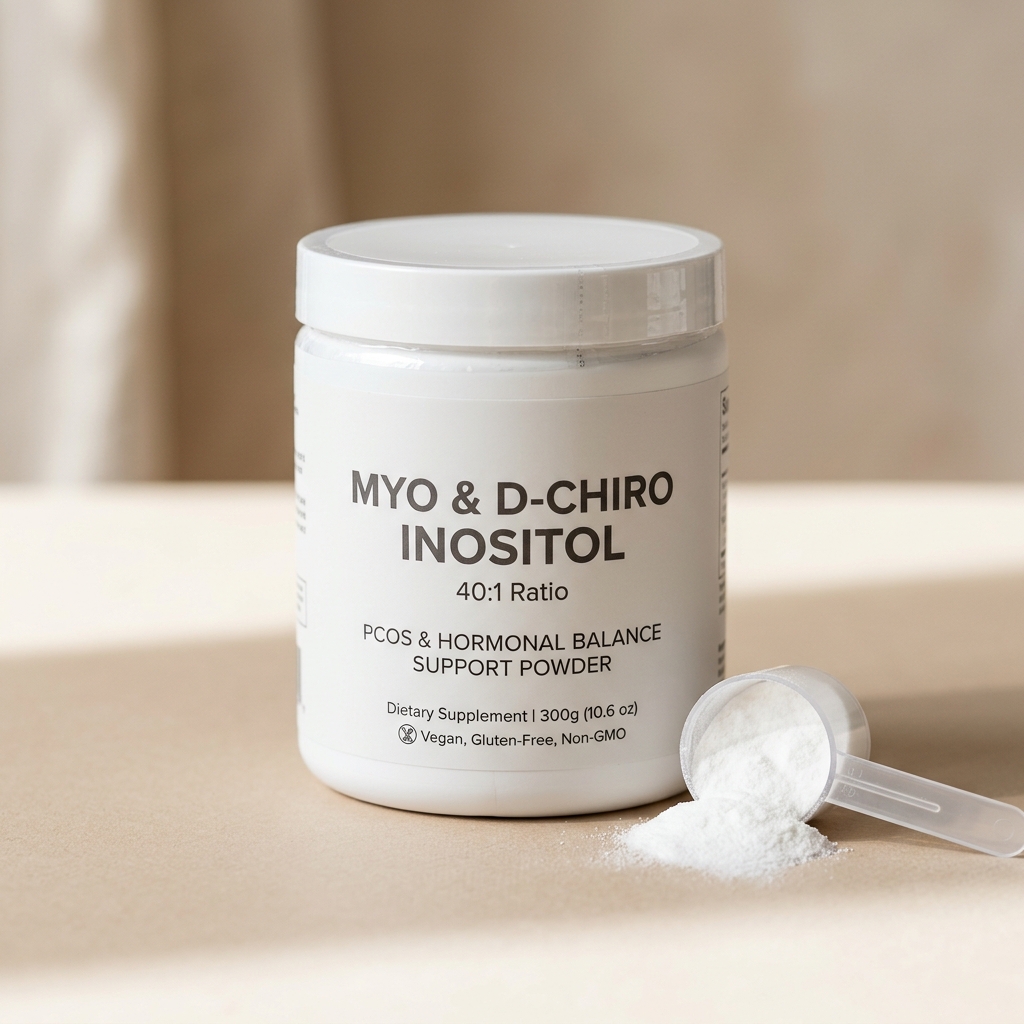
Pillar 3: Myo-Inositol & D-Chiro-Inositol (40:1 Ratio) — The Natural Insulin Sensitizer
For women dealing with PCOS who prefer a non-hormonal, non-prescription foundation, inositol therapy offers clinical efficacy backed by randomized trials.
- The 40:1 golden ratio: The human body uses Myo-Inositol and D-Chiro-Inositol together in an exact 40 to 1 proportion. Taking this specific ratio restores the cellular signals needed for insulin uptake.
- Benefits for acne: By calming insulin surges, inositol prevents your ovaries from overproducing androgens. This leads to regular menstrual cycles and clearer, less congested skin over 3 to 6 months.
Comparing Medical Options: Which Protocol Fits Your Profile?
Every woman's body responds differently. Here is how dermatologists evaluate the trade-offs between the primary treatment paths:
| Treatment Option | Primary Action | Typical Daily Cost | Main Pros | Watch-outs & Considerations |
|---|---|---|---|---|
| Spironolactone (Aldactone) | Blocks androgen receptors on facial oil glands | ₹8 – ₹15 / day | Targeted action; does not alter estrogen; highly effective for adult chin cysts | Mild frequent urination; potassium checks; strict pregnancy restriction |
| Diane-35 / Krimson-35 | Suppresses ovarian androgens & boosts SHBG sponge | ₹14 – ₹22 / day | Regulates irregular periods; reliable contraception; high clearance rates | Mild breast tenderness or spotting; clot risk in smokers; post-pill rebound possible |
| 40:1 Myo / D-Chiro Inositol | Improves insulin sensitivity; supports ovulatory health | ₹25 – ₹40 / day | Non-prescription; non-hormonal; safe long term; supports fertility | Takes 3 to 4 months for noticeable results; requires consistent daily dosage |
| Topical Retinoids + Azelaic Acid | Clears pore plugs & fades post-inflammatory brown spots | ₹10 – ₹20 / day | Essential external partner to systemic medications | Mild dryness or peeling initially; requires daily broad-spectrum sunscreen |
Video Breakdown: Dr. Aanchal Panth MD on Hormonal Acne Treatment
Watch board-certified dermatologist Dr. Aanchal Panth walk through why stubborn acne persists on adult faces, how androgens affect pore biology, and what modern clinical medicine does to restore clear skin:
Clinical commentary by Dr. Aanchal Panth MD exploring systemic management strategies for persistent adult breakouts.
Pharmacy Essentials & Supportive Skin Care for Hormonal Breakouts
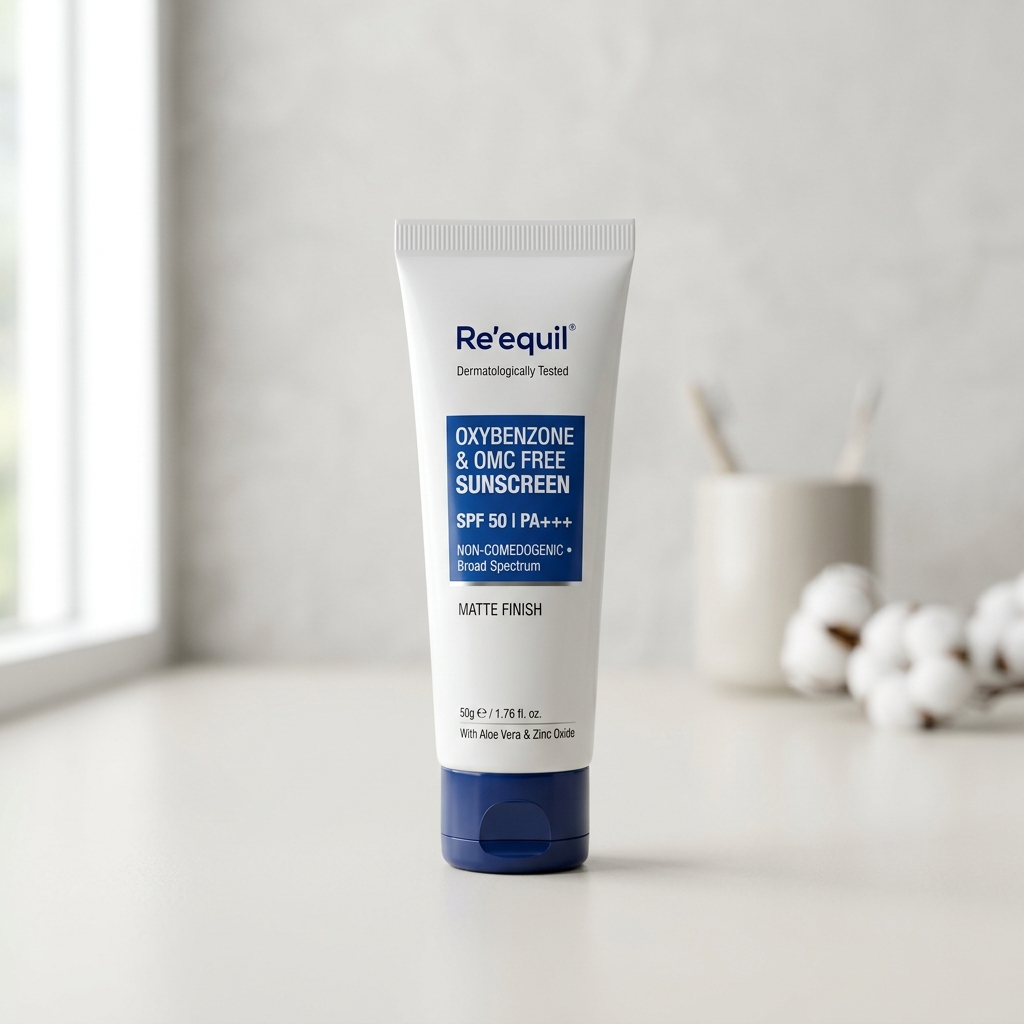
While your systemic prescription works from within, keeping your skin barrier calm and shielded from the Indian sun is mandatory to avoid permanent dark hyperpigmentation marks:
Frequently Asked Questions About Hormonal Acne Treatments
Face washes and exfoliating acids only work on the outermost 0.1 millimeters of your skin. Hormonal acne starts 3 to 4 millimeters down inside the dermis, where androgen hormones stimulate oil glands to produce thick, sticky sebum. Because the trigger is circulating internally in your bloodstream, scrubbing your face or applying surface washes cannot fix the underlying hormonal stimulus.
Yes, absolutely. Many women have normal total testosterone levels on lab reports because most testosterone is bound to proteins. What matters is Free Testosterone and how sensitive your individual oil glands are to male hormones. Even within normal lab ranges, hyper-sensitive androgen receptors in facial oil glands can trigger severe cysts.
Spironolactone works by sitting on the androgen receptors inside your oil glands, like a key that fits into a lock but does not turn. This stops testosterone and DHT from signaling your glands to pump out excess oil. Most women notice reduced oiliness within 4 to 6 weeks, fewer deep cysts around 8 to 12 weeks, and maximum skin clearance at 6 months.
Diane-35 works primarily at the ovarian level by shutting down the brain signals that tell your ovaries to make male hormones, while also creating more protein sponge (SHBG) to bind up free testosterone. Spironolactone works at the skin level by directly blocking oil gland receptors. Dermatologists select between them based on whether you also need cycle regulation or contraception.
The 40:1 ratio matches the natural balance found in healthy human plasma. Myo-inositol helps your cells process glucose and lowers insulin, while D-chiro-inositol supports glycogen synthesis. Taking this exact ratio improves insulin sensitivity, reducing the insulin spikes that prompt your ovaries to generate excess androgens, without altering your body's natural hormone production.
Peer-Reviewed References
- Roberts EE, et al. Efficacy of Spironolactone in the Treatment of Acne in Adult Women: A Retrospective Study of 110 Patients. J Clin Aesthet Dermatol. 2020;13(4):24-28. PubMed: 32360569
- Unfer V, et al. The 40:1 myo-inositol/D-chiro-inositol ratio in the treatment of polycystic ovary syndrome: an update. Arch Gynecol Obstet. 2020;301(4):871-884. PubMed: 31298440
- Ebede TL, et al. Hormonal treatment of acne in women. J Clin Aesthet Dermatol. 2009;2(12):16-22. PubMed: 20164583
- Arowojolu AO, et al. Combined oral contraceptive pills for treatment of acne. Cochrane Database Syst Rev. 2012;(7):CD004425. PubMed: 22786506
Unsure If Your Breakouts Are Hormonal?
Take a 60-second AI skin diagnostic scan. Our clinical tool maps your facial breakout distribution, identifies whether your pattern matches jawline hormonal clustering, and delivers personalized guidance before your doctor's visit.
Start Free AI Skin Scan Now →