Whey Protein Acne in India: The IGF-1 Signaling Pathway, Jawline Cysts & Safe Gym Swaps
Did you start drinking whey protein shakes to hit your fitness macros, only to develop painful cystic nodules along your jawline, neck, chest, or back? Why gym trainers tell you to "just drink more water" while your hormones are being hijacked, the biochemical reality of bovine IGF-1, and how to build muscle without sacrificing your skin.
🧬 The IGF-1 & mTORC1 Cascade🥛 Isolate vs Concentrate Truth🌱 Plant & Egg White Swaps🧪 30-Day Elimination Protocol
The Endocrinology of Whey: The IGF-1 & mTORC1 Signaling Cascade
Across Indian fitness communities, a frustratingly common story plays out: an athletic 22-year-old begins lifting weights, purchases a tub of popular whey protein powder, and within 3 to 6 weeks, develops severe, throbbing cystic acne along their jawline, neck, shoulders, and upper back. When they ask their gym trainer, the response is almost robotic: "Bhai, drink 5 liters of water, it's just your body heating up from heavy lifting."
Dermatologically, whey-induced acne has nothing to do with body temperature, "toxic heat," or inadequate water consumption. It is an endocrinological chain reaction driven by Insulin-like Growth Factor-1 (IGF-1) and the mTORC1 (mechanistic target of rapamycin complex 1) cellular signaling network.
The Evolutionary Biology of Whey: Bovine milk is biologically engineered by evolution to do one specific job: promote rapid tissue proliferation and cellular growth in newborn calves. The whey fraction of dairy contains potent concentrations of active bovine growth factors and essential branched-chain amino acids (particularly leucine). When isolated and consumed as a processed protein powder, it acts as a hormonal supercharger.
The 4-Step Biochemical Cascade from Shake to Cyst
📈
1. The Acute Postprandial Insulin Surge
Despite having a low glycemic index, liquid whey protein has a staggering insulinemic index. Drinking a whey shake stimulates pancreatic beta-cells to dump massive amounts of insulin into the bloodstream, rivaling white bread.
🧬
2. Hepatic IGF-1 Super-Spike
Elevated portal insulin synergizes with dairy peptides to signal the liver to synthesize and secrete massive amounts of Insulin-like Growth Factor-1 (IGF-1), while simultaneously downregulating IGF-Binding Protein-3 (IGFBP-3). This leaves unprecedented quantities of free, biologically active IGF-1 circulating in your blood.
⚙️
3. mTORC1 & SREBP-1c Overdrive
High circulating IGF-1 and intracellular leucine flood into facial and trunk sebocytes, hyper-activating the nutrient-sensing enzyme mTORC1. mTORC1 phosphorylates the nuclear transcription factor SREBP-1c, which commands the sebaceous gland to dramatically accelerate lipogenesis (sebum production).
🔥
4. 5α-Reductase & Keratin Plugs
IGF-1 directly upregulates 5-alpha-reductase in hair follicles, converting circulating testosterone into potent Dihydrotestosterone (DHT) locally at the skin level. DHT causes follicular hyperkeratinization (sticky pore lining) and churns thick, sticky squalene, creating the perfect anaerobic incubator for deep inflammatory acne cysts.
2
The Great Fitness Myth: Whey Isolate vs Concentrate for Acne
The most pervasive myth in Indian gym locker rooms is that switching from Whey Protein Concentrate (WPC) to expensive Whey Protein Isolate (WPI) will cure your breakouts. Supplement shop owners will confidently tell you: "Concentrate has lactose and fat, which causes pimples. Buy our 90% Isolate and your skin will stay clean."
This claim is scientifically completely false. Understanding the filtration process explains why:
Supplement Parameter
Whey Protein Concentrate (WPC 80)
Whey Protein Isolate (WPI 90)
Hydrolyzed Whey (WPH)
Lactose Content
Moderate (3% – 5%)
Virtually Zero (<1%)
Virtually Zero (<0.5%)
Effect on Lactose Intolerance
May cause bloating, gas, loose stools
Gentle on digestive lactose intolerance
Extremely easily digested
Amino Acid Leucine Content
High (~10%–11%)
Even Higher (~12%–14%)
High (Pre-digested peptides)
Insulinemic Spike Speed
Rapid (peaks in 45–60 mins)
Ultra-Rapid (peaks in 20–30 mins)
Instantaneous absorption
Serum IGF-1 Elevation
Significant
Equal or Higher than Concentrate
Equal or Higher
Acne-Inducing Potential
High
Equally High / Often Worse
High
The Clinical Reality: Acne is Caused by IGF-1, Not Lactose. Lactose is a milk sugar; an inability to digest lactose causes gastrointestinal fermentation (cramps and diarrhea), not follicular microcomedones. The trigger for acne is dairy peptide-induced IGF-1 signaling and leucine-driven mTORC1 activation. Because Whey Isolate is more concentrated in pure dairy protein and rapidly absorbed, it triggers an even faster, sharper spike in serum IGF-1. In clinical dermatology studies, patients who switched from concentrate to isolate saw zero improvement in their acne severity.
3
The Classic Clinical Pattern: Jawline Cysts & Severe Bacne
Whey protein acne does not present like ordinary teenage comedones or occasional superficial whiteheads. It displays a distinct, clinically recognizable anatomical distribution that experienced dermatologists can spot instantly across the examination room:
🧔
1. Lower Third of Face & Jawline
Presents as deep, tender, non-draining nodulocystic lesions along the mandibular angle, jawbone perimeter, chin, and upper lateral neck. These hormonal receptor-dense zones are exquisitely sensitive to local DHT synthesis driven by IGF-1.
🏋️
2. Upper Back & Scapular Region ("Bacne")
Dense clusters of deep, erythematous nodules and painful pustules across the traps, shoulder blades, and thoracic spine. Follicles in this area possess huge multi-lobed sebaceous glands that rapidly drown in excess sebum.
🛡️
3. Mid-Chest & Sternal Cleavage
Painful, inflamed papules over the sternum that bleed easily when chafed by gym t-shirts or bench-press padding. Often complicated by secondary bacterial colonization from trapped workout sweat.
⏱️
4. The Rapid-Onset Timeline
Typically manifests within 2 to 6 weeks of introducing protein shakes or increasing intake from 1 scoop to 2 scoops daily. Breakouts remain completely refractory to ordinary over-the-counter acne face washes as long as the supplement is consumed.
While the whey protein fraction is the primary driver of IGF-1 elevation, many commercial gym supplements sold in India contain secondary additives that amplify acne through independent physiological pathways:
1. High-Glycemic Maltodextrin & Dextrose
Mass gainers and budget whey brands frequently cut their formulations with maltodextrin as a cheap carbohydrate filler. Maltodextrin has a glycemic index (GI) between 105 and 135—substantially higher than pure table sugar (GI 65). This causes rapid, violent insulin spikes that supercharge mTORC1 signaling and double the rate of sebum excretion.
2. B-Vitamin Megadoses (Vitamin B6 & B12)
Pre-workouts, multivitamins, and fortified protein powders often pack astronomical doses of Cyanocobalamin (Vitamin B12) and Pyridoxine (Vitamin B6)—often 500% to 2,000% of the daily Recommended Dietary Allowance (RDA). High-dose Vitamin B12 alters the gene transcription of facial Cutibacterium acnes, causing the bacteria to downregulate its own B12 synthesis and massively overproduce inflammatory porphyrins. This triggers an explosive clinical condition called acneiform eruption—characterized by dozens of uniform, itchy pustules appearing overnight.
3. Artificial Sweeteners & Gut Dysbiosis
Nearly all "zero sugar" Indian protein powders use synthetic non-nutritive sweeteners like sucralose or acesulfame potassium. Clinical studies have demonstrated that chronic sucralose consumption depletes beneficial intestinal Bifidobacteria and increases gut mucosal permeability. This leaky barrier allows bacterial lipopolysaccharides (LPS) into systemic circulation, worsening whole-body inflammation through the Gut-Skin Axis.
5
The Athlete's Dilemma: Safe Non-Acne Protein Alternatives in India
Do you have to stop lifting weights or give up your muscle-building goals to have clear skin? Absolutely not. You simply need to replace dairy-derived bovine hormones with clean, non-insulinemic protein sources. High-level athletes and bodybuilders routinely achieve elite physiques using these dermatologist-validated alternatives available in India:
Protein Source
Bioavailability (PDCAAS)
Acne Risk Profile
Indian Market Options & Clinical Notes
Pea & Brown Rice Protein Blend (80:20)
1.00 (Complete amino acid profile; equal to whey)
Zero Acne Risk
The Gold Standard Swap. Pea provides high lysine; brown rice completes methionine. Does NOT stimulate bovine IGF-1. Brands: Cosmix, Origin Nutrition, Plantigo, Supermix.
Egg White Protein Powder (Albumin)
1.00 (Gold standard biological value)
Extremely Low
Dairy-free, lactose-free, highly anabolic. Perfect for those who dislike plant protein taste. Brands: MuscleBlaze Egg Protein, Nutrija.
Egg whites (6 eggs = ~24g protein), sattu mixed with roasted chana, sprouted moong dal, paneer in moderation (A2 cow milk), chicken breast, and fish (Rohu, Surmai).
Clinical Trial Insight: A landmark 2013 double-blind clinical trial published in the Nutrition Journal compared 24 grams of whey protein isolate versus 24 grams of pea-rice plant protein blend over 8 weeks of heavy resistance training. Researchers found identical increases in muscle thickness, lean body mass, and bench press strength between both cohorts. You sacrifice zero muscle gains by dropping whey.
6
The Active Gym-Goer Skincare Protocol: Pre- & Post-Workout
Even after eliminating whey, training hard in humid Indian gyms generates a secondary challenge: acne mechanica (friction from tight clothes, lifting belts, and bench equipment) combined with sweat-trapped bacteria. Maintain this strict clinical hygiene protocol:
1. Pre-Workout: Never Train with Occlusive Creams or Makeup
Do not apply heavy moisturizers, foundation, or thick BB creams before working out. As core body temperature rises, sweat ducts dilate to cool the skin. Occlusive cosmetics mix with sweat and sebum to form comedogenic plugs within minutes. Splash face with cool water or mist with a Hypochlorous Acid (HOCl) spray before stepping onto the gym floor.
2. Mid-Workout: The Clean Towel Rule
Never wipe sweat with gym t-shirt sleeves or hands that have touched barbell knurling and dumbbell handles. Indian gym equipment harbors dense colonies of Staphylococcus and environmental fungi. Keep a dedicated, clean micro-fiber face towel and gently dab perspiration—never drag or scrub, which abrades the stratum corneum.
3. Post-Workout: The 20-Minute Shower Rule
Do not sit in sweaty compression gear, gym leggings, or tight polyester vests while driving home or chatting post-workout. Sweaty fabric acts as an occlusive incubator that breeds bacterial folliculitis across your chest and back. Shower within 15 to 20 minutes of your final set using cool-to-lukewarm water.
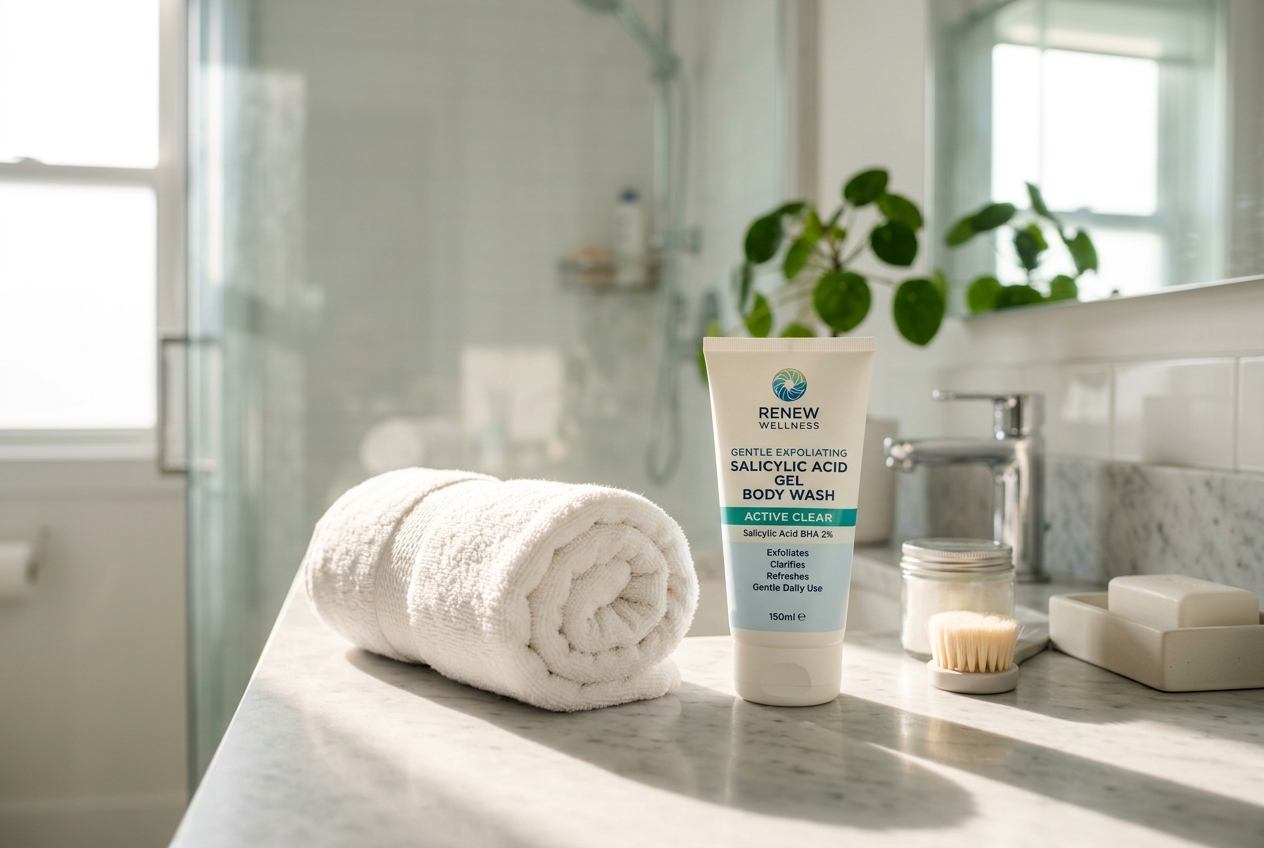
4. Body Wash: 2% Salicylic Acid or Benzoyl Peroxide Cleanser
For back and chest breakouts, use a 2% Salicylic Acid body wash or a 2.5%–4% Benzoyl Peroxide wash. Lather across the shoulders and chest, let it sit on the skin for 2 minutes (contact time is crucial for follicular penetration), and rinse thoroughly.
7
Dermatologist Treatments: Clearing Severe Post-Whey Nodules
Because whey protein acne involves deep, hormonally fueled dermal inflammation, standard superficial spot treatments rarely resolve existing lesions. Indian dermatologists recommend a combined internal and topical strategy to extinguish active flare-ups:
🧴
Topical Adapalene 0.1% Gel
Third-generation synthetic retinoid. Selectively targets RAR-beta/gamma receptors in follicular infundibula, accelerating turnover and expelling deep microcomedones. Apply a pea-sized amount every night across the entire jawline. Learn the Skin Cycling Framework.
⚡
Benzoyl Peroxide Short Contact Therapy
For large, painful cysts on the jawline or back, apply Benzoyl Peroxide 2.5% gel strictly for 10 minutes, then rinse off. This kills anaerobic bacteria without inducing peeling or leaving dark PIH marks on Indian skin tones.
💉
Intralesional Corticosteroid Injections
For huge, throbbing "blind" cysts that refuse to come to a head and risk permanent pitted scarring, a dermatologist can inject ultra-dilute triamcinolone acetonide (1–2 mg/ml) directly into the nodule. The cyst flattens completely within 24 to 48 hours.
💊
Low-Dose Oral Isotretinoin (Severe Cases)
For athletes with widespread nodulocystic bacne that persists despite stopping whey, a short dermatologist-supervised course of oral isotretinoin (10–20 mg/day) suppresses sebocyte hyperactivity and prevents permanent scarring.
8
The 30-Day Elimination & Rechallenge Protocol
Still not 100% convinced whether your breakouts are caused by whey protein or other gym factors? Run this gold-standard diagnostic elimination protocol:
🛑
Phase 1: Absolute Whey Elimination (Days 1 to 30)
The Rule: Zero whey protein concentrate, isolate, mass gainer, protein bars, or high-dairy milkshakes. Protein Replacement: Match your daily protein macros gram-for-gram using plant protein powder (pea-rice blend), whole egg whites, boiled chicken, or sattu/chana. Expected Result: By Day 14–21, new cystic eruptions should cease completely. Existing nodules will soften, flatten, and begin the healing process.
🔄
Phase 2: The Rechallenge Test (Days 31 to 35)
The Test: Once your skin has visibly calmed, consume 1 standard scoop (25g protein) of your original whey powder daily for 5 consecutive days while maintaining your exact workout schedule. The Diagnosis: If deep, tender jawline nodules or bacne pustules reappear within 48 to 96 hours of reintroduction, you have confirmed a clear causal link between whey and your skin. Switch permanently to plant-based or whole-food protein.
9
Gym Myths vs Clinical Dermatological Facts
Common Gym Locker Room Myth
The Clinical Dermatological Fact
"Whey protein pimples happen because your body is hot; drink Sabja or Gond Katira seeds to cool your liver."
Acne is driven by biological IGF-1 signaling, mTORC1 activation, and follicular DHT synthesis—not "body heat." While cooling seeds provide healthy hydration, they cannot alter systemic growth hormone cascades.
"Switch to 100% Whey Isolate; it has no lactose so it won't give you acne."
Lactose does not cause acne. The trigger is dairy peptides and leucine, which are even more concentrated in Whey Isolate. Isolate causes equal or higher IGF-1 spikes.
"You can't build significant muscle on plant protein in India."
Multiple double-blind sports nutrition studies confirm that an 80:20 pea and brown rice protein blend produces identical muscle hypertrophy and bench press strength compared to whey when total daily protein is matched.
"Just take more BCAA supplements instead of protein powder."
BCAAs (especially leucine) directly activate the exact same mTORC1 sebaceous pathway that drives acne. Taking free-form BCAA powders often accelerates breakouts.
10
Frequently Asked Questions — Whey Protein Acne
Yes, if left untreated. Whey protein typically triggers deep-seated, inflammatory nodulocystic lesions. Because these cysts form deep in the reticular dermis, inflammatory enzymes destroy collagen structural architecture. When combined with squeezing or delay in treatment, they frequently heal with permanent atrophic pitted scars (ice pick, boxcar, and rolling scars) alongside dark Post-Inflammatory Hyperpigmentation (PIH) on Indian skin tones. Early intervention is essential.
Once you stop consuming whey protein, circulating levels of bovine IGF-1 and insulin normalize within 7 to 10 days. You will notice that new, deep cystic eruptions stop forming within 2 to 3 weeks. However, existing dermal nodules and microcomedones that formed during supplement use take approximately 4 to 8 weeks to fully resolve with supportive topical care (such as Adapalene 0.1%).
Yes. High-quality plant proteins—particularly blends of yellow pea protein isolate and sprouted brown rice protein—do not contain dairy growth factors, bovine IGF-1, or the rapid insulinemic surge associated with cow's milk whey. They provide a complete amino acid profile without stimulating the sebaceous mTORC1 cascade, making them the preferred protein supplement for acne-prone gym-goers.
Creatine monohydrate does not directly cause acne through the IGF-1 pathway like whey does. However, creatine increases cellular water retention inside muscle tissue and can mildly elevate circulating Dihydrotestosterone (DHT) levels in some individuals during loading phases. If you are already prone to acne, this mild androgenic shift may cause minor breakouts. If you use creatine, skip the high-dose loading phase and take a steady 3g to 5g daily dose with ample water.
No. Drinking adequate water (3–4 liters daily) is vital for general athletic performance and renal clearance, but it cannot "flush out" or neutralize circulating IGF-1, insulin spikes, or cellular mTORC1 activation. Believing that hydration alone will prevent whey-induced cystic acne is a common locker room fallacy that delays effective dietary modification.
Acne susceptibility is heavily dictated by genetic sensitivity at the follicular receptor level. Some individuals possess sebaceous androgen receptors that are relatively insensitive to circulating IGF-1 and insulin fluctuations. Conversely, individuals genetically predisposed to acne possess hyper-reactive androgen receptors and sebocytes that respond aggressively to even moderate spikes in growth factors. If your genetics make you sensitive, whey will consistently trigger breakouts regardless of your overall hygiene.
Generally no. Branched-Chain Amino Acids (BCAAs)—especially leucine—are the exact signaling molecules responsible for activating the mTORC1 pathway in human sebocytes. Flooding your bloodstream with free-form BCAA drinks during workouts often triggers the same follicular hyperkeratinization and sebum spikes as whey protein. Stick to whole-food protein sources or a balanced pea-rice blend instead.
The most effective body wash for athletic bacne is an unfragranced wash containing 2% Salicylic Acid or a 2.5%–4% Benzoyl Peroxide wash. Apply it generously across the back and shoulders in the shower, allow it to remain in contact with the skin for 2 minutes before rinsing, and always change into a clean, dry cotton shirt immediately after showering.