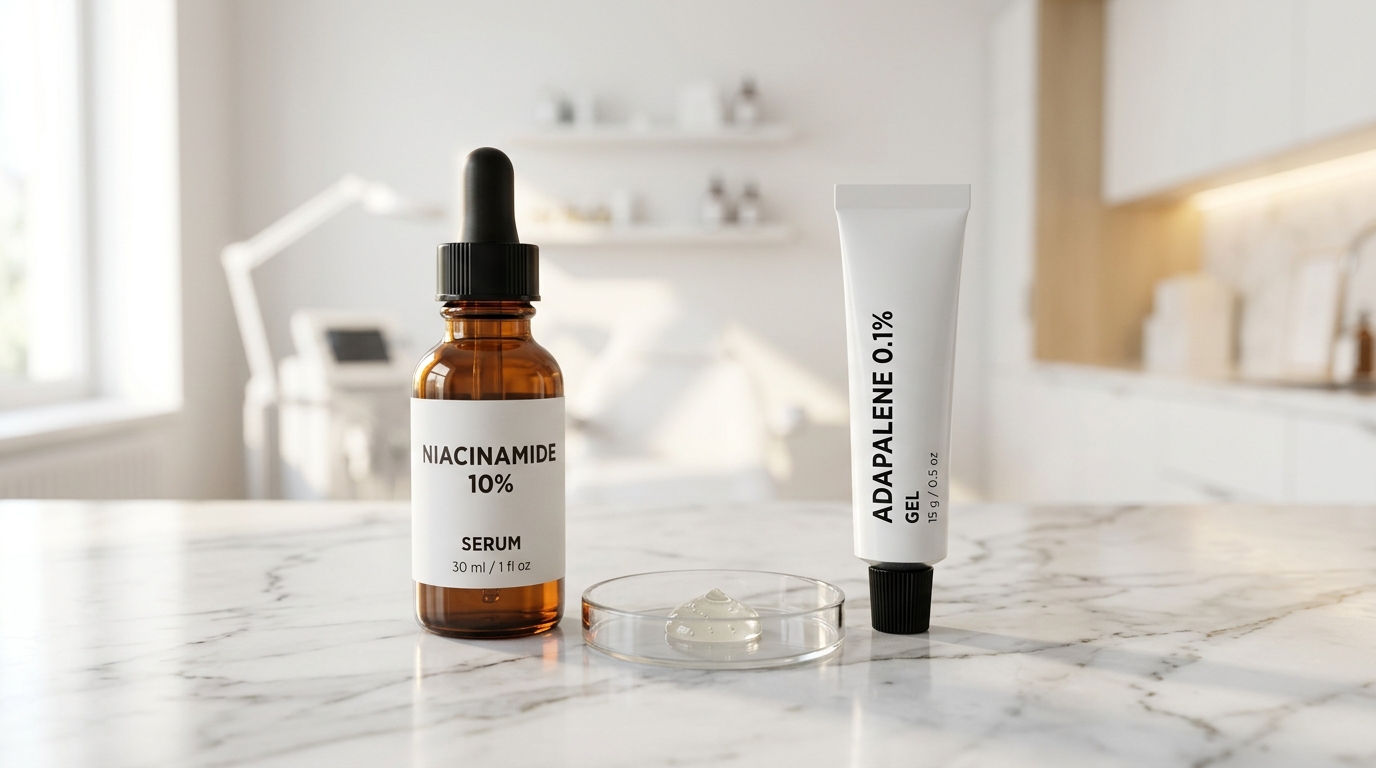
Can You Use Niacinamide with Adapalene on the Same Night?
The direct answer is yes — Niacinamide (Vitamin B3) and Adapalene (a third-generation synthetic retinoid) are not only compatible but clinically synergistic when used correctly on Indian skin.
The combination works because each ingredient addresses a different layer of the same problem:
✅ Clinical Bottom Line: Niacinamide does not deactivate, weaken, or compete with Adapalene's retinoid receptor activity. There is no shared molecular pathway that causes antagonism. You can use them on the same night, in the correct layering order.
Debunking the "Niacinamide Cancels Retinoids" Myth
The "niacinamide cancels retinoids" myth is one of the most damaging pieces of misinformation circulating in Indian skincare communities on Reddit and Instagram. Let's trace exactly where it came from and why it doesn't apply to Adapalene or Tretinoin.
The Wrong Molecule Was Blamed
The original concern cited a 1960s study in which niacin (nicotinic acid) — not niacinamide — was shown to interact with Vitamin A derivatives under specific laboratory pH conditions. Niacin and Niacinamide are two completely distinct molecules with different chemical structures and different biological mechanisms. Niacinamide does not undergo the same esterification reaction. The claim was subsequently applied incorrectly to modern skincare formulations where the two molecules share nothing except being B3 vitamers.
💡 Modern Clinical Position: Multiple peer-reviewed formulation chemistry papers and independent dermatologist guidance (including Dr. Sam Bunting, Dr. Shereene Idriss, and Indian dermatologists specialising in Fitzpatrick III–V skin) confirm that Niacinamide and Adapalene/Tretinoin in standard cosmetic formulation do not deactivate each other at normal skin surface pH (4.5–5.5).
Why Indian Skin Especially Needs the Niacinamide + Retinoid Duo
The clinical rationale for the Niacinamide + Adapalene combination is even more compelling for Indian skin (Fitzpatrick phototypes III–V) than for lighter skin tones. Here are the four specific reasons:
The 5-Step Night Layering Protocol for Indian Skin
Sequence matters. The following clinical protocol ensures Niacinamide primes the barrier before Adapalene or Tretinoin contact, maximising retinoid efficacy while minimising PIH risk:
Gentle Cleanse — Soap-Free, pH 5.0–5.5
Use a non-stripping gel or foam cleanser. Avoid foaming face washes with SLS or high pH (above 6.5), which disrupt the acid mantle. Pat face completely dry before moving to the next step.
Niacinamide 10% Serum — Apply to Dry Skin
Apply 3–4 drops of Niacinamide 10% serum (e.g., Minimalist Niacinamide 10% + Zinc) to completely dry skin. This step primes the barrier ceramides and begins anti-inflammatory signalling. Wait 5 minutes for absorption before proceeding.
Adapalene 0.1% Gel — Pea-Sized Dose Only
Use a pea-sized amount (approximately 0.25 mL) — no more. Larger amounts dramatically increase purging without improving efficacy. Apply to affected areas: forehead, cheeks, chin. Avoid eye corners, nostrils, and lip corners where skin is thinnest.
Wait 10–15 Minutes (Critical for Beginners)
Allow the Adapalene to absorb fully before applying moisturiser. This prevents the moisturiser from creating a physical barrier that reduces retinoid skin contact. Intermediate and experienced users may reduce this wait to 5 minutes as skin builds retinoid tolerance.
Oil-Free Ceramide Moisturiser — Seal and Recover
Seal with a lightweight ceramide + hyaluronic acid gel-cream. Avoid occlusive oils (e.g., plant oils, Vaseline) on retinoid nights, as these can trap Adapalene beneath a lipid barrier and increase localised irritation.
⚠️ The "Sandwich Method" — Only for Extreme Sensitivity: Some dermatologists recommend applying moisturiser both before AND after the retinoid (the sandwich technique) for users with very compromised barriers. While this reduces irritation, it also reduces Adapalene's skin contact and slows results. If your barrier is intact, use the 5-step protocol above. If you have severe sensitivity or active eczema, consult a dermatologist before starting.
Best Indian Product Pairings for Niacinamide + Retinoid
Here is how top Indian formulations perform in the Niacinamide + Retinoid combination protocol:
| Product | Role in Protocol | Key Actives | Price (Approx) | Verdict |
|---|---|---|---|---|
| Minimalist Niacinamide 10% + Zinc | Barrier primer (Step 2) | 10% Niacinamide, 1% Zinc PCA | ₹399 / 30ml | Top Pick |
| Minimalist Adapalene 0.1% (ADAP01) | Retinoid (Step 3) | 0.1% Adapalene gel, propanediol base | ₹449 / 20g | Top Pick |
| Epiduo 0.1% / 2.5% BPO Gel | Retinoid + Antibacterial (Step 3) | Adapalene 0.1% + Benzoyl Peroxide 2.5% | ₹650 / 15g | Compatible — see note |
| The Ordinary Niacinamide 10% + Zinc 1% | Barrier primer (Step 2) | 10% Niacinamide, 1% Zinc PCA | ₹750 / 30ml | Effective |
| Minimalist Ceramide + HA Moisturiser | Recovery seal (Step 5) | Ceramide NP, Hyaluronic Acid, Panthenol | ₹599 / 50ml | Top Pick |
⚠️ Niacinamide + Epiduo (Adapalene + BPO) Note: Niacinamide is compatible with the Adapalene component of Epiduo. However, Benzoyl Peroxide at higher concentrations may oxidise niacinamide under prolonged direct contact. For Epiduo users, apply Niacinamide first, wait 5 minutes, then apply Epiduo as Step 3. Do not mix them directly in the palm.
The Alternate-Night Rotation for Sensitive Beginners
If you are starting Adapalene for the first time and your skin is sensitive, barrier-damaged, or highly reactive, use the 3-night rotation protocol for the first 8 weeks before moving to same-night layering:
Frequently Asked Questions
No. Niacinamide and Adapalene work through completely different molecular pathways. Adapalene binds to retinoid nuclear receptors (RAR) in keratinocyte nuclei. Niacinamide enhances ceramide synthesis and inhibits melanin transfer at the melanosome-keratinocyte junction. These pathways do not compete or interfere with each other at normal skin surface pH (4.5–5.5).
Apply Niacinamide first on completely dry skin and wait 5 minutes before applying Adapalene. This sequence allows Niacinamide to begin ceramide synthesis and anti-inflammatory signalling, priming the barrier before retinoid contact. Never apply Adapalene first and Niacinamide on top — this can push the retinoid deeper than intended.
Yes — Niacinamide is compatible with Tretinoin (0.025% and 0.05% concentrations) using the same layering sequence. In fact, the PIH prevention benefit of Niacinamide is even more important with Tretinoin, as Tretinoin causes more initial purging than Adapalene, creating a higher PIH risk on Fitzpatrick III–V Indian skin.
Purging duration with Adapalene typically spans 4 to 8 weeks regardless of Niacinamide use. Niacinamide does not shorten the purging timeline but significantly reduces the severity of PIH mark formation during the purging window. If purging exceeds 10 weeks or is accompanied by painful cystic lesions in new areas, consult a dermatologist, as this may indicate a breakout rather than a purge.
10% Niacinamide is the dermatologically validated concentration for ceramide synthesis stimulation and melanosome transfer inhibition. Lower concentrations (5%) are also effective and recommended for extra-sensitive skin types or beginners. Concentrations above 10% offer no additional clinical benefit and may cause transient facial flushing.
