
1. The Right Concentration: 10% vs 15% vs 20% and Active Forms
Walking into a pharmacy or shopping online, you will see bottles labeled 10%, 15%, and 20% Vitamin C. It is easy to think higher numbers fade marks faster. On Indian skin, that assumption often backfires into stinging and fresh breakouts.
Indian skin has reactive pigment cells. When a serum is too strong, it causes micro-inflammation. Your skin responds to that irritation by producing extra dark pigment. Here is how dermatologists break down the percentages:
Best for Beginners, Oily Skin & Mild Marks
Strong enough to block melanin production and brighten dark spots without stinging or compromising your moisture barrier. This is the safest starting point for Indian skin.
For Stubborn, Deep Brown Marks (PIH)
Clinical strength found in pharmacy brands. It delivers faster fading on deep brown marks, but requires a calm, healthy skin barrier to avoid redness.
Why Higher Is Not Better for Acne-Prone Skin
Biological skin absorption hits a ceiling at 20%. Any extra acid sits unabsorbed on the skin surface, triggering contact irritation, closed bumps, and worse dark marks.
For Rosacea or Severely Reactive Skin
Mild antioxidant formula designed to introduce sensitive faces to Vitamin C without any tingling. Safe for barrier recovery, but slower on old dark marks.
The 3 Active Molecules: Popular Examples, When to Apply & How to Use Each
Not all serums use the same chemical active. Walking down an aisle, you will see three main forms listed on ingredient boxes: Pure L-Ascorbic Acid, 3-O-Ethyl Ascorbic Acid, and Sodium Ascorbyl Phosphate. Choosing the right molecule matters just as much as picking the right percentage:
1. Pure L-Ascorbic Acid (LAA) · Biological Gold Standard
Pure Active · Low pH AcidThe purest, most biologically active form of Vitamin C. It requires zero conversion inside your skin cells. It halts melanin production immediately. However, it requires a very low acidic pH (3.0 to 3.5) to penetrate, and it oxidizes rapidly when exposed to warm Indian air and sunlight.
2. 3-O-Ethyl Ascorbic Acid (EAA) · Heat-Stable All-Weather Favorite
Stabilized Derivative · Zero StingingA modern, heat-stable derivative loved by Indian dermatologists and community testers. An ethyl group shields the molecule from degrading in heat and light. Once absorbed into the skin, natural enzymes release active Vitamin C right beside pigment cells with minimal stinging. It does not turn orange or stain clothes.
3. Sodium Ascorbyl Phosphate (SAP) · Gentle & Anti-Acne Antibacterial
Gentle Salt · AntimicrobialA gentle, water-soluble salt derivative of Vitamin C. Clinical studies show SAP has direct antibacterial action against Cutibacterium acnes (the bacteria that causes breakouts) while preventing sebum oil oxidation. It is ideal if you still get occasional new pimples while treating older dark marks.
| Molecule Form | Popular Indian Brands | Best Time to Use | Ideal Skin Condition | Storage & Critical Rule |
|---|---|---|---|---|
| Pure L-Ascorbic Acid (LAA) | Cipla VC 15, Minimalist 16%, The Ordinary 23% | 🌙 Nighttime (PM) | Resilient skin with stubborn brown marks; zero active breakouts | Apply on 100% dry skin. Store in fridge/dark drawer. Discard if amber. |
| 3-O-Ethyl Ascorbic Acid (EAA) | Minimalist 10%, Plum 15%, Deconstruct 10% | ☀️ Morning (AM) | All skin types; daily marks fading in hot or humid climates | Room temperature shelf is fine. Does not oxidize quickly. Follow with SPF 50. |
| Sodium Ascorbyl Phosphate (SAP) | Mad Hippie, Sesderma C-Vit, Dr. Sheth's Centella | ☀️ AM and/or 🌙 PM | Active acne, oily skin, small pimples forming alongside old marks | Neutral pH. Fights acne bacteria. Safe to layer with Niacinamide. |
2. Eating Amla & Oranges vs Using a Serum: Why Diet Alone Isn't Enough
Indian diets are naturally rich in Vitamin C. A single Indian gooseberry (amla) has roughly 600 to 800 milligrams of Vitamin C. That is nearly twenty times more than an orange! Guavas, papayas, and fresh lemons are also packed with antioxidants.
Eating amla daily supports whole-body health. It boosts immunity and gives your body the nutrients needed to build collagen.
The Biological Delivery Funnel: Why Food Doesn't Reach Facial Marks
When you swallow Vitamin C, your digestive system absorbs it into your blood. Your body sends nutrients to vital organs first. The brain, liver, and heart take almost all of it.
Your skin's outer surface has no direct blood supply. By the time nutrients reach your face, only a tiny trace reaches the skin cells.
Why a Topical Serum is Essential: Applying a topical serum delivers 20 to 40 times higher concentration directly to your dark marks. Eat amla for overall health, but use a serum to clear facial spots.
3. Natural Homemade Remedies: Why Raw Lemon Juice is Dangerous
A common home remedy in India is applying fresh lemon juice to dark marks. Many people also mix orange peel powder with curd. While the intention is natural, raw citrus juice is hazardous on facial skin.
🛑 The Science of Lemon Juice Burns (Phytophotodermatitis)
- Severe Acidity: Healthy facial skin sits at a pH of 4.5 to 5.5. Raw lemon juice has a harsh pH of 2.0 to 2.5. It burns your moisture barrier, causing chemical irritation, flaking, and redness.
- Sun-Induced Dark Spots: Citrus juice contains natural compounds called psoralens. When you step into the Indian sun after using lemon juice, UV rays react with these oils. This triggers phytophotodermatitis, leaving severe dark blotches and blisters.
- Orange Peel Powders: Crushed peel powder has rough, sharp edges. Scrubbing it over healing skin tears the surface and leaves tiny scars.
Formulated serums use lab-tested, pH-balanced molecules. They safely target pigment without burning your skin. Keep lemons in your kitchen and use formulated skincare on your face.
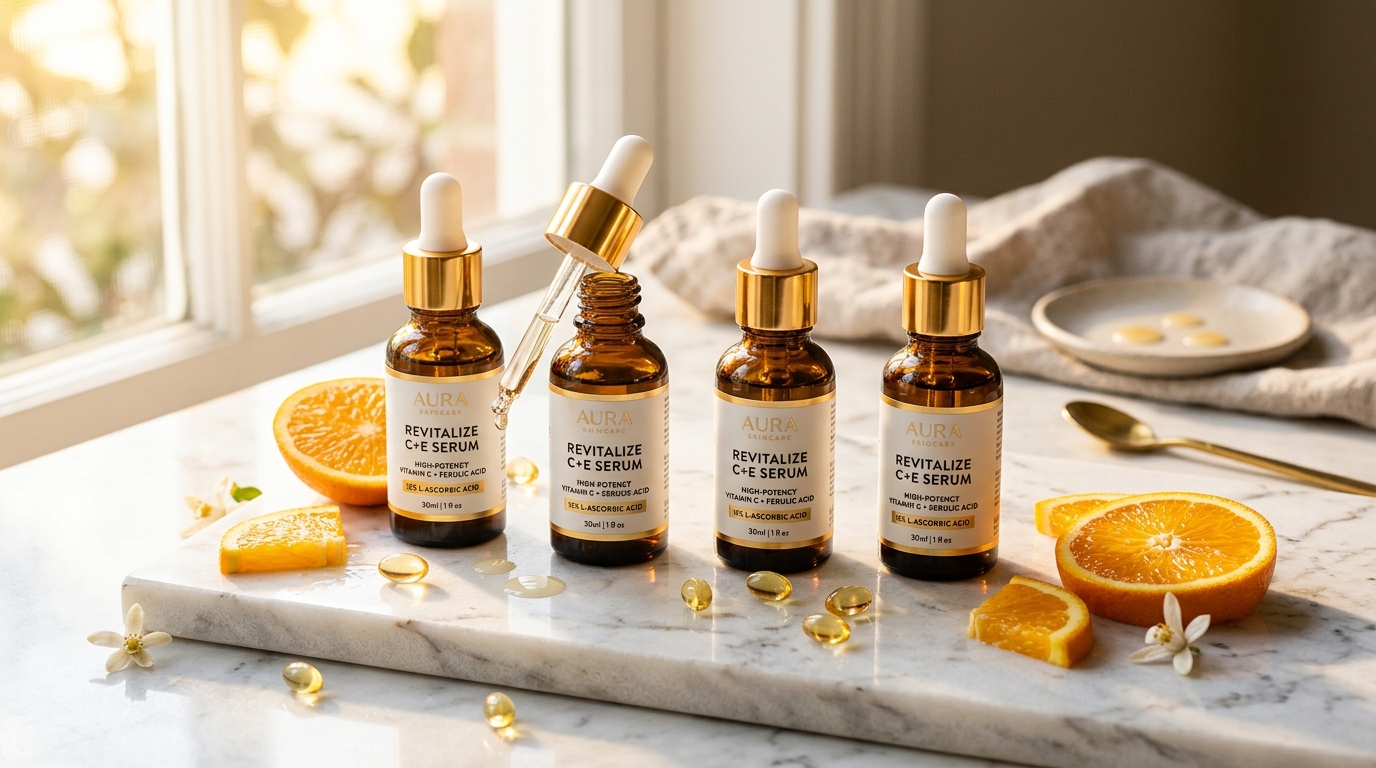
4. Indian Vitamin C Serums Ranked & Graded (With Reddit Community Consensus)
To help you cut through marketing claims, we evaluated top pharmacy and clinical brands across India, factoring in active form, stability, price, and real feedback from over 200,000 skincare enthusiasts on forums like Reddit's r/IndianSkincareAddicts:
| Brand & Product | Active & % | Price (INR) | Clinical Grade | Community Verdict & Notes |
|---|---|---|---|---|
| Cipla VC 15 Serum | 15% L-Ascorbic Acid | ₹1,950 / 15ml | Grade A+ · Pharmacy Gold Standard | Consistently ranked top-tier on dermatological forums for fading stubborn brown PIH. Highly potent. Requires cool, dark storage to prevent oxidation. |
| Minimalist 10% Vitamin C | 10% Ethyl Ascorbic + Centella | ₹699 / 30ml | Grade A · Community Holy Grail | Voted the best beginner-friendly pick on r/IndianSkincareAddicts. Extremely stable in Indian heat, non-sticky, fragrance-free, and calms redness. |
| The Ordinary 8% Ascorbic + 2% Arbutin | 8% LAA + 2% Alpha Arbutin | ₹950 / 30ml | Grade A · Dual Action Fader | Powerful dual tyrosinase inhibitors. Excellent for deep dark patches. Formulated in a propanediol base that feels slightly oily for the first two minutes. |
| Deconstruct 10% Vitamin C + Ferulic | 10% 3-O-Ethyl Ascorbic + 0.5% Ferulic | ₹649 / 30ml | Grade B+ · Best for Oily Skin | Very watery texture that absorbs instantly without residue. Gentle for daily morning use, though takes a bit longer for dark spots than 15% formulas. |
| Plum 15% Mandarin Vitamin C | 15% Ethyl Ascorbic + Mandarin | ₹790 / 30ml | Grade B · Cosmetic Surface Glow | Popular for an immediate surface glow, but community members note it is slow on deep acne marks and can feel slightly tacky in humid monsoon months. |
| Unverified / Fragranced 20% Serums | Unspecified 20% + Heavy Perfume | ₹299–₹450 | Grade C · High Purge Risk | Often sold on quick-commerce apps. High artificial fragrance and unstable packaging frequently cause contact eczema and turn dark orange within 20 days. |
💡 Top Takeaway from Community Testers:
If you are new to actives or have sensitive, breakout-prone skin, start with a 10% Ethyl Ascorbic Acid serum like Minimalist. Once your skin builds tolerance and you need faster results on stubborn spots, upgrade to a clinical pharmacy brand like Cipla VC 15.
5. Dermatologist Video: 5 Common Vitamin C Mistakes to Avoid
Before adding Vitamin C to your morning shelf, watch this clear breakdown by renowned MD Dermatologist Dr. Aanchal Panth explaining how people accidentally ruin their skin barrier with Vitamin C:
Video Summary: 5 Common Vitamin C Mistakes by Dr. Aanchal Panth
Dr. Aanchal Panth explains the top five errors: applying on active cysts, rubbing aggressively on palms, applying on damp skin, mixing with strong acids, and skipping moisturizer.
Dr. Aanchal Panth's 5 Golden Rules:
- Never apply on active, inflamed acne: Vitamin C treats the pigment left behind, not the bacterial infection. Clear the angry pimple first, then use Vitamin C to fade the mark.
- Pat directly with fingers; do not rub on palms: Rubbing the serum between your palms warms and degrades the active before it ever reaches your face.
- Apply on completely dry skin: Unlike hyaluronic acid which loves damp skin, Vitamin C penetrates too aggressively on wet skin, leading to sharp stinging and irritation.
- Do not stack with salicylic or glycolic acid serums: Using strong exfoliating acids at the same time destabilizes Vitamin C and damages your skin barrier.
- Always lock in with moisturizer: Vitamin C works best when sealed beneath a protective barrier cream and daily sunscreen.
6. Safe 4-Step Daily Routine for Acne Marks
Consistency beats complexity. Follow this easy 4-step morning protocol to fade dark spots without irritation:
Wash & Dry Completely
Cleanse with lukewarm water and a mild, non-stripping face wash. Pat your face completely dry with a clean towel and wait 60 seconds before applying your serum.
Pat 3 to 4 Drops Directly
Dispense three to four drops onto your fingertips. Gently pat across your forehead, cheeks, and dark marks. Do not drag or rub your skin hard.
Lightweight Barrier Cream
Wait 60 to 90 seconds for the serum to absorb. Apply a soothing gel or ceramide moisturizer to keep your skin plump and hydrated throughout the day.
Broad-Spectrum SPF 50
Apply two finger lengths of sunscreen every morning. Vitamin C and sunscreen work together as antioxidant partners to double your protection against UV rays.
Patience Timeline for Post-Acne Marks:
Skin cells take roughly 28 to 40 days to turn over. Do not expect dark spots to vanish in a week. With daily morning use and faithful sunscreen application, noticeable lightening typically appears between weeks 6 and 10.
7. Post-Acne Marks: Red Marks (PIE) vs Brown Spots (PIH) vs Pitted Scars
Many people use the word "scar" to describe anything left after a breakout. However, dermatologists divide post-acne blemishes into three very different categories. Knowing which one you have determines whether Vitamin C will actually help:
- Brown or Black Flat Marks (PIH): This is Post-Inflammatory Hyperpigmentation. It happens when acne inflammation triggers excess melanin. Vitamin C is the gold standard here because it directly stops tyrosinase, the enzyme that produces brown pigment.
- Pink or Red Flat Spots (PIE): This is Post-Inflammatory Erythema, caused by damaged, dilated capillaries beneath the surface. Vitamin C has mild anti-inflammatory benefits, but pairing it with Azelaic acid or Niacinamide clears red vascular marks much faster.
- Textured or Indented Scars (Icepick, Boxcar, Rolling): These are true structural scars caused by permanent loss of collagen fibers deep in the dermal layer. No topical cream or serum can fill in physical pits. Indented scars require in-clinic procedures like microneedling, chemical peels, subcision, or fractional CO2 lasers.
मुहांसों के काले दागों के लिए विटामिन सी सीरम का सही इस्तेमाल
चेहरे पर पिंपल ठीक होने के बाद जो काले या भूरे रंग के दाग रह जाते हैं, उन्हें चिकित्सकीय भाषा में 'पोस्ट-इंफ्लेमेटरी हाइपरपिग्मेंटेशन' (PIH) कहा जाता है। भारतीय त्वचा में मेलेनिन ज्यादा होता है, इसलिए यह दाग महीनों तक हल्के नहीं होते।
सीरम चुनते समय क्या ध्यान रखें?
- 10% से शुरुआत करें: अगर आप पहली बार इस्तेमाल कर रहे हैं, तो 10% विटामिन सी सीरम (जैसे Minimalist 10%) सबसे सुरक्षित है। 20% सीरम भारतीय त्वचा पर जलन और नए दाने पैदा कर सकता है।
- आंवला और संतरा खाने का सच: आंवला खाना सेहत और कोलेजन के लिए बहुत अच्छा है। लेकिन खाया हुआ विटामिन सी चेहरे की त्वचा तक बहुत कम मात्रा में पहुंचता है। चेहरे के दाग मिटाने के लिए सीरम लगाना जरूरी है।
- नींबू कभी न लगाएं: चेहरे पर कच्चा नींबू लगाने की गलती कभी न करें। नींबू का एसिड त्वचा को जला देता है और धूप में जाने पर काले धब्बे और छाले बना देता है।
- लगाने का सही तरीका: सुबह चेहरा धोने के बाद त्वचा को पूरी तरह सूखने दें। 3-4 बूंद सीरम उंगलियों से हल्के थपथपाकर लगाएं, फिर मॉइस्चराइजर और सनस्क्रीन जरूर लगाएं।
9. Frequently Asked Questions
Clear, straightforward answers to the most common questions about Vitamin C and acne scars:
No. Vitamin C works on pigmentation and surface collagen. It can fade flat brown marks (PIH) and pink spots (PIE). However, physical pits, icepick scars, and boxcar indentations represent missing dermal tissue and require in-clinic dermatological treatments like microneedling, subcision, or fractional lasers.
Indian skin (Fitzpatrick types IV to VI) is prone to post-inflammatory hyperpigmentation when irritated. A 20% pure ascorbic acid serum has a very low, acidic pH that can damage your moisture barrier, leading to stinging, redness, and micro-inflammation that actually worsens dark spots. A 10% concentration delivers proven melanin-fading benefits with minimal irritation risk.
Yes. When you eat amla or citrus fruits, your gut absorbs Vitamin C and your body distributes it to vital internal organs like the brain, heart, and liver. Very little reaches the surface layers of facial skin. Applying a topical serum delivers 20 to 40 times higher concentration directly to your skin cells to fight dark spots.
Never apply raw lemon juice to your face. Lemon juice has an extreme pH of 2.0 to 2.5, which causes chemical burns. Furthermore, citrus oils contain compounds called psoralens that react with Indian sunlight to cause phytophotodermatitis, resulting in severe brown blotches and blisters.
Fresh Vitamin C serum should be clear, slightly cloudy, or pale champagne yellow. If it turns dark orange, amber, or brown, the active molecule has oxidized into dehydroascorbic acid. Oxidized serum loses its effectiveness and can cause blackhead oxidation and skin irritation. Discard it once it turns dark amber.
Dermatologists recommend applying Vitamin C in the morning. When paired with broad-spectrum sunscreen, Vitamin C neutralizes free radicals generated by UV rays and city pollution, giving your skin double the protection against dark spots.
No. Do not apply strong Vitamin C serums over red, painful, or open acne cysts. It will sting and may aggravate the infection. Treat active breakouts first with gentle cleansers, benzoyl peroxide, or pimple patches. Once the pimple is flat and healing, start Vitamin C to fade the mark.