
What Is the Skin Microbiome? (And Why It Governs Your Acne)
Right now, your facial skin hosts roughly 1.8 million bacterial cells per square centimeter. Rather than a sterile sheet of tissue, human epidermis is an intricate living ecosystem comprising over 1,000 bacterial species, microscopic fungi (like Malassezia), viruses, and follicular mites (Demodex). This collective microscopic population is known as your cutaneous microbiome.
On facial skin, sebaceous glands secrete an oil-rich sebum slurry that creates specialized lipid microclimates. Three primary bacterial phyla dominate this terrain:
- Cutibacterium acnes (formerly Propionibacterium acnes): Anaerobic actinobacteria nestled deep inside hair follicles that metabolize sebum triglycerides into free fatty acids.
- Staphylococcus epidermidis: Aerobic coagulase-negative bacteria living on the stratum corneum surface that produce natural antimicrobial peptides and ferment glycerol into protective lactic acid.
- Corynebacterium species: Aerobic commensals that assist in skin lipid breakdown and compete with environmental pathogens.
For more than fifty years, conventional dermatology operated under an aggressive premise: C. acnes is the root culprit behind acne, and clear skin requires sterilizing the pore. Millions of patients were given prolonged courses of oral doxycycline, topical clindamycin, and high-strength antibacterial washes.
When you continuously bombard Indian skin with broad-spectrum antibacterials, harsh foaming cleansers, and unbuffered acids, you decimate protective commensal strains while leaving tough, biofilm-producing pathogenic variants behind. Understanding this dynamic is the first step toward long-term remission.
Dysbiosis: How Microbial Imbalance Triggers the Acne Cascade
The medical term dysbiosis describes a functional collapse in microbial equilibrium where beneficial species lose their regulatory dominance, allowing opportunistic strains to multiply uncontrolled. In acne vulgaris, dysbiosis is not an afterthought — it is the initial catalyst that drives follicular hyperkeratinization and microcomedone formation.
The 4-Step Dysbiosis Inflammatory Cascade
5 Clinical Dysbiosis Triggers Unique to Indian Skin
-
1. Over-the-Counter Antibiotic Misuse
India remains one of the world's most accessible markets for OTC topical antibiotics. Self-medicating with clindamycin 1% gel or taking short, erratic courses of oral azithromycin wipes out vulnerable S. epidermidis populations while breeding multi-drug resistant C. acnes biofilms that are almost impossible to penetrate.
-
2. Topical Corticosteroid Abuse (The "Fairness Cream" Trap)
Widespread clandestine use of clobetasol, betamethasone, or triple-combination creams (like Betnovate-N or Panderm+) creates Topical Steroid-Damaged Skin (TSDF). Steroids profoundly paralyze cutaneous local immunity, inducing severe bacterial and demodicid dysbiosis characterized by monomorphic steroid acne.
-
3. Hard Water (High TDS) Mineral Crusts
Tap water across Delhi NCR, Bengaluru, Chennai, and Rajasthan contains extreme concentrations of dissolved calcium, magnesium, and carbonates (TDS exceeding 450–900 ppm). These minerals bind to facial sebum to form insoluble stearate scums that elevate surface pH and choke off aerobic commensal microbes.
-
4. Monsoon Relative Humidity & Occlusion
During Indian monsoon months (June to September), relative ambient humidity surges to 80%–95% alongside temperatures above 32°C. Saturated sweat ducts and high hydration create anaerobic surface conditions where lipophilic yeast (Malassezia folliculitis) and pathogenic C. acnes thrive synergistically.
-
5. Chronic Academic & Corporate Cortisol Surges
High-stakes competitive exams (JEE, NEET, UPSC) and intense urban work hours generate prolonged hypothalamic-pituitary-adrenal (HPA) axis activation. Cortisol triggers sebocyte neuropeptide Y receptors, altering lipid composition (depleting linoleic acid) and downregulating endogenous antimicrobial peptides.
| Biological Factor | Eubiotic (Healthy) Skin | Dysbiotic (Acne-Prone) Skin |
|---|---|---|
| C. acnes Ribotypes | Diverse; dominated by anti-inflammatory RT6 / Clade II | Monoculture dominated by virulent RT4, RT5, Clade IA-1 |
| Staphylococcus Balance | High S. epidermidis (produces 6-HAP & antimicrobials) | Depleted S. epidermidis; colonized by S. aureus |
| Stratum Corneum pH | Slightly acidic: 4.5 – 5.2 | Neutral/Alkaline: 6.2 – 7.4 |
| Sebum Quality | High linoleic acid; liquid consistency | Oxidized squalene, low linoleate; thick & comedogenic |
| Antimicrobial Peptides | Abundant cathelicidin (LL-37) & beta-defensins (hBD-2) | Suppressed or functionally blocked by bacterial biofilms |
The Gut-Skin Axis: Your Digestive System Is Speaking to Your Face
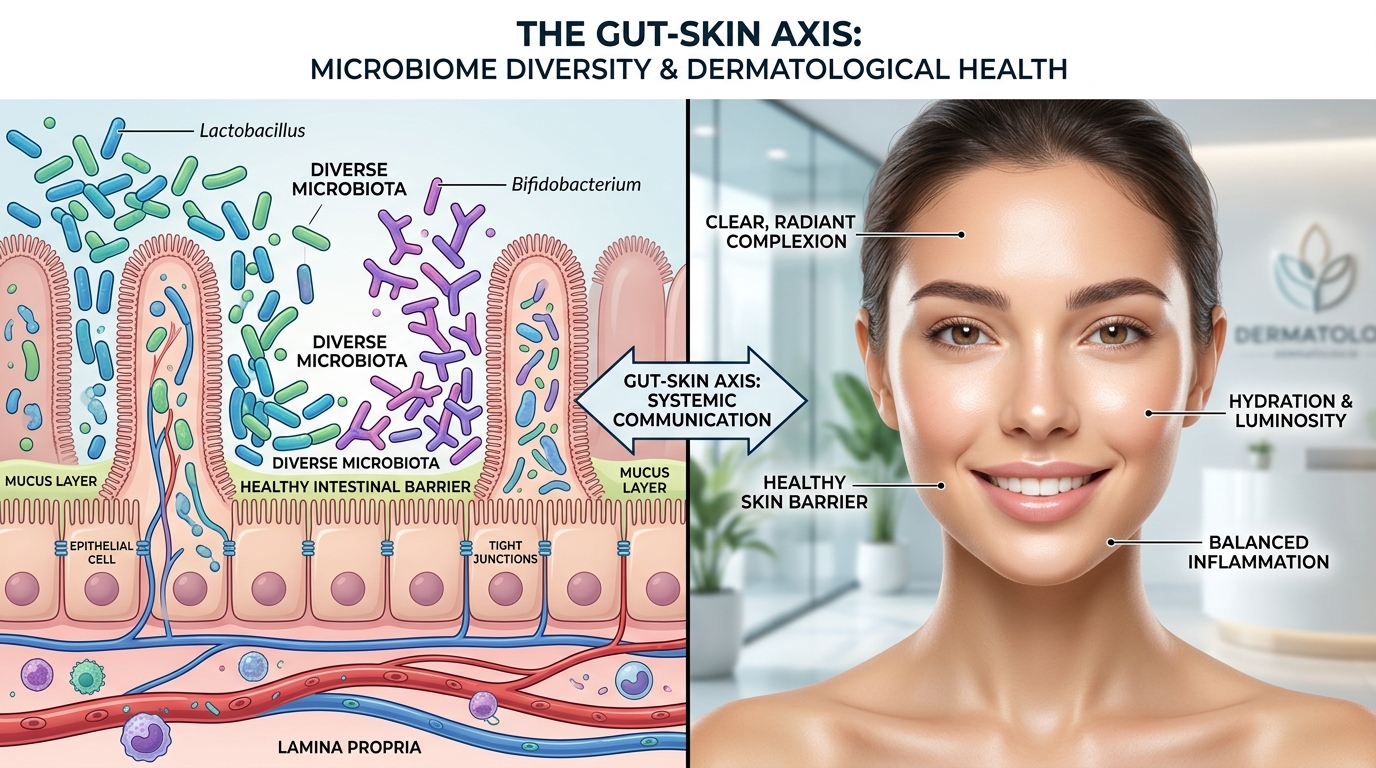
The concept of the gut-skin axis is no longer alternative wellness folklore; it is one of modern dermatology's most heavily investigated neuroendocrine-immunological communication channels. The mucosal lining of your gastrointestinal tract and your epidermal surface share embryonic origins and continuous systemic crosstalk.
4 Concrete Biological Communication Channels
Indian Dietary Realities Influencing the Axis
Modern Indian urban diets present distinct biochemical challenges for the microbiome:
- High Glycemic Load Staples: Diets heavily reliant on polished white basmati or sona masoori rice, refined maida, and sugary sweets trigger immediate insulin and Insulin-like Growth Factor-1 (IGF-1) spikes. IGF-1 stimulates the mTORC1 pathway in sebocytes, drastically increasing sebum excretion rates and microbial fuel.
- Heated & Re-used Seed Oils: Street foods and casual eateries often fry snacks in polyunsaturated seed oils subjected to multiple thermal cycles. These generate lipid peroxides and advanced glycation end-products (AGEs) that deplete beneficial intestinal Bifidobacteria.
- The Dairy Paradox: Traditional A2 cow curd (dahi) and cultured buttermilk (chaas) supply beneficial lactic acid fermenters. Conversely, industrial ultra-pasteurized buffalo milk, milk powder additives, and commercial whey protein supplements pack concentrated bovine growth hormones and whey-induced leucine that fuel severe cystic breakouts along the jawline.
Is Your Acne Microbiome-Driven? — 8 Clinical Signals
How do you distinguish between straightforward follicular clogging (which responds neatly to standard keratolytic actives) and deep-seated microbiome dysbiosis? Review these 8 clinical indicators commonly observed in Indian dermatology consultations:
- 0 to 2 Signals: Standard comedonal acne. Responds well to conventional skin cycling with Adapalene and Niacinamide.
- 3 to 4 Signals: Probable barrier impairment with mild dysbiosis. Requires reducing active frequency and integrating postbiotic barrier support.
- 5 or More Signals: Clinically significant microbiome dysbiosis. Aggressive acids will worsen inflammation; a complete 4-week microbiome and gut reset protocol is warranted.
C. acnes vs Staphylococcus: The Two-Player System That Controls Breakouts
The health of your skin barrier is largely dictated by an ongoing cellular negotiation between two dominant bacterial powerhouses: Cutibacterium acnes and Staphylococcus epidermidis. When these two organisms operate in harmony, acne vulgaris cannot take hold.
The Protective Commensal: Staphylococcus epidermidis
S. epidermidis is your skin's primary immunological bodyguard. It resides on the stratum corneum surface and deploys specific bio-molecules to keep pathogenic organisms under control:
- FAME (Fatty Acid Modifying Enzyme): Converts toxic, irritating free fatty acids produced by clogged sebum back into soothing, inert fatty acid alcohols.
- 6-HAP (6-N-hydroxyaminopurine): An advanced antiproliferative metabolite that selectively halts the growth of dangerous Staphylococcus aureus and pathogenic C. acnes clades without harming beneficial flora.
- Esp Protease: An extracellular serine protease secreted by S. epidermidis that actively degrades the tough, sticky biofilms produced by infectious organisms.
The Dual-Nature Commensal: Cutibacterium acnes
C. acnes is not inherently villainous. In a healthy microbiome, commensal C. acnes strains metabolize triglycerides to generate short-chain volatile fatty acids like propionic acid. Propionic acid lowers follicular pH to roughly 4.8, creating an inhospitable barrier that prevents colonization by deadly environmental bacteria.
However, when harsh skincare or antibiotics eliminate S. epidermidis and strip the acid mantle, the microclimate within the follicle shifts from diverse and aerobic to hypoxic and alkaline. Under these conditions, the aggressive, mutated Clade IA-1 and RT4 phylotypes of C. acnes dominate. These strains produce extracellular lipases, hyaluronidases, and porphyrins that generate toxic reactive oxygen species (ROS) upon exposure to sunlight, causing localized lipid peroxidation and severe tissue inflammation.
| Microorganism | Role in Eubiotic (Clear) Skin | Role in Dysbiotic (Acne) Skin | Skincare Triggers That Destroy It |
|---|---|---|---|
| C. acnes (Commensal RT6) | Produces propionic acid to guard pores against pathogens | Suppressed or outcompeted by aggressive clades | High-dose oral doxycycline, broad-spectrum topical antibiotics |
| C. acnes (Virulent RT4 / IA-1) | Kept in trace, dormant balance by other strains | Forms heavy biofilms; triggers TLR-2 inflammatory nodules | Alkaline shift (pH >6.0), high-glycemic sebum excess |
| Staphylococcus epidermidis | Releases 6-HAP antimicrobials, degrades biofilms, buffers pH | Critically depleted; unable to suppress opportunistic invaders | Sodium Lauryl Sulfate (SLS) cleansers, alcohol toners, physical scrubs |
| Staphylococcus aureus | Completely excluded from facial skin by S. epidermidis | Colonizes weeping, excoriated pustules; amplifies redness | Absence of protective 6-HAP and Esp protease enzymes |
| Malassezia Yeast | Harmless commensal fungus checking bacterial dominance | Surges in sweat/oil; produces itchy fungal folliculitis | Heavy plant oils, unevaporated monsoon sweat, thick occlusives |
Actives Scorecard — How Your Routine Is Affecting Your Microbiome
Treating acne does not require abandoning dermatological actives. The objective is transitioning from indiscriminate sterilizers to microbiome-preserving therapies that eliminate follicular plugs and hyperkeratosis while sparing commensal bacteria.
| Active Ingredient | Microbiome Impact | Safety Rating | Dermatological Optimization Strategy |
|---|---|---|---|
| Azelaic Acid (10%–20%) | Selectively inhibits pathogenic C. acnes and S. epidermidis overgrowth while sparing commensal flora. Inhibits micro-capillary inflammation. | ✅ Gold Standard | Ideal for daily maintenance on Indian skin. Safe to layer alongside postbiotic humectants and ceramide moisturizers. |
| Adapalene (0.1% Gel) | Third-generation synthetic retinoid. Normalizes follicular desquamation without bactericidal toxicity. Clears pore occlusion that breeds anaerobic pathogens. | ✅ Excellent | Buffer with a ceramide cream. Follow a structured 4-night rotation using the Skin Cycling Framework. |
| Niacinamide (2%–5%) | Stimulates endogenous ceramide and free fatty acid synthesis via Serine Palmitoyltransferase. Modulates sebum without drying. | ✅ Excellent | Use in 2% to 5% concentrations. Avoid unbuffered 10%–15% serums which frequently trigger irritant vasomotor flushing. |
| Salicylic Acid (0.5%–2%) | Lipophilic BHA that dissolves sebum plugs and disrupts bacterial biofilms. Does not induce microbial resistance. | ✅ Safe (Wash-off) | Best used as a 1%–2% wash-off gel cleanser rather than a daily leave-on liquid to prevent acid mantle disruption. |
| Benzoyl Peroxide (2.5%) | Releases free oxygen radicals that kill anaerobic bacteria. Non-selective: eliminates both beneficial and pathogenic species. | ⚠️ Use with Caution | Employ Short Contact Therapy (SCT): apply 2.5% gel for 5–10 minutes on active cysts, then rinse thoroughly. Never leave overnight. |
| Topical Clindamycin | Lincosamide antibiotic. Rapidly induces bacterial target modification and resistance in Indian C. acnes isolates. | 🔴 High Risk Monotherapy | Never apply clindamycin alone. Always combine with Benzoyl Peroxide to limit resistance, and restrict courses to under 8–12 weeks. |
| Oral Doxycycline / Minocycline | Systemic broad-spectrum tetracycline. Drastically reduces gut microbial diversity and predisposes to secondary candidiasis and fungal acne. | 🔴 Restrict Strictly | Reserve strictly for moderate-to-severe nodulocystic breakouts. Always co-prescribe with multi-strain oral probiotics taken 3 hours apart. |
Microbiome-Aware Products Available in India
When selecting microbiome-conscious formulations in the Indian marketplace, it is vital to understand the technological differences between the three classes of "biotics":
Dermatologist-Approved Formulation Classes in India
Note: Product examples are cited for clinical composition educational guidance only.
Ingredients: Sodium Cocoyl Glycinate, Oat Amino Acids, Glycerin.
Indian Market Examples: Cetaphil Gentle Skin Cleanser, Minimalist Aquaporin Booster Cleanser, Bioderma Sensibio Gel Moussant, Episoft Cleansing Lotion.
Ingredients: Bifida Ferment Lysate, Lactobacillus Ferment, Ceramides 1, 3, 6-II.
Indian Market Examples: Dot & Key Barrier Repair Probiotic Moisturizer, Formularx Barrier Relief, Dr. Sheth's Cica & Ceramide Serum.
Clinical Strains: Lactobacillus acidophilus, Lactobacillus rhamnosus GG, Bifidobacterium longum (5–15 Billion CFU).
Indian Pharmacy Options: Vibact DS, Darolac, Enterogermina, Becelac PB.
Recommended Doses: Elemental Zinc (25–30 mg daily as picolinate or gluconate) + Omega-3 Fatty Acids (1000 mg EPA/DHA).
Indian Pharmacy Options: Zincovit (check elemental levels), Zinconia 50.
The 4-Week Microbiome Reset Protocol (Indian Skin)
If your skin is caught in a chronic cycle of active breakouts, peeling, and rebounding inflammation, your cutaneous ecosystem requires a systematic reboot. Follow this 4-week clinical protocol to re-establish microbial equilibrium:
AM: Splash with room-temperature filtered water or use a gentle amino-acid cleanser. Apply a pure Hyaluronic Acid or Panthenol humectant, followed by an oil-free, non-nano mineral or hybrid sunscreen.
PM: Cleanse with a low-pH cleanser. Apply a physiological ceramide cream (containing Ceramides + Cholesterol + Free Fatty Acids in a 3:1:1 ratio). Read the Damaged Barrier Protocol.
AM: Introduce a postbiotic serum containing Bifida Ferment Lysate or Oat Beta-Glucan before moisturizer.
PM: Continue barrier moisturization. Start taking a daily multi-strain oral probiotic capsule (minimum 10 billion CFU) with breakfast and 25 mg elemental zinc with lunch.
Regimen: Introduce Azelaic Acid 10% on alternate mornings to selectively purge pathogenic C. acnes without irritating the barrier.
Night Protocol: Initiate a conservative 4-night skin cycle: Night 1 (Mild 1% SA wash-off), Night 2 (Adapalene 0.1% buffered over moisturizer), Nights 3 & 4 (Pure postbiotic barrier repair).
Clinical Markers: The skin should no longer sting upon applying plain moisturizer. Reactive redness should fade, and new breakouts should transition from deep, painful cystic nodules to small, rapidly resolving micro-papules.
Maintenance: Maintain low-pH cleansing indefinitely.
Diet & Lifestyle: The Indian Gut-Skin Axis Toolkit
Modulating your cutaneous microbiome without addressing gastrointestinal dysbiosis is like bailing water from a boat with an open hull. Leverage traditional Indian nutritional wisdom alongside clinical biochemical evidence to optimize your gut-skin axis:
- Cultured Dahi & Buttermilk (Chaas): Contains live Lactobacillus bulgaricus and Streptococcus thermophilus. Drink with roasted jeera (cumin) and black salt.
- Traditional Kanji: Winter fermented black carrot and beetroot beverage rich in natural probiotic yeasts and potent anthocyanin antioxidants.
- Wild Fermented Idli / Dosa Batter: Authentic slow-fermented urad dal and rice batter produces bioavailable B vitamins and lactic acid.
- Prebiotic Soluble Fiber: Generous portions of lightly cooked onions, garlic, raw bananas (kachha kela), oats, and flaxseeds (alsi) to nourish SCFA-producing colon bacteria.
- Refined Maida & Bakery Goods: Highly processed flour combined with hydrogenated vanaspati destroys intestinal mucosal tight junctions.
- Re-heated Commercial Frying Oils: Repeatedly heated palm and soybean oils generate inflammatory acrolein and peroxides that trigger visceral inflammation.
- Excess Industrial Dairy: Skimmed milk and commercial whey protein concentrate rapidly escalate serum IGF-1 levels.
- Excessive Artificial Sweeteners: Sucralose and aspartame in diet sodas have been clinically demonstrated to disrupt gut microbial balance.
| Lifestyle Factor | Impact on Cutaneous & Gut Microbiome | Actionable Clinical Recommendation |
|---|---|---|
| Sleep Quality (<6.5 Hours) | Elevates nocturnal cortisol; induces gut dysbiosis; triggers circadian disruption of epidermal antimicrobial peptides. | Prioritize 7.5 hours of uninterrupted sleep. Avoid blue-light screens 60 minutes before bedtime. |
| Tap Water Hardness (>300 ppm) | Leaves insoluble mineral stearate deposits on facial pores, driving surface pH to 7.0+ and killing S. epidermidis. | Wash face using drinking RO water or install a reliable KDF/polyphosphate shower filter. |
| Pillowcase Hygiene | Absorbs oxidized sebum, sweat, and hair oils, functioning as an incubator that repeatedly re-inoculates virulent bacteria into pores. | Switch to pure cotton or mulberry silk pillowcases. Launder with fragrance-free detergent every 3 to 4 days. |
| Post-Workout Sweat Evaporation | Dried perspiration leaves concentrated sodium and urea crusts that irritate compromised skin barriers and feed lipophilic yeast. | Rinse face with cool water or wipe with a gentle micellar pad within 15 minutes of finishing physical workouts. |