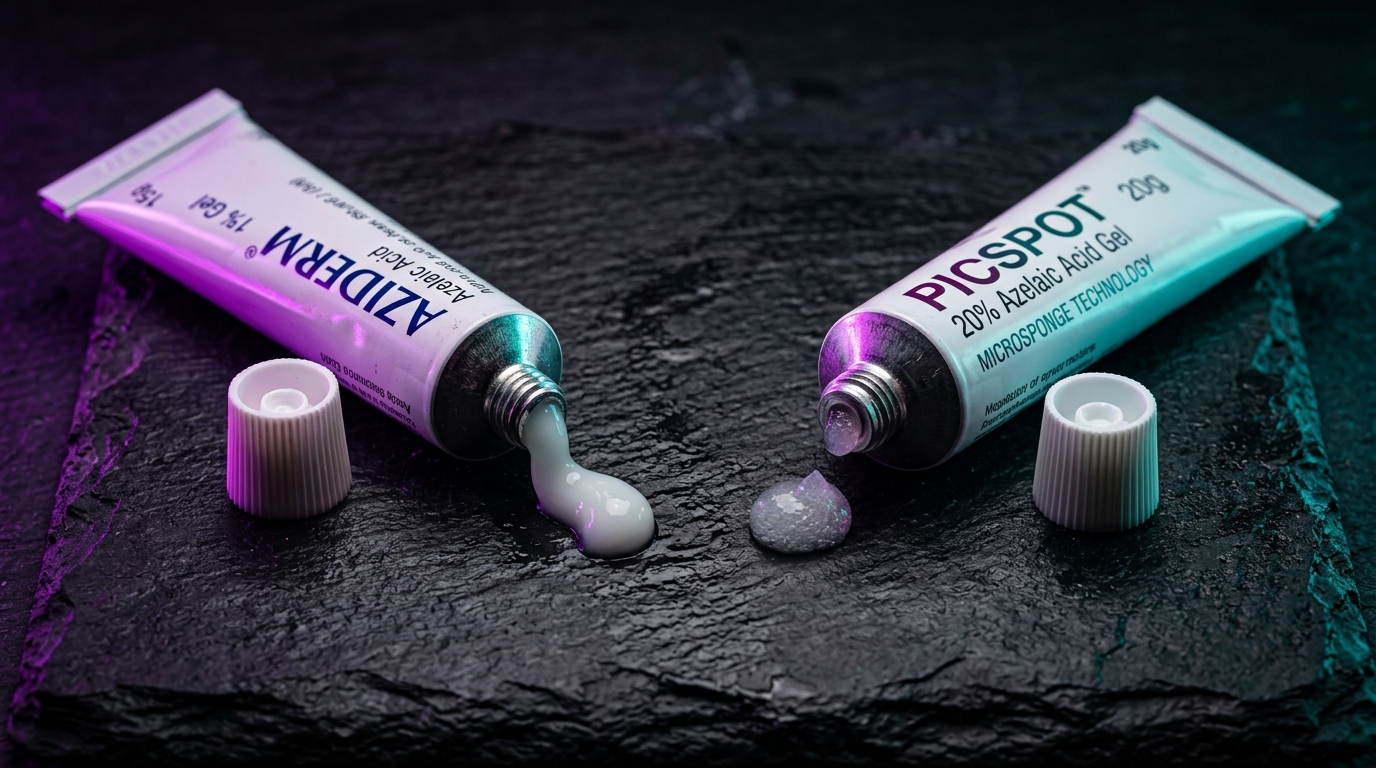
The Selective Tyrosinase Mechanism: Why Indian Skin Thrives on Azelaic Acid
Azelaic Acid is a naturally occurring dicarboxylic acid. Unlike Hydroquinone (which kills melanocytes indiscriminately) or strong chemical peels (which cause post-inflammatory rebound hyperpigmentation on Indian melanin), Azelaic Acid is a selective, competitive tyrosinase inhibitor. It seeks out and suppresses only hyperactive, abnormal melanocytes while leaving normal skin baseline tone untouched.
For Indian skin tones (Fitzpatrick IV–VI), managing acne marks and melasma is notoriously tricky because aggressive exfoliating acids (like 10% Glycolic or high-strength Tretinoin) frequently trigger severe secondary Post-Inflammatory Hyperpigmentation (PIH). Azelaic acid solves this clinical dilemma through a 4-fold mechanism:
Selective Tyrosinase Blockade
Binds to abnormal melanocyte tyrosinase, stopping melanin synthesis in dark spots without lightening surrounding normal skin.
Non-Antibiotic Antimicrobial
Inhibits cellular protein synthesis in C. acnes and Staphylococcus without inducing bacterial resistance (unlike Clindamycin).
Anti-Angiogenic & Anti-Erythema
Downregulates Kallikrein-5 (KLK5) and cathelicidins, constricting dilated micro-capillaries to fade red post-acne marks (PIE) and rosacea.
Mild Follicular Keratolytic
Prevents retention hyperkeratosis (dead skin cell clumping inside pores), clearing microcomedones and bumpy texture without harsh peeling.
Azelaic Acid 10% vs. 15% vs. 20%: The Vehicle & Strength Comparison
The clinical efficacy of Azelaic Acid depends heavily on its concentration and pharmaceutical vehicle (Gel vs Cream):
📊 Azelaic Acid Strength & Vehicle Matrix (Indian Dermatology Standard)
SUPERIORITY ASSET- Best For: Mild PIH, general roughness, first-time active users
- Tolerability: Minimal tingling (0–5 mins); zero peeling
- Availability: OTC (Minimalist, The Ordinary, Chemist at Play)
- Vehicle: Lightweight silicone suspension or water-gel
- Best For: Active comedonal acne, cystic redness, stubborn PIE
- Penetration: 8x higher lipid solubility than 20% cream
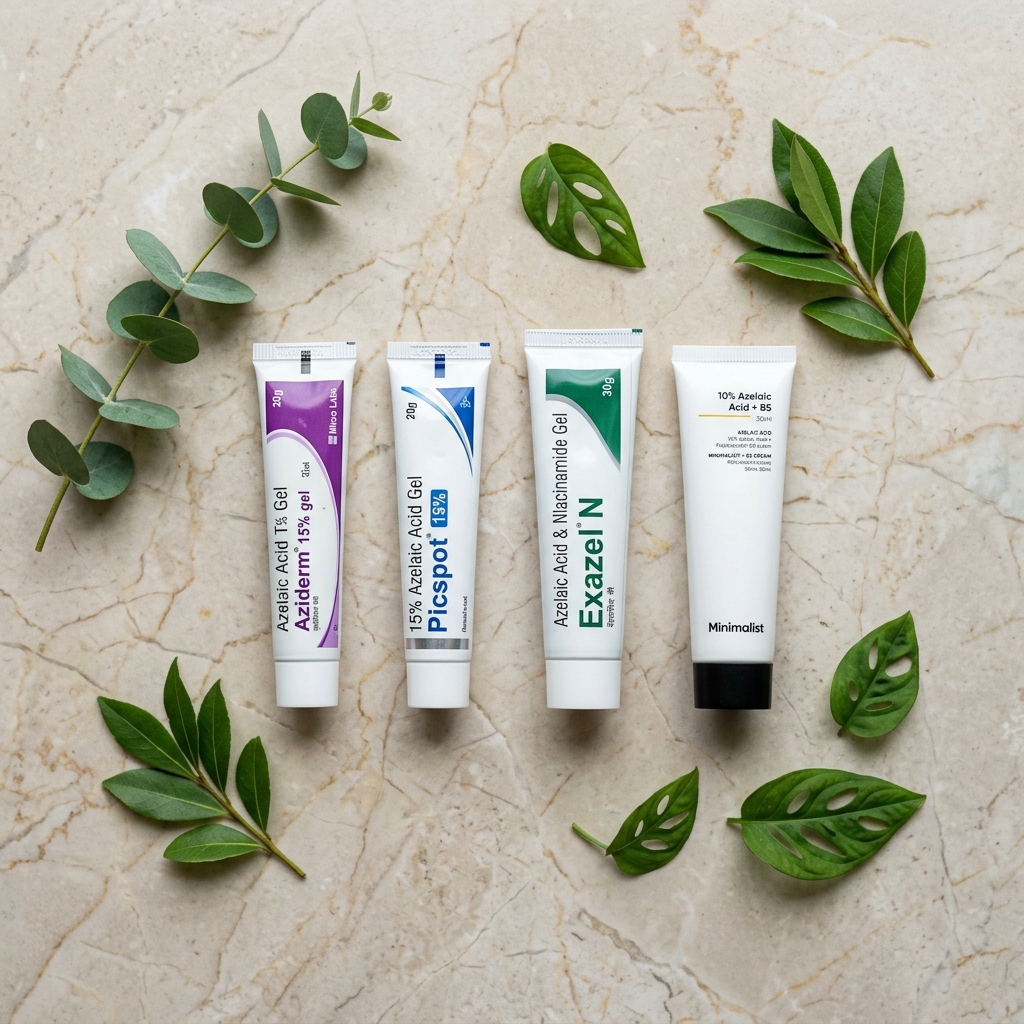
- Availability: Aziderm 15% Gel, Picspot 15% Gel
- Vehicle: Hydro-alcoholic gel (rapid follicle delivery)
- Best For: Chronic dermal melasma, years-old dark marks
- Potency: Maximum tyrosinase inhibition
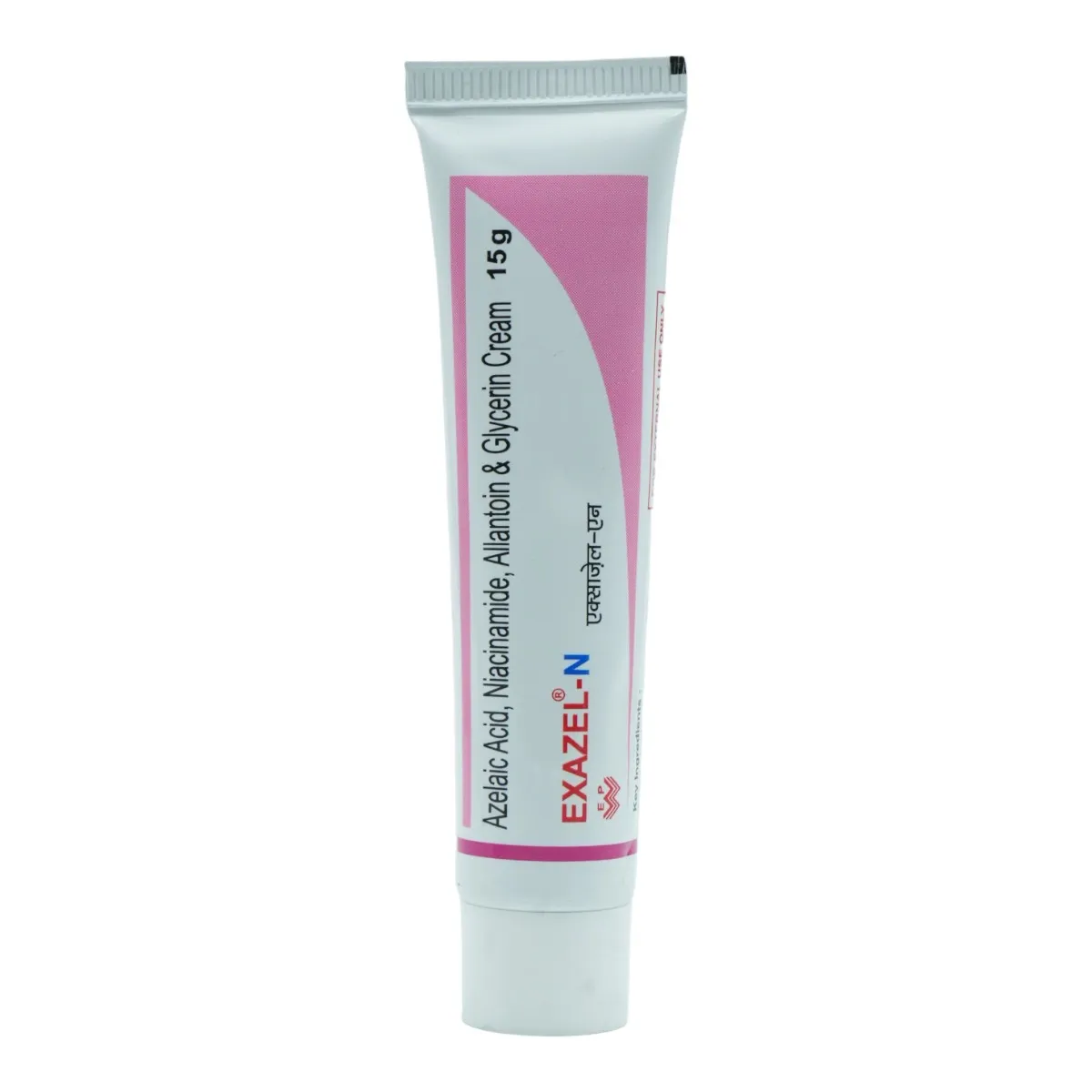
- Availability: Aziderm 20% Cream, Exazel-N Cream
- Vehicle: Rich emollient cream base (needs buffer)
How Azelaic Acid Treats PIE (Red Marks) vs. PIH (Brown Marks)
Indian skin frequently experiences both vascular erythema and melanin deposits following an acne lesion:
| Acne Mark Type | Underlying Pathology | How Azelaic Acid Resolves It | Recommended Strength |
|---|---|---|---|
| Post-Inflammatory Erythema (PIE) Red / Pinkish Marks |
Dilated, inflamed micro-capillaries at base of healed acne follicle | Inhibits inflammatory vascular cathelicidin & decreases localized capillary blood flow | 15% Gel (Morning Application) |
| Post-Inflammatory Hyperpigmentation (PIH) Brown / Black Marks |
Excess melanin dropped into basal epidermal and dermal layers by reactive melanocytes | Competitively blocks tyrosinase enzyme, halting new melanosome production | 15% Gel or 20% Cream (Daily) |
| Epidermal Melasma Malar Cheek Patches |
Hormonally aggravated hyperactive melanocyte clusters | Suppresses abnormal melanogenesis without causing halo hypopigmentation | 20% Cream + Sunscreen SPF 50+ |
The "Azelaic Itch" Protocol: How to Stop Prickling & Stinging
Within 3 minutes of applying Azelaic acid, over 65% of beginners experience an intense prickling, itching, or tingling sensation (paresthesia) that lasts 15–20 minutes. This is NOT an allergic reaction. It occurs because Azelaic acid temporarily lowers skin surface pH and depolarizes epidermal sensory nerve endings. Follow these 4 stacked steps to completely neutralize it:
Never apply Azelaic acid to damp or wet skin. Water dramatically accelerates skin penetration, overwhelming epidermal nerve endings and creating severe stinging.
- Wash face and pat dry with a clean towel.
- Wait a full 10 to 15 minutes for latent moisture to evaporate before applying Azelaic acid.
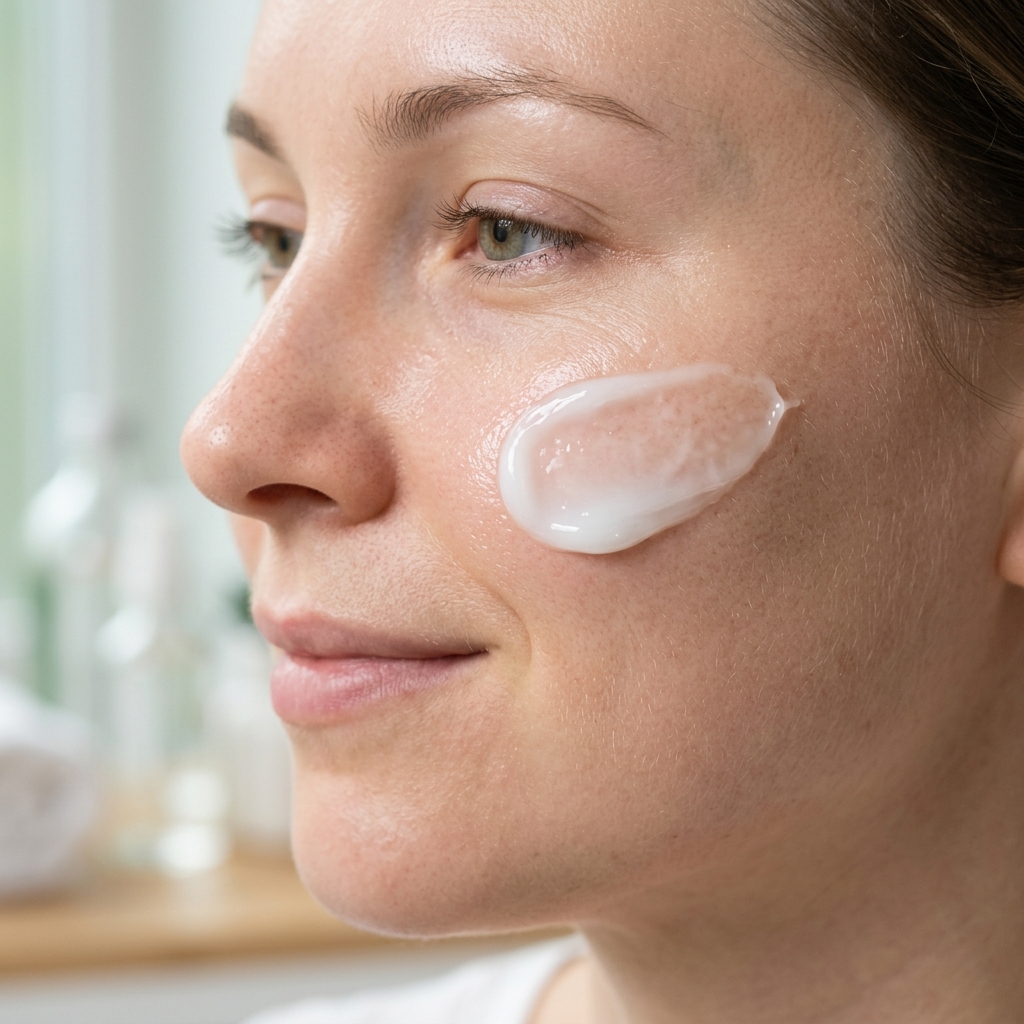
For the first 3 weeks, apply a thin layer of lightweight non-comedogenic ceramide moisturizer first, let it dry for 5 minutes, then apply a pea-sized amount of Azelaic acid on top.
- Creates a lipid buffer that prevents acute sensory nerve irritation.
- Does NOT diminish tyrosinase inhibition efficacy.
Gradually build your epidermal tolerance before jumping to daily high-dose use:
- Week 1: Apply once every 3 nights (pea-sized amount).
- Week 2: Apply every alternate night.
- Weeks 3+: Apply every single morning or evening.
Best Azelaic Acid Formulations Evaluated in India
Dermatologist-prescribed pharmacy gels and high-quality OTC formulations available in India:
The Dermatologist AM/PM Layering Routine for Indian Skin
How to combine Azelaic Acid safely with other active ingredients:
| Routine Step | Morning (AM) Protocol | Evening (PM) Protocol |
|---|---|---|
| 1. Cleanser | Gentle low-pH gel cleanser (e.g. Cetaphil / Minimalist) | Non-ionic wash (or micellar pre-cleanse if wearing SPF) |
| 2. Treatment Active | Azelaic Acid 15% Gel (Pea-sized amount on bone-dry face) | Adapalene 0.1% Gel (Retinoid Night) OR Ceramide Recovery |
| 3. Hydration / Barrier | Lightweight Ceramide / Niacinamide Gel-Cream | Physiological 1:3:1 Ceramide Barrier Cream |
| 4. Sun Protection | Broad-Spectrum SPF 50+ PA++++ (Non-negotiable) | None (Sleep) |
6 Fatal Mistakes Made with Azelaic Acid in India
1. Applying on Damp Skin
Applying immediately after washing traps water molecules, accelerating penetration and triggering severe prickling. Fix: Wait 10 mins post-wash.
2. Layering with BHA or Glycolic Acid
Mixing 2% Salicylic Acid or 10% Glycolic with 15% Azelaic causes acute acid mantle collapse. Fix: Alternate nights or keep BHA to PM.
3. Stopping at the First Tingle
Mistaking standard paresthesia for an allergy and quitting on Day 3. Fix: Use the buffer sandwich method; it subsides in 2 weeks.
4. Skipping Broad-Spectrum Sunscreen
UV radiation stimulates melanocyte tyrosinase faster than Azelaic can inhibit it. Fix: Apply SPF 50+ every single morning.
5. Using Huge Glob Amounts
Applying half a fingertip of 20% cream causes localized flaking. Fix: One single pea-sized dot is sufficient for the entire face.
6. Expecting Overnight Results
Melanin shedding takes 28–45 days in Indian epidermis. Fix: Maintain consistent application for at least 6 to 8 weeks.
Azelaic Acid Clinical Troubleshooting Matrix
| Symptom Experienced | Root Cause Mechanism | Immediate Dermatological Remedy |
|---|---|---|
| Intolerable prickling & itching for 20 mins | Rapid acidic pH drop depolarizing sensory C-nerve fibers | Apply over moisturizer (buffer method); ensure skin is 100% dry before use. |
| Dry flaking patches around nose & mouth | Excessive keratolysis on thin barrier zones | Apply plain vaseline / ceramide balm on nostrils and mouth corners before Azelaic. |
| Small whiteheads appearing in week 2 | Normal follicular turnover acceleration (micro-purging) | Continue routine without popping; clears naturally within 3 to 4 weeks. |
| Dark marks not fading after 4 weeks | Deep dermal melanin requires extended epidermal renewal | Ensure SPF 50+ adherence; upgrade from 10% OTC to 15% Gel after week 6. |
Frequently Asked Questions
For beginners and sensitive skin, 10% is ideal for building tolerance with minimal tingling. For active acne and red marks (PIE), 15% Gel (such as Aziderm 15% or Picspot 15%) is often considered the clinical sweet spot because its hydro-alcoholic gel vehicle penetrates lipid-rich follicles significantly better than a 20% cream. For deep epidermal melasma and stubborn dark spots (PIH), 20% cream provides maximal tyrosinase enzyme inhibition.
Azelaic acid is a dicarboxylic acid with a low pH (3.5–4.5). When applied to human skin, it stimulates local sensory C-nerve fibers in the epidermis, producing a temporary prickling, itching, or tingling sensation (paresthesia) for 15–20 minutes. This is completely normal and subsides as tolerance builds over 2–3 weeks. Applying Azelaic acid on completely DRY skin over a lightweight moisturizer eliminates this sensation.
Yes, mild purging can occur during weeks 1 to 4 because Azelaic acid normalizes follicular keratinization (cell turnover), bringing pre-existing microcomedones to the surface. However, unlike Tretinoin or strong chemical peels, Azelaic acid purging is mild and rarely causes severe inflammatory flares.
Yes, this is a dermatologist gold-standard protocol for Indian skin. Applying Azelaic Acid in the morning (under sunscreen) provides antioxidant protection, inhibits daytime tyrosinase activity, and calms redness, while applying Adapalene 0.1% or Tretinoin at night accelerates cellular turnover to prevent new comedones.
No. Unlike Hydroquinone, Azelaic acid is a selective tyrosinase inhibitor. It only binds to and suppresses abnormally hyperactive, inflamed melanocytes in acne spots and melasma patches, leaving normally pigmented surrounding skin completely unaffected. There is zero risk of halo hypopigmentation on Fitzpatrick IV–VI skin.
Yes. Azelaic acid is classified as FDA Pregnancy Category B and is widely considered by dermatologists and gynaecologists to be one of the few completely safe acne and melasma treatments during pregnancy and lactation.
🏥 Medical Disclaimer: This guide is for educational awareness and reviewed by board-certified dermatologists. It does not replace individualized clinical diagnosis or medical prescription.