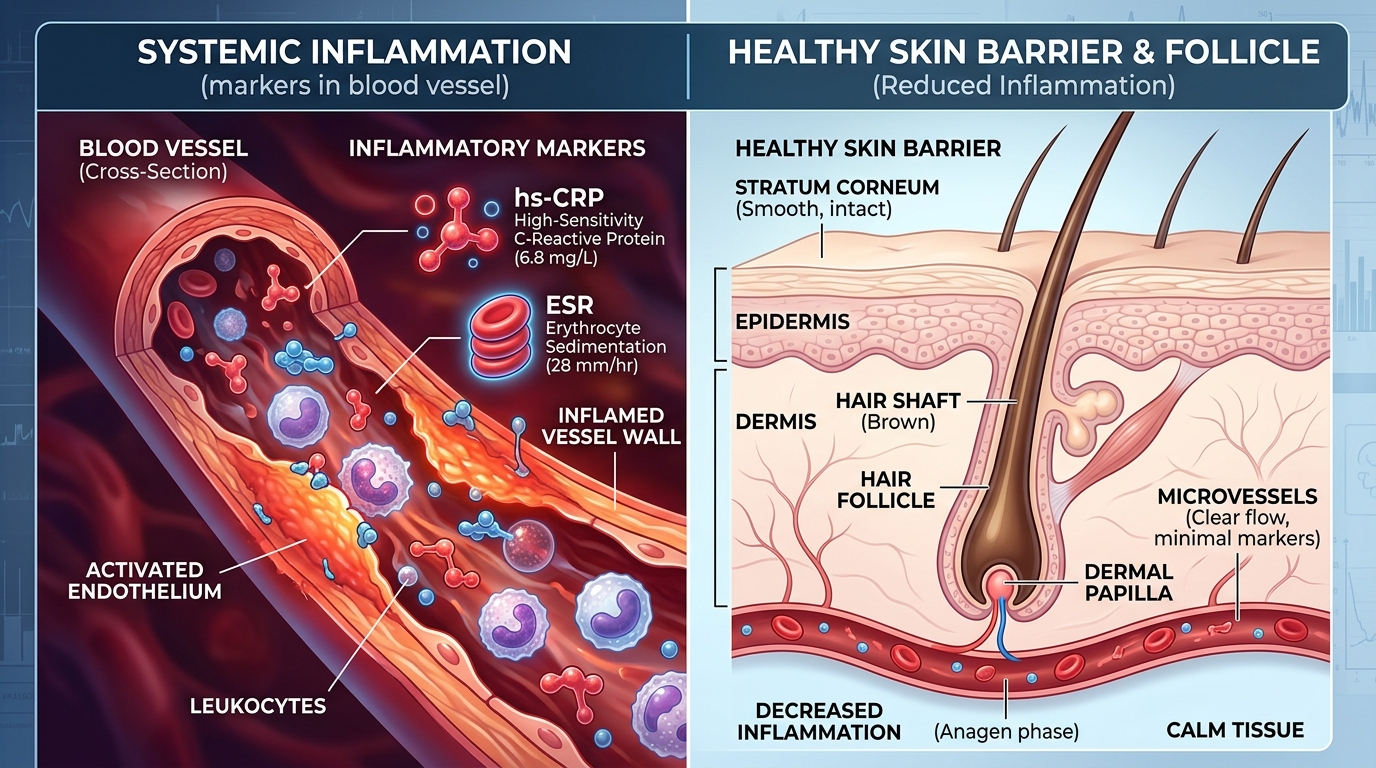
The Sulfone Anti-Inflammatory Mechanism: How Dapsone 5% Calms Acne
Dapsone 5% Gel (Acnedap, Dapson) is a synthetic sulfone. Unlike traditional antibiotics (like Clindamycin) that focus on killing bacteria, Dapsone acts primarily as an intense anti-inflammatory agent. It selectively inhibits myeloperoxidase (MPO), halts neutrophil chemotaxis, and shuts down reactive oxygen species (ROS) production, stopping inflammatory pustules from destroying surrounding tissue and causing deep scars.
Because Dapsone is not an antibiotic, it carries zero risk of bacterial resistance, making it safe for continuous, multi-month therapy in adult patients who have failed courses of topical clindamycin or oral doxycycline.
Myeloperoxidase (MPO) Inhibition
Blocks the primary enzyme neutrophils use to generate toxic hypochlorous acid, preventing tissue destruction inside inflamed follicles.
Neutrophil Chemotaxis Arrest
Prevents inflammatory white blood cells from migrating to the follicle, quenching throbbing soreness within 24 to 48 hours.
Zero Bacterial Resistance
Maintains 100% therapeutic potency over multi-month maintenance protocols without selecting for resistant mutant strains.
Non-Stripping Hydrogel Vehicle
Formulated in an oil-free, non-comedogenic aqueous gel that leaves stratum corneum barrier lipids completely intact.
Why Adult Females (18–45) Respond 2x Better to Dapsone
Large multicenter clinical trials have confirmed a striking dermatological pattern: Adult women achieve nearly double the percentage reduction in inflammatory acne lesions compared to adolescent males when using Dapsone 5% gel.
| Patient Profile | Underlying Acne Biology | Dapsone 5% Gel Clinical Response |
|---|---|---|
| Adult Females (Ages 18–45) Primary Target Demographic |
Lower-face hormonal papules driven by neutrophil-dominant inflammation; delicate skin barrier prone to retinoid peeling | 🏆 65–75% reduction in inflammatory lesions with exceptional skin barrier tolerance |
| Adolescent Males (Ages 13–19) | Severe sebaceous hyper-secretion and dense microcomedones across T-zone and back | Moderate response; typically requires high-strength comedolytics (Adapalene/BPO) as first line |
Dapsone 5% vs. Clindamycin 1% vs. Benzoyl Peroxide (BPO)
📊 Topical Acne Therapeutic Comparison Matrix (Indian Standard)
SUPERIORITY ASSET- Class: Non-antibiotic anti-inflammatory sulfone
- Resistance: 0% (Safe for long-term use)
- Barrier Feel: Non-drying, zero peeling, non-bleaching
- Target: Inflamed lower-face pustules & papules
- Class: True bacterial protein synthesis inhibitor
- Resistance: High (>60% resistance at 12 wks)
- Barrier Feel: Mild hydrogel (pair with Niacinamide)
- Target: Acute short-term bacterial flares
- Class: Free-radical cell wall disruptor
- Resistance: 0% (Impossible for bacteria to resist)
- Barrier Feel: Can bleach fabric & cause mild flaking
- Target: Mixed inflammatory & comedonal acne
The Benzoyl Peroxide + Dapsone "Orange Skin" Reaction
⚠️ The Chemical Oxidation Reaction (Orange / Yellow Staining)
If you apply Dapsone Gel and a Benzoyl Peroxide (BPO) wash or cream simultaneously on your skin, an immediate chemical oxidation reaction takes place. The interaction forms an insoluble bright yellow-to-orange dye that temporarily stains your face, facial hair, and collars for 24–48 hours.
While the orange stain is completely harmless and reversible, Indian dermatologists enforce the "8-Hour Separation Rule":
- Morning (AM): Apply a thin film of Dapsone 5% Gel onto cleansed, dry skin, followed by sunscreen.
- Evening (PM): If using Benzoyl Peroxide, thoroughly cleanse your face with a gentle wash first to ensure zero residual Dapsone remains before applying BPO.
Top Indian Pharmaceutical Brands Evaluated
Prescription Dapsone 5% formulations available across Indian pharmacies:
The 4-Step Dapsone Application Protocol
Follow these 4 stacked action boxes to maximize clearance while avoiding common user errors:
Dapsone is NOT a spot treatment. It prevents new inflammatory lesions from forming by suppressing neutrophil migration across the entire zone.
- Dispense one pea-sized drop onto your fingertip.
- Smooth into a thin, transparent layer across the entire chin, jawline, and lower cheeks.
Apply Dapsone in the morning. Dapsone is completely non-photosensitizing and does not break down under UV light.
- Layer comfortably under your lightweight ceramide moisturizer and broad-spectrum SPF 50+.
Never apply Benzoyl Peroxide wash or gel in the same morning routine as Dapsone.
- Keep Dapsone strictly to AM; keep BPO or Retinoids strictly to PM.
- Eliminates 100% of yellow-orange skin oxidation staining.
Pair morning Dapsone with night Adapalene 0.1% or Tretinoin 0.025%.
- Dapsone clears the inflammatory pustules; Adapalene clears deep clogged pores.
G6PD Deficiency & Systemic Absorption Safety Truth
While oral Dapsone tablets (used for leprosy and autoimmune dermatoses) can cause hemolytic anemia in individuals with Glucose-6-Phosphate Dehydrogenase (G6PD) deficiency, topical Dapsone 5% Gel has less than 1% systemic bioavailability. Extensive FDA and Indian clinical pharmacokinetic studies confirmed that topical Dapsone does NOT alter hemoglobin levels or cause hemolysis, and routine G6PD blood screening is NOT required prior to prescribing.
6 Critical Mistakes Made with Dapsone Gel in India
1. Layering Directly Over BPO Face Wash
Creates an instant bright orange oxidation stain on face and collars. Fix: Use gentle non-BPO cleansers in the AM.
2. Expecting Blackhead Clearance
Dapsone does not dissolve keratin plugs. Fix: Pair with BHA 2% or Adapalene 0.1% at night for comedones.
3. Spot-Dabbing Only on Huge Cysts
Misses the subclinical neutrophil micro-inflammation in surrounding pores. Fix: Apply a thin film across the entire zone.
4. Quitting Before 6–8 Weeks
Neutrophil downregulation takes several weeks of steady dosing. Fix: Commit to at least 8 weeks of consistent use.
5. Rubbing Aggressively into Skin
Friction triggers mechanical irritation in active cysts. Fix: Gently smooth a light film over the surface.
6. Skipping Sunscreen on Indian Melanin
Inflammatory acne lesions exposed to UV radiation trigger severe PIH. Fix: Broad-spectrum SPF 50+ every morning.
Dapsone Clinical Troubleshooting Matrix
| Symptom Experienced | Root Cause Mechanism | Immediate Dermatological Remedy |
|---|---|---|
| Face turned yellow/orange | Chemical oxidation with Benzoyl Peroxide residual particles | Wash face thoroughly with gentle cleanser; stain fades completely in 24 hrs. |
| Mild dryness / tight sensation | Aqueous gel vehicle evaporation | Apply a lightweight ceramide gel-cream immediately after Dapsone dries. |
| Inflammatory bumps resolved but blackheads remain | Comedonal keratin plugging requires retinoid cell turnover | Introduce Adapalene 0.1% Gel into evening routine 3x weekly. |
| Deep cyclical premenstrual jawline cysts persist | Hormonal androgen-driven sebocyte hyper-responsiveness | Consult dermatologist to evaluate adding oral Spironolactone (Aldactone). |
Frequently Asked Questions
Dapsone is a synthetic sulfone that functions primarily as a powerful anti-inflammatory and mild antibacterial agent. It inhibits the myeloperoxidase (MPO) enzyme in neutrophils, blocking the release of reactive oxygen species (ROS) and stopping inflammatory destruction of the hair follicle wall. It rapidly reduces swelling, throbbing, and redness in painful papulopustular acne lesions.
Clinical trials consistently demonstrate that adult females (ages 18–45) experience significantly higher lesion reduction from topical Dapsone than adolescent males. Adult female acne is predominantly inflammatory rather than purely comedonal, and Dapsone specifically suppresses the neutrophil-driven inflammatory cascade along the lower face without causing peeling, photo-sensitivity, or barrier breakdown.
If Dapsone Gel and Benzoyl Peroxide (BPO) are applied to the skin at the same time, an immediate chemical oxidation reaction occurs, generating a temporary yellow-to-orange dye that stains the skin, facial hair, and clothing. This stain is harmless and washes off within 24–48 hours, but dermatologists prevent it entirely by instructing patients to apply Dapsone in the morning and BPO in the evening.
No. While oral Dapsone tablets carry a risk of hemolytic anemia in G6PD-deficient individuals, topical Dapsone 5% gel has less than 1% systemic absorption. Extensive clinical safety trials confirmed that routine G6PD screening is not required prior to prescribing topical Dapsone gel.
The leading prescription brands in India include Acnedap 5% Gel (Cipla), Dapson 5% Gel (Micro Labs), and Dapsoderm 5% Gel. These are Schedule H prescription formulations available in 15g and 30g tubes across Indian pharmacies.
Topical Dapsone is classified as FDA Pregnancy Category C. While systemic absorption is minimal (<1%), pregnant or breastfeeding women should use it only under direct prescription and supervision by their obstetrician and dermatologist.
🏥 Medical Disclaimer: Dapsone 5% Gel is a Schedule H prescription medication in India. This guide is for educational awareness and does not replace individualized clinical diagnosis or medical prescription.