Indian skin predominantly falls into Fitzpatrick Skin Types IV, V, and VI. Melanin-rich skin contains larger, highly active melanosomes. Whenever the skin experiences trauma (acne, picking, UV radiation, or harsh chemical burns), melanocytes respond defensively by overproducing melanin. Choosing the correct treatment requires first diagnosing your exact condition:
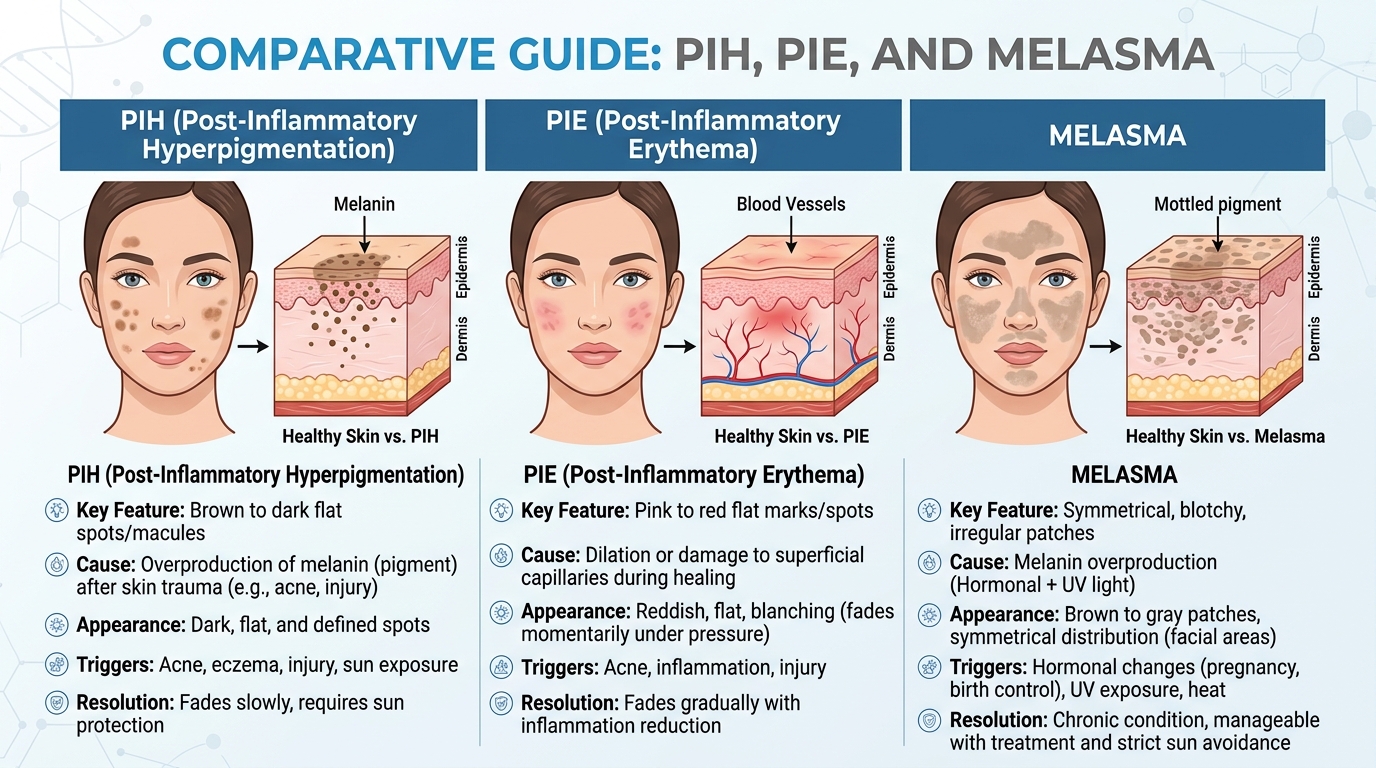
| Condition | Visual Appearance | Underlying Cause | Melanin Inhibitor Efficacy | Laser Safety on Indian Skin |
|---|---|---|---|---|
| PIH (Post-Inflammatory Hyperpigmentation) | Brown, dark brown, or black flat spots | Overproduction of melanin after skin trauma/acne | High (Azelaic / Kojic / Niacinamide) | Safe (Low-fluence Q-Switched / Pico) |
| PIE (Post-Inflammatory Erythema) | Pink, red, or purplish flat marks | Damage/dilation of capillary blood vessels | Zero Efficacy (Blood vessel issue) | Vascular IPL / Pulsed Dye Laser only |
| Melasma | Symmetrical blotchy gray-brown patches on cheeks/forehead | Hormonal fluctuations + UV exposure | Moderate (Requires oral Tranexamic acid under Rx) | ⚠️ CAUTION — Heat can severely worsen melasma |
At-Home Sun & Barrier Shield
Broad-spectrum SPF 50 PA++++ (tinted mineral preferred to block blue light) + ceramide-rich barrier repair. Prevents new pigment activation.
Targeted Topical Actives
AM: Azelaic Acid 10–15% or Niacinamide 10%.
PM: Tretinoin 0.025% (under Rx) or Kojic Acid 2% serum to accelerate cell turnover.
In-Clinic Superficial Peels
Glycolic (30–50%), Salicylic (20–30%), or Yellow Peels performed by a dermatologist to shed superficial melanin sheets (₹1,500–₹5,000/session).
Advanced Laser Toning
Q-Switched Nd:YAG (1064nm) in low-fluence toning mode or Picosecond Laser to shatter deep dermal pigment without heat burns (₹3,000–₹15,000/session).
Using improper laser parameters on Fitzpatrick IV–VI skin can cause devastating rebound hyperpigmentation or mottled hypopigmentation (permanent white spots):
• Q-Switched Nd:YAG (1064nm): Must be operated strictly in Low-Fluence Toning Mode with a large spot size. High fluences cause thermal burns.
• Picosecond Lasers (PicoSure / PicoWay): Deliver energy in trillionths of a second via photomechanical shockwaves rather than heat, making Pico significantly safer for Indian skin.
• CO2 Ablative Lasers & High-Heat IPL: Strictly contraindicated for general hyperpigmentation in dark skin due to extreme burn risks.
- At-Home Topical Regimen (Sunscreen + Actives): ₹500 – ₹2,500 / month.
- Chemical Peels (Glycolic / Yellow Peel): ₹1,500 – ₹5,000 / session (3–6 sessions recommended).
- Q-Switched Nd:YAG Laser Toning: ₹3,000 – ₹8,000 / session (4–8 sessions recommended).
- Picosecond Laser Toning: ₹6,000 – ₹15,000 / session (3–5 sessions recommended).