
1. The Haldi Paradox: Why Home Remedy Tradition Backfires on Modern Facial Skin
In Indian households, turmeric (Haldi) is treated as a cultural cure-all. From bride-to-be ubtan ceremonies to DIY pimple treatments passed down through generations, applying raw turmeric paste directly to the face is widely assumed to be harmless because it is "100% natural."
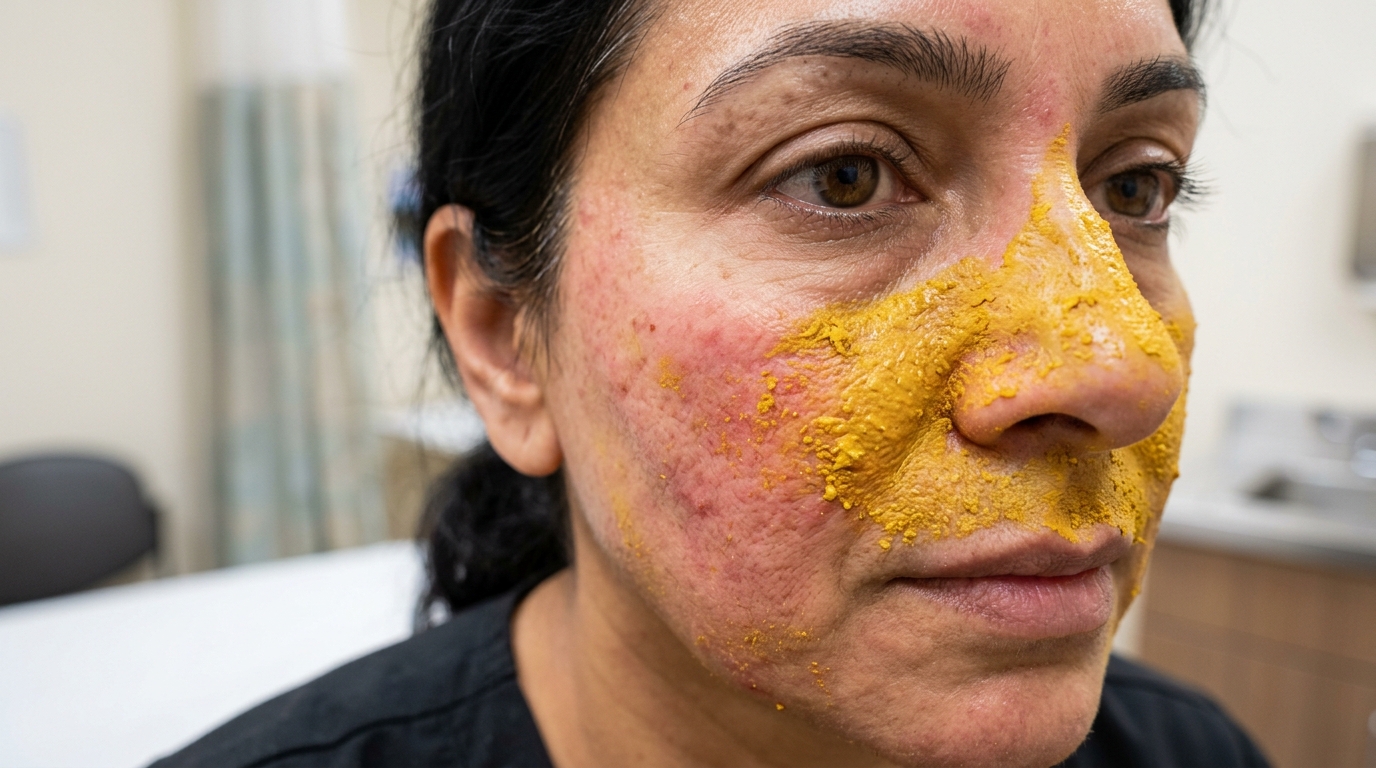
However, board-certified dermatologists across India are witnessing a surge in patients presenting with acute facial erythema, intense burning, patchy yellow staining, and sudden breakouts following DIY turmeric applications. This phenomenon—known clinically as the Haldi Dermatitis Paradox—occurs because facial skin is fundamentally different from the skin on the rest of the body.
Biological Mechanism: Volatile Oils vs Epidermal Thickness
Facial stratum corneum is significantly thinner (10–15 cell layers) than forearm or leg skin (30+ layers). Raw kitchen turmeric contains volatile essential oils—specifically ar-turmerone, α-turmerone, and β-turmerone—alongside active curcuminoids. On delicate facial skin, these concentrated phytochemicals act as direct chemical irritants rather than soothing agents.
When raw turmeric is left on the face for extended periods, especially under occlusive wraps or mixed with acidic bases like lemon juice or curd, these bioactive compounds breach the lipid bilayer, initiating an immediate inflammatory cascade.
2. The 5 Primary Side Effects of Applying Turmeric on Facial Skin
Understanding the exact dermatological damage caused by DIY Haldi preparations is crucial for preventing long-term hyperpigmentation and chronic skin barrier dysfunction.
Curcumin is a highly lipophilic polyphenol that binds strongly to keratin proteins in the upper stratum corneum. Kitchen turmeric leaves a persistent bright yellow cast that cannot be washed off with water, leading many users to scrub aggressively with soap, causing micro-tears.
Curcuminoids and turmerones are known haptenic allergens. Exposure triggers cell-mediated Type IV hypersensitivity, leading to red rash, tiny itchy papules, swelling, and hot stinging sensations across the cheeks and forehead within 2 to 24 hours.
DIY turmeric recipes frequently blend Haldi with coconut oil, mustard oil, or full-fat milk curd. These heavy lipids act as food for Malassezia yeast, exploding into uniform, itchy fungal acne bumps across the forehead and jawline.
The acidic or abrasive nature of home ubtans strip intercellular ceramides. On melanin-rich Indian skin, the resulting inflammation triggers melanocytes to overproduce pigment, converting a temporary rash into post-inflammatory hyperpigmentation (PIH).
Severe Reaction Alert: Turmeric Burn & Blistering
Combining raw turmeric with acidic ingredients like lemon juice, apple cider vinegar, or baking soda creates a caustic mixture. This severely disrupts facial skin pH (dropping it below 3.5 or spiking above 8.5), causing chemical burns, peeling skin, and severe raw weeping patches that require urgent dermatological intervention.
3. Kitchen Turmeric (Curcuma Longa) vs Wild Turmeric (Kasturi Manjal)
A major reason for unexpected facial reactions in India is using culinary kitchen Haldi instead of cosmetic-grade wild turmeric.
Kitchen turmeric is cultivated for culinary flavor, color, and culinary shelf-life. It undergoes commercial heat drying and grinding, and is frequently adulterated with starch, metanil yellow dye, or lead chromate in unregulated local markets. Furthermore, kitchen turmeric contains high levels of essential oils designed for cooking, which severely burn facial pores.
Why Kasturi Manjal (Curcuma Aromatica) is Structurally Different
Authentic Kasturi Manjal (wild turmeric) belongs to a distinct botanical species (Curcuma aromatica). It possesses a camphor-like aroma, is intrinsically non-staining, contains lower concentrations of harsh turmerones, and exhibits higher antioxidant activity without leaving a yellow tint. If you must use turmeric in home masks, only 100% pure, unadulterated Kasturi Manjal should ever touch facial skin.
4. Clinical Diagnosis & Symptom Resolution Table
Use this dermatological reference table to identify what your skin is experiencing post-turmeric application and the correct clinical fix:
| Observed Reaction | Underlying Biological Cause | Correct Clinical Action | Contraindicated Mistake |
|---|---|---|---|
| Bright Yellow Face Stain | Lipophilic curcumin binding to keratin cells | Massage mild cleansing oil or micellar water for 60s; double-cleanse softly | Scrubbing face with harsh loofahs or alkaline soap bars |
| Redness, Burning & Stinging | Irritant contact dermatitis & barrier lipolysis | Apply cool saline compress followed by pure Ceramide & Squalane moisturizer | Applying ice directly to raw skin or layer more active acids |
| Tiny Itchy Forehead Bumps | Malassezia yeast overgrowth from oil/curd vehicle | Switch to oil-free routine; wash twice weekly with 2% Ketoconazole cleanser | Applying heavy neem oil or coconut oil to "soothe" bumps |
| Dark Brown Marks (PIH) | Post-inflammatory melanogenesis on Fitzpatrick IV-VI skin | Strict daily broad-spectrum SPF 50; introduce 15% Azelaic Acid once healed | Using bleaching creams or lemon juice DIY remedies |
5. Emergency First-Aid Protocol for Turmeric Skin Reactions
If you currently have a burning, red, or yellow-stained face from a recent Haldi mask, follow this 4-step dermatological recovery sequence immediately:
- Step 1: Oil-Based Dissolution (Stain Removal): Do not use harsh granular scrubs. Apply 4–5 drops of squalane oil, jojoba oil, or a gentle emulsifying cleansing oil onto dry skin. Curcumin is fat-soluble and will dissolve into the lipid vehicle. Rinse gently with lukewarm water.
- Step 2: Neutralize & Flush: Wash with a non-foaming, pH 5.5 syndet cleanser (such as Acnemoist or Cetaphil Gentle Cleanser). Pat dry gently with a clean micro-fiber towel.
- Step 3: Barrier Lipid Replenishment: Apply a generous layer of a ceramide-dominant cream containing cholesterol and fatty acids (see our Cica Barrier Repair Moisturizer Guide). Avoid any active retinoids, AHA/BHAs, or Vitamin C for at least 5–7 days.
- Step 4: Sun Shield Protection: Irritated, inflamed skin is hyper-sensitive to UV radiation. Wear a gel-based mineral sunscreen (SPF 50 PA++++) whenever exposed to daylight to prevent PIH pigment darkening (read Best Sunscreen for Acne Prone Indian Skin).
Unsure If Your Reaction is Contact Allergy or Fungal Acne?
If your bumps are intensely itchy and uniform in size, you may be dealing with Malassezia folliculitis triggered by DIY oils. Take our 60-second AI Skin Scan to analyze your exact bump patterns and get a custom clinical routine.
Start Free AI Skin Scan →6. Evidence-Based Clinical Alternatives to Raw Turmeric
If you were using turmeric for its supposed anti-acne, anti-inflammatory, or spot-fading benefits, modern dermatology provides standardized pharmaceutical actives that deliver these exact benefits without the risk of yellow staining or allergic contact dermatitis:
- For Acne Marks & Hyperpigmentation: Instead of raw Haldi, use Azelaic Acid 15% Gel or Alpha Arbutin 2% Serum. These selectively inhibit tyrosinase without staining skin.
- For Active Inflammatory Pimples: Switch to Clindamycin + Nicotinamide Gel or Benzoyl Peroxide 2.5% Gel for targeted antibacterial action.
- For Overall Redness & Barrier Soothing: Use Niacinamide 5% Serum or purified Centella Asiatica (Cica) preparations.
- For Clogged Pores & Blackheads: Use Salicylic Acid 2% Cleanser to dissolve intra-follicular sebum.
7. Frequently Asked Questions
Kitchen turmeric contains essential volatile oils (turmerones) and spice additives that trigger acute irritant contact dermatitis, especially when applied to sensitive or active-treated facial skin.
Curcumin is lipophilic (fat-soluble). Do not scrub with harsh soap; instead, massage a gentle cleansing oil, micellar water, or jojoba oil onto dry skin for 60 seconds, then wash off with a mild cleanser.
Yes. DIY Haldi face packs mixed with heavy oils like coconut or mustard oil clog pores and feed Malassezia yeast, triggering fungal acne papules and comedonal breakouts.
Kitchen turmeric (Curcuma longa) contains high staining pigments and fiery volatile compounds. Kasturi Manjal (Curcuma aromatica / wild turmeric) is non-staining, gentler, and clinically preferred for topical skincare.